Teachers, software developers among most in-demand jobs as Singapore’s AI push gathers pace
But industry players caution that the country may need to do more to build and attract the talent needed to support its AI ambitions.

As Singapore moves to further embrace artificial intelligence (AI) and digital tools, demand for specialised skill sets – including AI governance and machine learning – is expected to grow.

This audio is generated by an AI tool.








SINGAPORE: Teachers and software developers remained among the most sought-after professionals in Singapore in 2025, driven by growth sectors such as information and communications, as well as financial and insurance services.
Data from the Ministry of Manpower’s (MOM) job vacancy and labour market surveys, released on Tuesday (Dec 30), showed that teaching and training professionals and software, web and multimedia developers topped the list of professionals, managers, executives and technicians (PMET) vacancies in 2025.
Overall PMET demand remained high compared with a decade ago, accounting for more than half of all job vacancies.
As Singapore moves to further embrace artificial intelligence (AI) and digital tools, demand for specialised skill sets – including AI governance and machine learning – is expected to grow.





“SKILLS ARE THE NEW CURRENCY”
Industry observers say the strong demand reflects the growing premium placed on specialised and future-ready skills.
“Skills are the new currency of the labour market. These are not skills that are very easily available. They are core to Singapore's economic strategy,” said Mr Dhilip Kumar, head of strategic talent partnerships for Southeast Asia at Aon Consulting, a global human capital and risk advisory firm.
“For example, the infocomm media powers digital transformation across industries, while finance underpins regional trade and investments. Teaching and software development reflect the need for building the talent for the future,” he added.
Mr Kumar expects competition for talent to remain intense in 2026, particularly in sustainability, healthcare and AI governance.
“2026 will be the year of green jobs, health tech and AI risk related roles, because AI is on the rise, you will now need to factor in all the guardrails and governance is required … the premium war for scarce skills isn't going away at all.”
He added that demand for roles in AI, machine learning, cybersecurity and data risk and compliance will continue to grow as companies, especially in the finance sector, adopt automation and cloud computing.
TOP JOB VACANCIES IN SINGAPORE IN 2025
Professionals, managers, executives and technicians (PMETs)
- Teaching and training professionals
- Commercial and marketing sales executives
- Software, web, multimedia and games developers and designers
Non-PMET roles
- Civil engineering/building construction labourers
- Waiters
- Shop sales assistants
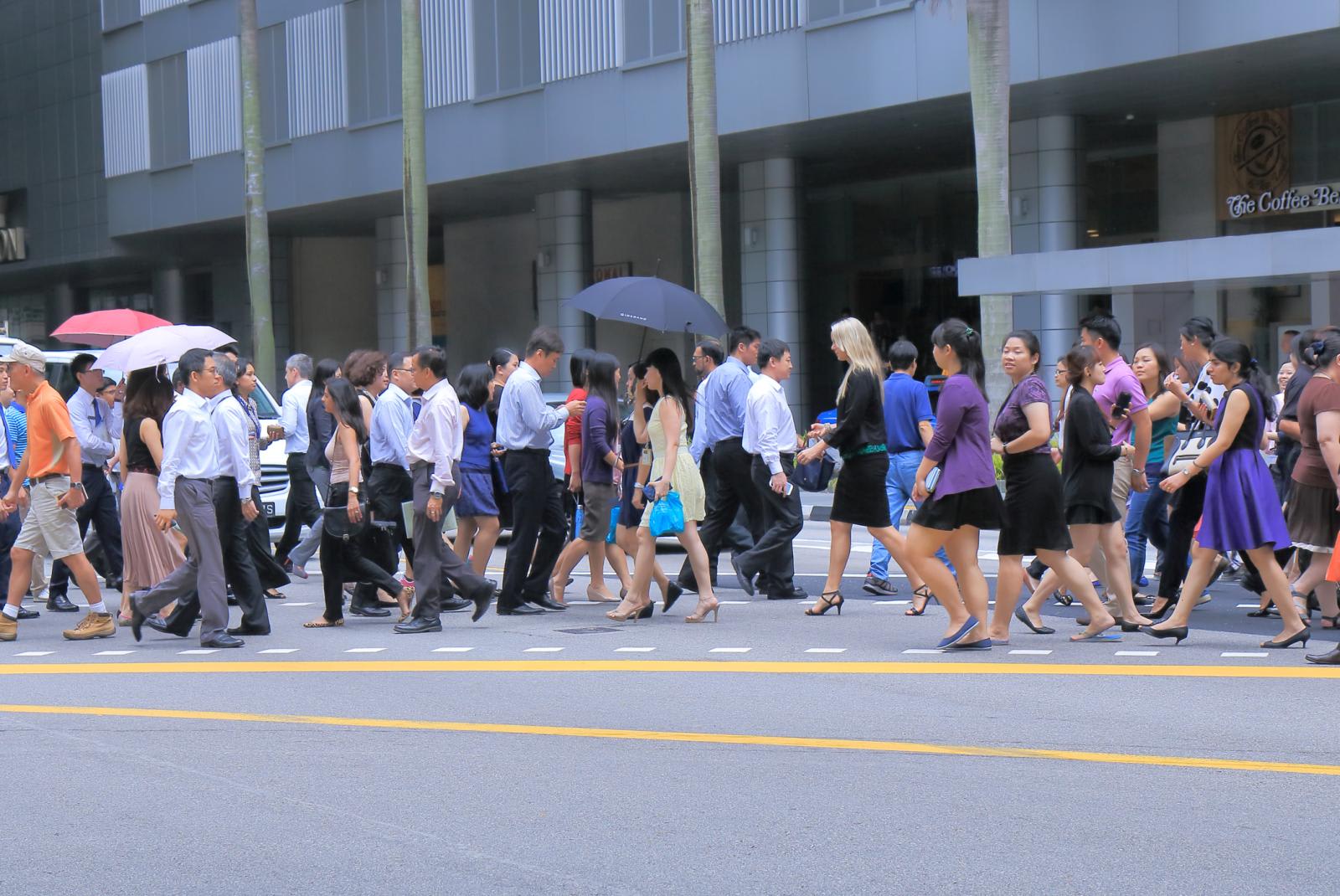
The proportion of PMET vacancies remains high compared with a decade ago. In 2015, PMET vacancies made up 45.4% of total job vacancies, compared with 56.3% in 2025.
Hiring demand for professionals was keener in growth sectors, including:
- Information and communications
- Financial and insurance services
- Professional services

COMPETITION FOR AI GOVERNANCE ROLES
The talent war is intensifying within the tech sector as well, and even general roles, such as software engineers and data scientists, are starting to list AI experience as a requirement, according to recruiters.
Tech companies are also creating new roles and seeking more employees with expertise in AI governance and cybersecurity, amid a shortage of such specialists in the market.
Human resource consultants estimate that demand for these roles has risen by about 5 to 10 per cent year-on-year.
“For strong candidates in the market, they often hold multiple offers on hand, which makes it more competitive to secure good talents,” said Ms Neo Miao Xia, a tech recruiter at Michael Page.
To ease manpower shortages, firms are willing to pay up to 20 per cent more for AI-related roles compared with general tech positions, with annual salaries ranging from S$110,000 (US$85,600) to S$210,000.
How quickly a role can be filled depends on its seniority and level of specialisation, said Mr Rumi Mohd, associate director at recruitment firm Randstad Singapore.
“If I can hire one every four weeks, I'm happy. But I would say this type of niche roles really depends on the level. So if you look at AI specialists or executives … I would say mid-level will probably take between one to three months.”
He added that recruiting more senior candidates with startup experience can take up to four months.
Recruiters also note a broader shift in hiring preferences, with employers placing more weight on practical experience and adaptability.
“Companies are moving forward from less of a traditional certification or degree, to the projects you have handled … certification from different providers, which shows your tech capabilities … instead of formal education,” Mr Rumi said.

TALENT SHORTFALL MAY STIFLE AI AMBITIONS
However, industry players caution that Singapore may need to do more to nurture and attract sufficient talent to support its AI ambitions.
“I do not think at the current rate of our graduates, we have enough of those resources,” said Dr David Leong, managing director of recruitment firm PeopleWorldwide Consulting.
He pointed to China’s large graduate output and rapid expansion of its AI talent pipeline, contrasting it with Singapore’s smaller graduate base.
“For Singapore to catch up right in terms of having sufficient talent … we have to be open to hiring more of such talent.”
At the same time, Dr Leong said schools will play a critical role in developing future AI talent, with AI expected to become more embedded in education.
“Students will be exposed to AI learning. AI will be part of the curriculum, and that will come very naturally,” he said.
“That also means that teachers would have to go through a lot of AI education to be able to impart to the students the use of AI.”
CONSTRUCTION TOPS NON-PMET DEMAND
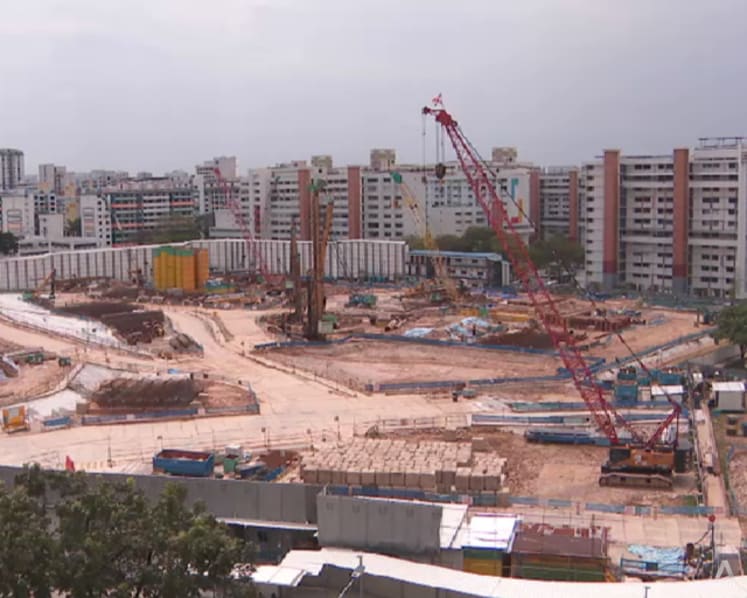
Beyond PMET roles, MOM also highlighted the rising demand for non-PMET workers, particularly in the construction sector.
Construction labourers topped the list of non-PMET vacancies in 2025, driven by an uptick in infrastructure projects such as transport network upgrades.
Aon Consulting’s Mr Kumar said attracting workers to these roles will require a shift in how construction careers are perceived.
“To attract talent to these sections, we need to reposition some of these jobs as skilled and tech-enabled careers, highlighting the modern tools and safety standards that it might require for progression.”
Firms can also make such roles more appealing by offering structured training or linking them to sustainability projects, he added.
“For example, take drones for construction or prefabrication digital safety with structured apprenticeship, so the discipline becomes much more lucrative,” he said.