







News analysis: Should the position of Leader of the Opposition be institutionalised?
Political analysts said that formally entrenching the role in law would properly define the duties and privileges of the office.

This audio is generated by an AI tool.


SINGAPORE: Political analysts believe the Leader of the Opposition position should be institutionalised in law, not solely to give the parliamentary role independence from the executive, but because doing so would empower it to better serve Singaporeans.
Presently, the appointment of a Leader of the Opposition remains a discretionary decision by the government of the day, also known as the executive branch.
Speaking to CNA on Friday (Jan 16), three analysts argued that formally entrenching the role in law would properly define the privileges of the office.
Singapore Management University law professor Eugene Tan said the Leader of the Opposition’s office should have “a more secure and clearer status” in law.





This could be done either by making the rights of the role, the process of appointment and removal, the office’s privileges and responsibilities well defined either in the Constitution or in ordinary legislation or both, said Associate Professor Tan.
They were weighing in after several political observers and opposition figures took to social media to express the view that the role should be institutionalised.
Progress Singapore Party chief Leong Mun Wai pointed out on Facebook that the Leader of the Opposition is not appointed by the executive branch in “established democracies”.
Similarly, Red Dot United secretary-general Ravi Philemon said on his own Facebook page that an office that is not grounded in the Constitution or parliament’s standing orders but “exists as a discretionary gift from the Prime Minister” is contrary to the idea of an independent opposition.
Former Nominated Member of the Parliament Calvin Cheng said that institutionalising the role would bring Singapore “in line with other developed democracies”.
“If Prime Minister Lawrence Wong is serious that this position is an ‘important position in our parliamentary democracy’, then let’s institutionalise it. Either put it into the constitution or make it a statute, or create a standing convention,” he said in a Facebook post.
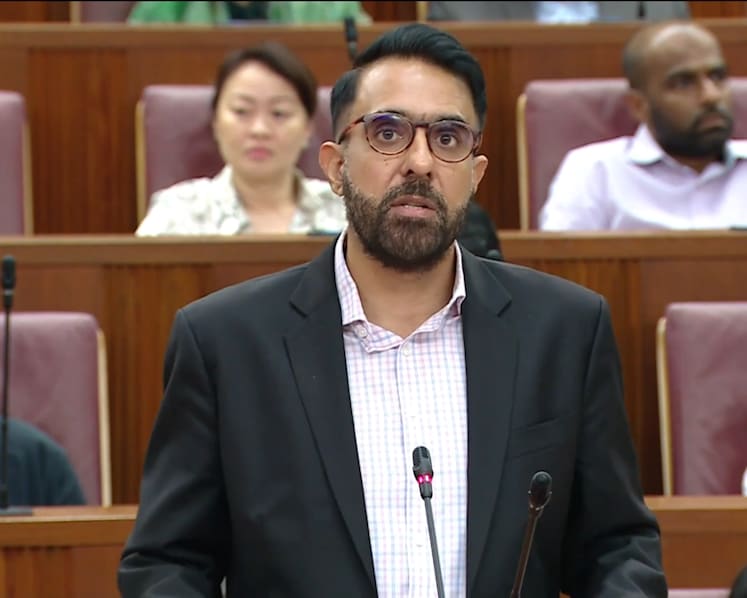
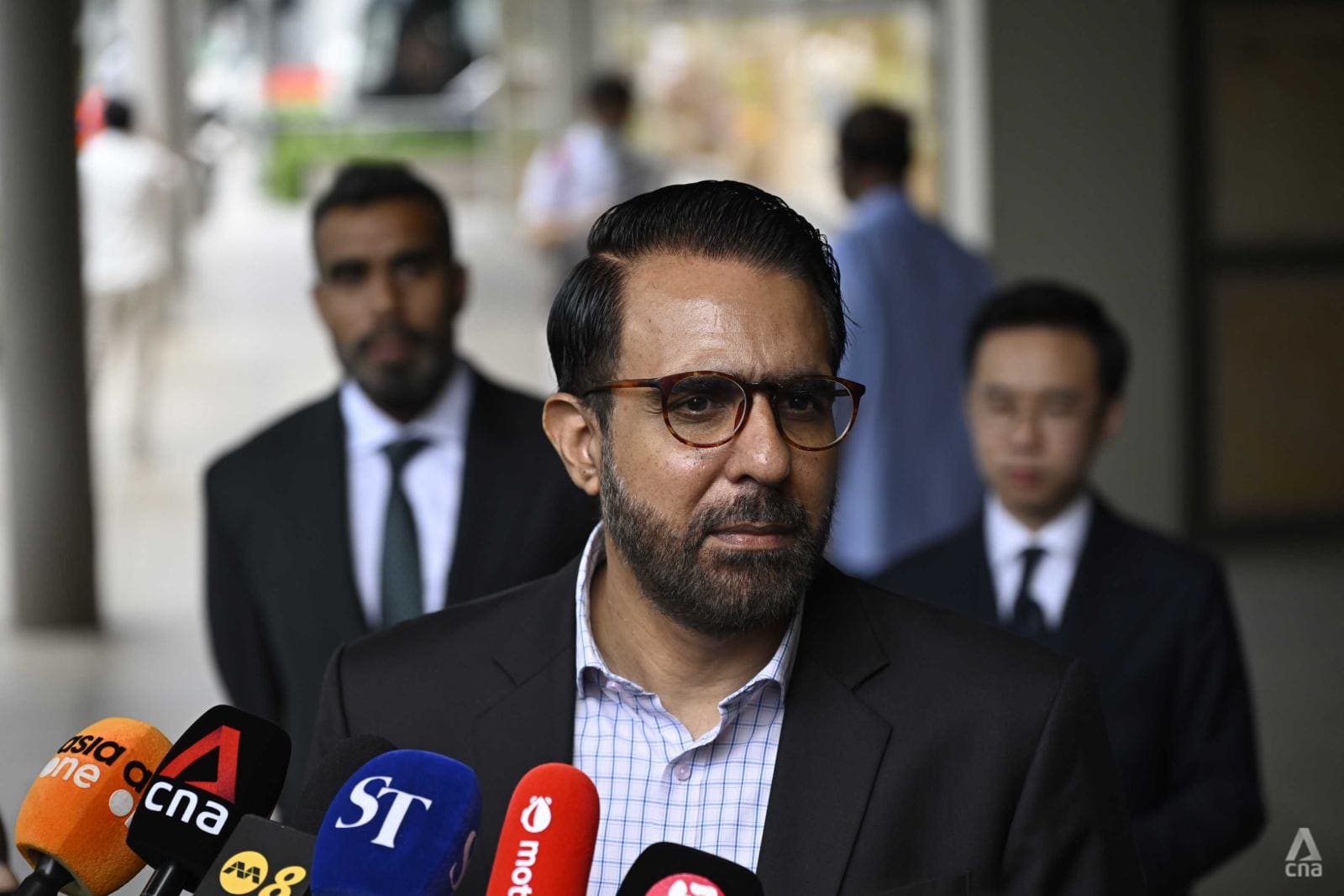
WP secretary-general Pritam Singh was first appointed Leader of the Opposition in 2020 following that year’s General Election by then Prime Minister Lee Hsien Loong.
At the time, Mr Lee said the election results showed a clear desire for a diversity of voices in parliament.
"Singaporeans want the PAP to form the government, but they - and especially the younger voters - also want to see more opposition presence in parliament," he said.
The Leader of the Opposition receives certain privileges, such as confidential briefings by the government on important national issues, and may be asked to take on official state functions, visits and meetings alongside members of the government and the public service.
In parliament, he or she is also given the right of first response and more time for speeches, equal to a minister's speech.
The opposition leader is also given an office in parliament, additional staff support and resources, as well as double the allowance of an elected MP, or around S$385,000 per year.
CNA has asked the WP and Mr Singh about the number of meetings and visits he had taken part in when he was the Leader of the Opposition.
THE CASE FOR INSTITUTIONALISING THE ROLE
Political analysts who spoke to CNA were in favour of institutionalising the role because it would remove ambiguity.
In the two occasions that Mr Singh was appointed as the Leader of the Opposition, it was left up to the government of the day to spell out the duties and privileges of his office, as these were also not dealt with in the Constitution or in parliament’s standing orders.
But should the role be formalised in the law, it would establish clear privileges that can strengthen the opposition’s ability to scrutinise the government, which is healthy for a maturing democracy, analysts said.
“One just needs to consider the air time given to the Leader of the Opposition as well as the resources to enable the opposition to better scrutinise the government of the day,” said Assoc Prof Tan.
“It’s still a relatively new office and how the PM and the WP mould the office at this developmental stage is vital.”
Dr Mustafa Izzuddin, senior international affairs analyst at policy and business consultancy Solaris Strategies Singapore, agreed that institutionalising the office would provide further clarity on the appointment and also show the “continued maturation” of the political landscape in Singapore.
“It is good for our political landscape … political discourse for there to be a Leader of the Opposition. It should be a permanent feature,” he added.
IMPACT OF THE LEADER OF THE OPPOSITION
As to whether the role of the Leader of the Opposition has had any impact on the political scene over the past five years, Assoc Prof Tan and Dr Mustafa said it had.
“The Leader of the Opposition office has helped to strengthen the role of the opposition in our parliamentary system of government,” said Assoc Prof Tan.
“What it has also achieved is that we have been able to see how a Leader of the Opposition operates in parliament, what kind of access it has, whether it has also enriched the speeches that are made by the opposition,” said Dr Mustafa.
He added that the role has had a “positive impact”.
This was why, when Mr Wong removed Mr Singh from the role, he also invited the party to nominate another person to take its reins, said Dr Mustafa.
“The prime minister was driven by the belief … (that) this is an important position,” said Dr Mustafa. “He was taking into account ground sentiments, he was taking into account what parliament has voted on and of course, the value of the Leader of Opposition position.”
Independent political analyst Dr Felix Tan said that it would also “confer greater official recognition” on the position.
However, he felt the impact of the role “seems limited”, he said.
While there are resources to help the Leader of the Opposition obtain substantive information on policies, Dr Tan said he wonders how forthcoming various ministries or institutions have been with supplying this information to Mr Singh.
“I do believe that there needs to be some clearer guidelines as to how much or what amount of information the opposition can receive, especially given that the opposition MPs do not have any portfolios.”
By formalising the role in the statutes, it would allow for clearer provisions defining the scope of the position’s duties and responsibilities, as well as established procedures to address any breaches, he added.
After all, the Leader of the Opposition serves as the principal opposition spokesperson. He or she can also appoint members of their party or coalition to shadow ministerial roles, said Dr Tan, though he clarified that he does not think the WP is able to do so with its present numbers.
As for comments from opposition leaders that the office should be institutionalised in order to not allow its existence to be subject to the executive’s decision, Assoc Prof Tan said that it should be clear the Prime Minister at present cannot appoint or remove the Leader of the Opposition “based on his personal whim or fancy”.
Said Assoc Prof Tan: “Wednesday’s debate on the motion was important. There is no need for parliamentary approval for what the prime minister intended to do but the debate demonstrated that there was due process and sound reasons for Pritam’s removal.”
WHAT NEXT FOR THE WORKERS’ PARTY?
Political analysts downplayed the suggestion that Mr Wong’s invitation to the WP to nominate another person “soon” will have any effect on the party’s internal disciplinary process.
Assoc Prof Tan added that the WP should not and must not allow its procedures to be influenced by the invitation; otherwise, due process will be compromised.
“The disciplinary panel inquiry and the invitation to nominate another elected Member of Parliament to be the Leader of the Opposition are two separate processes and should not be conflated or for one to affect the other,” he said.
Similarly, Dr Tan said he does not think that Mr Wong’s letter would have an impact on how a WP inquiry panel makes its recommendations to the CEC.
“However, the WP should seriously consider finding a more appropriate replacement (for the Leader of the Opposition) at this juncture because the role … comes with benefits.”
Dr Mustafa said it would be the party’s future and the sentiments of WP supporters and Singaporeans that would be weighing on the minds of WP’s central executive committee (CEC) members.
He noted that Mr Singh’s leadership in the past General Election and the unity of WP MPs in recording their dissent against Wednesday’s motion could work in the WP chief’s favour, he added.
Earlier this month, the WP said its CEC has directed that a disciplinary panel be formed to determine if Mr Singh contravened the WP’s constitution.
“The CEC has concluded that it is appropriate to call the Special CMC (Cadre Members' Conference) after the disciplinary panel has completed its work, considering the need for due process,” the WP said.
The CEC set a timeline that the disciplinary process will be concluded within three months “to prevent undue delay”. The party later said it would “respond in due course” to Mr Wong’s letter after deliberating on its contents carefully through its internal processes.
Assoc Prof Tan said: “I don’t see the WP being in any hurry to have the Leader of the Opposition filled for now. They will wait for the disciplinary inquiry on Pritam’s conduct to be completed first.”




