







Yale-NUS, undergrads welcome dissent and protests as topics, but views vary on how they should be taught
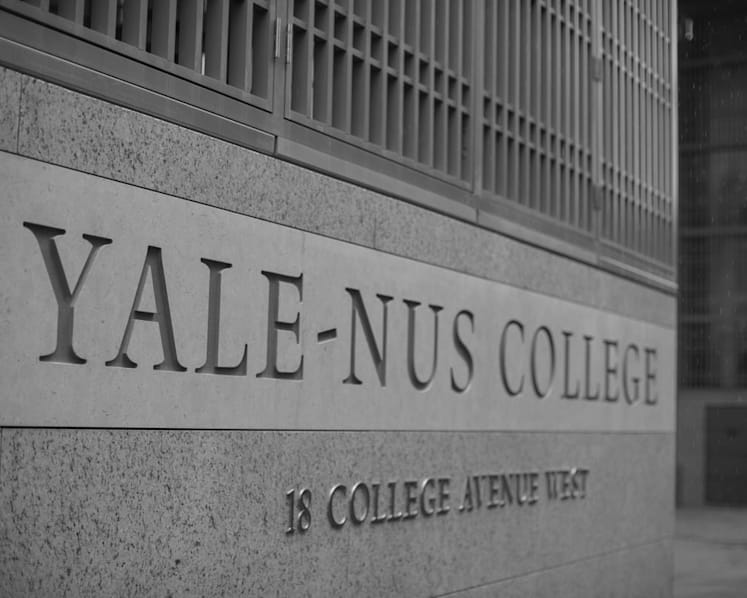
Yale-NUS College cancelled a programme called Dialogue and Dissent in Singapore. Sixteen students who were supposed to take part in it were informed by the school and relocated to other projects.




SINGAPORE — Despite cancelling a programme on dissent and protest, Yale-NUS College president Tan Tai Yong told TODAY on Tuesday (Sept 17) that these topics are "legitimate objects of study and investigation in university", as he reiterated the rationale behind the decision.
Meanwhile, most of the dozen Yale-NUS students who were interviewed said they agreed with or accepted the university's decision.
They stressed though, that the school should not shy away from conducting courses on such topics, as long as they do not put students at risk of breaking the law.
Nevertheless, there were a handful of students who disagreed with the decision and believed that the programme should have been allowed to continue.





Away from the school's handling of the matter, one undergraduate, third-year student Jiang Hao Lie, pointed to the public reaction after news emerged in recent days about the cancellation of the programme. He was "disappointed” with what he felt was a “knee-jerk” reaction by some sections of the public in condemning the “ideas and discourse that (are) superficially uncomfortable to our society but a necessary part of democracy and creating progress in our society”.
The out-of-classroom programme, titled Dialogue and Dissent in Singapore (formerly titled Dissent and Resistance in Singapore), was due to run from Sept 27 to Oct 2 and would have been led by playwright Alfian Sa’at.
The reasons for the cancellation were communicated to the students during a meeting held at Professor Tan’s apartment on Sunday, where 30 students had the opportunity to seek clarification from the school administration on the college’s decision.
TODAY understands that a second meeting is scheduled to take place later this week.
Students who attended Sunday’s meeting said that the decision to cancel the programme was made last Thursday and the 16 students who had been allocated to the programme were immediately informed by the school and relocated to other projects.
Dialogue and Dissent in Singapore was initially one of 14 programmes offered under the Week 7 Learning Across Boundaries (LAB) projects, which are faculty-led programmes that first-year students take part each year. The school website states that these projects explores the curriculum “in a broader context outside the traditional classroom”.
Activities included a visit to the Speaker’s Corner at Hong Lim Park, and dialogues with freelance journalist Kirsten Han, as well as a “sign-making workshop” with activist Cara Ow. Talks featuring activist Jolovan Wham, rapper Subhas Nair and independent filmmaker Jason Soo were also lined up.
Several film screenings were also planned, including a documentary about Hong Kong protester Joshua Wong and Mr Soo's 1987: Untracing The Conspiracy, which focuses on detainees arrested under Singapore’s Internal Security Act in 1987.
Mr Alfian — who had a visiting appointment to teach playwriting last semester — had put up a proposal for the programme, which TODAY understands was conditionally approved by the school’s curriculum committee in June.
WHAT ARE THE SCHOOL’S CONCERNS
In an email reply, Prof Tan told TODAY that the college later “evaluated the project content, design and detailed itinerary in its entirety” and found that the activities outlined in the curriculum were not in alignment with the concept and learning objectives that had been approved by the curriculum committee earlier.
Prof Tan added that although different versions of the itinerary had been proposed, the college “assessed that the proposed itinerary did not meet (the) Week 7 LAB projects’ criteria, and could subject students to the risk of breaking the law”.
Another concern was that the proposed curriculum did not “provide a range of perspectives required for students to properly examine this topic”, Prof Tan said, adding that “the project was meant to be an examination or study of protest that would expose students to the wide range of perspectives in Singapore, something essential for an academic consideration of the topic”.
Students at the meeting said that the school tried to work with Mr Alfian to address the concerns. One of them, who wanted to be known only as Mr Yong, said that due to work commitments, Mr Alfian was “unable to sit down and iron out the programme such that it addressed (the schools’) concerns”.
In a Facebook post on Sunday, Mr Alfian said that the programme “is not designed to train students ‘to stage protests in public’” but is “designed to guide students to think about dissent in Singapore”.
“One of the best ways to get these insights is to meet some so-called dissidents face to face. To give the students unfiltered access,” he added.
TODAY has reached out to Mr Alfian for comment.
WHY SOME STUDENTS AGREE WITH DECISION
Most of the students interviewed by TODAY agreed with Prof Tan’s stance that dissent and resistance were legitimate objects of study.
A first-year student, who did not want to be identified, said: “I still believe that (the programme) was a valuable one, and had there been enough time and room to refine the course, it should have been run.”
In signing up for it, he thought that it would have introduced him to the “different kinds of ways in which different Singaporeans participate in social and political engagement, information I feel all Singaporeans should have access to”.
Miss Rachel Juay, president of Yale-NUS Student Government — an organisation of student leaders which works closely with the school administration — said the decision “does not mean that the college is discouraging of the freedom to inquire and to examine Singapore’s history of dissent”.
The final-year philosophy, politics and economics major added: “I think that this shows the need for a well-structured course on the topic at Yale-NUS.”
"Another undergraduate, Miss Grace Kwak, a final-year life sciences major, said that there was “a possible blurring of lines” between studying and practicing dissent in an experiential, out-of-the-classroom learning environment.
She said she believes in the necessity and benefits of such learning, but also thinks that “those benefits can materialize only when conducted in the best or right ways.”"
Miss Kwak added that students — especially international students — could potentially get into trouble with the law.
“Being an international student myself, I think the prospects of possibly being deported because of involvement in political activity is worrisome.
“After a conversation with the school administration, I could tell that the school had the students' wellbeing and safety in mind in making this decision,” she said.
THOSE WHO DISAGREED SAY…
Some students though, were not convinced by the university’s reasons for cancelling the programme.
Miss Averyn Thng, 22, disagreed that the selection of speakers invited did not represent a wide range of perspectives in Singapore.
The third-year anthropology major said that students could learn more by “critically and academically engaging” with the speakers who have “differing perspectives”.
“For example, Jolovan has a background in working with migrant workers, Kirsten has a background in political journalism, Thum Ping Tjin has a background in history, Project X has a background in sex work advocacy, Seelan Palay has a background in artistic expression. We, as citizens, have a responsibility to engage with these various aspects of civil society,” Miss Thng said.
A first-year student who declined to be named told TODAY that he was disappointed with the decision because he had chosen to attend the college due to the “academic freedom” that it offered.
“With many students being truly invested in the idea of healthy democracy that favours objective political discourse, (the decision) really goes against the spirit of a university that proclaims to be open to teaching what students really want to learn and explore,” he said.




