After 12 years of pushing for 'car-lite' Singapore, desire for car ownership remains high. What gives?
From caregiving needs to everyday convenience, real-world constraints make it difficult for some people to move away from driving cars. Transport experts say that such needs are not easily addressed through public policy.
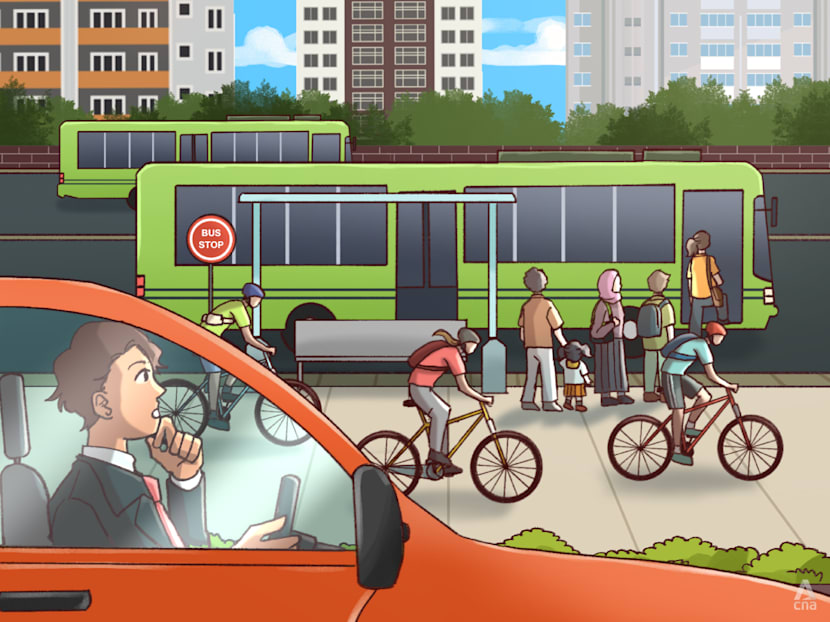
Singapore's approach to transport combines restrictions on car ownership with investments in alternative modes. (Illustration: CNA/Clara Ho)

This audio is generated by an AI tool.


Mr Michael Liew, 52, spends a significant amount of time on the road, as the demands of his day require him to shuttle between school runs, work appointments and family errands.
As a single father to a daughter sitting for the Primary School Leaving Examination this year, his mornings begin with driving her to school before he heads to work.
He runs his own advertising agency and on some days, he drives all over the island to meet clients.
Some weekdays, he takes a break from work in the early afternoon to pick up his daughter from school, have lunch with her and then fetch her to tuition classes, all within a tight window of time.
His parents, who are both in their 80s and living with him, also depend on him. He ferries them around on errands such as grocery shopping.
All of these demands mean that for Mr Liew, having a car is practically non-negotiable.
"If I were living alone, definitely, I could go car-lite or even go completely without a car – that wouldn't be an issue. But when I have dependents, it's very difficult," he said.
For others, the draw of driving is less about necessity and more about comfort.
Mr Jimmy Tang, 46, a technical specialist without similar caregiving responsibilities, said: "When I drive, I'm in my own environment, rain or shine. I can blast my own music, think out loud or even cry."
He renewed his Certificate of Entitlement (COE) in April this year. The COE, part of the Vehicle Quota System managed by the authorities, lets a person own a car in Singapore for a period of 10 years. It was introduced to limit the number of vehicles on the road to control congestion and pollution.
Recalling a period of time when he relied solely on public transport, Mr Tang described the experience as frustrating, pointing to crowded trains and service disruptions in the MRT network and the inconvenience of commuting in bad weather.
"I'd rather be in my own car than be squeezed like a pack of sardines," he said.
These varied experiences reflect why Singapore can only do so much to push commuters to go car-lite.
Efforts to curb car ownership date back decades. Since the 1970s, policies have been introduced to manage vehicle growth and road congestion, as incomes rose and demand for cars increased.
The push took on renewed urgency in late 2014, when then Prime Minister Lee Hsien Loong announced a vision of a car-lite Singapore alongside the Sustainable Singapore Blueprint. The 15-year development plan emphasised reducing reliance on private transport.





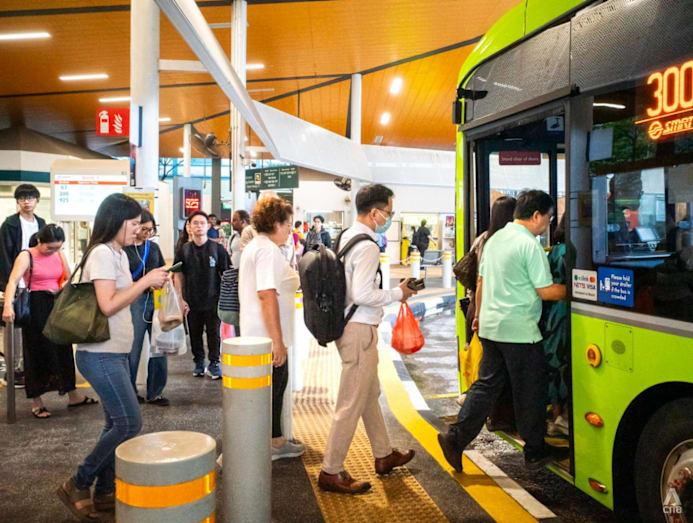
"Car-lite" means relying less on cars and more on public transport, walking and cycling for mobility, transport engineering consultant Gopinath Menon said.
It should not be confused with being car-free, he added, because the strategy does not seek to eliminate car use.
The strategy was underpinned by significant investments in public transport and alternative modes of travel, including plans to expand the rail network to about 360km by 2030, and boost bus capacity through the Bus Service Enhancement Programme, which added 1,000 buses and 80 services to ease crowding and reduce waiting times.
Efforts were also made to improve first- and last-mile connectivity, with more sheltered walkways under the Walk2Ride programme and expanded cycling infrastructure.
Despite such investments, public transport usage has seen modest gains, with the share of commuters using mass public transport during peak hours rising from about 63 per cent in 2012 to 66 per cent in 2024.
The demand for cars remained firm, even with the government making significant improvements to make public transport attractive.
COE premiums continued to rise, reflecting this demand, even with the authorities allowing more cars on the road beyond replacing those that were deregistered.
Eventually, given the constraints on land use, the Land Transport Authority (LTA) decided to cut the allowable growth rate for vehicles in phases – starting the process in 2009 when it was halved from 3 per cent to 1.5 per cent and ultimately bringing the growth rate down to zero in 2018.
This policy will remain in place until 2028. The cap means that the total number of vehicles on the road, hovering around 524,000, is not meant to increase.
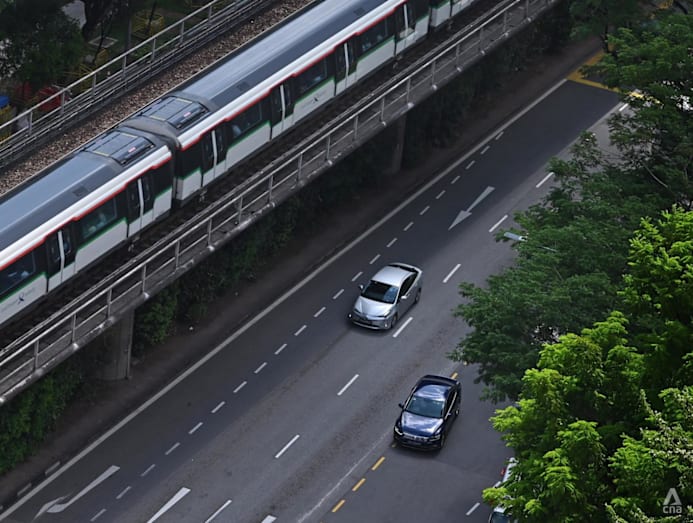
Dr Woo Jun Jie, senior lecturer from the Lee Kuan Yew School of Public Policy at the National University of Singapore (NUS), said that in practice, however, continued high demand for private vehicles means that these available COEs are quickly taken up, sometimes by new car buyers or those not de-registering an existing vehicle.
Figures from LTA showed that the number of private cars rose from 519,645 in 2015 to 524,312 in 2025.
Dr Raymond Ong, an associate professor from the College of Design and Engineering at NUS, said that despite the mixed results of the car-lite strategy so far, it would be too simplistic to say that it has hit its limit.
He noted that public transport ridership continues to grow alongside population and travel demand.
Car-lite efforts should continue, from improving reliability and accessibility to shaping commuter behaviour, he added.
With concerns over rising energy costs in the current geopolitical climate, public transport – being far more energy-efficient on a per capita basis than private cars – is more important now than ever, serving as a logical alternative and strengthening energy resilience, he said.
THE ROAD TO A CAR-LITE SOCIETY
Singapore's efforts to curb car ownership date back to its early years of development, when managing congestion was seen as critical to attracting investment and supporting economic growth.
By the early 1970s, peak-hour traffic in the central business district had slowed to a crawl of about 20kmh, prompting the authorities to act.
Measures were introduced to make driving more costly and less attractive, starting with the Area Licensing Scheme in 1975, which charged motorists entering the city during peak periods.
Over time, this approach evolved into a broader suite of policies to manage vehicle growth and congestion. These included the COE system in 1990 to control the vehicle population and the Electronic Road Pricing system in 1998.

As incomes rose and car ownership increased, these measures were progressively tightened.
In 2009, for instance, the allowable vehicle growth rate was halved to 1.5 per cent, as policymakers sought to rein in car numbers and encourage a shift towards public transport.
This came against the backdrop of a decline in public transport ridership in the early 2000s, which was attributed in part to rising car ownership.
But as car growth slowed and investments in public transport increased, ridership rebounded strongly, rising by about 60 per cent between 2005 and 2014 to 6.65 million trips a day.
By 2014, it had become clear that managing car growth alone was not enough. The authorities recognised the need for a new approach to urban mobility, culminating in the launch of the Singapore Sustainability Blueprint in November that year.
"We will aim for a 'car-lite Singapore' by promoting and developing other modes of transport, making them more convenient," then Prime Minister Lee Hsien Loong said at the launch.
"We also have to promote non-usage of cars and find ways to use them more efficiently, so that we can use the car without feeling like we have to own a car."
At the heart of the blueprint was a push to make public transport the preferred choice, through improvements to its convenience and connectivity, including expanded rail networks, more buses and better links to train stations.
WHAT THE CAR-LITE STRATEGY HAS ACHIEVED
Transport analysts noted that this investment in public transport has become more aggressive in recent years.
"What we are seeing is an acceleration of this push," Mr Menon said, pointing to improvements such as more bicycle parking, new car-lite developments in new towns such as Tengah, as well as moves to reclaim road space for other users, such as along Bras Basah Road and Connaught Drive.
Other experts noted how parking provisions are also being reduced to prioritise public transport and free up spaces for the community. LTA has said that these will be implemented in upcoming estates such as Bayshore and Ulu Pandan, which have been gazetted as car-lite areas.
Another example they cited was the Bus Connectivity Enhancement Programme, which has improved routes – including peak-hour, limited-stop feeder and express bus services to ease congestion on busier MRT lines.
New Build-to-Order public housing has been factored in as well, with LTA planning for at least one bus service to be operational in tandem with the first batch of homeowners collecting their keys.
LTA has also been continually improving the rail network, which it considers to be the "backbone of our transport system". Today, seven in 10 households are within a 10-minute walk of a train station.
More improvements are in the pipeline, with the opening of new stations on the Circle Line, Thomson-East Coast Line and Downtown Line planned this year. New rail lines such as the Jurong Region Line and Cross Island Line are set to provide more connections, while engineering studies are ongoing for the west coast extension of the Jurong Region Line, as well as the Seletar Line and Tengah Line.
Improvements to infrastructure, such as underpasses and covered walkways, have also made it more convenient and comfortable for commuters to switch modes, the experts noted.
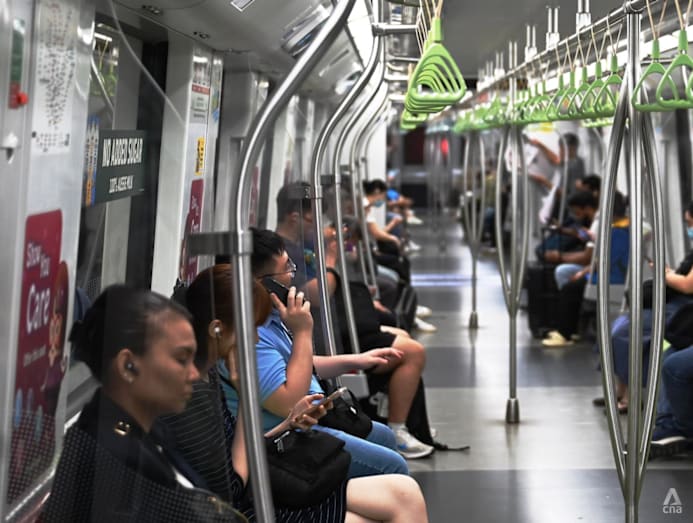
In response to queries from CNA TODAY, LTA said that the aim is not to eliminate car ownership, but to control vehicle population and manage congestion, while reducing reliance on individually owned cars and enhancing the appeal of walking, cycling and the use of public transport.
"We recognise that for some Singaporeans, a car offers a level of convenience and flexibility that public and shared transport does not yet fully replicate."
To this end, the refreshed Land Transport Masterplan will focus on narrowing the travel time gap between public and private transport.
LTA added that since public consultations were launched in November, it has received more than 3,500 responses and held six focus group sessions with more than 200 participants. Feedback broadly supported prioritising public transport over private transport, with key matters to be looked at that include wider pedestrian paths and greater road priority for public transport.
This dual approach of restricting car ownership while also improving public transport infrastructure is what sets Singapore apart, Dr Woo from NUS said, adding that many cities tend to emphasise one over the other.
Even though there have been some adjustments to car ownership policies in recent years, including efforts to promote electric vehicles (EVs) and changes to the Preferential Additional Registration Fee (PARF) scheme, the broader goals of reducing car use and encouraging public transport remain unchanged.
At the same time, the scope of Singapore's transport strategy has widened to include non-vehicular forms of travel such as walking and cycling.
"Beyond rail and buses, LTA is also progressively expanding the cycling path network across all Housing and Development Board towns to improve connectivity, so that more can meet their travel needs via shared and active mobility modes," the authority said.
Assoc Prof Theseira said that this has been one of the more significant shifts over the past decade.
"Such modes were once seen as 'backward' or associated with poorer countries, but they are now recognised as efficient and sustainable, though they require careful integration with traffic."
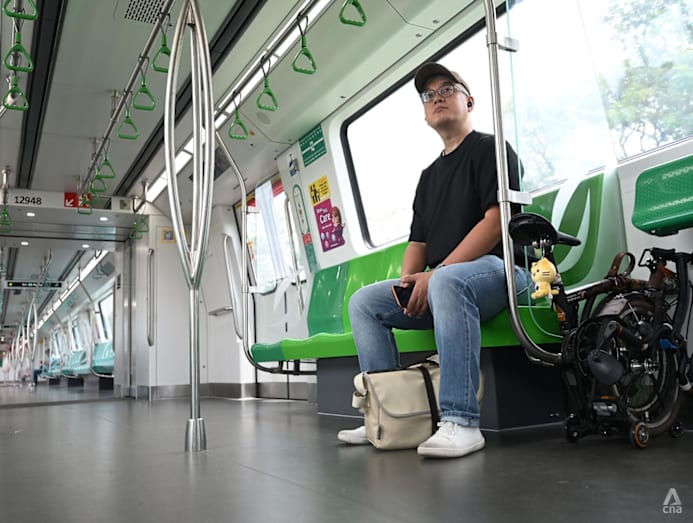
For Mr Zhu Bingcheng, 47, cycling has been his primary mode of commuting for the past 15 years, and the improvements to cycling infrastructure have made a tangible difference.
He relies on a foldable bicycle, often combining cycling with MRT rides – pedalling from home to the station, taking the train and completing the last-mile journey on two wheels.
"The biggest change for me has been the widening of footpaths to include cycling paths," the civil servant said, noting that shared paths with better visibility have made it easier to navigate Singapore's urban landscape.
Measures such as Silver Zones and Friendly Streets have also made cycling on roads feel safer.
However, when it comes to using cycling for everyday travel, gaps remain.
Many routes are still fragmented, forcing cyclists onto crowded shared paths or into traffic alongside heavier vehicles.
"For cycling to work well, you need to maintain momentum," Mr Zhu said, adding that frequent disruptions make longer journeys exhausting.
More connected routes, better shade and end-of-trip facilities such as shower facilities would make cycling a more practical option for everyday travel, he suggested.
"Right now, as a commuter, our transport system still feels very much oriented around cars."
Still, in some ways, the country has already achieved what many cities are still striving for, Assoc Prof Theseira said.
Private vehicle use is relatively low by global standards, and policies to limit car ownership here are among the strictest in the world.
At the same time, satisfaction with public transport in Singapore remains high.
Based on the Public Transport Council's latest survey, 93 per cent of commuters in 2023 said that they were satisfied, with an average score of 7.8 out of 10 – broadly unchanged from the year before.

Public transport's central role in daily life has also been evident in recent public discourse.
In April, Deputy Prime Minister Gan Kim Yong encouraged Singaporeans to take public transport to conserve energy amid rising global oil and gas prices.
In the days that followed, several political office-holders – including Workers' Party chief Pritam Singh; Associate Professor Muhammad Faishal Ibrahim, Senior Minister of State of Home Affairs; and retired defence minister Ng Eng Hen – were either spotted on public transport or shared social media posts of themselves commuting.
The posts drew widespread attention online, with some praising them for being relatable and "down to earth", while others questioned whether the displays were staged.
Mr Menon said that such reactions reflect a broader shift in how public transport is perceived in Singapore. Although bus use once carried a stigma among car owners in the 1960s to 1980s, improved service quality means that many commuters today do not think twice about using it.
"Many politicians must have been using public transport, but only recently have these facts been publicised," he added.
These responses suggest growing acceptance of public transport as part of everyday life.
However, Assoc Prof Theseira said, there are still some commuters who may feel constrained by policy and are not choosing public transport willingly.
He noted that in other cities, driving is often seen as inconvenient due to congestion and usage costs.
In Singapore, the deterrent is largely the high upfront cost of the COE. Even though it fluctuates according to market demand, it exists due to government policy.
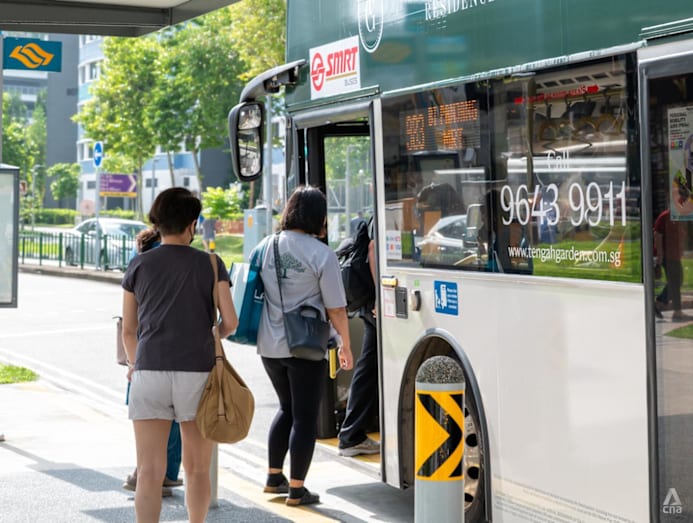
Nonetheless, Mr Menon said that the availability of alternative modes has helped ease dissatisfaction over the high cost of car ownership.
"Many people have accepted that it is very expensive to own and use a car in Singapore, but this resentment is somewhat mitigated because they are not handicapped in mobility," he added.
WHY CAR-LITE CANNOT MEAN CAR-FREE
So should more be done to curb car ownership even further to bring down the car population in Singapore?
After all, there are cities that have managed to achieve even higher public transport ridership and lower car ownership rates.
In Hong Kong, for instance, public transport accounts for about 70 per cent of trips, among the highest in the world, while car ownership remains relatively low – deterred by high costs such as expensive parking and annual licence fees.
Similarly, in Tokyo, strict regulations – including requirements to show proof of a parking space – limited parking availability and high expressway tolls make driving both inconvenient and costly. These help to keep car use in check.
Drive Sweden, a national initiative for sustainable transport systems, states that only about 12 per cent of journeys are made by private car in Tokyo.
Cycling accounts for around 17 per cent, while the city's rail network is the most heavily used in the world, with some 30 million daily commuters.
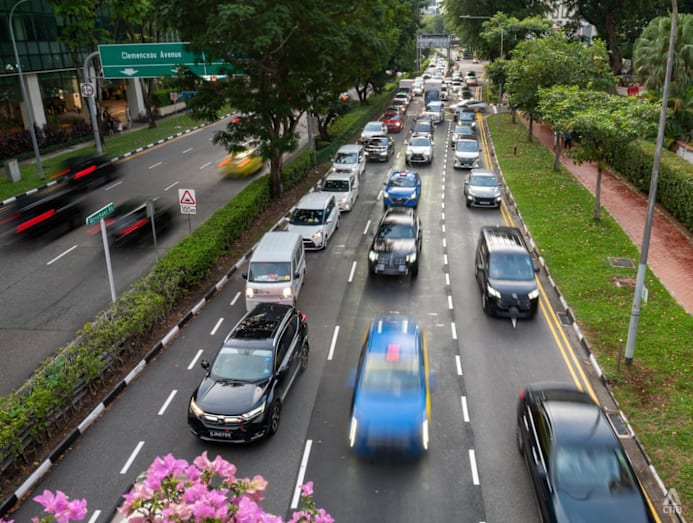
However, the transport analysts cautioned against drawing direct comparisons.
Mr Menon noted that Singapore already has a comprehensive set of measures in place to manage car ownership and usage.
"Singapore was among the first cities to rein in car use through fiscal disincentives," he said. "We already have most of these measures – there is no need for more."
He also said that tightening existing policies should only be considered if traffic conditions worsen, and any further tightening would need to be carefully calibrated, taking public sentiment into account.
"Any measure that increases the cost to consumers will invite adverse reaction."
Furthermore, a world-class public transport network does not remove the need for cars, and everyday realities mean that some demand will persist, the experts said.
They described this as "residual" demand – travel needs that are difficult to eliminate through policy, such as schooling choices or caregiving responsibilities.
For instance, while urban planning can reduce the need for some trips by ensuring amenities such as supermarkets are located near homes, other behaviours are harder to influence.
"You cannot 'design out' the desire for a parent to send a child to a particular school, even if it is further away," Assoc Prof Theseira said.
If I were living alone, definitely, I could go car-lite or even go completely without a car – that wouldn't be an issue. But when I have dependents, it's very difficult.
Dr Woo from NUS said that Singapore's tropical climate, along with the household needs of parents and caregivers, "will continue to sustain demand for cars".
This is perfectly illustrated by Mr Mohammad Faizal, 43, whose need for a car is tied to his role as a caregiver to his parents, who are aged 78 and 66.
His mother relies heavily on a wheelchair, while his father's mobility has also declined with age.
"They depend on me for things like grocery shopping … they need ease of transportation as much as possible," he said.
But rising costs have made it increasingly tough for him to keep driving. When his COE expires this September, he plans to give up his car and switch to a motorcycle instead.
Giving up his car will mean a loss of convenience and flexibility, particularly when it comes to caring for his parents. He recalled a time when he had to rush his father, who has a heart condition, to the hospital.
"If I had to book a ride, it would have been too late."
Even in day-to-day life, the adjustment is significant, because travelling without a car means waking up earlier and spending less time with family.
Yet despite these trade-offs, Mr Faizal said that he would definitely look into owning a car again when his circumstances allow.
"It's about comfort, practicality, and sometimes just having your own space."


To be sure, there are further improvements that could be made to Singapore's public transport network, which could go some way to meet the needs of people such as Mr Faizal.
At this stage, Dr Ong from NUS said that further gains may lie in improving the quality of the commuting experience, beginning with understanding why some commuters still feel dissatisfied or constrained by having to take public transport, and addressing the gaps that remain.
He pointed to reliability, comfort and accessibility as key areas.
This includes improvements to ancillary facilities such as Wi-Fi access, and more lifts in stations, which can make the system easier to use for families, seniors and people with disabilities.
"Often, it is these smaller improvements that can make public transport users much happier," he added.
Assoc Prof Theseira said that connectivity could be improved.
For example, journeys outside the city centre and those that require multiple transfers are still comparatively inconvenient.
Such trips tend to be less well-served by the public transport network, which has historically been designed to move people between residential areas and central business districts, he noted.
Quality of experience, especially during peak hours, is another area for improvement.
During these times, crowded trains and buses can make travel time unpredictable, with some passengers unable to board at the first attempt, he said.
These challenges can be even more pronounced for families and older passengers, whose main concerns are accessibility and comfort.
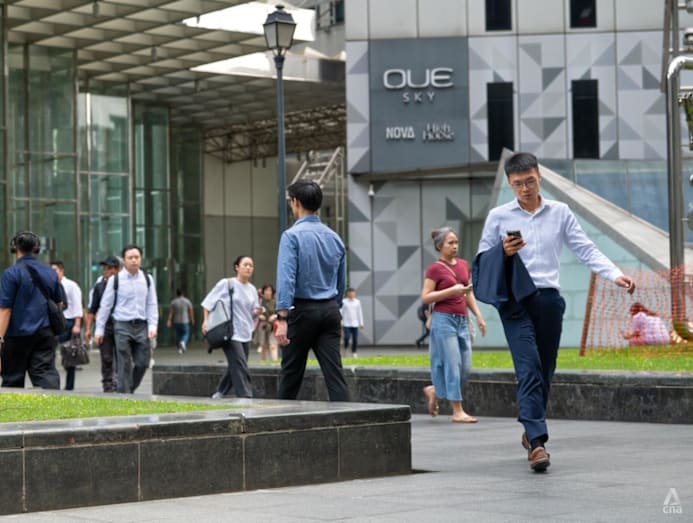
However, there are limits to how far public transport can be expanded without trade-offs.
Some of these challenges, such as crowding, are partly a matter of capacity.
On MRT lines such as the North East Line, trains are already running at or near engineering limits during peak hours, Assoc Prof Theseira said.
Expanding capacity also comes at a cost. More infrastructure or services are often only fully used during peak periods, raising questions about cost-effectiveness.
Given such limits, the government has had to strike a balancing act between encouraging public transport use and allowing some room for car ownership, the experts said.
This is reflected in recent one-off increases in COE quotas. For instance, overall COE supply for February to April 2025 rose by about 8 per cent from the previous quarter.
The bigger challenge lies in how access to cars is distributed.
Many Singaporeans may accept that car ownership needs to be limited, but the reliance on price means that it is often seen as being out of reach for some people – raising questions about fairness and whether there are better ways to allocate access.
The issue was brought up in a public debate, with Workers' Party MP Jamus Lim questioning whether a purely market-based system adequately accounts for those with genuine needs but limited purchasing power.
It is certainly a matter close to the heart of drivers such as Mr Liew, the single father, for whom owning a car is more of a need than a choice.
"I understand it's ideal (to be car-free), but if I don't have a car, it would be very difficult for me. I would just try to find some alternative to be able to drive again," he said.