A hand up, not just a handout: How a social support scheme has made a difference in Singapore and what remains to be done
Lower-income families say they have seen a tangible difference in their lives through ComLink+. But even as the scheme helps them make progress, structural challenges continue to complicate their path out of hardship.
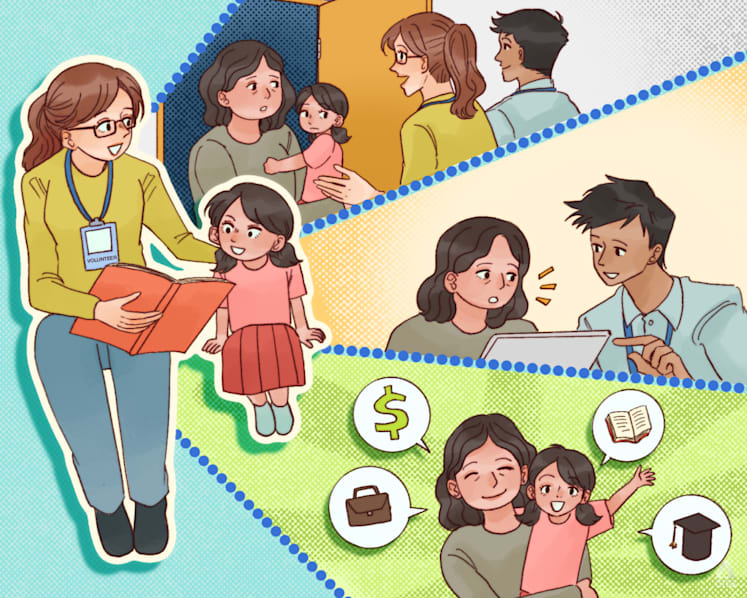
Experts said ComLink+'s blend of financial top-ups and sustained engagement from family coaches underscores the role of relational support in helping families bridge resource gaps and achieve upward mobility. (Illustration: CNA/Clara Ho)

This audio is generated by an AI tool.


Mr Kuah Chee Hian, 63, used to be the sole breadwinner for his family of five, working 12-hour shifts to support his wife and three daughters, now aged six to nine years.
Amid those gruelling days, support came in 2022 when an officer from the Ministry of Social and Family Development (MSF) knocked on their door as part of an outreach effort, spoke to them and helped them sign up for ComLink, as it was known then.
Since the programme's transition to ComLink+ at the end of 2023, his family has been matched with a ComLink+ family coach, who worked with the household to place them on a combination of "progress packages" from 2024, entitling them to various financial top-ups.
These included quarterly contributions to their younger two daughters' Child Development Account (CDA) if they achieved at least 75 per cent preschool attendance in a given quarter.
Their coach also introduced them to an external savings-matching programme and helped place the family on ComCare support earlier this year, after Mr Kuah was medically certified unfit for work due to chronic knee pain from years spent on his feet in supermarket retail and security enforcement roles.
ComCare, also under MSF, supports lower-income households with financial assistance to meet basic needs such as food, transport and household bills.
All of this aid has gone a long way in supporting the family, whose main monthly expenses are utilities for their two-room rental flat and for their children, said Mr Kuah.
"If we're able, once we're stable already and do not require financial (support), we will give up our ComCare (assistance)," he said, adding that the family does not intend to reapply once their situation improves, as they work towards supporting themselves and buying a home.





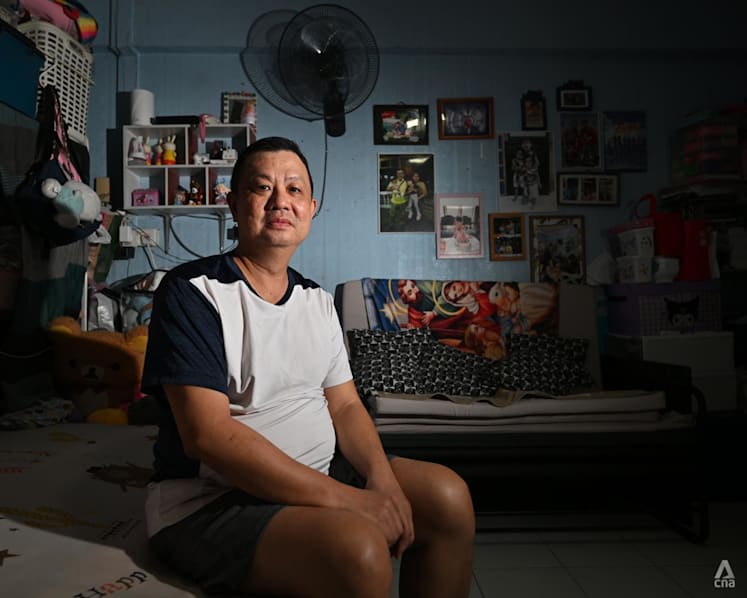
CNA TODAY spoke to six families receiving support from ComLink+, who said the features of the scheme have made all the difference in their journey to uplift themselves.
Announced in October 2023, ComLink+ was built on the ComLink initiative and subsequently extended to more families, including those not living in public rental housing.
The programme introduced two key features: "Progress packages", funded by the government and community partners, and dedicated family coaches.
Four progress packages, rolled out from the second half of 2024, are being piloted over three years. Eligible families receive financial top-ups when they work with their family coaches and take steps towards long-term goals in four key areas: preschool education, employment, debt clearance and saving for home ownership.
While all eligible lower-income households can receive financial support from ComCare, these ComLink+ progress packages provide a further boost to those families making headway in these four key areas, an MSF spokesperson said.
Payouts from the ComLink+ progress packages are also not taken into account when assessing the amount of ComCare assistance a family receives.
Meanwhile, the dedicated family coaches work with the families to develop tailored action plans and serve as a single point of contact to help families better navigate the social support system.
Today, ComLink+ supports around 11,000 families, with the majority living in public rental housing.
Enhancements to the ComLink+ scheme were announced by Prime Minister Lawrence Wong in his Budget speech on Feb 12. Mr Wong, who is also Finance Minister, said that families who commit to working with their family coaches and take steps towards their goals will receive a partnership payout of S$500 (US$396) per quarter from the third quarter of 2026.
The scheme was also expanded to include additional payouts for eligible lower-wage young adults who continue their education.
The ComLink+ skills upgrading support pilot, launched in January, will provide eligible lower-wage adults aged 18 to 39 on the scheme who return to school with S$500 per quarter to help offset the opportunity cost of upskilling. The ministry will additionally provide basic living expenses at ComCare short-to-medium term assistance rates.

For more than a decade now, Madam Noor Ani Mohd Jadi has been the main caregiver to her four children as her husband works in Johor Bahru, currently as a general waste subcontractor.
The family used to live together in Malaysia, but Mdm Noor Ani moved back to Singapore with her children, now aged 12 to 18, when her eldest daughter started primary school. Her husband still lives in Johor Bahru, returning to Singapore only once a week.
Mdm Noor Ani, 50, previously ran an online apparel business, which gave her the flexibility to manage household and caregiving responsibilities while earning an income. However, the business slowed significantly during the COVID-19 pandemic.
To tide the family over, she began receiving financial assistance from ComCare and other aid organisations in recent years. She was put onto ComLink in 2022 and later transitioned to ComLink+ after its launch.
Since then, she has worked closely with her family coach, Ms Nur Halizah Abdul Hamid, to move from self-employment to part-time work as a guest experience guide at a virtual reality store, which offers immersive gaming experiences, while still running her online apparel business on the side.
The part-time work has given her greater financial stability in meeting the family's basic needs, while still allowing her to be present for her children, she said.
Her situation has improved such that Mdm Noor Ani said she has no intention of reapplying for financial assistance for now, given the more stable flow of earnings into the household.
Comparing ComLink+ with the financial assistance she previously received, Mdm Noor Ani said a key advantage is the scheme's holistic approach, as well as the human touch provided by her family coach, Ms Halizah.
Beyond practical support, such as introducing Mdm Noor Ani to her current job, Ms Halizah also provided crucial emotional support, checking in on her as she adjusted and transitioned back into formal employment, she said.
Ms Halizah also linked her to a volunteer befriender, whom Mdm Noor Ani described as a "big brother" to her children. He has even taken them on outings, which made the children very happy, she added.
"With financial assistance, there is no human touch. Every month, they basically just bank whatever amount that they have mentioned. They will settle the outstanding (utilities bills) directly with SP and credit it directly to the bill, and then the rest is for my daily expenses."
Under ComLink+, however, she receives much more, she said.
"The family coach and befriender will ask how we're doing, how the children are doing … Overall, it's more in-depth compared to the previous (assistance) I received,” she said.
Mdm Noor Ani recalled how she once felt alone, with no one to turn to, while juggling personal health issues and financial difficulties on top of caring for her children. In Ms Halizah, she found the listening ear she needed.
"Halizah is more than a family coach. Along the way, she has become a friend. I know she always has my back, and I can just talk to her anytime … She really went beyond her duties."
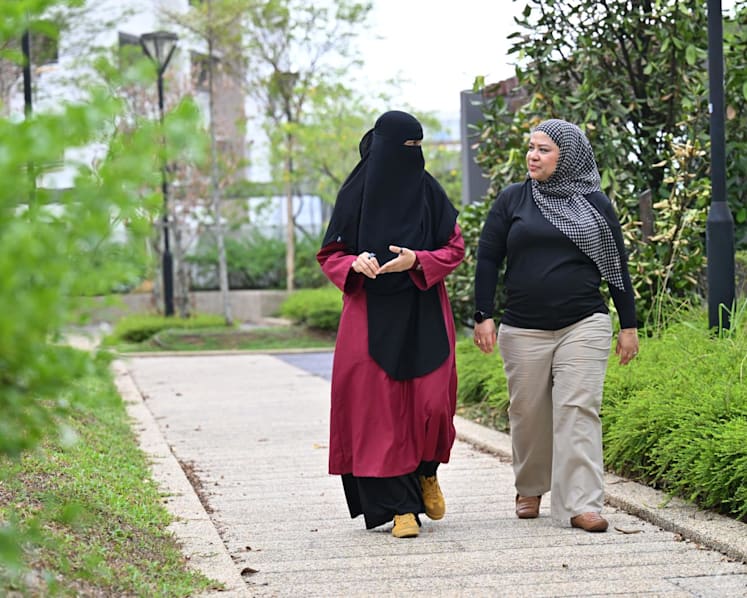
Dr Nathan Peng, an assistant professor of political science at Singapore Management University (SMU), said this combination of financial support with sustained engagement from family coaches is key to helping families stay the course to better outcomes.
They often need encouragement, accountability and just the knowledge that they have someone that they can trust and rely on, he added.
"Family coaches, as the name suggests, play an important role in not just goal-setting, but motivating families to work to meet those objectives through personal relationships."
Despite the transformative nature of the ComLink+ scheme, however, challenges remain.
MSF's Supporting Lower-Income Households Trends Report 2025, published in December last year, found that nearly four in 10 lower-income families on ComLink+ did not have any family members earning a regular wage at the end of 2024.
In that year, 4,025 such families had no member in stable employment with regular income, up from 3,563 in 2023.
The figures underscore the scale of the challenge, indicating that even with targeted interventions, many families continue to face persistent employment instability.
Dr Ng Kok Hoe, a senior research fellow and head of the Case Insights Unit at the Lee Kuan Yew School of Public Policy (LKYSPP), said: "For conditional cash transfer schemes like ComLink+ (progress packages), results depend on a complex balance of factors: What behaviours they target, the generosity of incentives, how these are given and other psychosocial interventions.
"If we design them well, they can give families resources to move forward. If we don’t, we may end up simply rewarding families that are already positioned to do well: instead of intervention, it is just selection."
MAKING A DIFFERENCE ON THE GROUND
Several families who qualify for ComLink+ progress packages told CNA TODAY that the financial top-ups help to offset monthly expenses, cover their children's needs and, where applicable, pay down debt.
For Mr Mohammed Fikree Hakim Mohammed Salleh, who is awaiting his first disbursement under the progress package for debt clearance, the one-to-one matching of debt repayment amounts is set to offer him significant relief.
The 26-year-old barista said he had previously incurred credit card debt in 2023 and was unable to repay it after losing his job at the time. As interest charges accumulated, it became increasingly difficult to clear the amount. He declined to disclose how much he eventually owed.
But Mr Fikree, who was put onto ComLink in June 2023 and later transitioned to the ComLink+ scheme, said having a family coach helped clear his mind when he was at his wits' end over his debt woes.
The coach, Ms Ng Shan Yi, referred his family to Credit Counselling Singapore for mandatory financial coaching. The family was assessed in February this year to be eligible for the ComLink+ progress package for debt clearance.
Families who qualify for the package receive a dollar-for-dollar match on debt repaid to licensed creditors. For every S$1 repaid, donors contribute S$1 directly to the creditors. Repayments are matched up to a cap of S$5,000 in total debt repaid, comprising donor-matched contributions of up to S$2,500.
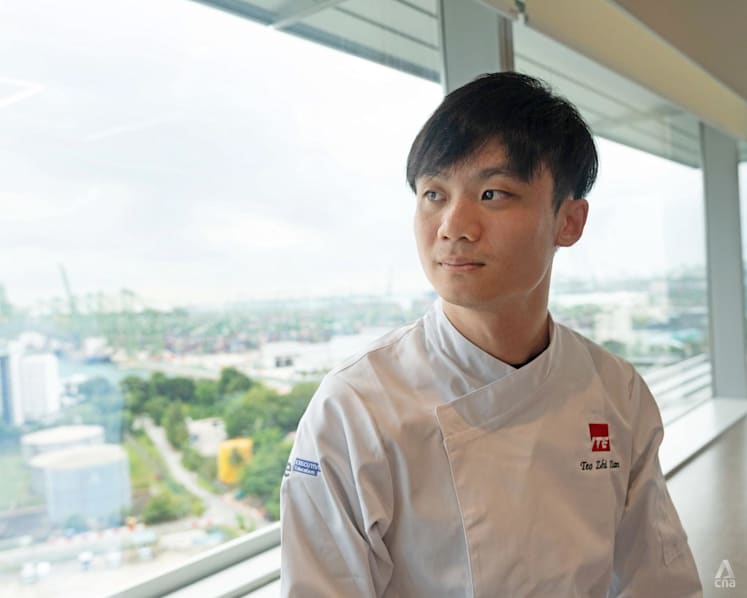
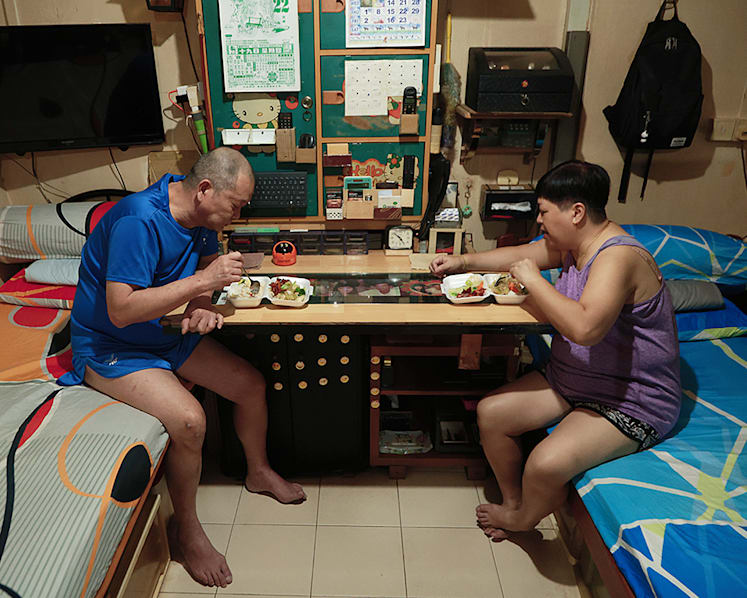
The family has also been placed on progress packages for employment and preschool attendance for Mr Fikree's six-year-old son.
Mr Fikree estimated that about 90 per cent of his monthly salary goes towards household expenses and debt repayment, leaving the family with little left over each month until the next payday.
He said the financial top-ups from the various packages have been a significant help, allowing him to set aside some funds for emergencies. The family is also hopeful of paying off the debt sooner.
Responding to queries from CNA TODAY, an MSF spokesperson said that under ComLink+, family coaches and family service centre (FSC) case workers work closely with each household to co-develop customised action plans tailored to their needs, strengths and goals.
They also connect families with community resources, including employers offering flexible work arrangements, and help them build the support systems needed to pursue upward mobility.
Family coaches told CNA TODAY that this can take the form of regular check-ins with families, through home visits or phone calls. They also support families in a range of needs, from connecting them with suitable jobs that match their qualifications and availability, to pointing them to relevant public resources, or even helping to source items such as a sofa for their home.
Family coach Janice Ang said their work differs from that of social workers, who typically handle cases involving some degree of risk, safety concerns or deeper psychosocial issues, and provide professional intervention.
Family coaches, on the other hand, play an "in-between role", bridging families with the various forms of support available. They work to understand families' needs and break down goals into small, actionable steps, to help them move towards their aspirations and achieve long-term stability.
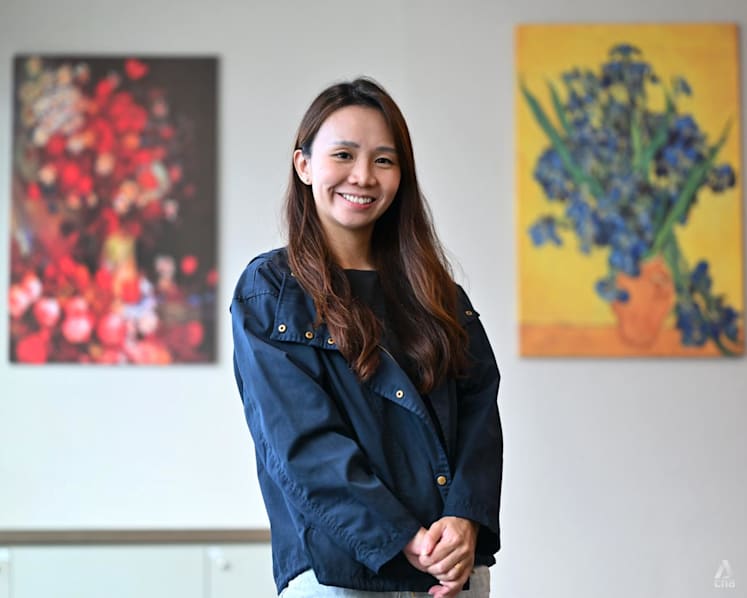
Mr Fikree's coach, Ms Ng, a former ComLink engagement officer, said that under ComLink, her role was more focused on assessing families' needs and befriending them. There was less emphasis on action planning then, and no progress packages to support families, she added.
With ComLink+, family coaches now link households with relevant resources to encourage self-reliance. While coaches serve as a single point of contact to direct families to specific support based on their needs, the goal is for families to eventually access these services and resources on their own, said Ms Ng.
STRUCTURAL BARRIERS TO SOCIAL MOBILITY
Even with enhanced support, many families continue to face deeply entrenched and interconnected barriers, as factors affecting social mobility are often multifaceted.
The MSF spokesperson told CNA TODAY that families on ComLink+ often face significant demands on their time and attention, and experience day-to-day challenges that make it harder for them to focus on longer-term goals.
These competing priorities can also limit their access to better employment opportunities, which are a key first step towards upward mobility, the spokesperson said.
For example, they might find it tough to find jobs with sufficient flexibility to balance their health needs and family responsibilities such as caregiving. Some adults also have lower qualifications or require skills upgrading to access better employment opportunities, the spokesperson added.
Crucially, because every family's circumstances are different and dynamic, it is important to listen carefully to each family's challenges, identify their root causes and address these issues one at a time, said Ms Halizah, the family coach.
While helping families meet the criteria for top-ups under the progress packages is important, there are often also underlying issues or pressing needs that coaches must work with them to address, she added.
"I think beyond the role of a family coach, I hope to create a safe space for the families I work with to pause and slow down," she said.
"More often than not these families tend to rush through things because all they ever do is firefighting. I think our way of listening and responding to them really does matter, and when kindness meets care, I believe incremental change is possible."
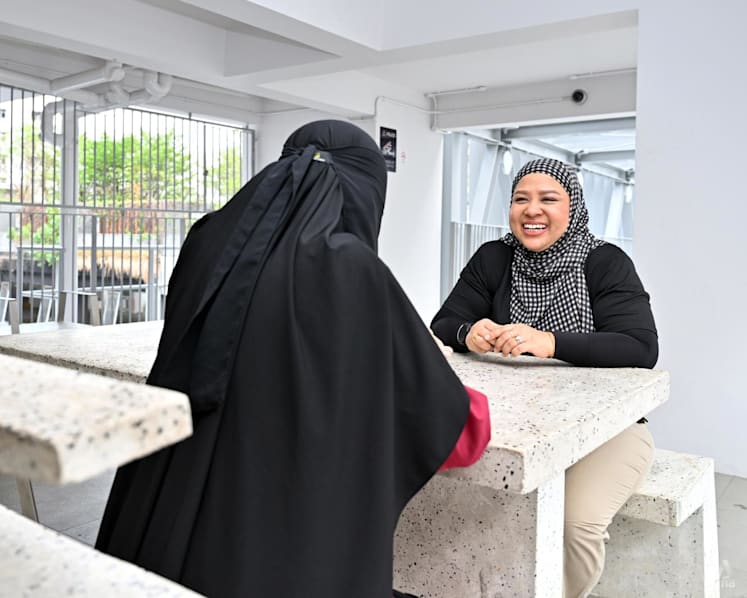
The skills upgrading support pilot launched by the ministry in January aims to address such issues by helping families meet basic living expenses while they complete their training, thereby offsetting some of the opportunity costs of upskilling.
According to SMU's Dr Peng, three structural barriers continue to hinder social mobility among lower-income families.
Economic barriers arise when higher-income parents can afford more training and enrichment to support their children's education, creating unequal starting points.
Lower-income families also face social barriers, Dr Peng said, as they are less likely to have networks that provide information about, or access to, higher-paying careers.
Then, there are psychological barriers: Lower-income parents tend to have less education and may lack first-hand experience in navigating the education system or the economy. As a result, they may be less able to guide their children towards more economically rewarding careers.
Dr Vincent Chua, associate professor of sociology at the National University of Singapore (NUS), also noted that different forms of capital – financial, social and cultural – can compound over time and across generations, making disadvantages persistent and inequality difficult to break.
That is why it is all the more important that families receive coaching on top of financial aid, experts said.
Associate Professor Walter Theseira from the Singapore University of Social Sciences (SUSS) noted that middle-class families can tap extensive social and institutional resources through their networks, which help them navigate complex public policies and make decisions on education, careers and housing. By contrast, families in the lowest income groups have "practically nothing" in these areas.
The ComLink+ scheme is thus based on the idea that support must go beyond financial aid to address gaps in social networks and institutional knowledge, he said, adding that family coaches, along with volunteer befrienders, help to build these relationships.
Dr Chua from NUS agreed, saying: "Money matters, but relational support matters too. You need people who can walk with families over time, provide consistency, encourage follow-through, and be there as a kind of checkpoint and support system.
"If we are serious about breaking cycles of disadvantage, we need both financial assistance and social assistance."
Experts added that tying progress package payouts to specific actions can reinforce a sense of ownership and progress, rather than dependency.
"It is dignifying, empowering. It's also about ownership. It says to families: You are not helpless, not just dependent, waiting for someone to rescue you," said Dr Chua. "You have a role in shaping your own future. Benchmarks affirm self-direction, responsibility, strength and the ability to take ownership of the journey."
Nevertheless, policy design matters, he added. If benchmarks become too rigid, there is a risk they turn performative rather than transformative. They need to remain flexible – encouraging progress without becoming punitive – while allowing for different starting points and pathways.

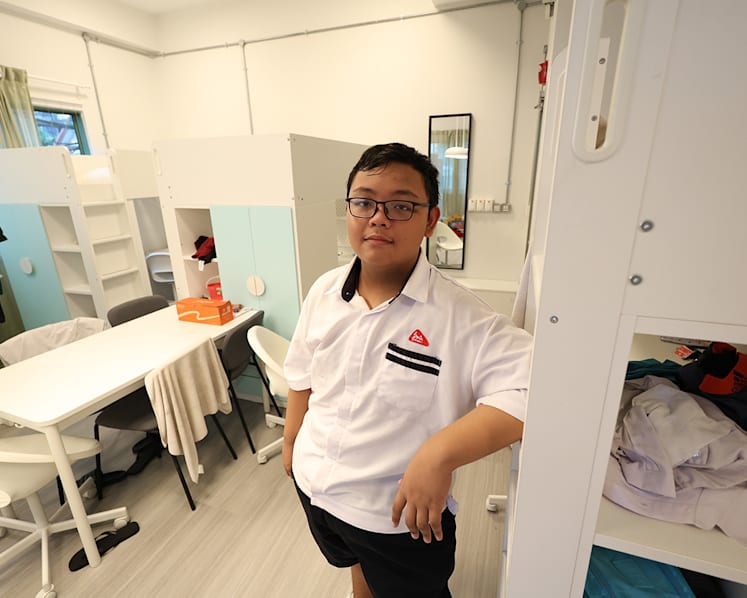
Encouraging families to work towards certain milestones can also have longer-term benefits for social mobility.
SMU's Dr Peng noted that measures such as ensuring preschool enrolment and attendance, securing stable CPF-paying employment and reducing debt can improve family stability.
This gives parents greater peace of mind and supporting a child’s behaviour, health and brain development, he added.
Such stability also allows both parents and children to focus on longer-term goals, such as education, even where there are no immediate gains.
Attending preschool provides children with more opportunities to socialise and prepares them academically for primary school. This helps level the playing field, as children from lower-income families tend otherwise to be less prepared in terms of language and mathematical ability, said Dr Peng.
"Getting families out of 'survival' mode is therefore crucial for helping them participate more equally in society, the education system, and the economy in the long run."
NEW CHALLENGES AMID PROGRESS
Families told CNA TODAY that even as they cherish the support they receive from ComLink+, they sometimes face challenges in meeting the requirements for the progress packages, such as caregiving constraints and unforeseen circumstances, such as children falling ill.
These can affect their ability to send their children to preschool consistently and meet the 75 per cent attendance threshold required to qualify for the S$200 quarterly top-up to their CDA.
For some, a lack of caregiving support means they have to take on part-time work instead of full-time roles. This, in turn, can affect their ability to secure and sustain a CPF-paying job with a monthly income of at least S$1,600, a criterion for the ComLink+ employment progress package.
Revisions to the progress package milestones and payouts were announced at this year's Budget and in the subsequent debate on MSF’s spending plans, which will go some way to address such problems.
For preschool attendance, ComLink+ families previously received a S$200 quarterly top-up to their child's CDA only if attendance reached at least 75 per cent.
Under the revised scheme, each child will receive S$150 per quarter for attendance of 50 to 74 per cent – comprising S$60 in cash and S$90 credited to the CDA. Those with at least 75 per cent attendance will receive S$250 per quarter, with S$100 in cash and the remainder credited to the CDA.
The employment package will also be adjusted. Currently, each working adult receives between S$450 and S$550 per quarter – in cash and contributions to the CPF – for maintaining employment with a gross monthly salary of at least S$1,600, for up to two adults per household.
Under the revised package, families will be assessed based on total household income rather than individual earnings. An intermediate tier will also be introduced to support households that may not yet meet higher income thresholds.
Households earning between S$1,000 and S$1,999 in gross monthly income will receive S$500 per quarter, comprising S$200 in cash and S$300 in CPF contributions. Those earning S$2,000 or more will receive S$1,250 per quarter, comprising S$500 in cash and S$750 in CPF contributions.
While those interviewed acknowledged the progress they had made under ComLink+, they admitted that they had outstanding concerns.
Some families said that while support for preschool enrolment and attendance has been helpful, they remain worried about the costs of the later stages of their children's education.
Madam Nurzarina Abdul Hameed, 37, who was put onto ComLink in August 2023 and later transitioned to the ComLink+ scheme, said her four-year-old daughter has qualified for the progress package for preschool enrolment and attendance, just like her seven-year-old twin sons did.
However, the mother of four children aged four to 11 years, expressed concern about school-related expenses in the years ahead; her twins enter Primary 1 this year, and her youngest daughter will soon follow suit.
The current CDA top-ups cannot be used to pay for student care centre fees, which will be an issue. She needs that caregiving support, as she recently returned to the workforce and found a job in data entry, while her husband holds two jobs in warehouse logistics and as a hawker.
While she had been able to care for her children on her own previously, with preschool hours covering most of the day, this will change when they enter primary school, with the school day typically ending around 2pm.
Looking ahead, the family may need to adjust their work schedules, potentially at the cost of giving up some income, or allocate more of their monthly earnings towards childcare services, she lamented.
Additionally, to qualify for the Student Care Fee Assistance scheme, one criterion is that total monthly gross household income must not exceed S$4,500 for households with four members or fewer, or that monthly per capita income must not exceed S$1,125 for households with five members or more.
With Mdm Nurzarina taking up employment, she said the family may cross these income thresholds and no longer qualify for the subsidy, even as their expenses rise, leaving them feeling caught in between.
"Once they go to primary school, it's totally a different game," she said, though she is grateful for the support her family has received through ComLink+.
"Towards the end of the month, I have some difficulty managing the kids' needs and everything. So when I receive such (top-ups), it really helps me."
She added that the family's focus ahead is on saving up for their own home, future renovations, as well as the children's education.
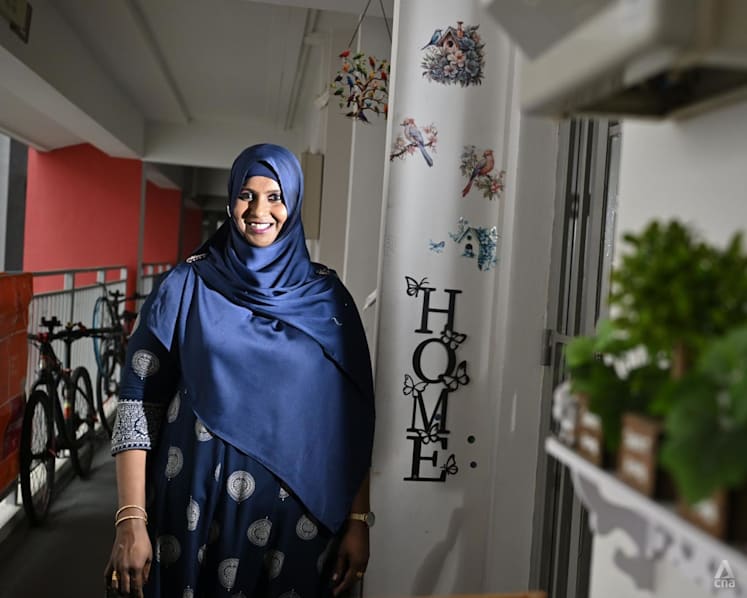
TACKLING DEEPER STRUCTURAL ISSUES
Mdm Nurzarina's example reflects how tackling poverty and promoting upward mobility requires dealing with broader structural issues and upstream constraints, including access to affordable childcare, stable jobs with flexible arrangements and pathways to better wages, experts noted.
Dr Ng from LKYSPP said: "On their own, cash incentives will not fully address the circumstances leading to unstable work, irregular school attendance and the lack of resources for home ownership.
"We must also tackle the challenges that poorer households face in managing wage work and care responsibilities, through accessible and affordable childcare, and opportunities for flexible work with decent pay."
He added that the current public rental housing system can itself be a barrier to stability. Space constraints may affect children's learning and development, while short tenures can create anxiety.
"Housing quality and security need to be improved, even as we provide support for people to exit to home ownership, so that tenants who are not ready to buy housing yet can also live in peace, security and dignity."
Experts also cautioned that there is no blanket solution that works for everyone.
While schemes such as ComLink+ are a step forward, poverty and social inequality are complex and will not be resolved through any single intervention, they noted.
NUS' Dr Chua said: "Poverty is multifaceted. (It's) not just about money, (but) can also involve mental health challenges, family stress, social disconnection and other overlapping difficulties.
"Very often, lower-income families also face social isolation, prejudice and stigma. They may be looked down upon, excluded, or made to feel lesser. So what they face is not only resource inequality, but also relational and recognition inequality. So the response has to be comprehensive."
SMU's Dr Peng said that those seeking to help these families would need an "intimate" understanding of each household's situation in order to identify what they need to overcome their specific challenges. Those providing support must also have the flexibility to allocate resources as needed.
For families who are unable to make progress, it becomes even more important to understand the reasons without judgment or assumptions, as their issues tend to be more complex and entrenched, Dr Peng added.
Specific to ComLink+, Assoc Prof Theseira from SUSS said a key takeaway is the need to learn from the ground experience of family coaches on what else may need to change in the system to help families progress faster.
For instance, if greater proximity to preschools or entry-level jobs with more flexible schedules is needed to get more children into school or more adults into employment, these are areas the market may need to respond to.
Otherwise, progress may remain limited, he added.
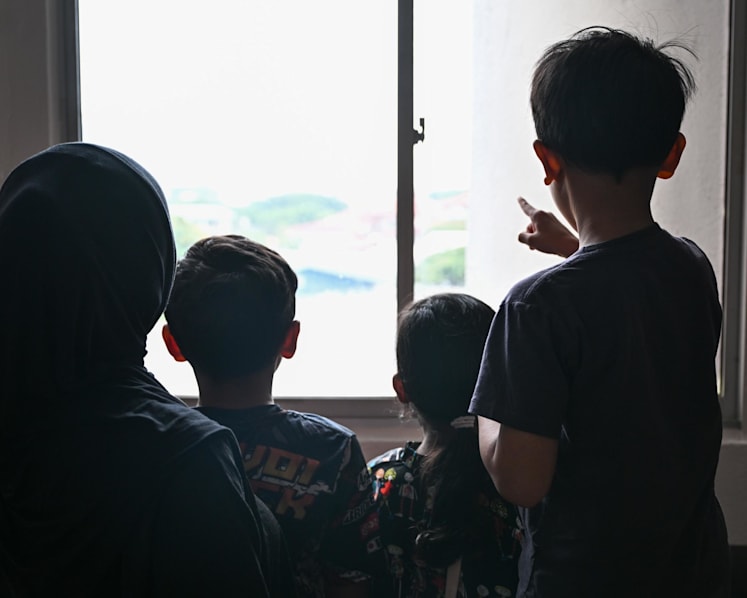

MSF said it is working with local academics to evaluate the impact of the ComLink+ progress packages on families' short- and long-term outcomes.
The evaluation is expected to be completed by 2028, about three years after the nationwide rollout of the final package – a timeline a ministry spokesperson said is sufficient to allow for a meaningful assessment of outcomes and families' trajectories. The findings will inform whether and how the scheme should be expanded to support more families.
"In the meantime, we will continue to make adjustments to the programme where necessary to ensure that families continue to receive support they need," said the spokesperson.
For now, some families told CNA TODAY that they are grateful for the assistance they have received so far, even as the road ahead remains uncertain.
"If there was no family coach … we would be stuck," said Mr Fikree, the barista. "We wouldn't know our next steps or what our plan was. So having a family coach has actually helped us become a better family.''
Looking ahead, Mdm Noor Ani said she hopes to move out of the rental flat her family currently lives in and eventually buy their own home.
"Buying a house in Singapore is very expensive. If my CPF is not (growing), then there is no way I can achieve that," she said.
She hopes to transition from part-time work to a full-time, CPF-paying role next year, after her youngest son completes his Primary School Leaving Examination later this year.
On the ComLink+ scheme, Mdm Noor Ani said: "If you just receive help financially, it's more 'dry'. But if you receive help that also comes with emotional support, it builds up your inner (self) … you have more confidence; you feel you can do more things.
"With a holistic approach, you know you're not walking alone … I think we as humans also need other humans. We cannot live on our own."