







Trump’s mixed signals on Iran deal underscore unresolved issues over Hormuz, nuclear programme: Analysts
Analysts say Washington and Tehran may be edging closer to an agreement, but disputes over control of the Strait of Hormuz, uranium stockpiles and Lebanon could still derail negotiations.

This audio is generated by an AI tool.


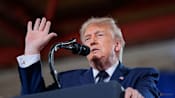
United States President Donald Trump’s shifting signals on negotiations with Iran may reflect political pressure and unresolved disagreements, even as talks continue, analysts say.
After announcing on Saturday (May 23) that Washington and Tehran had “largely negotiated” a memorandum of understanding on a peace deal, Trump said a day later that he had instructed US negotiators not to “rush into any deal” with Iran.
The proposed agreement reportedly includes reopening the Strait of Hormuz – a key global shipping route for oil and liquefied natural gas – while also addressing Iran’s nuclear programme and the release of frozen Iranian assets.
Despite Trump’s apparent backtrack, analysts told CNA that both sides appear closer to a deal than in previous weeks, though major obstacles remain.
TRUMP UNDER PRESSURE
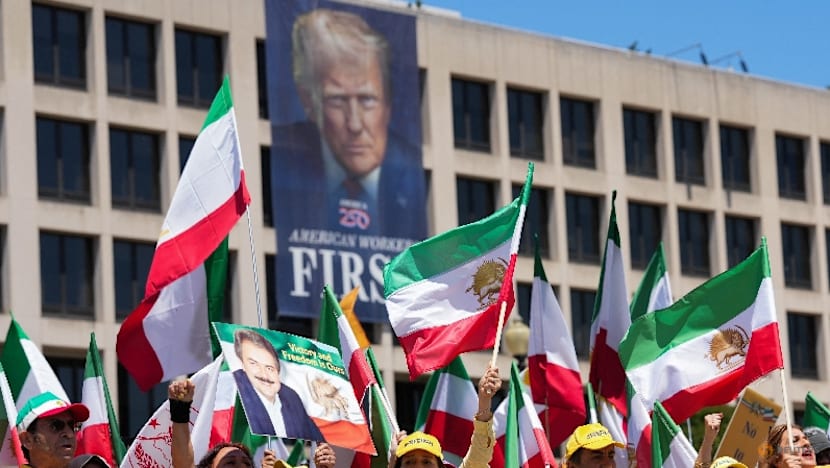
Analysts say Trump appears to be facing pressure from hardliners within his own political camp, including Iran hawks in Washington and allies of Israel, who support a tougher approach towards Tehran.
They suggested this may explain Trump’s mixed messaging about the talks, even as an agreement appeared in sight.
Mouin Rabbani, non-resident senior fellow at the Middle East Council on Global Affairs, a Doha-based think-tank, said the White House had come under “sustained pressure from the war party”, warning that the situation remained highly volatile.
“We’re either in the last few yards before we reach a framework agreement that opens the way to negotiations, or we’re on the cusp of a new round of escalation and military confrontation,” he told CNA938.





Listen:
CONTROL OVER HORMUZ A STICKING POINT
Trump’s latest comments came after months of conflict following the US-Israeli military campaign against Iran that began Feb 28. A fragile ceasefire has been in place since early April.
According to media reports, US officials say the proposed framework could give negotiators 60 days to reach a final agreement.
The US reportedly wants Iran to dispose of its highly enriched uranium stockpile, while Tehran wants relief from longstanding US sanctions and access to frozen Iranian funds held abroad.
One of the biggest sticking points is no longer simply whether ships can pass through the Strait of Hormuz, but who controls the waterway, analysts say.
Iran has insisted the strait remain under Iranian authority, while the US has demanded guarantees that commercial shipping can move freely.
Related:
Rabbani noted that Iran appears to be seeking “some kind of sovereignty over this critical maritime choke point”.
“Iran is now saying … we will extract a management fee for passage through this choke point, and we will manage it in coordination with Oman,” he said.
Oman shares control of the Strait of Hormuz with Iran, and Tehran has said it is in talks with Muscat over establishing some form of permanent toll system to regulate traffic through the strategic waterway. Oman has not issued any formal statements or responded to requests for comment.
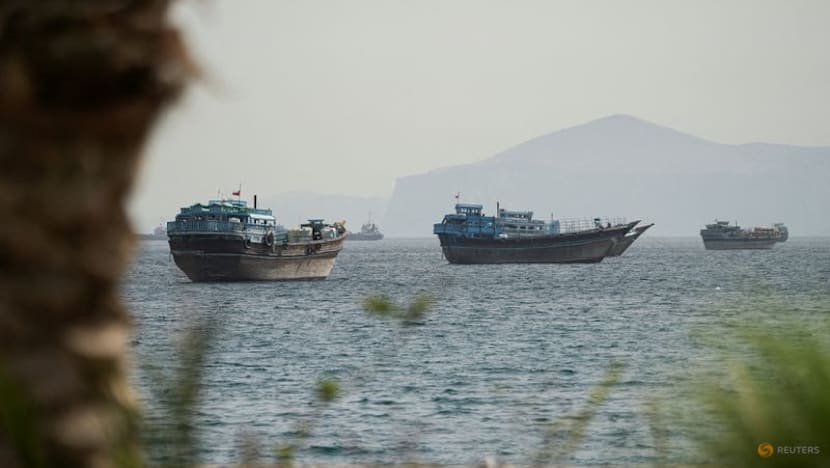
Rabbani added that Washington may have been prepared to accept such an arrangement temporarily, provided shipping flows were not disrupted.
Stephen Zunes, professor of politics at the University of San Francisco, argued that the conflict had inadvertently strengthened Iran’s leverage over the waterway.
“Thanks to Trump and (Israeli Prime Minister Benjamin) Netanyahu’s war, they recognise they have this power,” he said, referring to Tehran’s ability to disrupt the channel through drone strikes, mines and other means, which have fuelled soaring global energy prices.
But Zunes told CNA’s Asia First that there appeared to be few realistic alternatives.
“The stalemate obviously cannot stay, given all the economic damage … but returning to war would just make things worse,” he said.
“The US and its Arab allies are just trying to make the best of a bad situation that does ultimately put Iran in a stronger position overall than it was when the hostilities commenced,” he added.
It is still unclear how any reopening of the strait would actually work in practice.
“Who will determine what comes through and what doesn’t?” Zunes asked. “There are certainly some sticking points to be concerned about.”
NUCLEAR ISSUES REMAIN UNRESOLVED
Another hurdle is Iran’s uranium stockpile.
Under the 2015 Iran nuclear deal negotiated during former US president Barack Obama’s administration, Iran agreed to limit uranium enrichment to 3.67 per cent and allow extensive inspections by the International Atomic Energy Agency (IAEA).
Trump withdrew the US from that agreement in 2018 during his first term in office.
Iran has long denied pursuing nuclear weapons, saying it is enriching uranium for civilian purposes, although the levels it has reached exceed those usually needed for power generation.
Iranian officials have reportedly suggested that Tehran could dilute or chemically disable its uranium stockpile under international supervision, rather than remove it from the country entirely.

Rabbani said this issue has become tied to Iran’s broader distrust of Washington after Trump’s withdrawal from the 2015 agreement.
“For Iran, the key issue is that the stockpile not be removed from Iranian territory,” he said, describing it as a guarantee against future US policy reversals.
Still, both analysts suggested a technical compromise may ultimately be possible.
Zunes noted that the international community had previously supervised the dismantling of parts of Iran’s nuclear infrastructure and the removal of much of its enriched uranium stockpile, showing that similar measures could be implemented again.
LEBANON COULD DETERMINE WHETHER TALKS SUCCEED
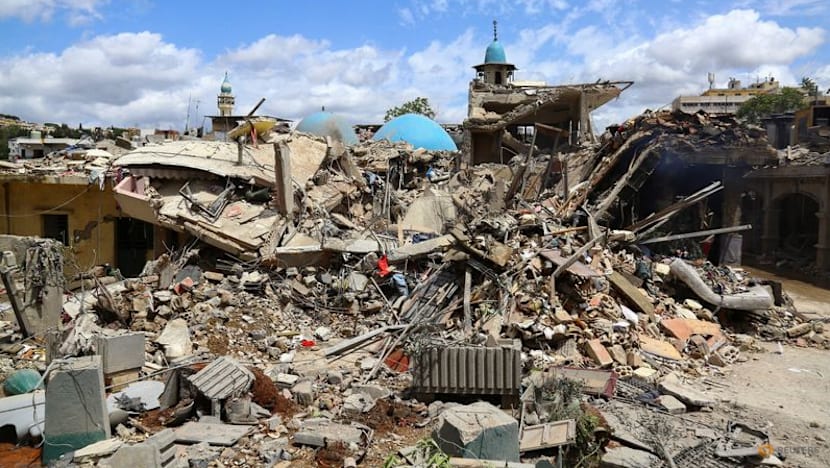
The regional spillover from the conflict also remains a major obstacle.
Rabbani argued that developments in Lebanon may ultimately determine whether negotiations move forward.
Iran, he said, wants any agreement to include a ceasefire involving Israel and Hezbollah, the Lebanon-based militant group backed by Tehran.
“Without a ceasefire in Lebanon, there will be no agreement with the US,” Rabbani said.
He warned that continued fighting in Lebanon could provide opponents of a deal with an avenue to undermine negotiations.
For now, both analysts suggested talks were continuing despite the shifting rhetoric.
But with political mistrust running deep on all sides, neither ruled out another sudden shift or the resumption of hostilities.
“I've been quite sceptical of previous claims of an imminent breakthrough … but we may actually be getting close on this one. But of course, close may not be enough,” Zunes added.




