







US-EU tensions deepen over Greenland as Trump’s Europe strategy comes under scrutiny
The US blames policies championed by the EU, including its commitment to becoming climate-neutral by 2050, for its current trajectory.
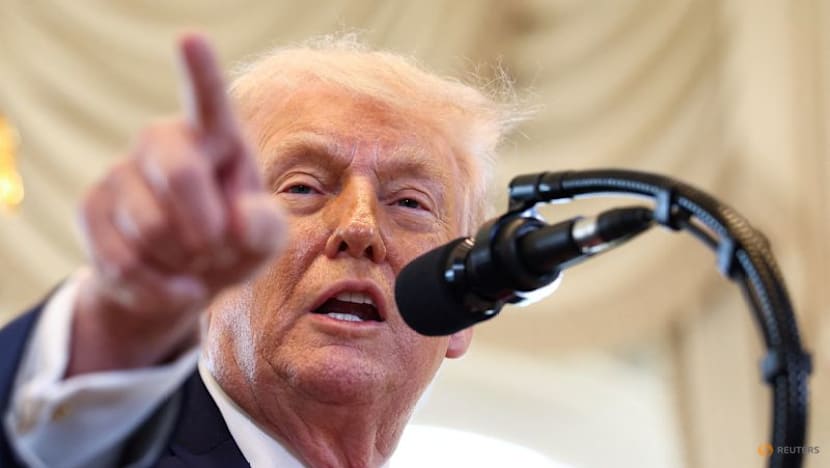
US President Donald Trump speaks at a ceremony in Palm Beach, Florida, on Jan 16, 2026. (Photo: Reuters/Kevin Lamarque)

This audio is generated by an AI tool.


BRUSSELS: The spat over Greenland is worsening strained relations between the United States and the European Union, adding to concerns over Washington’s broader strategy towards Europe under President Donald Trump.
These tensions come at a time when transatlantic ties are already under pressure due to the war in Ukraine.
Relations between the US and the EU have grown notably frosty over Trump’s renewed desire to take control of Greenland, a semi-autonomous territory of Denmark.
It has also raised fears that the year ahead could prove increasingly fractious for two of the world’s longest-standing allies.






US BLAMES EU POLICIES
The White House has framed Greenland as a national security concern, citing what it says is a growing Russian and Chinese presence in the Arctic region.
Denmark has firmly rejected that stance.
Last week, Danish Prime Minister Mette Frederiksen said Washington has no right to annex its territory, pushing back against a scenario once considered unthinkable.
“This is not just about Greenland or the Kingdom (of Denmark). It is about not being able to change borders by force, not being able to buy another people, and it is about small countries not having to fear big countries,” said Frederiksen on Jan 13 ahead of a meeting with US Vice President JD Vance at the White House.
“That is why we are clearly speaking out. And that is why many allies are doing the same, in the Nordic countries, in Europe and in the rest of the world,” she added.
But on Tuesday (Jan 20), Greenland’s Prime Minister Jens-Frederik Nielsen said the Arctic island needs to start preparing for a possible military invasion, even though it remains an unlikely scenario.
Concerns have now emerged that the US could pose a looming threat to a fellow member of the NATO military alliance.
In its most recent National Security Strategy, the Trump administration stated that Europe remains strategically and culturally vital to the US but suggested that the status quo could change.
Washington has warned that over the next few decades, it is unclear whether certain European nations will be strong enough to remain as reliable allies.
The US blames policies championed by the EU for its current trajectory.
Those policies include the bloc’s commitment to becoming climate-neutral by 2050, which the White House has rejected as “disastrous ideologies that have so greatly harmed Europe, threaten the US and subsidise adversaries”.

The US has also accused the EU of being weak on migration, claiming this has led to a loss of identity and self-confidence across the continent.
European officials have countered that the bloc has taken steps to strengthen its borders and improve its ability to remove people without the right to stay in Europe, while stressing they will not succumb to political interference.
SHIFT IN EU DEFENCE POLICY
The EU’s defence posture has also shifted significantly since Trump took office again a year ago.
While European leaders have resisted some American demands, they have conceded on others.
Under pressure from Washington, the EU pledged to invest more than US$900 billion in its defence sector, taking on greater responsibility for its own security – including support for Ukraine.
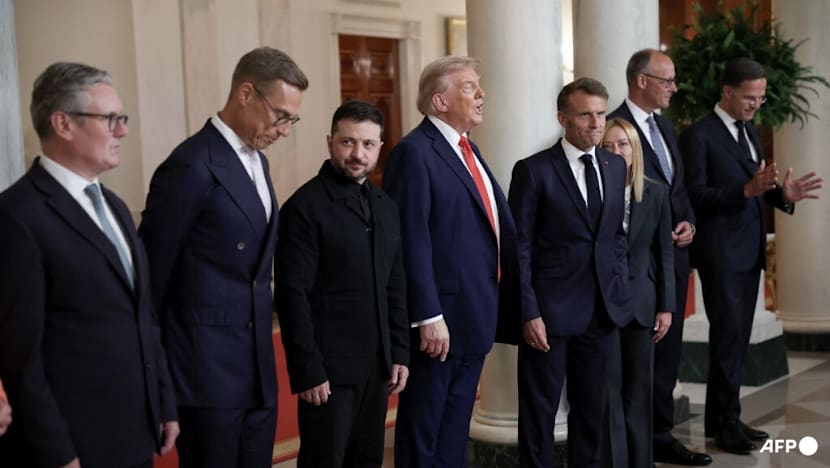
Ian Lesser, a distinguished fellow at the German Marshall Fund of the United States, said Washington expects much of that increased spending to benefit American defence companies.
“In Washington, there’s a belief that if Europe is going to spend more, much of that will be spent on American equipment,” he noted.
“That's clearly the preference, and in fact it may be the reality because for many things, the lead time is such that it’s not really practical for Europe to build these capabilities in a short timeframe.”
Some of these commitments were incorporated into a trade agreement brokered between the US and the EU last year.
The deal, which has yet to be ratified by Brussels, places a 15 per cent cap on US tariffs for most European exports.
Despite this, the US maintains that the transatlantic trade relationship – which is worth more than 40 per cent of the global gross domestic product (GDP) – is unfair, citing a trade deficit of about US$147 billion based on 2024 figures.
Policy analyst Bryan Bille warned that tensions could escalate further.
“It doesn’t protect the EU from further escalation, I think, in the future, from the Trump administration,” noted the analyst from London-based price reporting agency Benchmark Mineral Intelligence.
“A conflict is foreseeable in the future – you never know. The National Security Strategy is an illustration of an ever-increasing conflictual relationship between the EU and the US.”
While the US maintains that transatlantic trade remains a cornerstone of the global economy, clashes over issues such as Europe’s regulation of big US tech companies – aimed at ensuring fair competition and managing illegal and harmful content – continue to fuel divisions.
Trump is set to head to Davos, Switzerland on Wednesday for the World Economic Forum, where he could face fresh confrontations with European allies.
He has threatened to hit Europe with tariffs of up to 25 per cent unless Greenland is ceded to the US, while EU leaders have vowed to resist Washington’s pressure.
As the US leader continues to pursue an America First agenda on security and economic fronts, trust between these long-standing allies appears increasingly fragile.




