Trump sends a message with Maduro’s seizure, but democracy takes a back seat: Analysts
Observers say Washington has signalled it is prepared to work with what remains of Maduro’s government, using a carrot-and-stick approach to extract cooperation from a shaken but intact Venezuelan regime.
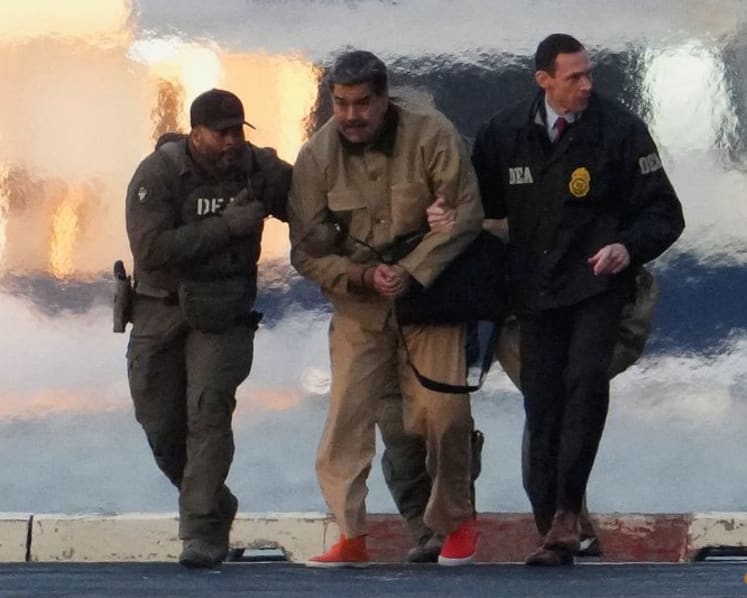
Captured Venezuelan President Nicolas Maduro is escorted, as he heads towards the Daniel Patrick Manhattan United States Courthouse for an initial appearance to face US federal charges including narco-terrorism, conspiracy, drug trafficking, money laundering and others in New York City, Jan 5, 2026. (Photo: Reuters/Adam Gray)

This audio is generated by an AI tool.
The recent dramatic seizure of Venezuelan President Nicolas Maduro by the United States has removed a long-standing adversary from power, but it has not delivered what many Venezuelans were hoping for: A clear path back to democracy.
Instead, experts say Washington’s priority appears to be leverage – using military pressure to reshape Venezuela’s behaviour, secure energy interests and extract cooperation from a weakened but still-functioning regime in Caracas.
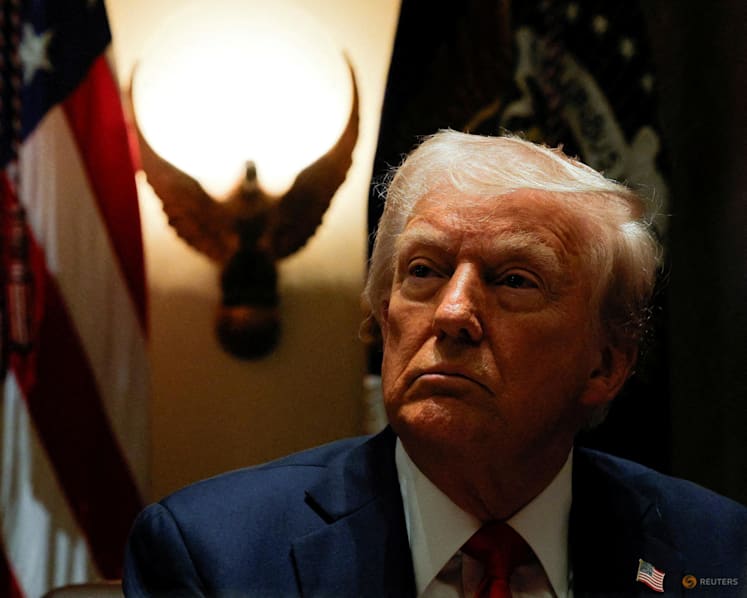
“Rather than calling for elections to happen soon – as the Venezuelan constitution demands, or that the Venezuelan people would like to do – it seems (US President Donald) Trump (is prepared to) negotiate with (the current leadership),” said political analyst Ernesto Castaneda.
Any negotiations are likely to revolve primarily around oil – specifically access for US companies to Venezuela’s energy sector – added the director of the American University’s Center for Latin American and Latino Studies.
DEMOCRACY SIDELINED





Venezuela’s Vice President Delcy Rodriguez was sworn in as interim president on Monday (Jan 5), two days after her ally Maduro was captured and flown to New York.
Trump said on Monday that Venezuela would not hold elections within the next 30 days, distancing the White House from the country’s opposition figures.
Opposition leader Maria Corina Machado – widely regarded as Maduro’s most credible challenger and awarded the Nobel Peace Prize last year – was publicly dismissed by Trump, who said: "She doesn't have the support or the respect within the country.”
Edmundo Gonzalez, whom observers and independent exit polls say decisively won the 2024 presidential election but was blocked from taking power by Maduro, has also been conspicuously absent from Washington’s plans.
The stance has disappointed opposition supporters who had hoped Maduro’s removal would trigger an immediate democratic transition.
A REGIME SHAKEN, BUT STILL IN CHARGE
Analysts warn that even with Maduro removed, his close confidants – many accused of human rights abuses and other crimes – remain firmly in control.
“People in Venezuela have been cautious not to be too joyful in the streets, because the Maduro regime is still in power, even if Maduro is in New York,” Castaneda told CNA’s Asia First programme.
“The diaspora are celebrating in many places around the world, but they are not ready to return to Venezuela yet because the situation hasn't changed,” he added.
“What they want is a return of democracy and eventually more international trade and investment, so their economy can recover.”
Observers say Washington has signalled it is prepared to work with what remains of Maduro’s government, using a carrot-and-stick approach to extract cooperation from a shaken regime.
Trump has warned that a second US strike is possible, threatening Rodriguez with a fate worse than Maduro's, if Venezuela’s government does not cooperate with Washington’s demands.
“Within (Maduro's administration), there are those more pragmatic, willing to do a deal with the US, particularly after Sunday’s display of military power. Others will be highly resistant,” said Nick Redman, an analysis director at consulting firm Oxford Analytica.
“But they are under the threat of further US military bombardment, and that might encourage them to do some sort of deal. This is (why opposition figures like) Machado doesn't fit into the mix.”
OIL AT THE HEART OF RAID
Energy lies at the centre of Washington’s leverage. Venezuela holds the world’s largest proven oil reserves, but years of sanctions, political mismanagement and decaying infrastructure have left production a fraction of its potential.
Trump has made clear the US expects to benefit from Venezuela’s oil, declaring American companies would fix the nation’s “badly broken” oil infrastructure and “start making money for the country”.
For the US, analysts say, access to Venezuela’s heavy crude – well suited to American refineries – is strategically attractive. For Caracas, the promise of sanctions relief is potentially the fastest way to revive an economy in freefall.
“One thing that Venezuelans want, no matter who's in charge, is the speedy removal of sanctions,” said Ross Feingold, the head of research at Caerus Consulting.
“The Venezuelan government needs (the diaspora) to come back and help contribute to the rebirth of the country. Whoever’s in charge has a long list of things to achieve, and the best way to achieve that would be by working with the US.”
Still, analysts caution that rebuilding Venezuela’s oil sector would require billions of dollars in investment, years of infrastructure development and major improvements in security – outcomes far from guaranteed.
DRUGS & IMMIGRATION
Beyond oil, Washington has framed Maduro’s capture as a law-enforcement operation tied to drug trafficking – an argument analysts say is likely to hold up in US courts, even as it draws condemnation internationally.
US authorities have accused the ousted leader of working with violent cocaine-trafficking networks and have in recent days targeted alleged smuggling boats in the Caribbean.
There are also allegations involving family members of Maduro’s wife Cilia Flores, who was seized alongside her husband. These include the 2016 conviction of two of her nephews on drug conspiracy charges in Miami.
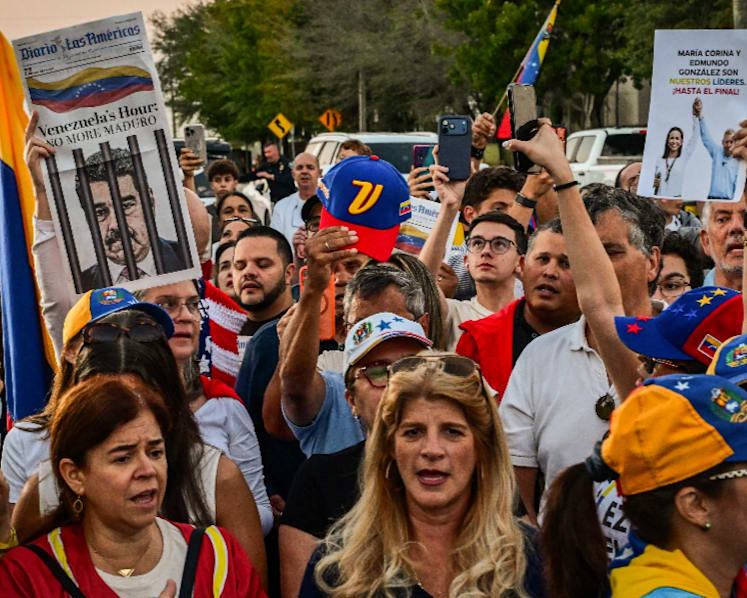
Immigration has been another key driver. Since 2014, roughly 8 million Venezuelans have fled the country, creating the largest displacement crisis in Latin America.
Trump made curbing migration a central campaign promise. Since returning to the White House almost a year ago, he has moved to strip some 600,000 Venezuelans of protection permits and deport them.
Observers say the administration sees Maduro’s removal and economic stabilisation as a way to stem migration and encourage displaced Venezuelans to return home.
WAS THE CAPTURE LEGAL?
Internationally, the seizure of Maduro has been condemned as a violation of Venezuelan sovereignty. Critics argue Washington’s claim of self-defence under the United Nations Charter lacks evidence of any imminent threat.
Yet, analysts say meaningful consequences are unlikely.
“The UN Charter is very vague and has no enforcement mechanisms. It's effectively a debate society at this point, and it won't change the outcome whatsoever,” said Drew Thompson, a senior fellow at the Nanyang Technological University’s S Rajaratnam School of International Studies.
“As a fundamental principle here, domestic law tends to supersede international law.”
On the domestic front, experts say Maduro’s lawyers are expected to challenge the legality of how he was brought before a US court, but the argument is unlikely to sway judges.
“What federal judges in the US are going to look at is whether there's a valid indictment; not look at how he was brought in front of the court,” Feingold told CNA938.
“From that perspective, the Trump administration believes they're on firm ground as far as US federal law goes, and that the judges are not going to interfere in the political process of detaining him in a foreign country.”
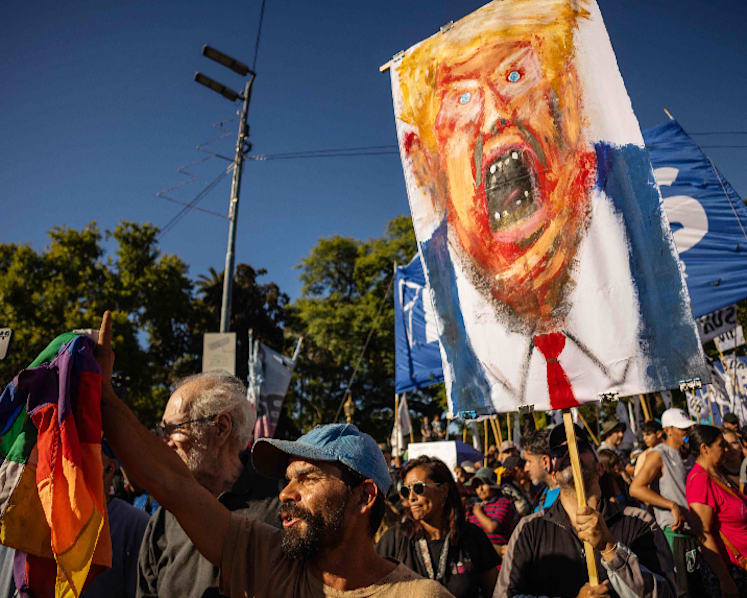
Internationally, Washington’s political, military and economic might is expected to limit backlash.
“Very few countries are going to take a long-term view that they need to punish … (such as) put in place sanctions against the Trump administration. It’s just unrealistic (and) not practical,” said Feingold.
“Obviously, the Trump administration knows this, which helped embolden them to make this decision (to strike).”
TRUMP’S MESSAGE TO THE REGION
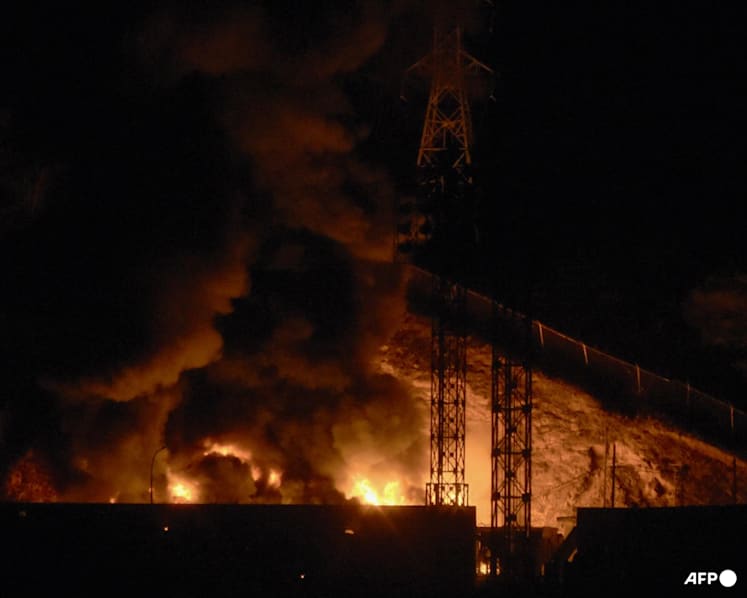
Analysts say Maduro’s overnight capture by US special forces – accompanied by strikes on Venezuelan military bases – was also intended to send a broader message about how the Trump administration plans to defend what it sees as US interests.
“Certainly, there was an element of a show of power. It's a message to the region (and) other global powers like China, Russia … that the US will be the preeminent power in that part of the world,” said Feingold.
Analysts say the operation has raised concerns that Washington has set a precedent – one that could encourage powerful states to use force unilaterally against others.
There are also fears the US could attempt similar actions elsewhere, including Greenland – which Trump has repeatedly said he wants to annex – and long-time adversaries such as Cuba and Iran.
However, experts cautioned against drawing direct parallels. “This was an easy operation for the US to execute – it was very proximate. Militarily, it would be much more difficult to do something similar in (for example) Iran,” said Thompson, adding that Venezuela is tied to issues like drugs and migration that resonate strongly in US domestic politics.
He noted that the operation reflects a broader shift in US strategy.
“The bottom line here is Trump has put the international community on notice that the US … will take extraordinary measures to defend its (national interests),” he said.
“While the US is going to protect its interests in the western hemisphere more assertively, it doesn’t mean the Trump administration is conceding the sphere of influence in, for example, the Asia Pacific or Indo Pacific,” he added.
“The US is still an established power with access and influence, and is going to continue to seek dominance (elsewhere) as well.”