analysis Asia
ASEAN’s proposed resilience measures must go into ‘full gear’, but domestic priorities a stumbling block
The war in the Middle East has hit Southeast Asia’s energy, fertiliser and food supply simultaneously, prompting new regional solutions - but turning them into action could prove difficult, say observers.
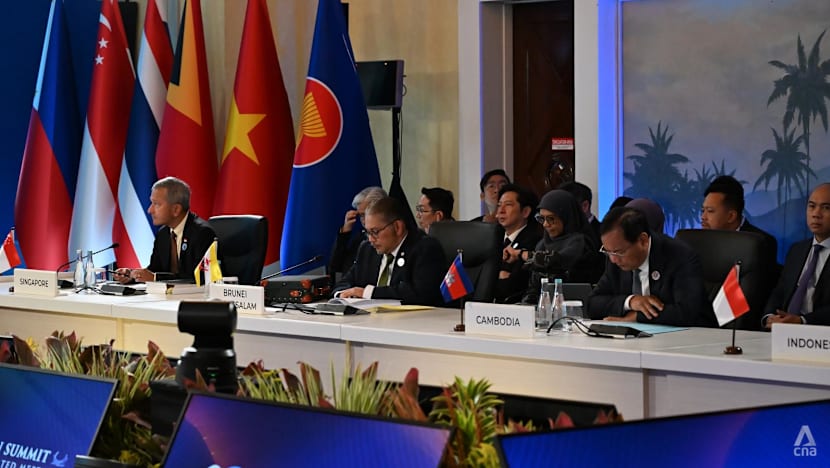
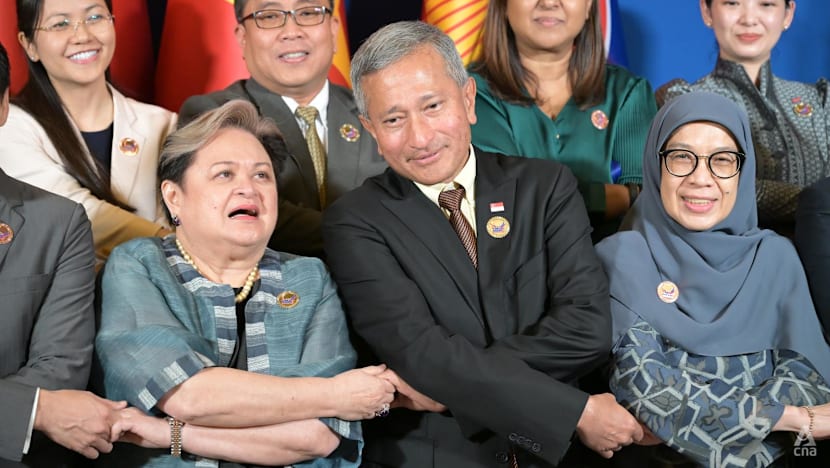
Association of Southeast Asian Nations (ASEAN) foreign ministers meet at the 48th ASEAN Summit in Cebu, Philippines on May 7, 2026. (Photo: CNA/Jarupat Karunyaprasit)

This audio is generated by an AI tool.


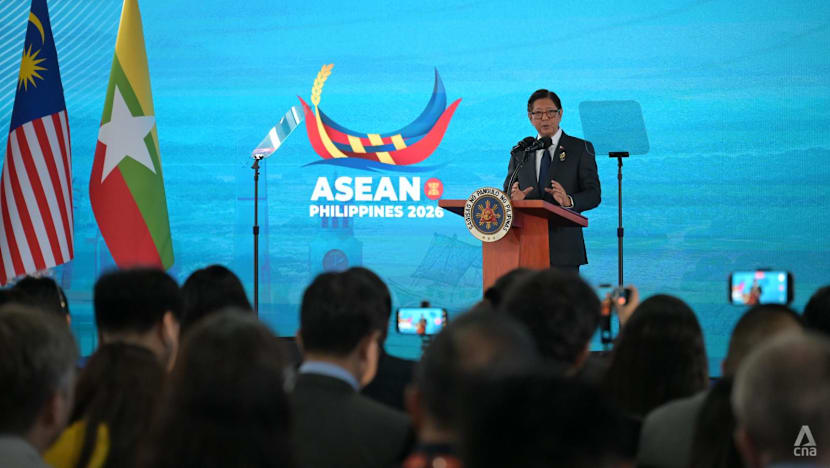
CEBU, Philippines: In a packed media conference room near the luxury beach resorts on Mactan island in central Philippines, President Ferdinand Marcos Jr made an assessment of the urgent task ahead for Southeast Asian countries.
The ongoing Middle East conflict has wrought supply disruptions that hit the region hard, as leaders of the Association of Southeast Asian Nations (ASEAN) gathered on the island last Friday (May 8) to endorse measures aimed at boosting cooperation on energy and food security as well as improving coordination during crises.
“We needed it last month. Forget about next month, six months, a year from now. We needed it yesterday, if not sooner, sort of thing. So, that's the way we are approaching the problem,” Marcos said.
The 48th ASEAN Summit that concluded on Friday saw leaders propose new ideas like a regional fuel stockpile and a standby mechanism for food security to cushion against the impacts of the Strait of Hormuz closure - and potentially similar incidents in the future that could strain crucial fuel and fertiliser supplies to the region.





They also agreed to consider a “crisis communication and coordination protocol” for foreign ministers to ensure a “coherent, timely and coordinated” regional response to crises that impact multiple sectors.
Experts weigh in on the need for these ideas and the challenges of turning them into reality.
TO SHARE OR STOCKPILE FUEL
Marcos told reporters on Friday that individual ASEAN member states could independently decide how they were going to get energy during the fuel supply crisis caused by the Middle East conflict.
“It's left to individual countries to make their own arrangements on how to gain supply, because we are all in a different situation,” he said.
But he insisted that ASEAN members were pulling in the same direction on the regional fuel stockpile proposal, saying that leaders had “unanimously agreed” on its principle though officials were still figuring out operational details.
“So, we are trying to even out those differences between countries. We are making our own arrangements, but at the same time we are coming together and developing the idea that we will have a fuel reserve (of) all the different kinds of fuel,” he added.
Disruptions in the Strait of Hormuz have unsettled fuel supplies and pushed up prices across the region. The strait, which connects the Persian Gulf to the Indian Ocean, handles about a quarter of the world’s seaborne oil trade, with roughly 80 per cent of these shipments bound for Asia.
During the plenary session on Friday, Singapore Prime Minister Lawrence Wong acknowledged that ASEAN ministers had discussed the fuel stockpile, though he also called for the swift ratification of ASEAN Petroleum Security Agreement (APSA), which was last renewed in 2025.
APSA, which allows member states to support each other's oil and gas needs during supply disruptions, also recommends joint oil stockpiling as a medium to long-term measure to minimise exposure to disruptions.
First signed in 1986, the agreement obliges ASEAN members to individually or collectively enhance petroleum security, with cooperation on a voluntary and commercial basis.
Under APSA’s coordinated emergency response measures, all member states should endeavour to supply petroleum to the distressed country at the aggregate amount equal to 10 per cent of its normal domestic requirement for at least 30 days.
On Apr 14, Marcos reportedly urged member states to operationalise APSA and activate these measures, using the current energy crisis as a “live” test to glean “immediate” lessons.
“This mechanism, once tested and activated regularly, could serve as a meaningful buffer for smaller economies during exactly the kind of disruption that we are experiencing today,” he said during a virtual energy resiliency summit hosted by Japanese Prime Minister Sanae Takaichi.
Still, APSA is generally seen as a last-resort coordination mechanism meant for severe fuel shortages, and as with many other ASEAN mechanisms, would first require consultation and agreement among member states.

While an ASEAN regional fuel stockpile is a “good idea”, the reality is that the bloc’s formal energy-security architecture is “still not fully ready”, said Joanne Lin, coordinator of the ASEAN Studies Centre at Singapore's ISEAS-Yusof Ishak Institute.
“The APSA has yet to enter into force because not all member states have completed ratification,” she said, referring to the third and latest version renewed in 2025.
The third version was updated to reflect modern energy risks and gas integration, with more emphasis on broader regional energy resilience including diversified fuels and crisis coordination.
But during times of crisis, most governments will still need to ensure that they have enough supply for their own citizens, Lin said.
“They will be cautious about locking themselves into obligations that may constrain national flexibility, and this is precisely the kind of dilemma that the agreement is meant to address,” she said.
“It shows that in a real crisis, national needs will still come before regional commitments.”
Sharon Seah, principal fellow at the ISEAS-Yusof Ishak Institute, believes APSA will “not immediately” help member states during the current Middle East crisis.
“One reason is that the ratification process will take time,” she told CNA, noting that the second APSA signed in 2009 took four years to be ratified by all member states.
And even if the latest version was ratified expeditiously, the agreement would still be “voluntary and commercial”, she said.
“If everyone is in distress like the current crisis, then there’s limited utility. But if it's one or two (member states), I think the rest would have a buffer to help.”
To this end, Seah said ASEAN’s longer-term energy security measures, including the operationalisation of the ASEAN power grid, need to “go into full gear”.
“ASEAN has to have an eye on energy security beyond this current crisis as it is clear that the fragmentation that is happening in the world, whether (United States President Donald) Trump-triggered or not, will continue to affect us in this region,” she said.
“Hence, investing in these strategies will help ASEAN dismantle its structural energy import dependencies.”

While some ASEAN members already share some electricity interconnectivity, the bloc aspires to develop a completely integrated Southeast Asia power grid system to enable resource-sharing and improve cross-border electricity trade.
At Friday’s plenary, Malaysia Prime Minister Anwar Ibrahim said the ASEAN power grid “remains central” to the bloc’s energy transition and long-term security, as he called for more investment to accelerate interconnectivity and low-carbon growth.
Anwar also urged ASEAN to “fully leverage” cooperation with Gulf nations and China under existing mechanisms to build more reliable and resilient energy arrangements.
Seah said ASEAN should work with the Gulf nations to establish a “decentralised” strategic fuel stockpile in the Middle East, as physical stockpiling capacities in Southeast Asia were “limited”.
“I’m sure the bloc considered this (regional fuel stockpile idea) during the 1980 oil crisis but for whatever reason it didn’t take off,” she said, referring to a global energy shock caused by the Iranian Revolution and the Iran-Iraq War.
“But I note that (Malaysia) minister Johari is proposing an ASEAN-X approach to this idea - start with an interested few and expand it slowly.”
The ASEAN minus X approach refers to a flexible, consensus-based formula allowing willing member states to proceed with economic agreements or cooperation projects, while others follow later.
RICE, FERTILISERS AND BEYOND
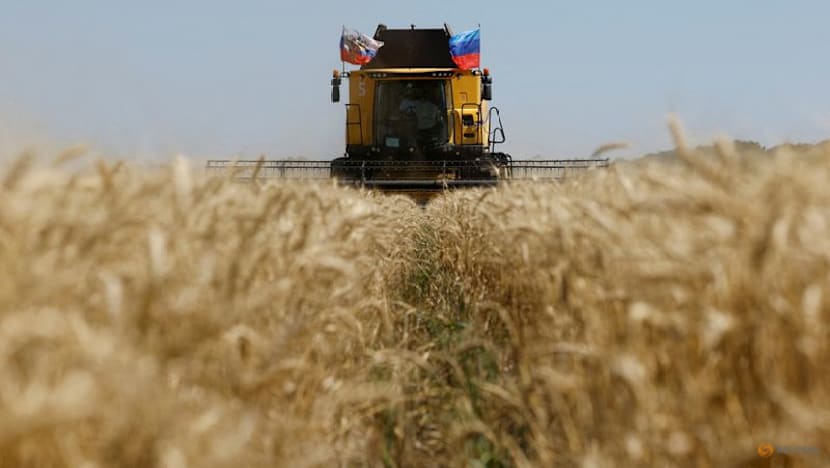
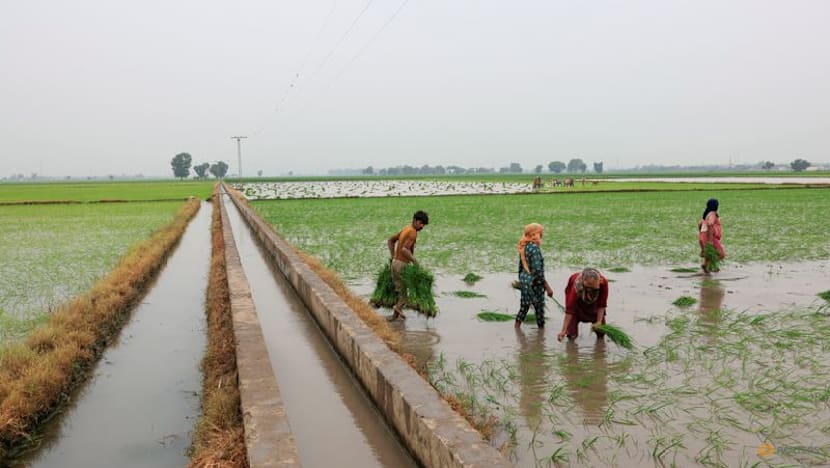
On Friday, Anwar also proposed exploring a “regional standby arrangement for food security” during crises, and expanding the ASEAN Plus Three Emergency Rice Reserve (APTERR) mechanism to include fertilisers.
Analysts consider fertiliser to be the most critical bottleneck affecting agriculture and food security, with the Gulf region accounting for about 11 per cent of fertilisers imported by ASEAN.
While Anwar did not give details on how the standby arrangement might work, he said it will ensure faster coordination and emergency response among member states.
APTERR, which includes the ASEAN member states plus China, Japan and South Korea, has operated since 2011 and involves stockpiling rice for immediate release during disasters, without disrupting market prices.
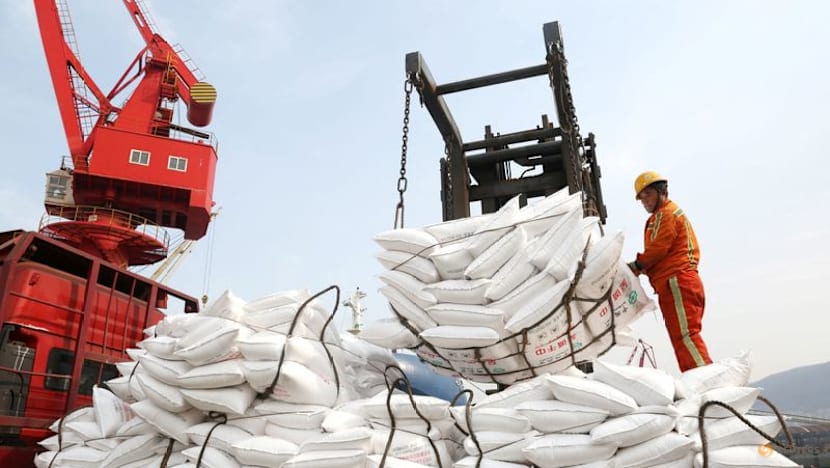
Genevieve Donnellon-May, director of food and water research at the Sweden-based Institute for Security and Development Policy, said Anwar’s proposal is an “evolution” of APTERR into a “broader food security standby mechanism”.
In practice, this would mean introducing pre-agreed triggers - like price spike thresholds and supply disruption indicators - that automatically release food stockpiles rather than after “slow consensus-building”, she told CNA.
“It means real-time data sharing on fertiliser stocks and input needs, extending what the ASEAN Plus Three Food Security Information System currently does for grain. And it means joint procurement frameworks to provide collective buying power during crises,” she said.
But extending the mechanism to fertilisers, which are more expensive to store and manage than rice, would raise costs considerably, Donnellon-May said.
“Logistics add another layer: Varying storage standards, phytosanitary rules, and transport infrastructure across very different economies complicate rapid deployment,” she added.
Food security expert Paul Teng, who has briefed ASEAN ministers on resilience measures, said more details were needed on how exactly fertilisers would be stockpiled.
“If Malaysia, Indonesia, Vietnam and Brunei can actually ramp up the production of fertiliser and have no trade restrictions - zero tariffs and so on - then the free flow of fertiliser will be such a big boon for the region,” he told CNA.
Teng said the four countries’ liquefied natural gas reserves allow them to produce nitrogen fertiliser - or urea - and potentially export to other member states.
“Of course, once you talk about stockpiles, then the next questions are: Is it going to be a physical stockpile? If so, who’s going to pay for the storage?” he asked.
Beyond fertilisers, Teng - who is also a visiting senior fellow in a climate change programme at the ISEAS-Yusof Ishak Institute - encouraged ASEAN to look at other vulnerable components in the food supply chain.
For instance, the region is highly dependent on imports for wheat and soybean - critical for the production of food items that will be consumed more instead of rice as economies develop, he said.
Teng suggested a mid- to long-term measure of collectively initiating serious breeding programs to develop subtropical varieties of wheat and soybean.
“But right now, as we all know, ASEAN is like a club - we’re not like the European Union. The acceptance of any of these policy imperatives depends on the country concerned. If you have no capabilities, you can't do it,” he said.
“Which is why I like the whole approach (Malaysia premier) Anwar is pushing. We need to have a regional approach where we leverage on the comparative advantages of the 11 member states.”
Teng identified “asymmetry” in terms of member states’ capabilities, infrastructure and financial resources as the single biggest challenge for ASEAN in implementing food security measures.
“The question to be asked in a standby procedure is: Would ASEAN member states be willing to release their stockpiles to other countries? That’s a very political question. Unless the heads of state agree on that, I don’t think it will happen,” he said.
Donnellon-May warned that ASEAN has never resolved what she called a “fundamental tension”.
“Member states consistently prioritise domestic food self-sufficiency over regional commitments precisely when those commitments matter most,” she said.
During the 2007 to 2008 food price crisis, export restrictions by India and Vietnam, combined with panic buying by major importers like the Philippines, drove up global rice prices and pushed close to a billion people into poverty, Donnellon-May said.
She called on ASEAN to commit to binding trade agreements that avoid export bans and panic buying, as well as treat food and energy security as a “single problem”.
“No amount of reserve expansion fixes that fundamental design mismatch without (these) two things,” she added.
Nevertheless, Donnellon-May feels a functioning standby mechanism could have a “significant” impact in reducing the panic buying and unilateral export bans that have historically amplified food crises far beyond the original supply shock.
“But here is the critical caveat: APTERR was designed primarily for natural disasters - typhoons, floods, droughts,” she said, highlighting that the current crisis has affected energy, fertiliser and food supply simultaneously.
“That's a different problem, and a standby mechanism that doesn't account for that distinction will be slower and less effective than its architects intend.”
SWIFT AND COORDINATED RESPONSES
This is where ASEAN’s proposed crisis communication and coordination protocol could come in, said Lin from the ISEAS-Yusof Ishak Institute, by setting out procedures on what to do when a crisis breaks out.
“For example, when to consult, who convenes, how information is shared, how ASEAN messaging is coordinated and which sectoral ministers should be involved,” she said.
“This will help to close the gap between the outbreak of a crisis and ASEAN’s ability to get its act together institutionally.”
The protocol could also determine how information is gathered from member states, and when other sectoral tracks - for example energy, economy, agriculture, transport, finance or consular officials - should get involved, Lin said.
“This could help speed up the coordination and ensure greater coherence. In that sense, we can avoid the situation where individual member states issue very different statements or take uncoordinated positions that dilute ASEAN’s collective voice,” she said.
Lin, who is also a visiting scholar at the MIT Center for International Studies, said member states could see crises differently, especially when major powers are involved or when the issue touches on sovereignty or relations with external partners.
In the current Middle East crisis for instance, some members are more dependent on imported energy, some have many migrant workers in the Gulf, and others may have different diplomatic or trade relationships with the parties involved, she said.
“Thus, even if everyone agrees that a crisis matters, they may not agree immediately on what ASEAN should say or do,” Lin said, noting that every line of a crisis response statement requires the agreement of all 11 members.
“As such, ASEAN may remain slow or end up with language that is so cautious it says very little.”
On Thursday, The Associated Press had reported that ASEAN was expected to issue a joint declaration that includes plans to launch a contingency plan that upholds international law, sovereignty and freedom of navigation in response to the Middle East conflict.
The report, citing a draft declaration, said this plan could be “seen as a veiled rebuke” to the US, Israel and Iran over the conflict.
But Saturday's declaration and a separate statement on ASEAN's response to the conflict did not mention such a "contingency" plan.
Lin said she would not “read too much” into this omission.
“ASEAN can change its language if there’s no consensus. It can happen if a term sounds too operational and ASEAN member states may feel that they are not ready for the level of details,” she said.
“It seems that most of the substance of the crisis response is already reflected. ASEAN tends to be cautious if the details are not agreed or not available.”

Ilango Karuppannan, a retired Malaysian diplomat with more than three decades of experience in the foreign service, said the crisis communication protocol should in theory allow the ASEAN chair to more freely respond on behalf of the bloc.
After the Sep 11, 2001 terrorist attacks in the US, ASEAN had agreed on similar measures to give the chair more latitude to issue statements, as the bloc needed to “quickly” state its position, he told CNA.
But these measures were “not followed through” over the years, Karuppanan said, explaining that implementation was often challenging because member states remained cautious about “delegating too much authority”.
“So, this is a good initiative. It would enhance ASEAN’s stature as a responsible regional organisation capable of managing regional crises,” he added.