No more rust: Prabowo wants Indonesia’s zinc roofs to be replaced, but experts question the urgency
President Prabowo Subianto has set the target to replace zinc roofs on homes throughout Indonesia in the next three years.
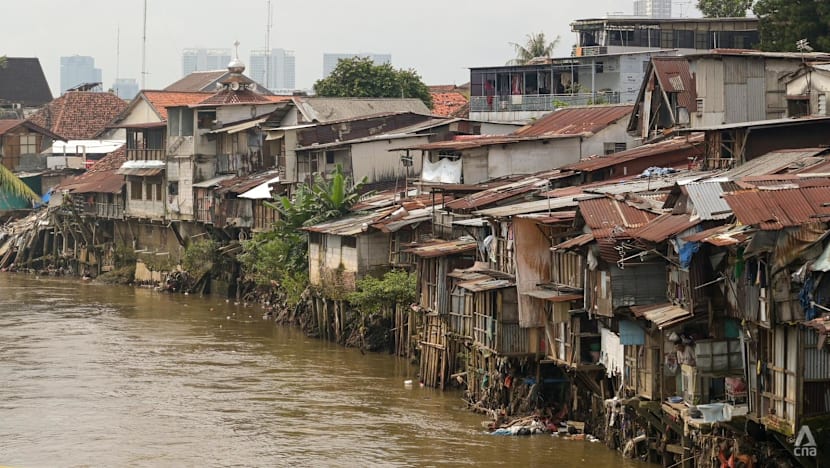
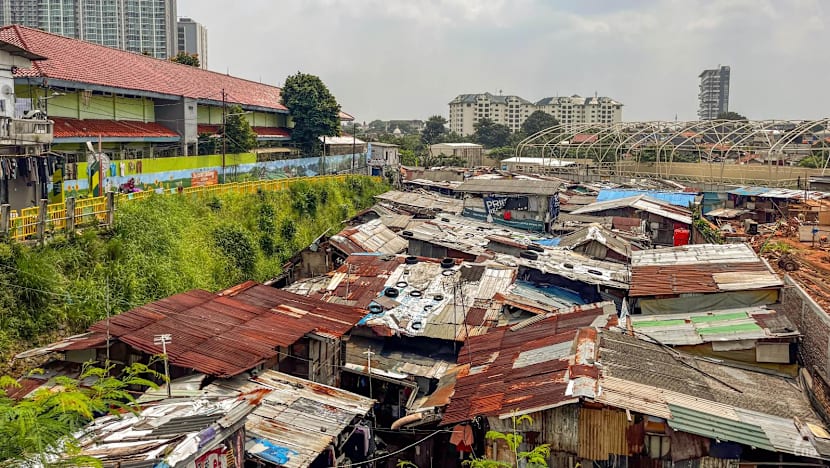
Zinc-roofed houses along the Ciliwung river in Jatinegara, East Jakarta, on Feb 11, 2026. (Photo: CNA/Ridhwan Siregar)

This audio is generated by an AI tool.


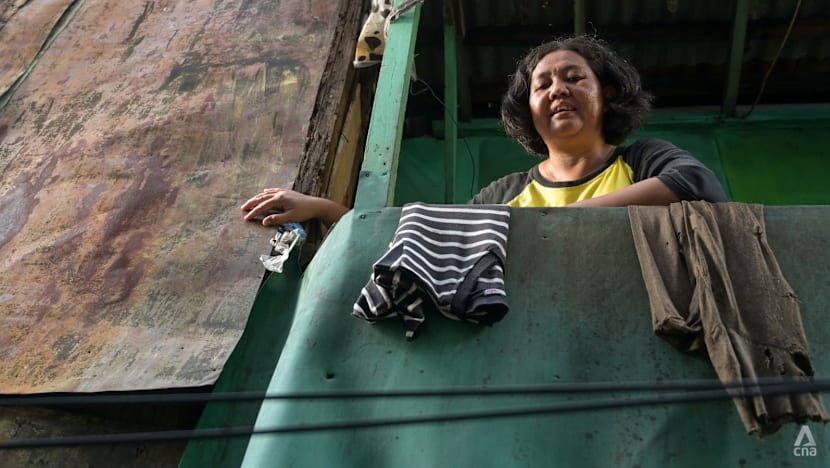
JAKARTA: Last month, 41-year-old Fitriyenni and her family of four moved from their rusty, zinc-roofed house in a small, densely populated alley in West Jakarta to her in-laws' house a few metres away.
“The roof was leaking, so we decided to move to the house of my parents-in-law, which has a proper roof,” said Fitriyenni, who goes by one name.
Her small two-storey home, which also has some zinc walls, is no longer liveable, Fitriyenni told CNA. She is not repairing her roof at the moment due to financial constraints.
Fitriyenni welcomed Indonesian President Prabowo Subianto’s plan, announced earlier this month, to replace all zinc-roofed houses in the country with clay tiles within the next three years.
“If it’s for free, then thank God. It’s like getting a house makeover,” she said.
Prabowo framed the programme as a push for cooler and more beautiful homes. “I see in all cities, almost all villages, there are lots of zinc roofs,” he said during a national coordination meeting between the central and regional governments on Feb 2 in Bogor, West Java.
"Zinc is hot for residents, and it also rusts. So, Indonesia wouldn't be beautiful if all roofs were made of zinc," he said.
The programme to replace all zinc roofs in Indonesia will be called “gentengisasi" or "roofing" in English. Genteng is Indonesian for tile roof.
Replacing rusty zinc roofs with tile roofs would make the landscape more orderly and clean, thereby attracting tourists, said Prabowo.
“Why would foreign tourists come to see rusty zinc? Rust is a symbol of degeneration. I hope that in two to three years, Indonesia will no longer be rusty,” he said.
“Indonesia is rising, Indonesia must be strong, Indonesia must be beautiful," he said, reiterating the message on Feb 13 at an event in Jakarta on Indonesia's 2026 economic outlook.





The roof-replacement programme will be part of the government’s broader plan, announced at the same event on Feb 2, to promote safe, healthy, clean, and beautiful environments. The latter's acronym, ASRI, means "beautiful" in Indonesian.
While details of the programme's funding have not been revealed, Finance Minister Purbaya Yudhi Sadewa said the roofing programme would not exceed 1 trillion rupiah (US$59 million) because it only targets houses with zinc roofs and not all homes.
"This is still a very rough estimate, but the figures can be controlled," Purbaya told reporters on Feb 3.
Prabowo said during the event on Feb 2 that the country’s Red-White cooperatives will incorporate roof tile factories.
Experts have, however, questioned the necessity of changing roofing material, its potential cost and whether it is a more environmentally sustainable option.
“There are various environmental considerations that need to be taken into account. Some houses already have comfortable temperatures, while others are hot,” said Mahawan Karuniasa, an environmental expert from the University of Indonesia.
Public policy expert Trubus Rahadiansyah from Trisakti University expressed concern about the budget.
“Once this has become a policy, I think the cost will be more than (1 trillion rupiah) because it involves the entire Indonesia, which is vast,” he said.
Analysts said the roofing programme risks becoming a highly visible intervention that diverts attention from deeper structural issues in Indonesia’s housing, land use and environmental governance.
IS IT MORE SUSTAINABLE?
According to Prabowo, tiles have four advantages over zinc roofs.
They are more aesthetically beautiful and will represent an Indonesian architectural identity, he said.
Tile roofs suit the country’s tropical climate and will provide more thermal comfort for homeowners and improve the family’s quality of life.
Roof replacement will also drive the local roof-tile industry, creating jobs and economic value, said Prabowo.
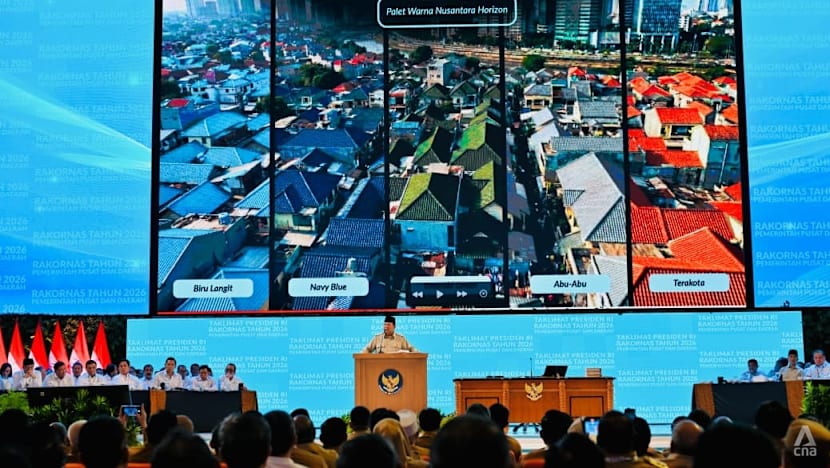
At the event, the president showed on a large screen what the Indonesian landscape would look like after all the zinc roofs have been replaced.
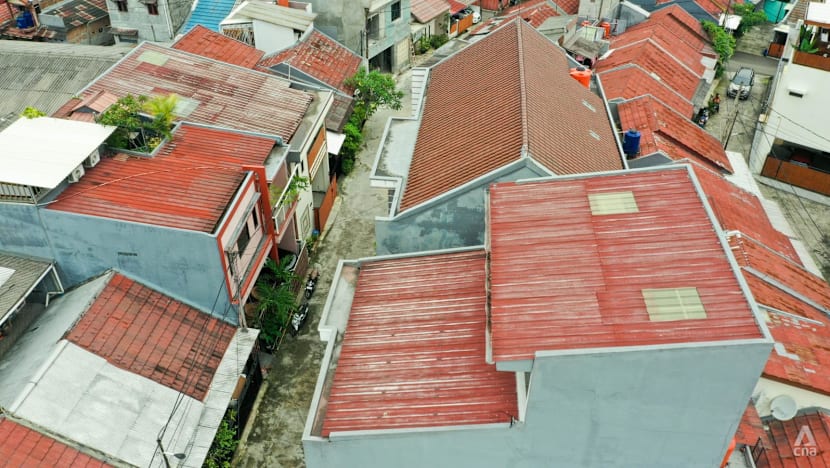
Going by images shown, the tiles could come in these colours: Sky blue, navy blue, green, grey and terracotta.
The roofs could use fly ash from coal waste mixed with clay, improving the strength and durability of the tiles while reducing their weight, said Cooperatives Minister Ferry Juliantono on Feb 7.
Last month, Prabowo had expressed concerns about zinc roofs while inspecting temporary housing for flood victims in Aceh.
He noted that the houses were built with zinc, which would make the interiors hot.
“Zincs are hot (absorb heat), so let's think about whether we can provide a solution," said Prabowo at a meeting with several ministers in Aceh Tamiang on Jan 1.
From a sustainability standpoint, the more relevant issue is the materials’ impact over the course of their life cycle, experts say.
Clay tiles are durable and can last decades, but they require clay extraction, including from agricultural land, and energy-intensive firing processes, which result in carbon emissions.
Production of the tiles for the programme would reshape supply chains, increase clay mining, increase transport emissions across islands, and may entail structural retrofitting of homes to bear loads that are heavier than zinc roofs.
Life-cycle studies have been conducted elsewhere on various roofing materials.
A 2018 study in Western Australia on the environmental impacts of sheet metal, concrete tiles and clay tiles found that sheet metal had the highest carbon footprint, mostly from acquisition of the raw material. Clay tiles had the lowest carbon footprint – less than half that of sheet metal – arising mostly from the manufacturing process.
With recycling, however, the carbon footprint of sheet metal could be reduced by 73 per cent, while the reduction for clay tiles was negligible as the waste was crushed for other applications, the study found.


While clay tiles are known to be durable, Abdullah, a civil engineering senior lecturer at Aceh's Syiah Kuala University, said there are high-quality zinc roofs in Indonesia that can last up to 20 years and are less prone to corrosion.
In an earthquake-prone region such as Aceh, zinc roofs may last longer than clay-tile roofs as the latter tend to fall when the houses are not sturdy enough, which is the case in many regions throughout the province, he said.
The price of zinc roofs and clay tile roofs differs across regions in Indonesia but, according to Abdullah, zinc roofs are usually cheaper.
He said in Aceh, a zinc roof could cost less than 100,000 rupiah per square metre, while clay tiles could cost twice as much per square metre. This is because Sumatra does not produce clay tiles, he added.
Installing roof tiles requires additional material such as roof frames, which increases the production cost, he said.
Environmental expert Mahawan said, given these considerations and more pressing national issues, the scheme is not urgently needed because the choice of roofs is a personal matter.
“There’s no need to force standardisation,” he said.
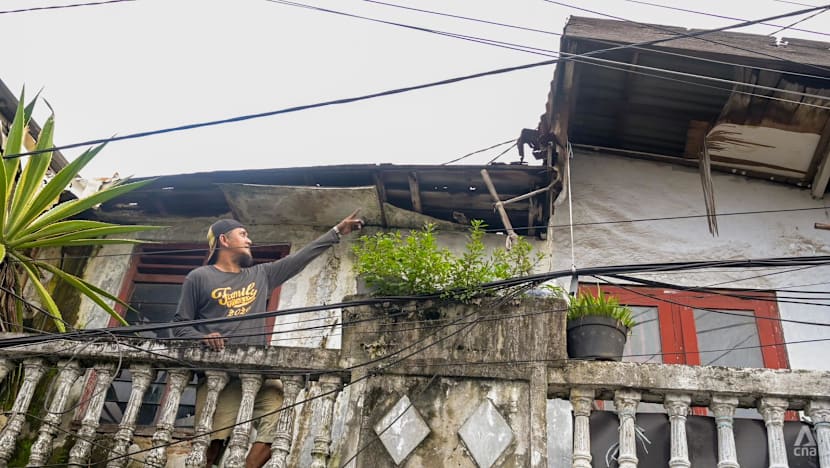
Home dwellers' experience with zinc roofs varies.
Some told CNA they do not feel the metal roofs trap a lot of heat. They said it depends on the ventilation and ceiling design rather than on the building material alone. Others wondered how much tile roofs would cost.
Jakartan Chandra Dalmanto, who has a zinc roof, said: “It is not so hot because there is still a ceiling and not just the zinc roof."
"I think people have been using zinc roofs since ancient times, and maybe they have worked out how to keep it from getting hot,” said Chandra, 40, a handyman.
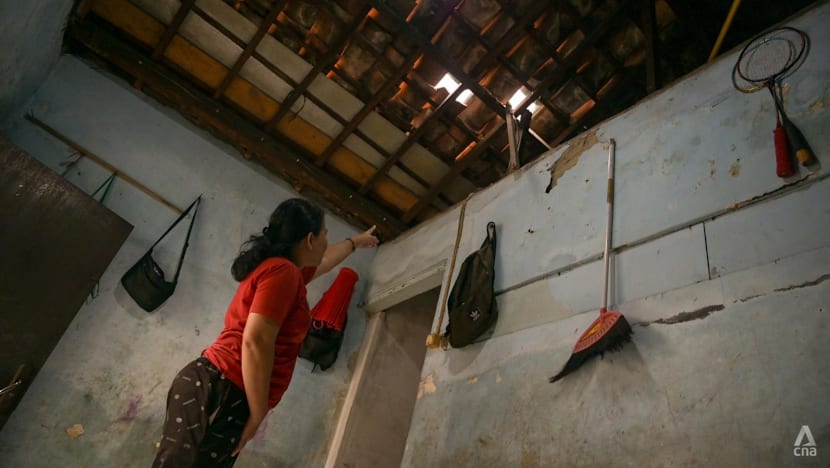
Yuli Febriana, 42, has a roof made of a combination of zinc and tiles. She said her main problem is leakage and would love to have the zinc portion replaced, provided it is done for free.
“If it’s not for free, then I wouldn’t be able to afford it because my husband is currently unemployed,” said the mother of five in West Jakarta.
“I only work sporadically, ironing clothes of people who need my help.”
WILL LOCAL AUTHORITIES FOLLOW?
Local governments have authority over spatial development, said experts.
Thus, a centrally driven roofing agenda risks friction with regional planning priorities, said public policy expert Trubus.
“Regions must also prepare their regulatory policies, whether by regional regulations or bylaws, whether by mayoral regulations or other supportive regulations, which must also not conflict with environmental laws, especially regarding various land use,” said Trubus.
He added that clay extraction must align with regional spatial plans. Expanding tile production may conflict with agricultural zoning and conservation areas.
While the authorities have billed the programme as a sustainable one, the materials used will require strict environmental and health assessments, given the suggestion to mix coal waste with clay, Trubus said.
It is also important to note that Indonesia’s housing forms evolved from local ecology, said experts.
Spatial planner Yayat Supriatna from Trisakti University said materials used for housing have historically reflected soil conditions, climate and cultural adaptation.
Indonesia’s most populous island, Java, is rich in clay soil, which supports tile production.
However, on other islands, such as Sumatra and Kalimantan, soil composition and humidity differ, experts said.
Some communities avoid earth-based materials for symbolic reasons, said Trubus and Yayat, so the plan may not be widely accepted.
“In Sumatra, for example, clay roofs may not be easily accepted because culturally, it’s been told that people’s roofs should not be from soil as it is synonymous with death,” said Yayat.
Besides, uniform roofing directives raise key planning questions, such as structural capacity of buildings, they added.
Tiles are heavier than zinc sheets, they said. In incrementally built informal settlements, structures may not be able to support additional loads without reinforcement.
In earthquake-prone zones, heavier roofs may increase risk for occupants if the housing structure is weak.
“So, for example, if a house is on a mountain slope, it's easier to use zinc roofs,” said Trubus.
“If an earthquake occurs and the house collapses, it's easier to escape. Roof tiles could kill the occupants.”
NOT JUST ABOUT THE ROOF
Given that the government already has other programmes that have yet to be fully implemented, it may be best to focus on those first, said analysts.
A key programme is, for example, the free meal programme meant to combat stunting and malnutrition, but there is also the government’s target to build three million houses for the poor annually, which is still ongoing.
Anton Sitorus, a property analyst based in Jakarta, said: “Housing is not just about the roof. It’s about sanitation, ventilation, lighting and healthy circulation of air.”
If sustainability is the objective, he argued, structural quality of houses should take precedence over aesthetics.
Indonesia still faces fundamental housing challenges under its three million homes programme, such as land availability, regulations and funding, he noted.
Addressing those gaps may be more urgent than replacing roofs, said Anton.
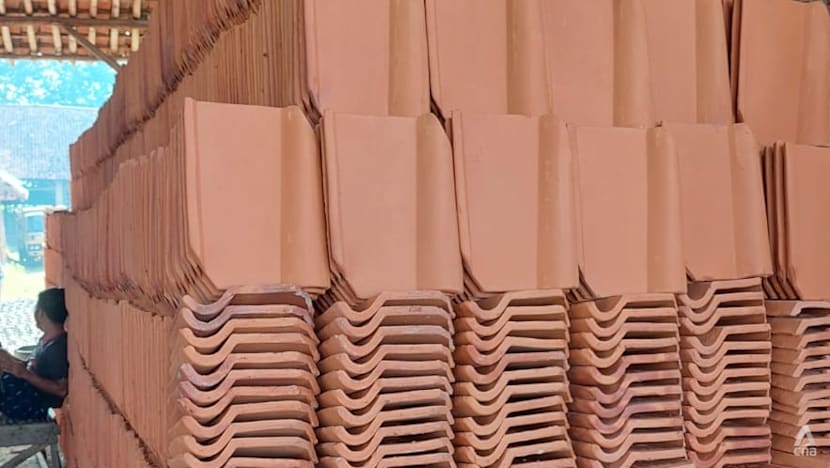
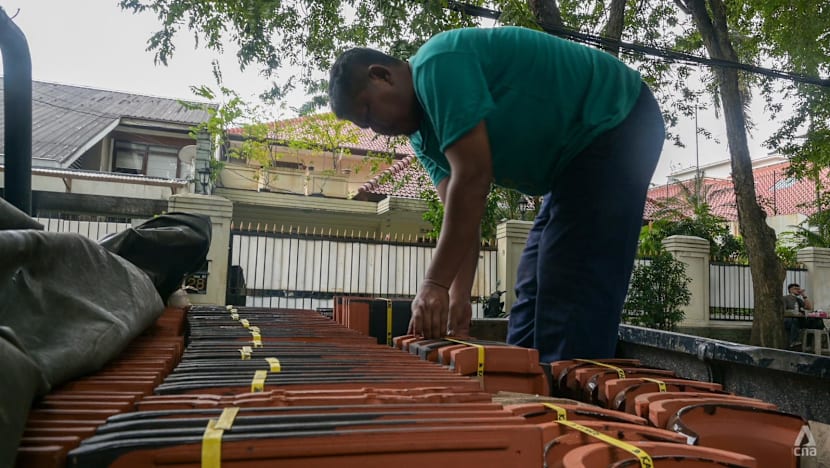
Some businesses are, however, hopeful of the opportunities the programme may bring. A clay-tile roof factory owner in Majalengka, West Java, said some government officials have already visited his facility to enquire about production since Prabowo’s announcement.
“I hope there will be an increase in demand. And also help from the government so my factory will thrive,” said 37-year-old Syarif, who goes by one name.