Amid ‘huge’ burden of 1MDB debt, Malaysia eyes US$7 billion in asset recovery from financial and law firms
With Malaysia facing huge debts from 1Malaysian Development Bhd (1MDB), Prime Minister Anwar Ibrahim's government is trying to fast-track already-in-motion legal action to boost the recovery of funds attributed to the scandal.

This audio is generated by an AI tool.
KUALA LUMPUR: The Malaysian government is stepping up efforts to recover funds and assets linked to the sprawling 1Malaysia Development Bhd (1MDB) scandal, intensifying its focus on international financial institutions accused of facilitating the transfer of billions of dollars in illicit funds siphoned from the state-owned sovereign fund.
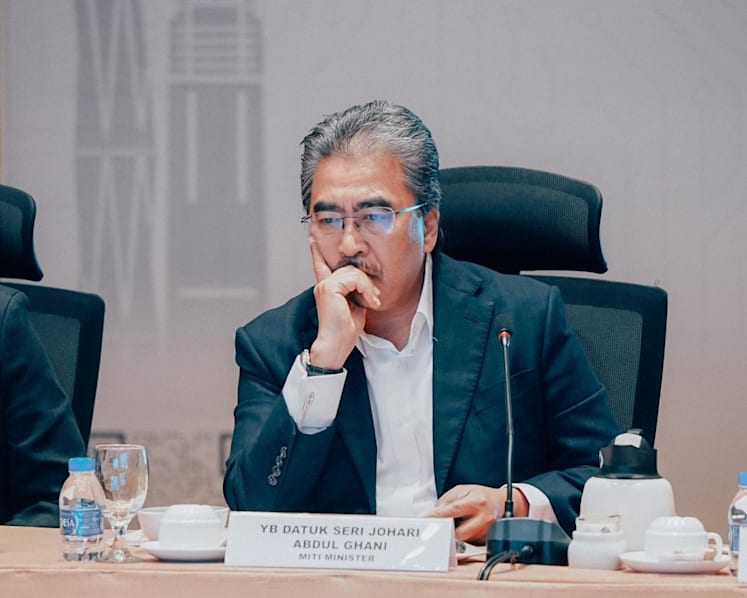
Johari Abdul Ghani, Malaysia’s newly appointed Minister of Investment, Trade and Industry and chairman of the 1MDB Asset Recovery Taskforce, told CNA that the government hopes to “fast-track” existing legal suits against global financial institutions by requesting courts in Malaysia, Singapore and Hong Kong to set early hearing dates in 2026.
“We are also reviewing other banks and financial intermediaries involved in the flow of funds from 1MDB,” he said in an interview, adding that Malaysia remains open to privately negotiated settlements with global financial institutions.
Malaysia has already filed suits in its domestic courts, Singapore and the British Virgin Islands against Deutsche Bank, Standard Chartered Bank, Julius Baer Group Ltd, BSI Bank Ltd and Amicorp, a Hong Kong–based corporate services provider, with total claims amounting to US$5.21 billion (RM21.15 billion).
The Malaysian government has also filed a US$1.83 billion suit against Patrick Mahoney, who was the chief executive officer of private firm PetroSaudi International, and US-headquartered global law firm White & Case.
The suits were filed between May 2021 and July 2025, with the most recent claim brought against Standard Chartered Bank.





Kuala Lumpur is currently in mediation talks in Hong Kong with Julius Baer in a bid to secure an out-of-court settlement.
The government's case against Deutsche Bank will be heard in October and December this year, rescheduled from this month, the bank said on Tuesday.
No dates have been fixed for the other cases yet.
Johari said other parties that received funds directly from 1MDB are also under the task force’s “legal radar”. He did not elaborate.
“We are flexible. If parties choose to enter into negotiations after suits are filed, we are open,” he said, adding that the task force will intensify efforts in the coming months to recover as much money as possible lost by Malaysia in the scandal.
“There is no slowing down in the asset recovery campaign,” he added.
Through overseas legal actions in foreign jurisdictions and non-conviction-based asset forfeitures, Malaysia has recovered just over RM5.68 billion (US$1.4 billion) as of mid-2025, according to the US Department of Justice (DOJ) and the US Embassy in Kuala Lumpur.
This amount comprises proceeds from the sale of assets such as the superyachts Equanimity and Topaz, as well as luxury real estate and high-value artworks.
On the domestic front, recoveries total about RM19.94 billion (US$4.91 billion), comprising settlements and fines imposed on local and international banks.
These include financial settlements with AmBank Group — the Malaysian bank that served as the primary lender and adviser to 1MDB — as well as international banking giants Goldman Sachs and JPMorgan.
This means Kuala Lumpur has so far clawed back RM25.62 billion, but it is still staring at a major financial shortfall.
Through a series of government-guaranteed bond issuances and bank loans between 2009 and 2015, 1MDB amassed debts of RM39.64 billion, according to Malaysian lawyers and Finance Ministry officials involved in the recovery exercise.
The RM25.62 billion amount therefore makes up roughly 64.6 per cent of the 1MDB debts, based on recoveries announced by the DOJ and the Malaysian government.
However, these recoveries pale in comparison with the amounts paid by the Malaysian government to service the principal and interest obligations arising from the 1MDB fiasco.
Prime Minister Anwar Ibrahim, who also serves as finance minister, told Parliament in early December that from 2018, Malaysia inherited RM34 billion in principal debt and RM17 billion in interest commitments as a result of 1MDB’s debt-raising schemes.
He added that the government has since 2018, settled RM42 billion in debt and interest obligations, with another RM13 billion remaining to be paid in the coming years.
“This clearly shows that the asset recovery efforts are insufficient to cover 1MDB’s liability repayment commitments,” he said.
“This is a huge loss to the nation.”
PUBLIC REMINDER
The ongoing asset recovery campaign stands as one of the most lingering dimensions to the long-running 1MDB saga.
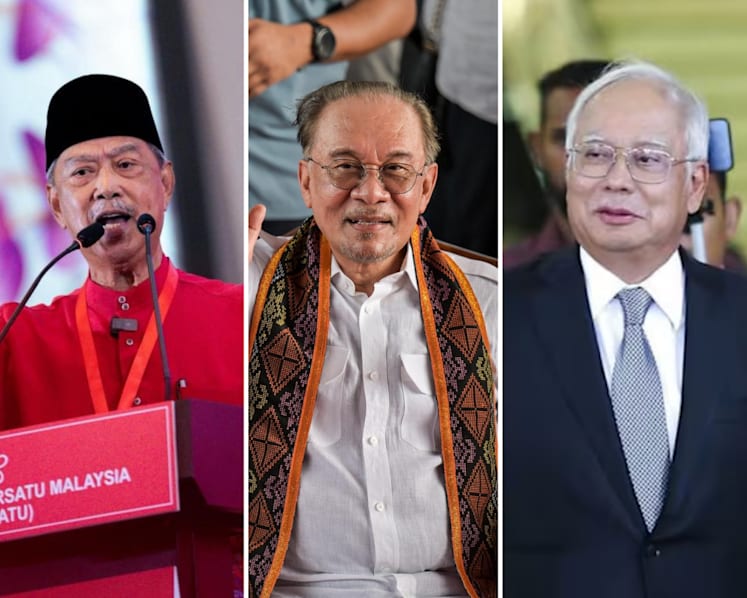
The Anwar administration’s push to accelerate asset recovery comes as the government concluded a major criminal case against former prime minister Najib Razak, widely regarded as the central figure in the scandal.
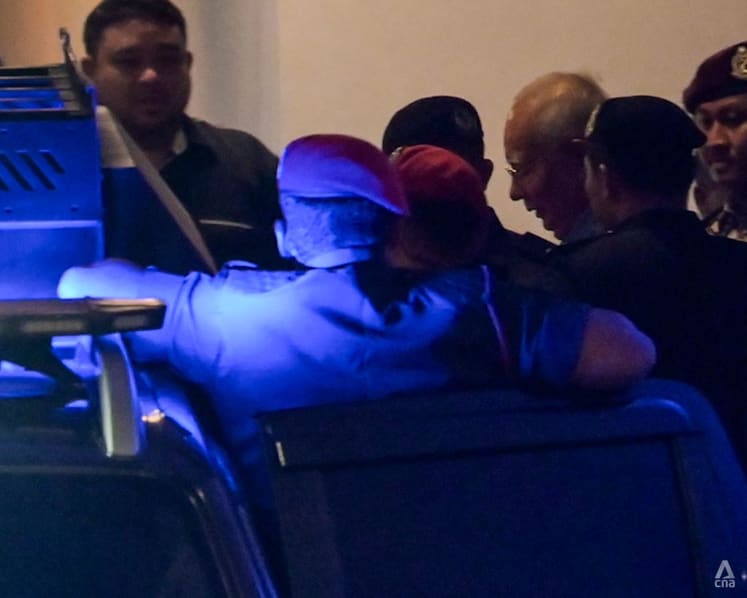
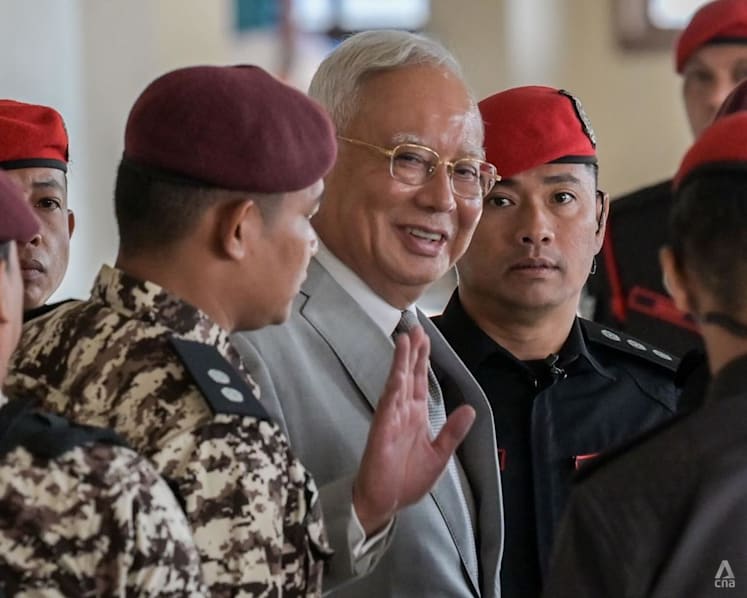
Najib, who is currently serving a six-year prison sentence for corruption involving former 1MDB unit SRC International, was found guilty by the High Court on Dec 26 on multiple counts of money laundering and abuse of power.
He was sentenced to 15 years in jail and fined a total of RM11.38 billion by Justice Collin Lawrence Sequerah.
The conviction — which Najib is appealing — represents the final major criminal prosecution arising from the 1MDB scandal.
However, Najib could still face further legal jeopardy. In mid-2025, certain 1MDB-related money laundering charges against him were dropped with a discharge not amounting to an acquittal, allowing prosecutors to refile the charges at a later date.
Close associates of Anwar said the government views the work of the Johari-led task force as an important public reminder of one of the world’s largest financial corruption scandals.
“The amount that was stolen is staggering, and the public needs to be constantly reminded of the failures of previous governments and the need to crack down on corruption,” said a senior aide to the prime minister, who declined to be named.
SHIFT IN STRATEGY, DOJ ROLE DILUTED
The decision to target financial institutions and professional firms that allegedly enabled the looting of 1MDB represents a strategic shift in Malaysia’s asset-recovery campaign.
Beyond criminal cases against Najib, Malaysia’s restitution efforts have largely relied on asset recovery initiatives led by the US Department of Justice.
The scandal took on global dimensions after the DOJ filed civil forfeiture cases in mid-2016 to seize assets allegedly stolen from the fund.
That effort accelerated after Najib’s government was voted out in May 2018 — the first change of political power in Malaysia in more than six decades — driven largely by public outrage over the misappropriation of more than US$4 billion identified by the DOJ.
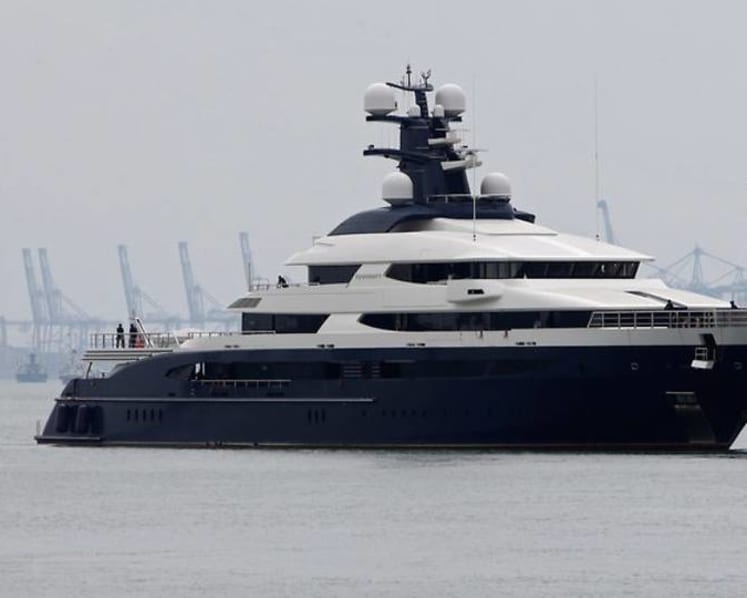
According to lawyers and Malaysian officials familiar with the case, the pool of assets identified by the DOJ was extensive.
In addition to superyachts, the US$1.4 billion repatriated to Malaysia included monies from real estate in London, New York and Los Angeles, luxury items, and proceeds from an investment in Electrum Group, a New York–based investment advisory firm.
By end-2024, officials said the DOJ had set its sights on more than 20 additional assets, including an 11.72-carat diamond, high-value paintings, bank accounts at Morgan Stanley and Wells Fargo, and apartments in France, all designated as being at the “asset seizure stage”.
However, the DOJ’s role has since diminished under the Donald Trump administration.
In February 2025, the administration disbanded the Kleptocracy Asset Recovery Initiative (KARI), which had spearheaded the 1MDB recovery effort, as part of a broader shift in law enforcement priorities.
“The disbanding of KARI was a major setback because we had built a strong working relationship with US investigators,” said a senior Malaysian government-appointed private-sector lawyer involved in the recovery campaign.

RESTIVE POLITICS
Malaysia’s asset-recovery efforts have also been hampered by years of political instability.
Following Najib’s ouster, the country experienced three changes of government before achieving relative stability after Anwar formed a coalition government following the inconclusive November 2022 general election.
The post-2018 administration initially pursued forfeiture proceedings against local recipients of 1MDB-linked funds, but many cases were withdrawn amid political pressures as the government struggled to remain in power.
Under Mahathir Mohamad’s second premiership from 2018 to 2020, several cases against former 1MDB directors and senior officials were discontinued after they agreed to serve as prosecution witnesses in Najib-related trials.
When Muhyiddin Yassin replaced Mahathir as prime minister in February 2020, his administration pursued negotiated settlements with several local and international parties linked to 1MDB.
The first was reached in February 2020 with AmBank Group, which agreed to pay RM2.83 billion to settle all outstanding claims related to its role in 1MDB.
A month later, the government reached a settlement with Deloitte for US$80 million, followed by a similar agreement with KPMG.

CONTENTIOUS SETTLEMENT
The most contentious settlement remains the deal struck with Goldman Sachs — an agreement the Anwar administration has repeatedly said it intends to revisit.
Goldman Sachs played an outsized role in the 1MDB debacle. Between 2012 and 2013, the US banking giant arranged three bond issues totalling US$6.5 billion for 1MDB, earning more than US$600 million in fees.
US investigators later found that billions of dollars were misappropriated with the complicity of rogue Goldman Sachs bankers, who helped move funds through complex financial structures in tax havens controlled by fugitive financier Low Taek Jho, better known as Jho Low.
Under Mahathir’s administration, Malaysia was pursuing fines against Goldman Sachs exceeding US$6.3 billion, including criminal and civil penalties, according to lawyers and government officials involved in the recovery campaign.
That approach changed after Mahathir’s government collapsed. The incoming Muhyiddin administration softened its stance and entered into negotiations with the US bank.
Under a deal finalised in August 2020, Malaysia granted immunity from criminal and civil action to 17 Goldman Sachs directors and certain bank entities. In return, Goldman Sachs agreed to pay US$3.9 billion under a staggered settlement.
Malaysia received an upfront payment of US$2.5 billion, with the remaining US$1.4 billion due by the end of August 2025. That final tranche is now in limbo, tied up in a London arbitration case initiated by Goldman Sachs that has already dragged on for more than two years.
Johari said the arbitration hearings are ongoing and remain confidential.
Editor’s note: This article has been updated to reflect the postponement of hearing dates for Malaysia’s suit against Deutsche Bank from January 2026 to October and December 2026, following a clarification from the bank.