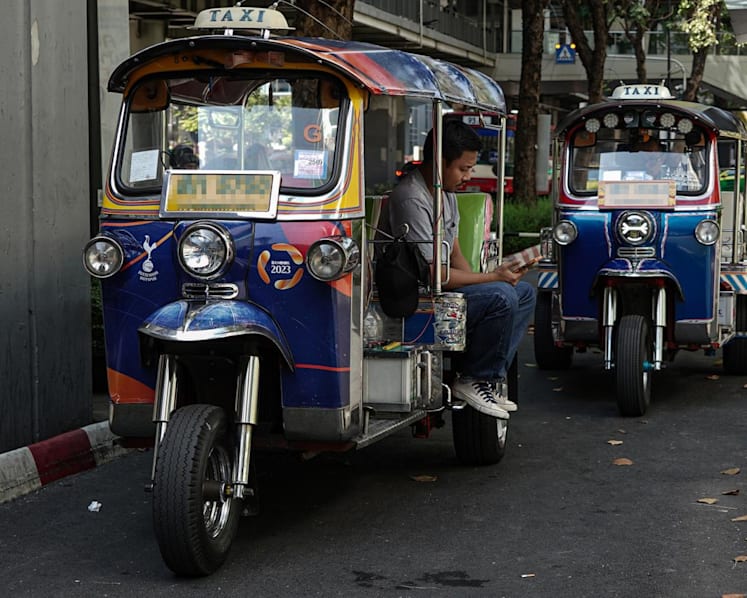
Thailand Election 2026: What to watch out for on polling day and beyond?
For the first time in Thailand’s history, a national referendum will be held alongside the general election on Sunday (Feb 8). Voters will not only elect 500 Members of Parliament, but also decide whether a new constitution should be created.
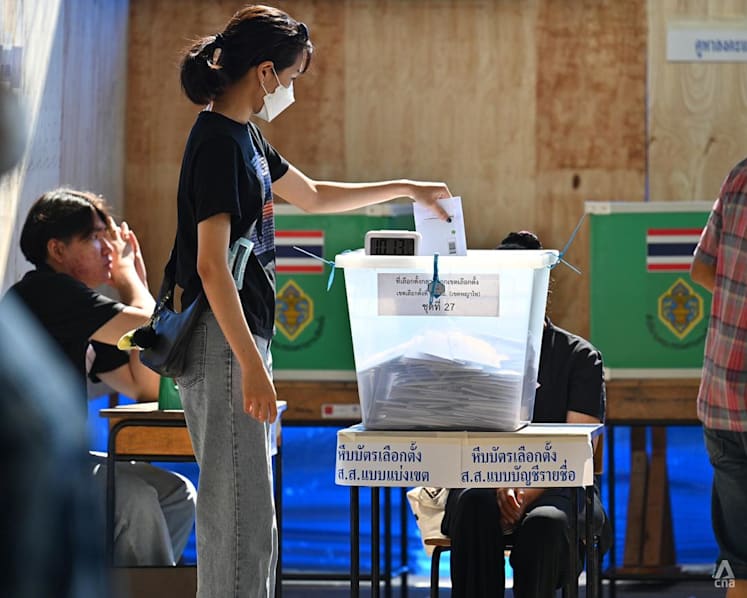
A woman casts her vote during early voting day on Feb 1, 2026, in Bangkok ahead of the general election on Feb 8, 2026. (Photo: CNA/Zamzahuri Abas)

This audio is generated by an AI tool.




BANGKOK: More than 50 million Thais will head to the polls on Sunday (Feb 8) in a snap election called following months of leadership churn and fragile coalition politics in the country. The election is also set against a backdrop of tensions along its land border with Cambodia.
About 2.3 million people will cast their ballots for the very first time and the vote could usher in Thailand’s fourth prime minister in just three years.
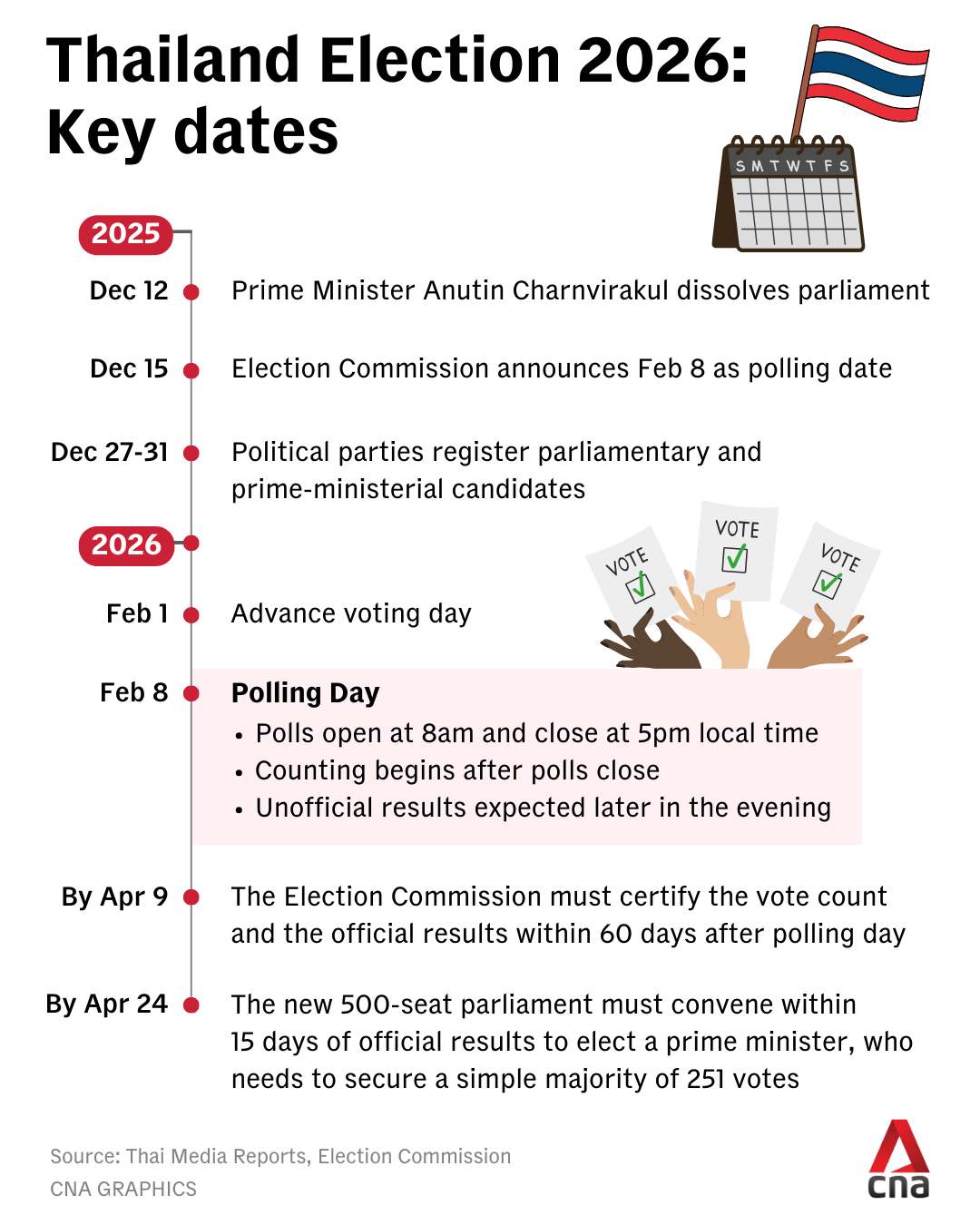
Interim Prime Minister Anutin Charnvirakul dissolved parliament on Dec 12 amid a looming no-confidence vote led by the People’s Party, sending voters back to the ballot box less than three years after the 2023 general election.
Three parties are expected to dominate the contest - Bhumjaithai, Pheu Thai and People’s Party - analysts had previously told CNA.





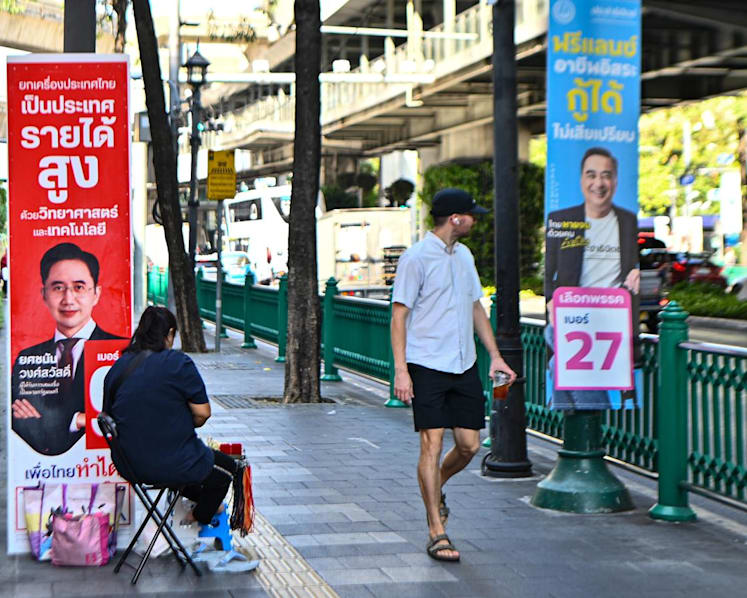
Key issues that have featured in the election campaign include cost of living, economic recovery and political reform.
Here are six things to watch out for in this election:
POLLING CENTRES OPEN FROM 8AM TO 5PM ON SUNDAY
Early voting took place on Feb 1, with more than 2 million people casting their ballots.
The Election Commission said a total of 2.26 million voters registered for advance voting outside their constituencies while 8,610 registered within their constituencies.
In Bangkok, over 740,000 voters cast their vote in advance outside their constituencies. This represented a voter turnout of 87.60 per cent, according to permanent secretary of the city administration Narong Ruangsri.
Thailand’s Election Commission said the advance voting process mostly went smoothly nationwide but some issues were reported, such as incorrect election district codes written on ballot envelopes, reported local news outlet The Nation.
However, most voters will cast their ballots on Sunday across 100,000 polling units nationwide that will be open from 8am to 5pm local time.
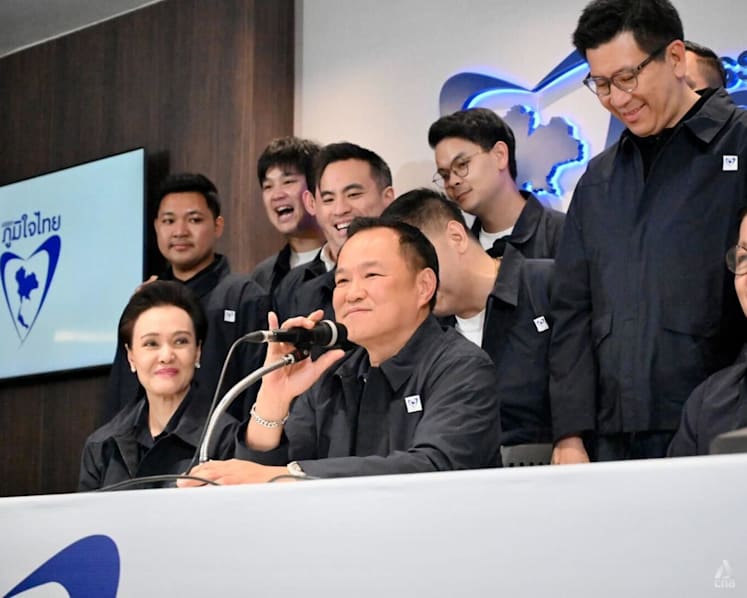
Election Commission Secretary-General Sawaeng Boonmee has assured voters that Sunday’s election is expected to be smoother than the advance voting, reported Bangkok Post.
Unlike advance voting which saw some venues handling between 50,000 and 60,000 voters, each polling station on Sunday is expected to serve an average of about 500 voters, making the process more orderly and manageable, said Sawaeng.
An unofficial, preliminary result is expected late on Sunday night.
The Election Commission must certify the vote count and declare the official results within 60 days of polling day, which is by Apr 9.
NATIONAL REFERENDUM HELD ALONGSIDE ELECTION FOR THE FIRST TIME
For the first time in the country’s history, a national referendum will be held alongside the general election.
Voters will not only elect 500 Members of Parliament, but also decide whether a new constitution should be created. Each voter will receive three ballot papers, two for the general election and one for the national referendum.
Approval of the referendum would give the newly-elected parliament a mandate to draft a new constitution. Otherwise, the current 2017 constitution written under military rule following the 2014 coup would remain in place.
Meanwhile, the general election uses a two-ballot system - voters cast one vote for a local constituency candidate and another for a political party.
Of the 500 seats in the House of Representatives, 400 are constituency seats and the candidate with the most votes in each district wins. The 100 party-list seats are allocated proportionally based on each party’s share of votes nationwide.
Ballots are colour-coded - green for constituency votes, pink for party-list votes and yellow for the referendum - ThaiPBS reported.
With two polling events held on the same day, Sunday’s vote is expected to be Thailand’s most expensive election to date, costing 8.97 billion baht (US$282.1 million).
This is about 3 billion baht more than the 2019 and 2023 elections, which cost 5.80 billion baht and 5.94 billion baht respectively, according to ThaiPBS.
WHAT HAPPENS AFTER VOTING DAY AND HOW IS THE PM CHOSEN?
Upon the announcement of the official results, the 500-seat parliament will then convene within 15 days to elect a prime minister, who needs to secure a simple majority of 251 votes.
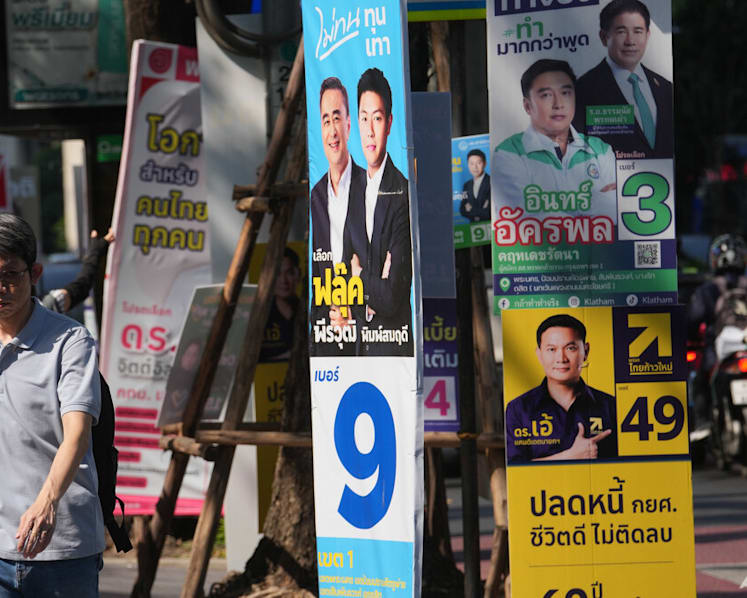
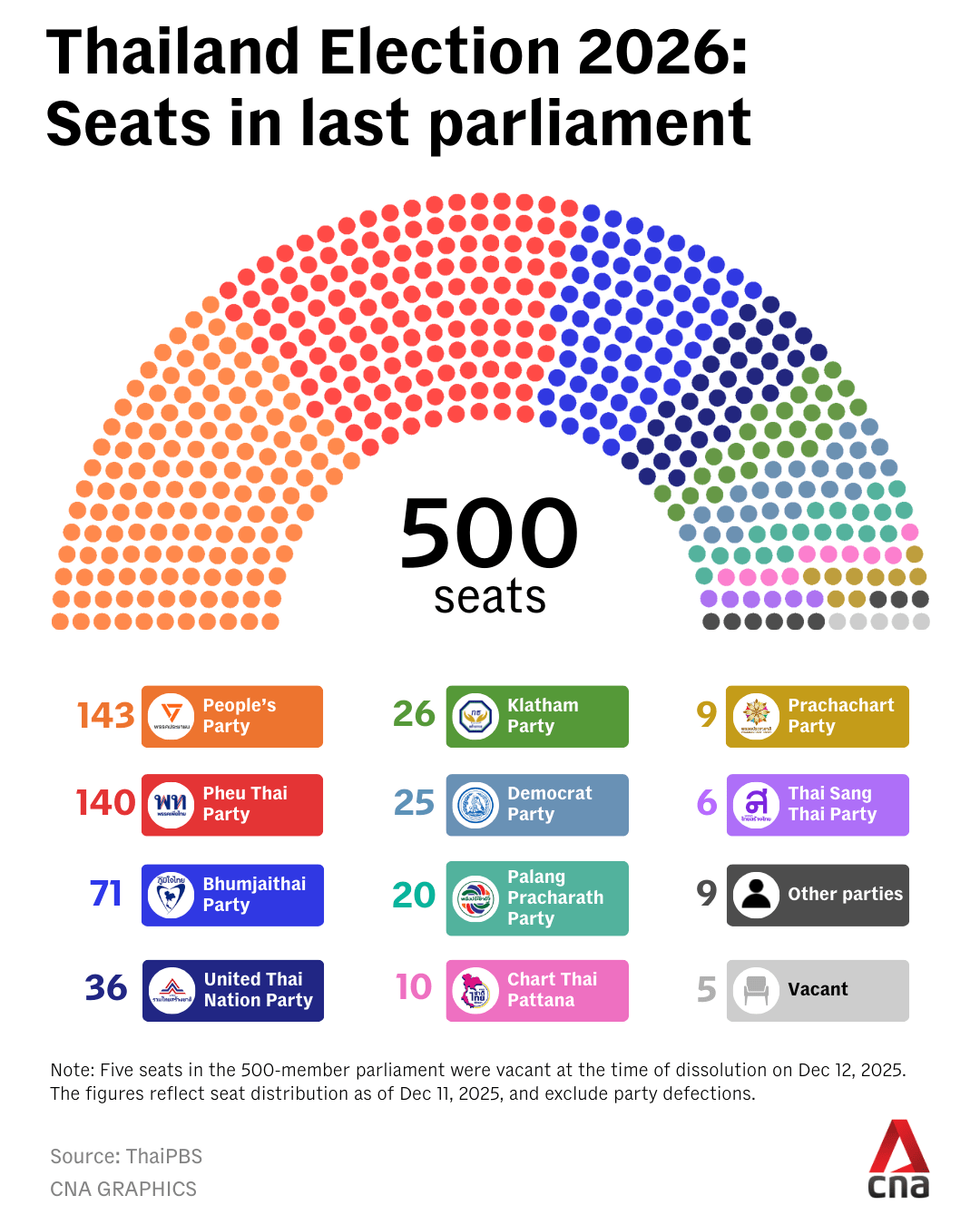
Before the polls, contesting parties submitted up to three prime ministerial candidates and any party with at least 25 seats can nominate a candidate to be put to a parliamentary vote.
A candidate would need to garner support of more than half of the lower house’s 500 members to become prime minister.
If a candidate fails, the house must convene again and the process is repeated for other candidates until a premier is chosen, with no time limit on this process.
KEY PARTIES AND PM CONTENDERS
A total of 57 parties are contesting this election, but analysts expect a three-way race between the People’s Party, Bhumjaithai and Pheu Thai.
However, experts believe that an outright majority for any of the three main parties is unlikely, making an alliance to be almost certain to be required to form a government.
Parties have also submitted 93 eligible names for the prime ministership.
Opinion polls by Suan Dusit University and the National Institute of Development Administration in the lead-up to the vote have consistently rated the People’s Party leader Natthaphong Ruengpanyawut, 38, as the clear preferred prime minister, ahead of caretaker PM and Bhumjaithai leader Anutin, 59, and Pheu Thai’s Yodchanan Wongsawat, 46.
The People’s Party had emerged as the largest party in parliament after the 2023 elections under its former name Move Forward when it was led by Pita Limjareonjat.
This was propelled by support from youths and Thais seeking change after years of political polarisation.
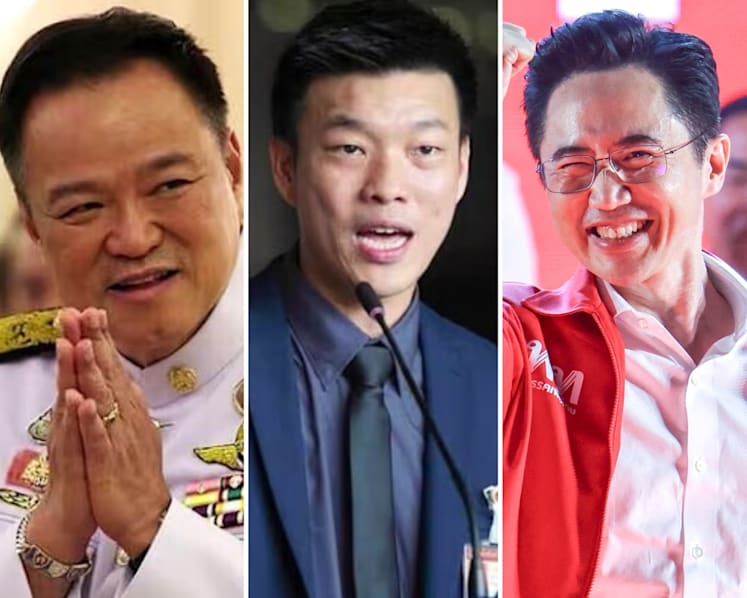
The party however failed to secure enough support in a joint parliamentary vote, after most military-appointed senators in the 250-member upper house opposed it, seen as a pushback by the conservative royalist establishment.
Its platform of democratic reform, changes to education, justice and social policy and a seemingly fresh approach to governance ultimately left the party on the wrong side of the parliament floor, even as it emerged under a new banner as the People’s Party.
Its prime minister candidate Natthaphong is Thailand’s youngest Leader of the Opposition.
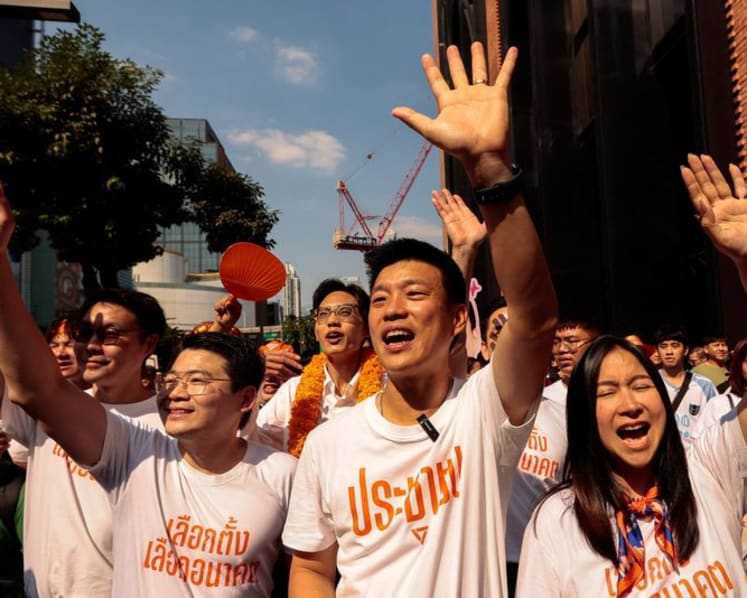
The People's Party has also nominated deputy leader Sirikanya Tansakun, 44, as an alternative prime minister candidate.
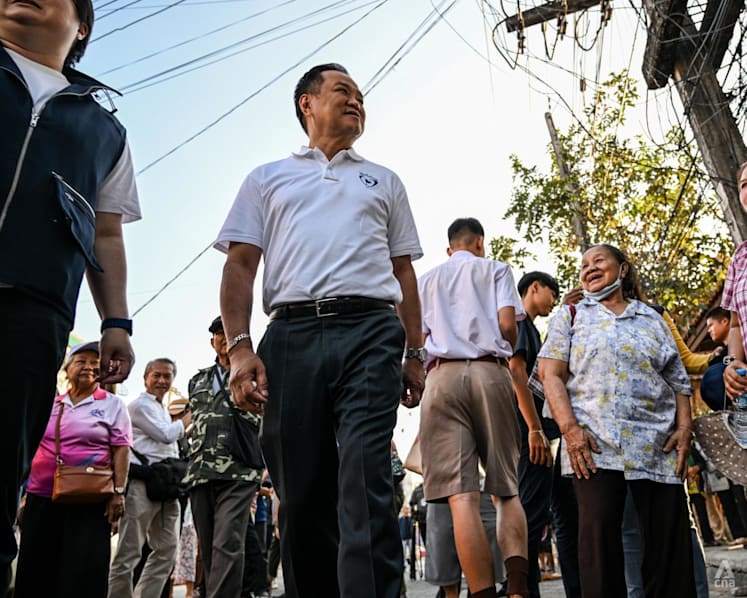
Meanwhile, Bhumjaithai - which is led by political pragmatist Anutin - is also positioning itself as a strong contender after it helped dismantle the Pheu Thai-led coalition following a court’s sacking of then-prime minister Paetongtarn Shinawatra.
Experts have said that Anutin may have boosted his appeal by adopting an aggressive military posture in Thailand’s border conflict with Cambodia and seeking to ride a nationalism wave.
While Bhumjaithai was not a contender in the 2023 and 2019 elections, taking 71 and 51 seats respectively, it was enough to win the staunch royalist party key positions such as interior and health minister and deputy prime minister.
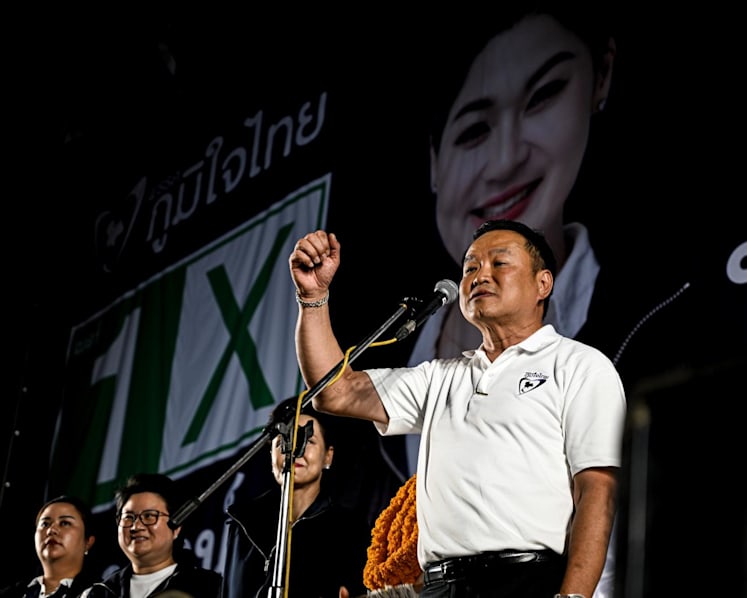
Besides Anutin, Bhumjaithai is also putting forward current foreign minister and veteran diplomat Sihasak Phuangketkeow as its second prime-ministerial candidate.
Another party to watch is Pheu Thai, which has been a dominant force in Thai politics over the past two decades, mobilising rural voters, reshaping welfare expectations and provoking fierce resistance from conservative elites.
But years in exile, court cases, party dissolutions and generational change have eroded their once-unassailable dominance, experts said.
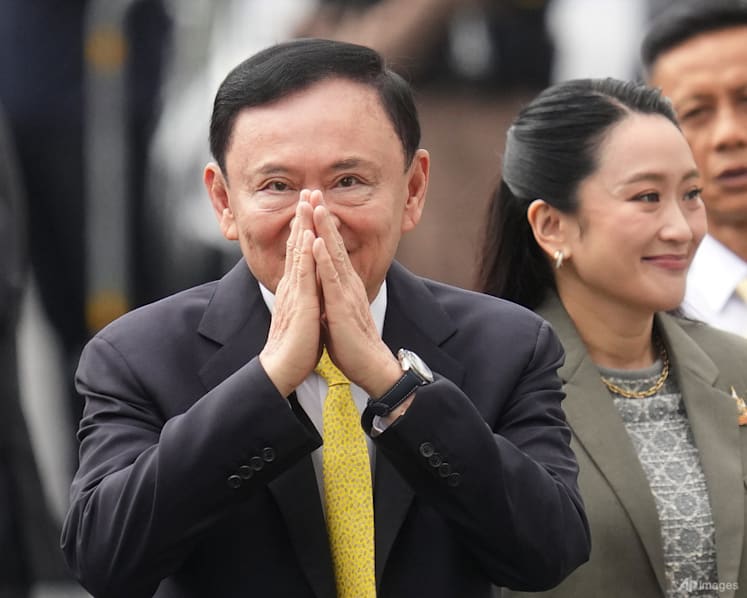
Founded by divisive and currently jailed billionaire and former prime minister Thaksin Shinawatra, the party has powerful enemies in the royalist establishment and multiple leaders from or linked to the Shinawatra family have been removed by military coups and court rulings.
The latest was Thaksin’s youngest daughter Paetongtarn who was ousted from premiership last year.
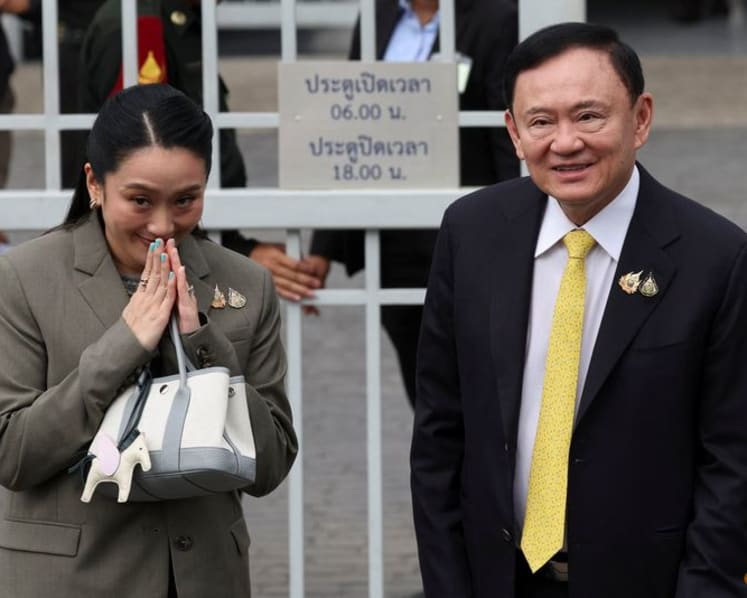
The upcoming vote will be a test of whether the Shinawatra dynasty still has pulling power in contemporary Thailand, political experts earlier told CNA.
Pheu Thai’s top prime ministerial candidate this time is Yodchanan, Thaksin’s nephew and the son of former PM Somchai Wongsawat.
Other significant parties include the Democrat Party led by former prime minister Abhisit Vejjajiva and the Klatham Party led by deputy PM Thammanat Prompao.
These parties and other smaller ones could play a role in deciding the formation of the new government if no parties win an outright majority as expected, with horse-trading talks expected in the days ahead.
However, unlike in 2023 when the vote for the prime minister took place in a joint parliamentary sitting that includes 250 military-appointed senators, the vote for the prime minister this time will just be by the lower house of 500 parliamentarians.
REFORM FATIGUE, BORDER TENSIONS RESHAPE THE RACE
But beyond the candidates and party line-ups, the election campaign has been shaped by deeper shifts in voter mood and regional tensions
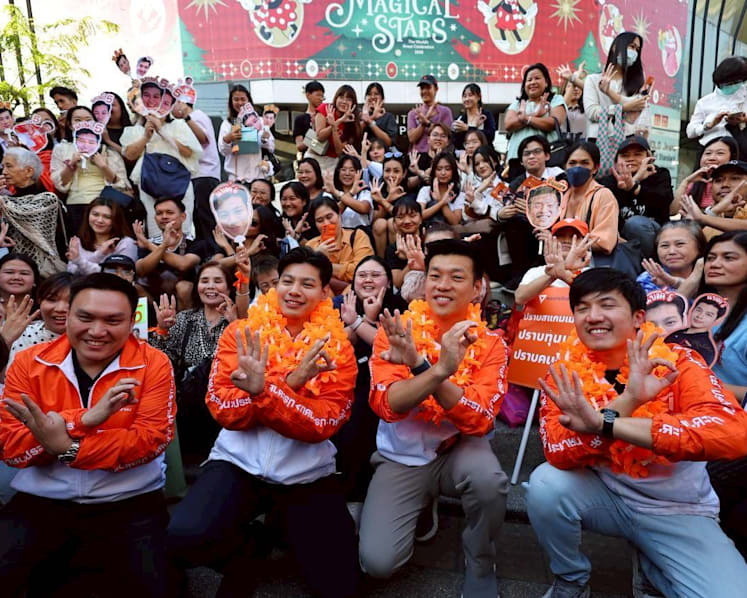
Earlier this week on Tuesday, thousands of young orange-clad supporters cheered on the People’s Party rallies ahead of the election, evoking memories of the “orange wave” of young supporters that propelled the Move Forward Party to victory in the 2023 election.
But the scene today reflects waning confidence among youth voters for radical change, as they weigh in on whether institutional reform has stalled or adapted after years of repeated political resets and pushback from the conservative royalist establishment.
The People’s Party has continued to champion promises of its rebranded party to combat corruption and push for reform of the royal insult or lese majeste law, which criminalises insults against the monarchy.
Party leaders told CNA that it is recalibrating further away from the streets and into a more mature party that can attract the votes and trust of the entire country.
Meanwhile, Stithorn Thananithichot, a senior research associate at Chulalongkorn University, warned of a struggling progressive agenda amid a wave of populism and nationalism shaping this year’s election campaign.
“The feeling to change, to reform, is still there, but nationalism is also lighting up. Many people are thinking about pragmatic policies that can make their well-being better. So there is no focus point that the people can pay attention to,” Stithorn previously told CNA.
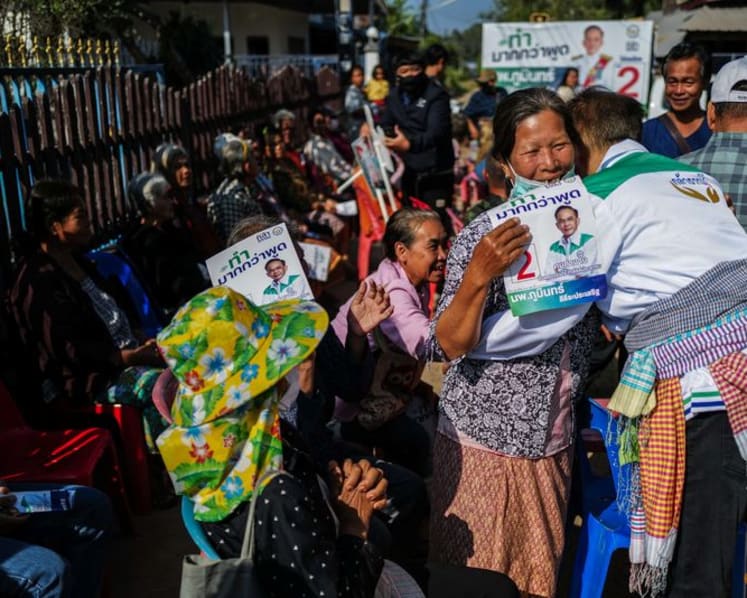
The border crisis with Cambodia, a struggling economy, a huge bloc of undecided voters and the legacy of vote-winning spending have together shaped a campaign driven more by immediate concerns than by a clear contest of values or ideas, he added.
The decade-old conflict between Thailand and Cambodia that ensued after a Cambodian soldier died in a skirmish in May last year, soon erupted into more bloodshed, killing dozens of people and displacing around one million on both sides.
Cambodia’s role as a key hotspot for scam centres have also drawn the ire of regional leaders, while Thai troops continue to seize scam complexes along the border.
OTHER KEY CAMPAIGN ISSUES: ECONOMIC UNCERTAINTY, FLOODS
As voters deal with debt worries and economic uncertainty, economy-boosting policies are pushed to the forefront of the political debate.
Thailand’s economy has seen a slump since the late 1980s and early 1990s and has been unable to return to similar heights of recovery after the Asian financial crisis in 1997 under Thaksin.
The exports market has also been hit by uncertainty due to United States tariffs, which has been reduced to 19 per cent after it was set at 36 per cent in April 2025.
The Thai finance ministry on Jan 26 also cut growth projections for 2026 from 2.2 per cent to 2 per cent, citing weaker manufacturing output.
To tackle economic headwinds, political parties have come forward with pledges of cash handouts, lotteries, subsidies and debt moratoriums.
For instance, the People’s Party pledged a 1,000 baht co-payment top-up for 12 million people, while Pheu Thai promised income top-ups for those earning below 36,000 baht a year. Bhumjaithai, meanwhile, vowed to revive the second phase of its co-payment subsidy scheme, which previously covered half the cost of selected food and consumer goods.
Pheu Thai in particular is known for its populist policies that have garnered support from the working class. It proposed a “million-maker scheme” in a daily lucky draw, giving nine people 1 million baht daily.
Parties have also pledged monthly cash handouts for different groups including mothers, the elderly and people with disabilities.
Observers have raised concerns over whether nationalist campaigns will deliver its promised safety and security or is merely symbolism to win votes.
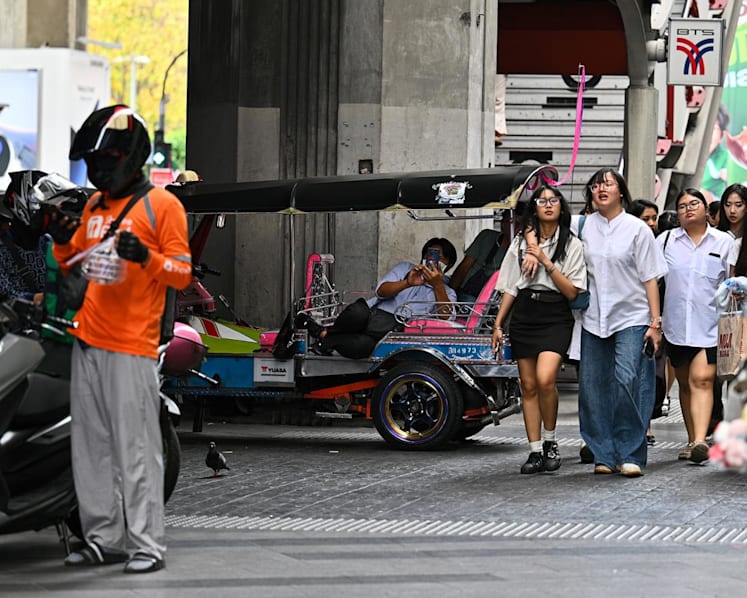
Thailand is also still reeling from flooding and landslides, as the country’s south saw its worst floods in 300 years, which have killed 145 people, crippling Hat Yai - a popular tourist destination.
Local authorities had faced sharp criticism over unclear warnings, slow rescues and relief efforts that left many communities without power, food and water for several days.
Alleged mismanagement of the disaster has also cast a bad light on Anutin’’s government.
Speaking at a rally in Hat Yai on Wednesday night, Anutin said that flood recovery had been completed within weeks of the disaster and reaffirmed the party’s commitment to rapid crisis response and sustained regional development.
Earlier on Tuesday, Natthapong unveiled a plan to invest 15 billion baht over four years to strengthen the flood prevention system in Hat Yai, reported Bangkok Post.
Sathaporn Wichairam, an assistant professor in public administration at Buriram Rajabhat University, believes that the most urgent issue is to address the economy and cost of living which affects people nationwide.
“On other issues, opinions differ widely, making it harder to find common ground,” he said.