Thailand Election 2026: A look at the 3 key parties contesting the polls
Thailand’s Feb 8 snap election is shaping up as a three-way contest, with voters weighing stability against reform and political legacy against change.
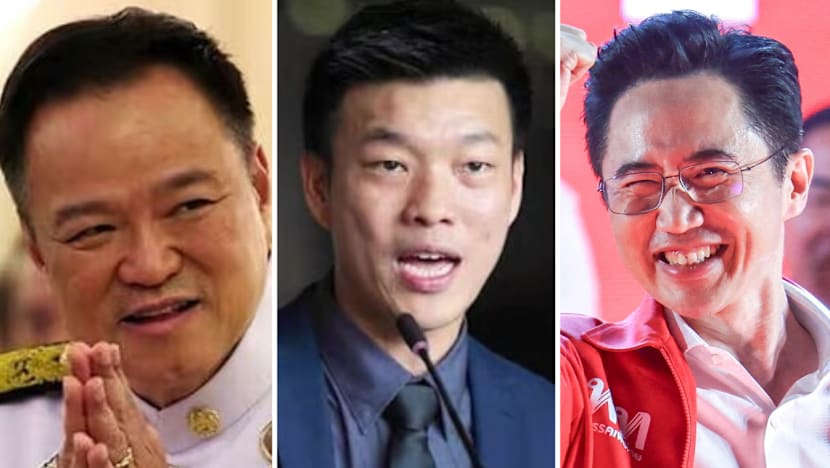
(From left) Bhumjaithai's Anutin Charnvirakul, People's Party's Natthaphong Ruengpanyawut and Pheu Thai's Yodchanan Wongsawat. (Photos: Reuters/Chalinee Thirasupa, AP/Sakchai Lalit, Reuters/Athit Perawongmetha)

This audio is generated by an AI tool.


BANGKOK: Thailand heads into a snap election on Sunday (Feb 8) after years of political churn and fragile coalitions.
Voters will decide at the ballot boxes whether to reward the incumbent, revive a once-dominant political dynasty, or hand reformists another chance to govern.
Three parties dominate the race: Bhumjaithai, led by incumbent Prime Minister Anutin Charnvirakul; Pheu Thai, the populist force built by former premier Thaksin Shinawatra; and the progressive People’s Party, reborn from the dissolved Move Forward Party.
BHUMJAITHAI PARTY
The Bhumjaithai Party headed by Prime Minister Anutin is heading into a snap election after parliament was dissolved less than three months into its term – a high-stakes gamble aimed at securing a full four-year mandate.





Anutin became Thailand’s 32nd prime minister in September last year – the country’s third leader to take office in just two years – after Bhumjaithai moved swiftly to form a minority government following the court-ordered removal of then premier Paetongtarn Shinawatra.
By December, he had dissolved parliament, betting that incumbency, momentum and political realignment would work in his favour.
Anutin's rise reflects years of strategic manoeuvrings by Bhumjaithai, a party hailing from the northeastern province of Buriram.
The party’s patriarch Newin Chidchob was once an ally of former Prime Minister Thaksin until a breakup with him in 2008 marked a turning point in Bhumjaithai’s ascent, turning it from a regional force into a national kingmaker.
Anutin, known by the nickname “Noo” – Thai for mouse, has embodied the party’s ideological flexibility. He has served in multiple administrations, holding some of the most powerful portfolios in government.
As public health minister, he oversaw Thailand’s decriminalisation of cannabis and led the country’s COVID-19 response. Later, as interior minister, he wielded significant influence over provincial and local appointments, steadily building political muscle.
Central to Bhumjaithai’s current strategy is the recruitment of influential local political families – so-called “big houses” – into its ranks.
Among the most prominent is Varawut Silpa-archa, a former cabinet minister and son of late prime minister Banharn Silpa-archa, who joined Bhumjaithai along with 11 other incumbent members of parliament from his own family’s party.
With the additions, Varawut said the party is now better positioned than ever to offer a comprehensive policy platform.
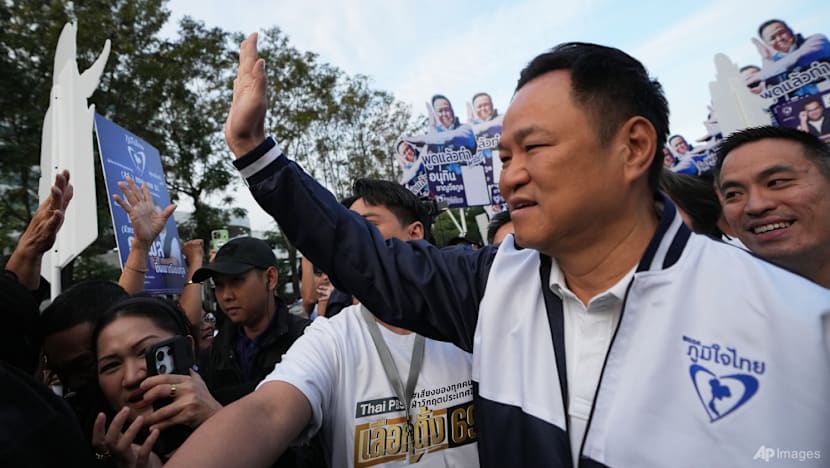
Bhumjaithai’s campaign blends the local clout of its MP candidates with an appealing national welfare and economic agenda.
Anutin is leaning on a team of technocrat ministers overseeing finance, commerce and foreign affairs, seeking to carry the momentum of a young incumbency into the race.
There is also a nationalist element to the campaign.
The border conflict with Cambodia has sharpened public sentiment, and Anutin has leaned into it at rallies, invoking Bhumjaithai’s name, which translates to “Proud to be Thai”.
That message has helped position Bhumjaithai as a new political anchor for conservative voters, linking military-aligned and royalist networks.
Still, Feb 8 will tell if Anutin’s snap election gamble pays off.
Although Bhumjaithai is the incumbent and boastfully predicts it will win the most seats, coalition partners are highly likely needed to govern again.
PEOPLE’S PARTY
After winning the most votes in the 2023 general election, the Move Forward Party appeared to have ushered in a political breakthrough. Instead, it was blocked from forming a government and later dissolved by the Constitutional Court.
Reborn as the People’s Party shortly after, the country’s progressive “orange” movement faces a familiar question: Can reformists remain faithful to their ideals and still secure the right to govern?
Challenging entrenched power structures has long defined the movement – and earned it fierce opposition. Critics have branded its leaders as traitors who are disloyal to the monarchy, accusations the party rejects.
While the party’s name has changed, its policy priorities and core support base remain largely intact. Former prime ministerial candidate and Move Forward leader Pita Limjaroenrat, however, has been sidelined – banned from politics for a decade.
The party is now led by Natthaphong Ruengpanyawut, a 38-year-old businessman and its prime ministerial candidate. He faces the task of stepping out of his predecessors’ shadows while repositioning the party as a credible government-in-waiting.
Natthaphong told CNA he believes the political landscape has shifted in the party’s favour.
“I feel more confident, more (hopeful),” he said. “We can see the people gathering around (us) … they want a new government to fix the core problems in Thailand. We can change the country (through) the people’s power.”
He also pointed to institutional changes since 2023, including the end of the Senate’s role in selecting the prime minister, removing a key obstacle that blocked Pita’s bid for office.
“We have a real chance … the next government will be one that reflects the people’s choice,” he added.

Deputy party leader Sirikanya Tansakun, an economist who has been with the movement since its earliest days, said the party’s rapid rise forced it to mature quickly.
“In 2019, it was about answering the ‘why’ question: “Why Future Forward?” So, if you’re pro-democracy, you vote for Future Forward,” she said, referring to the party that was later dissolved and rebranded as Move Forward.
“Then in 2023, it was more about ‘what’ we offered – very comprehensive policy platforms. And now, this time, it's about ‘how’ to implement them.”
That shift is reflected in a campaign heavy on technocrats and experienced politicians, with an emphasis on wholesale reforms and de-bureaucratisation across the economy, security, healthcare and education, which the party says has stifled the country’s growth and development for decades.
Some internal critics are concerned the party is retreating from controversial issues, such as the reform of the royal defamation law, for which its predecessor was dissolved.
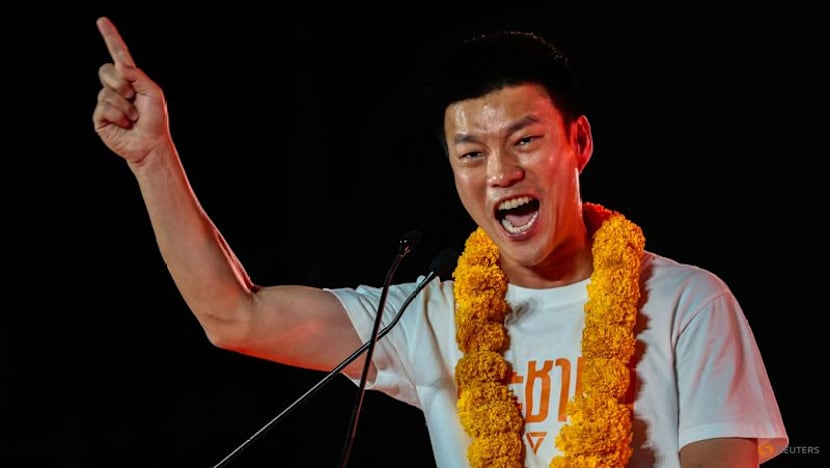
The People’s Party hopes to replicate its predecessor’s 2023 performance. Opinion polls consistently show the party leading nationally, especially among younger and urban voters.
But popularity alone offers no guarantees. Unlike in 2023, there is no clear incumbent fatigue to propel a protest vote, and years of political upheaval may have dampened expectations of real change.
Yet, among supporters, optimism persists.
“For the younger generation, they will see that things need to be done transparently,” said one supporter at a rally. “People's power cannot be bought.”
PHEU THAI PARTY
The populist Pheu Thai Party carries a formidable legacy in Thai politics.
Founded by Thaksin, the party – and its predecessors – have long dominated Thai politics, buoyed by vast campaign war chests and populist policies that secured deep loyalty among rural voters.
But the party now faces a far more uncertain political landscape after Thaksin’s return from 15 years of self-exile in 2023 exposed his fading influence and miscalculation of the country’s power dynamics.
Pheu Thai’s electoral strength, built over two decades through generous welfare policies and grassroots networks, has been tested by recent setbacks – two of its prime ministers were ousted, its coalition imploded and Thaksin put behind bars.
Support in its traditional northern and northeastern strongholds has also weakened as younger voters and reformist movements gain traction.
In the 2023 election, parties aligned with Thaksin failed to top the polls for the first time since 2001 – a stark sign of shifting political currents.
Pheu Thai now finds itself in a competitive three-way race. At the centre of its campaign is Yodchanan Wongsawat, a 46-year-old biomedical engineering professor and the nephew of Thaksin.
His profile represents a deliberate effort by the party to project fresh leadership while retaining ties to the Shinawatra legacy.
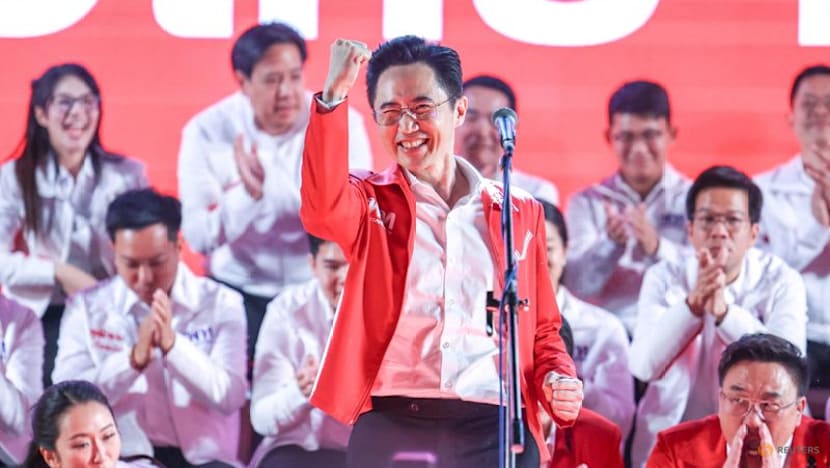
The party is pitching its familiar brand of populist policies and cash handouts in a declared “war on poverty”, including an eyebrow-raising sweepstakes promising a million baht (US$ 31,000) to nine Thais each day.
Pheu Thai has also presented two other prime ministerial nominees: the experienced party leader Julapun Amornvivat and senior figure Suriya Juangroongruangkit, signalling a blend of new and seasoned faces as it tries to appeal across voter segments.
As the vote nears, Pheu Thai’s performance could determine not only whether it returns to power but also whether the Shinawatra dynasty remains a defining force in Thai politics.
A poor showing could further diminish its national influence, while a strong result could reaffirm its relevance in a changing political era.
The fate of the party is also tied to that of Thaksin, who could be released on parole in May – coinciding around the same time when a new government is expected to be formed.