More than half of China’s adults are overweight or obese. It must now beat the bulge, or else
If current trends continue, about 70 per cent of Chinese adults could be overweight or obese by 2030, which will put a strain on medical resources. CNA’s Insight looks at how Beijing is making weight control a national priority.

Qin Siping, 19, participating in a weight loss camp in Shenzhen.

This audio is generated by an AI tool.


SHENZHEN: Before she turned 18, Qin Siping thought “being a little fat didn’t matter” as she was still young. But time passed, and she felt her body “getting increasingly swollen”. Her colleagues even joked that she might “break the seat”.
So she quit her job to attend the QiDian weight loss camp in Shenzhen, where there is a structured schedule for daily workouts, carefully planned meals and early lights-out. Campers must also weigh in twice daily.
For Qin, now 19, this is less a fitness retreat than a reset. Four months into the programme, she has lost almost 30kg, after starting off weighing more than 110kg.
“My mum said to just focus on losing weight and not think about anything else,” she said.
Around her, dozens of other participants push through the same grind. Many of them cite health concerns, while some want to look better or feel more confident.
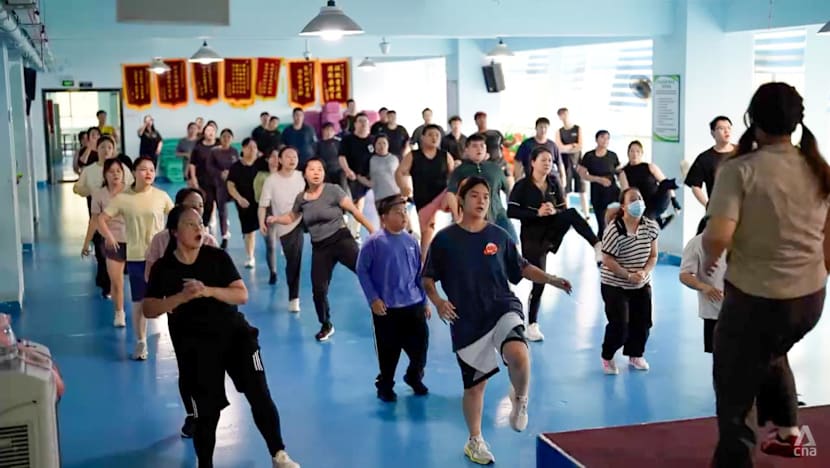
Shi Yizhi, 23, who has been staying at the camp for two months, said: “To be honest, I want to find a girlfriend. I used to be overweight, and I didn’t look my best.”
According to camp co-founder and chief coach Chen Fei, about 80 per cent of participants enrol voluntarily after recognising the risks obesity poses; the remainder are sent by families who “couldn’t bear to see them like this”.
Since it opened in 2021, the camp has trained nearly 10,000 students. It is one of a growing number of weight loss camps across China, a country where expanding waistlines have become hard to ignore.
About one in five Chinese adults were overweight or obese more than three decades ago. By 2021, China had more than 400 million adults in these categories — the largest number in the world, ahead of India and the United States.

More than half of Chinese adults are now overweight or obese. This figure could rise to 70.5 per cent by 2030 if trends continue, health officials warned in 2024 as authorities designated the next three years as “weight management years”.
China’s weight problem has also been designated as a major public health threat. CNA’s Insight examines what is driving the obesity surge and whether the country can rein it in before the health and economic costs grow heavier still.
RICHER FOODS, CHANGING LIFESTYLES
Like several other Asian countries, China sets a lower threshold for what counts as overweight or obese as measured by body mass index (BMI), a ratio of weight to height.
In the US, overweight is defined as a BMI of 25 to 29.9 and obesity as 30 or higher. But in China, the cut points are 24 and 28 respectively.
WATCH: More than half of China’s adults now obese or overweight — Can China beat the bulge? (46:05)
This reflects a physiological difference, highlighted family medicine physician Vicky Xu at Parkway MediCentre Xintiandi in Shanghai. Chinese with the same BMIs as Caucasians tend to have more body fat and face higher risks, such as diabetes and heart disease.
And more Chinese are at risk now because of their lifestyles. As incomes rose over the decades, diets changed, for example.
By 2015, fat accounted for more than 35 per cent of the energy intake of the Chinese, compared with about 20 to 25 per cent then in South Korea and Japan. Globally, China has one of the highest salt intakes. Meat, once reserved for special occasions, is now a staple.
Sugar, oil and protein intakes have climbed, said Xu, noting that fast food and takeaways have become “so popular, so convenient”, especially in the past decade.
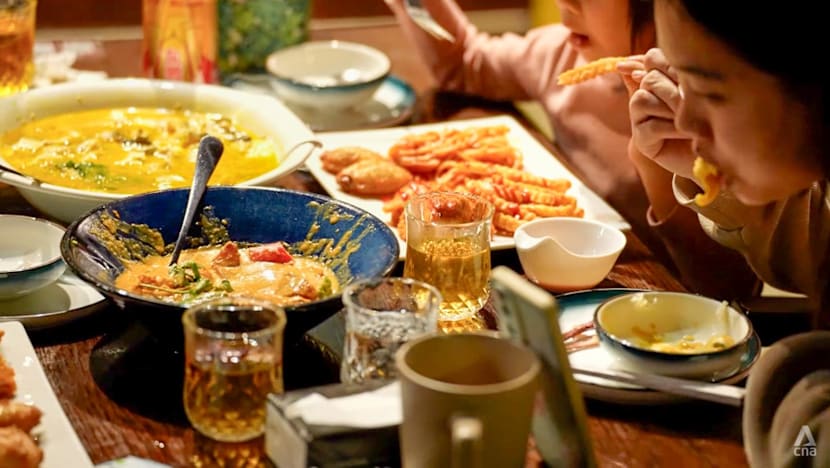
Hong Tao, the director of the Beijing Technology and Business University’s Institute of Business Economics, described China’s dietary development as a shift from “not having enough to eat” to deriving “satisfaction” from food.
At the same time as there has been increased access to calorie-dense meals, daily physical activity has declined. Urbanisation has drawn millions from farms into offices and factories, while mechanisation has reduced manual labour.
Long working hours compound the problem. In the first 11 months of last year, employees worked an average of 48.6 hours a week.
Mabel Lu Miao, co-founder and secretary-general of the Centre for China and Globalisation, said office workers seated for more than eight hours a day may also be eating at their desk and rarely exercising.

Stress adds another layer and “can make people eat more”, Xu added, describing “emotional eating” as a form of self-comfort. Alcohol, common at business gatherings, and sugary drinks such as bubble tea also increase people’s calorie intake.
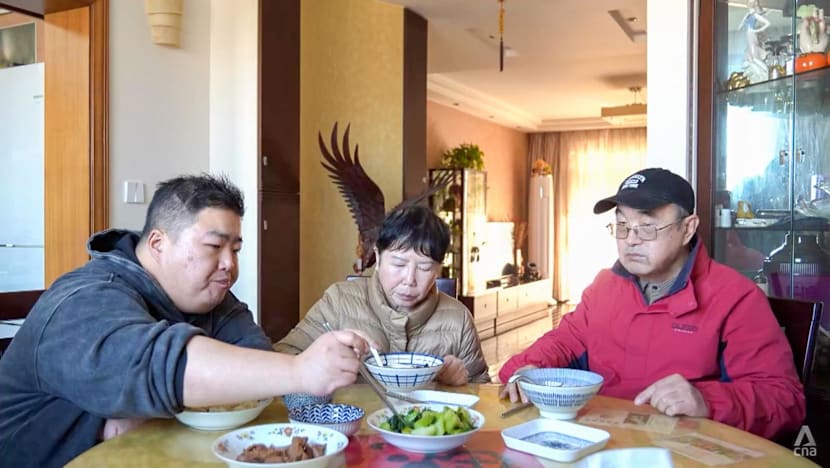
For media agency owner Alpha Zang in Shanghai, late nights and heavy meals became routine after university. “I crave a big meal to reward myself,” said the 38-year-old, who weighs 125kg and is 172cm tall.
One dish is rarely enough to satisfy him, so he orders and finishes several.
Food also carries cultural weight in China. Gatherings centre round sumptuous meals, and warmth is expressed through abundance. Leaving guests underfed is seen as inhospitable.
As part of Chinese cultural tradition, parents and grandparents tend to dote on their little ones too, equating plumpness with health and good fortune.
As an only child — like many among his generation — Zang recalled his grandfather giving him an extra meatball even when he was full. “I was well fed from a young age and was always called a ‘little fatty,’” he said.
A TICKING TIME BOMB
Over a decade ago, Li Xiaodi weighed more than 100kg too. She would have her menstrual period only once or twice a year. She felt lethargic every day. A doctor warned of more health problems if she did not change.
Today, the 28-year-old is the picture of health. A fitness influencer 164cm tall and weighing about 48kg, she posts workout and healthy eating tips online.
Her turnaround took years. “It felt as if eating was the biggest portion of my life,” she said, crediting her mother with helping in her weight loss journey.
Her experience reflects broader moves in China to confront overeating and its consequences. “(Obesity) isn’t just an individual problem. It’s a family issue,” said Hong. “It’s also a societal issue.”


Obesity is the sixth-leading risk factor for death and disability in China. Doctors classify it as a chronic disease linked to more than 200 conditions, including hypertension, heart disease and certain cancers.
“We need to keep body weight in the healthy range … to prevent chronic disease,” said Xu, who called excess weight a “health time bomb”.
One study estimates that without effective intervention, obesity-related healthcare spending could reach 418 billion yuan (US$61 billion) by 2030, accounting for 22 per cent of total health expenditure, up from 8 per cent in 2022.
In an ageing society, higher obesity rates among seniors — increasing the risk of other diseases — add “another layer of burden” to already heavy healthcare costs, said Yang Huang, head of China healthcare research at JP Morgan.

There are also productivity losses as health complications linked to excess weight can sap energy, limit mobility and lead to more sick leave taken, affecting both individual earnings and workforce efficiency.
According to Yang, healthy workers can be about 10 to 20 per cent more productive than obese individuals.
Maintaining a healthy workforce is increasingly critical as the population ages, Miao added. She warned that obesity may also affect military readiness if a rising number of young people cannot meet recruitment standards.
Even among preschool-age children, about 30 per cent could be overweight or obese by 2030, officials warn. And research published in the Obesity Reviews journal found that obese children and adolescents were around five times more likely than others to become obese adults.
The consequences are increasingly visible to families. When Zang’s weight peaked at 208kg, he would be out of breath after walking “only a dozen steps”, his mother recalled. He would also nod off while driving, which “terrified” her.
He has since shed some unwanted pounds, exercising about thrice weekly and aiming to weigh 90kg. But business dinners continue to test his discipline. “Even if I’m very restrained, who can resist something so delicious and tempting?” he asked.
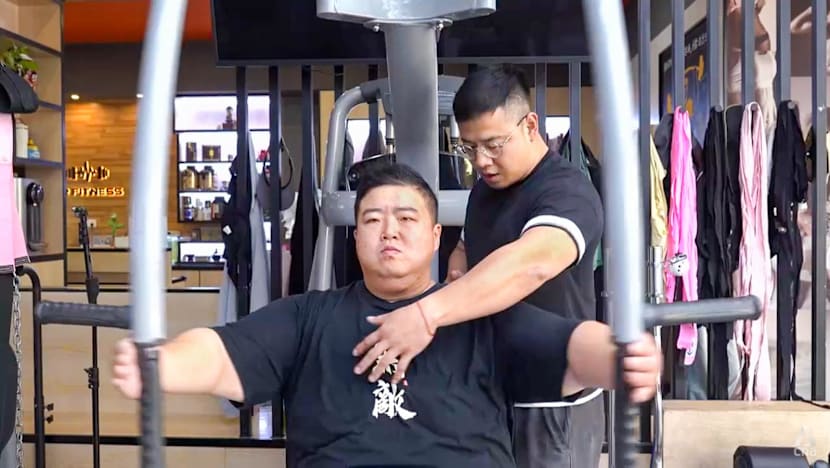
As anxieties about weight grow in China, so does the market for crash diets, fat-burning supplements and other quick fixes.
“Losing weight is a long struggle,” noted Xu, who cautioned against using unproven pills and treatment methods. “Slow (but) steady works faster.”
A NATIONAL PUSH FOR HEALTH
Having framed obesity as a public health threat rather than a cosmetic concern, Beijing is taking action at multiple levels.
Last March, at the Two Sessions policy meetings, the National Health Commission unveiled plans to establish multidisciplinary weight management clinics in hospitals nationwide, deepening the country’s three-year weight loss campaign.
LISTEN: Can China beat the bulge?
Hospitals are also being encouraged to adopt internet technologies, artificial intelligence and wearable devices. The government’s plan emphasises “prevention and control” across one’s lifespan, Hong highlighted, along with public education for families, schools, workplaces and communities.
“Preventing illness … is very effective, economical and scientifically sound,” he said. “It’s far less costly than waiting until illness develops or becomes severe before seeking medical attention.”
Just in the workplace, research has shown that every US$1 spent on wellness programmes can reduce future medical and absenteeism costs by about US$3 each, cited Yang.
The message about weight management appears to have resonated with the public. A white paper last year on adult health and weight control found that 70 per cent of people wanted to lose weight. More than half were already taking steps to do so.
Signs of this growing awareness are evident at Parkway MediCentre Xintiandi, where Xu is seeing more people aged between 20 and 50 seeking help.
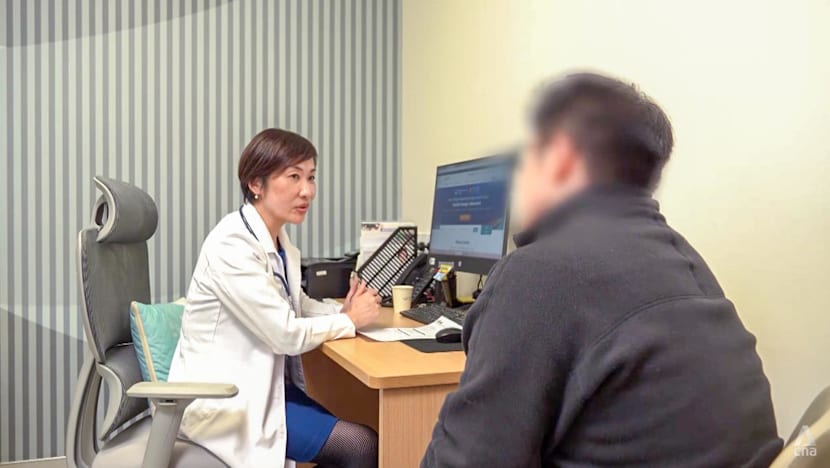
Some of them are advised to adopt lifestyle changes only, while others may need medication. Surgery may be recommended to a small group, and some patients turn to traditional Chinese medicine as an alternative to drug therapy.
Over in Guangzhou, the LN Garden Hotel Nansha has installed weighing scales in guest rooms. More than 60 per cent of guests use them, according to hotel management.
“We must move with the country’s strategy,” said general manager assistant Jeffrey Guan, who characterised the hotel’s health-oriented facilities as part of “riding the wave”.
Amongst the private companies joining in the effort is an apparel heat transfer printer in Dongguan, where founder and plant manager John Gu has led employees in daily voluntary exercises for two years now.

“If you’re interested in exercising, you can definitely find 15 minutes … to do it,” he said, adding that simple routines can boost energy.
China’s fitness industry has been catching up, expanding from only 500 gyms in 2001 to more than 140,000 fitness venues last year.
Chen the boot camp co-founder said there are dozens of gyms in each district in Shenzhen, “maybe one every few hundred metres”, while many parks now have exercise equipment.
On social media, there are influencers like Li promoting balanced eating rather than extreme dieting. She urges followers to follow national dietary guidelines and avoid chasing unrealistic body standards. “As long as your BMI is normal, that’s enough,” she said.
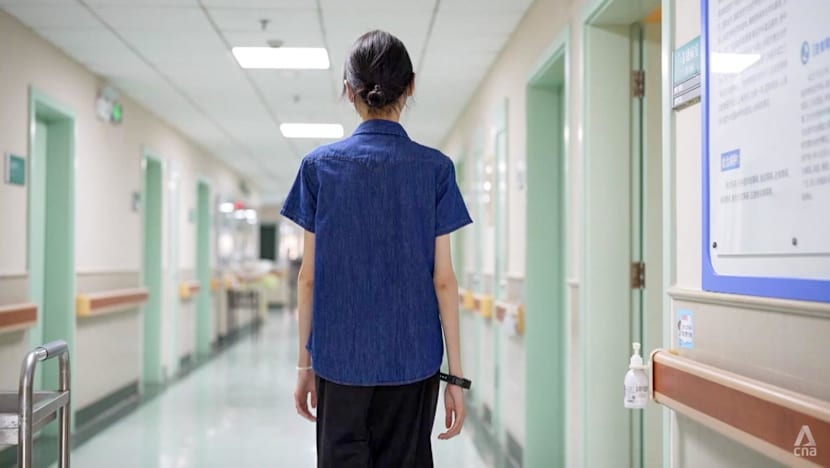
Progress will also take time, Hong stressed, as weight management “isn’t a one-day task”.
Back at the boot camp, the grind continues for Qin. “I hope that after leaving this place, I won’t regain all that weight,” she said. “I hope I can control myself a bit — not eat everything I want.”
Watch this episode of Insight here. The programme airs on Thursdays at 9pm.