







Commentary: Emissions are still rising but that doesn’t mean we’re failing
There are signs that the Paris Agreement has done its job, such as sparking a green revolution, says Lara Williams for Bloomberg Opinion.

Sea ice in the Arctic Ocean is seen near Ny-Aalesund, Svalbard, Norway, on Apr 5, 2023. (Photo: REUTERS/Lisi Niesner)
LONDON: When 196 nations adopted the momentous Paris climate accord, the United Kingdom prime minister at the time, David Cameron, wrote on Twitter: “Our grandchildren will see we did our duty.”
Ten years later, what would those grandchildren think? Because the Paris Agreement has started to look like a failure. But that only holds true if you’re fixated on the end goal rather than the journey.
The legally binding treaty aims to limit climate change to “well below 2 degrees Celsius above pre-industrial levels” and pursue efforts to keep the increase close to 1.5 degrees Celsius. It also specifies that countries should reach a “global peaking of greenhouse gas emissions” as soon as possible.
But carbon emissions continue to grow and, although climate impacts have intensified, anti-climate sentiments are on the rise.





This year, the US - which is responsible for about 24 per cent of all emissions ever pumped into the atmosphere - withdrew from the international treaty for the second time and has now undergone almost a full year of anti-climate policies under the leadership of President Donald Trump.
The European Union (EU) has weakened key environmental regulations as well, including its 2035 combustion engine ban and pollution reporting requirements.
Elsewhere, greenhushing, which plays down environmental efforts to avoid political scrutiny, is on the rise among companies.
DOOMED TO FAIL FROM THE START?
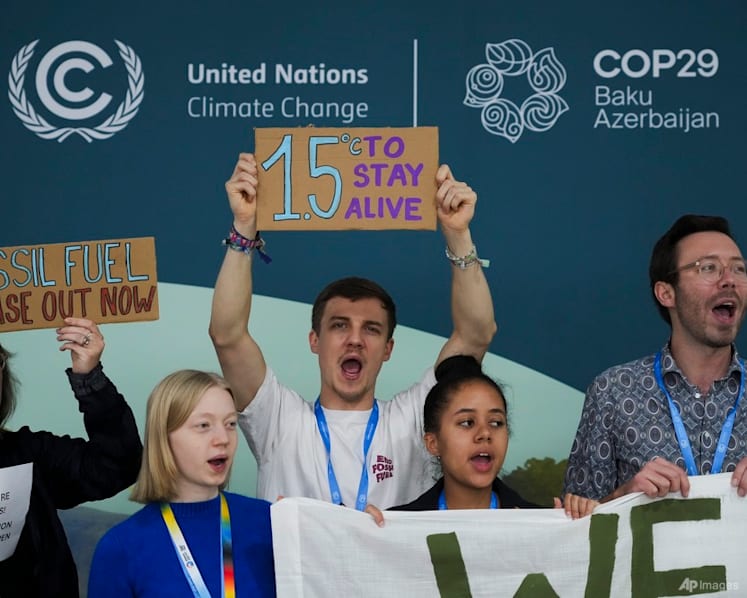
Many experts are now almost certain that the 1.5°C temperature target is toast. Copernicus, the EU’s Earth observation service, said the last three years were set to be the first period when average temperature rise would exceed that goal. And we’re nowhere near reaching net-zero emissions.
But, as Cameron Hepburn, an environmental economics professor at the University of Oxford’s Smith School, told me: “Paris is only a disappointment if you had inappropriately high expectations in the first place.”
The treaty gave us a multi-time period, multi-prisoner dilemma. Part of the problem is that the Paris Agreement includes no penalties for inadequate plans or action, so the incentive to free ride is high: While only those parties cutting emissions have to bear the costs, everyone benefits from their efforts.
Meanwhile, it’s too tempting for petrostates to keep squeezing profits out of their businesses. After all, oil and gas companies alone have been making about US$2.5 billion a day in profit for the last 50 years, according to a 2022 analysis of World Bank data. Why would oil and gas-producing countries give up that revenue? So if we’re judging the accord on emissions alone, it was practically doomed to fail from the start.

PROGRESS IN GREEN INNOVATION
Looking at the bigger picture, however, the Paris Agreement has put us in a far better position than we would have been without it.
In October 2015, Climate Action Tracker, an independent science-based project, calculated that policies and actions at the time put the world on track for 3.6°C of warming by 2100. Projected warming is now 2.6°C. Though that’s still too high for comfort, it signals huge amounts of progress.
By creating “a whole new idea of going to zero” emissions, as Niklas Hohne, co-founder of NewClimate Institute, explained to me, the Paris Agreement also sparked a flurry of innovation. If researchers didn’t believe that anyone would want green technologies, then why would they invest time and money in them? The accord sent a signal that appetite existed for net-zero materials and processes.
Ever since, research and money have been flowing toward green transition sectors and at an ever-increasing pace.
For example, the EU’s Innovation Fund, created to help the bloc meet its commitments under the treaty, has supported the development of batteries, carbon-negative cement and advanced recycling.
But what happens to fossil-fuel emissions will ultimately dictate the fate of the planet. Demand remains at an all-time high, and though the International Energy Agency forecasts that fossil-fuel use will peak before 2030, it also acknowledges that if governments abandon their stated intentions, oil and gas demand will continue to rise.
Still, everyone I spoke to was optimistic that emissions would likely peak by 2030, although that’s later than many climate scientists would like. Hohne believes that with renewables’ increasing availability and decreasing costs, we can reduce carbon dioxide pollution much faster than previously thought.

For another sign that the climate treaty has done its job, consider trends in often-overlooked parts of the world.
Pakistan is experiencing a massive, unanticipated solar boom. Rooftop power generation is expected to exceed demand on the grid during daytime hours in some large industrial regions for the first time next year. Driven by residents’ frustration with soaring electricity prices and power failures, the adoption of photovoltaics has allowed businesses and consumers to access reliable, cheap power.
Many African countries are set to replicate that expansion: Solar panel imports from China to the continent rose 60 per cent in the 12 months to June, according to a report from think tank Ember. Records were set in 20 countries, including Kenya, Algeria and Nigeria. Though the continent is responsible for only about 4 per cent of global emissions, it has a rapidly growing population and is industrialising. Switching to cleantech now avoids huge future growth in carbon dioxide emissions.
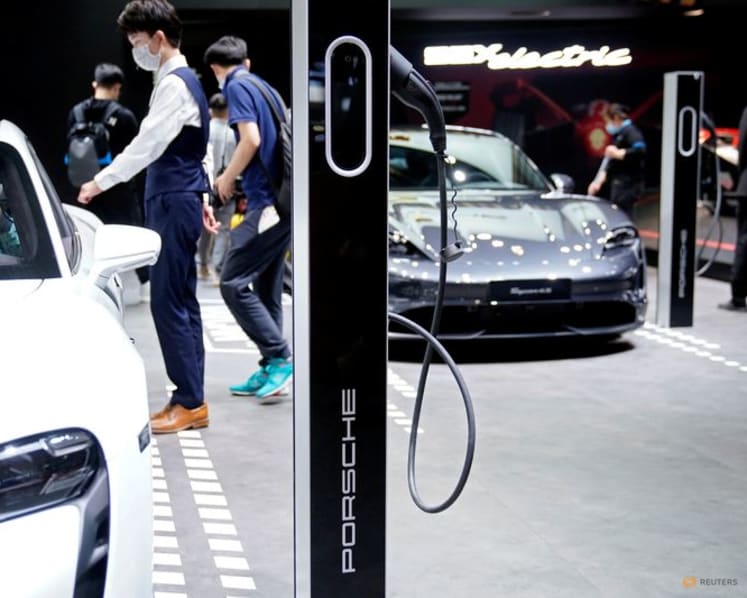
Meanwhile, Ethiopia and Nepal are embracing electric vehicles like never before. More than 70 per cent of four-wheeled passenger vehicles imported to Nepal last year were electric, and the adoption is helping to reduce Kathmandu’s air pollution crisis, which caused nearly 19 per cent of all deaths in 2021.
And though the Paris Agreement no doubt kickstarted the electric vehicle industry’s rapid development, in Ethiopia, the driving force behind widespread adoption is the desire to save money. The nation spends roughly US$4.5 billion importing fuel every year, while drivers have had to put up with chronic fuel shortages and rising prices. Electric vehicles eliminate that problem.
It’s shifts like these, where cleantech makes economic sense, that will power the next decade or longer of the climate transition.
Whether or not the Paris Agreement still exists in its current form by then, it's done a remarkable job of sparking a green revolution, which is only just beginning to take off. That’s not a failure to me.




