Commentary: China’s muted response to the Iran war speaks volumes
Beijing's national interests have not been severely threatened or damaged by the Iran war, says NTU’s Dylan Loh.
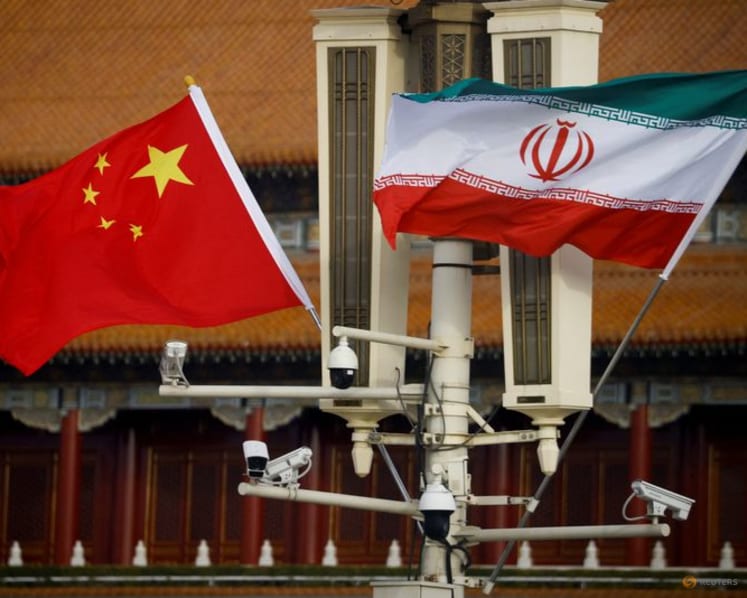
The national flags of China and Iran fly in Tiananmen Square, Beijing, China, Feb 14, 2023. REUTERS/Thomas Peter/File Photo

This audio is generated by an AI tool.


SINGAPORE: Questions have been raised over the role – or lack thereof – that China has adopted in the Iran war.
Indeed, its initial response was conspicuously mild. In the aftermath of the joint US-Israeli strikes on Feb 28, China expressed “grave concern” without rebuking either country. This stands in contrast to the capture of the Venezuelan president by American forces after which Beijing said it was “deeply shocked and strongly condemns” the use of force against a sovereign country.
These are not just semantic differences but reveal a hard-nosed pragmatism and an increasing desire to stabilise ties with Washington.
To be sure, China was by no means absent. Its primary focus was consular assistance as it scrambled to evacuate thousands of Chinese citizens from Iran. At the same time, Beijing also dispatched its special envoy on the Middle East, Zhai Jun, to the region in mid-March to mediate and promote a peaceful resolution.
Nonetheless, the calculus in this crisis is different from its more assertive attempts to broker peace in the Thailand-Cambodia conflict, its endeavours in the Myanmar civil war or its earlier role in the landmark Iran-Saudi Arabia rapprochement.
REASONS FOR CHINA’S MUTED RESPONSE
There are at least two reasons for Beijing’s relative reticence.
First, China’s national interests, while strained, are not severely threatened or damaged. China’s foreign ministry has confirmed that Chinese vessels have safely sailed through the Strait of Hormuz, which remains a critical flashpoint for global energy transit. As Iran’s primary economic patron, China can likely contain direct damage to its oil supplies.
What is more, China spent 2025 stockpiling significant oil reserves. According to energy intelligence firm Vortexa, “China’s onshore crude inventories… [reached] a record 1.13 billion barrels” by late 2025. Estimates suggest these reserves could last the domestic market for six to 12 months.
Additionally, electrification already accounts for 30 per cent of its energy consumption. More significantly, this grid is almost completely decoupled from oil – with coal and renewable energy effectively powering the grid entirely. In short, China’s energy security is not critically threatened in the short to intermediate range even as it is keeping a watchful eye on the ripple effects of rising oil prices.
In fact, Beijing’s anxiety has shifted from the strikes on Iran to Iran’s retaliatory attacks on the Gulf states. In a rare rebuke on Mar 11, China said it “does not agree” with Iran’s attacks on Gulf nations and condemned all strikes on non-military targets. This is unsurprising given Beijing’s lopsided economic stakes, including infrastructure, energy and trade investments in the Middle East region outside Iran that are threatened by ongoing insecurity.
The disparity is stark: According to the US-China Economic and Security Review Commission, in 2025, China’s total trading volume with Saudi Arabia and the United Arab Emirates was around US$108 billion each, while the total trading volume was only around US$10 billion with Iran. In short, China is acting pragmatically, privileging longer-term, higher-stakes interests in the region.
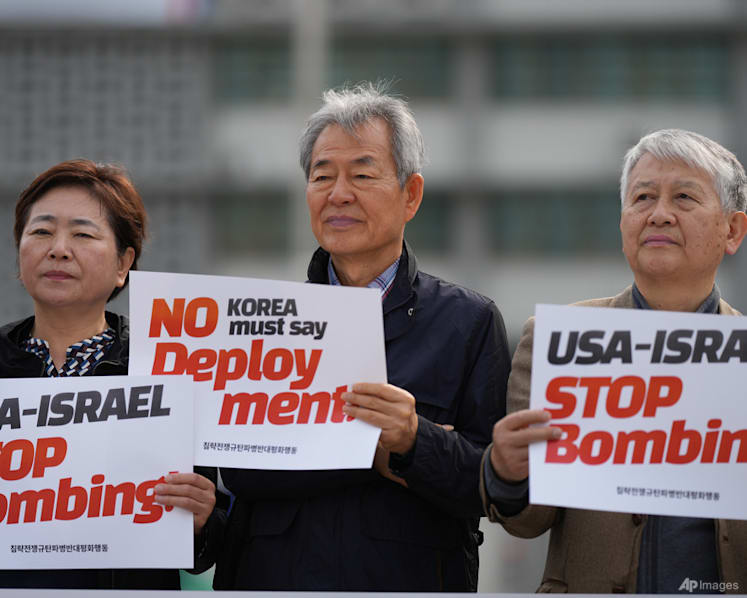
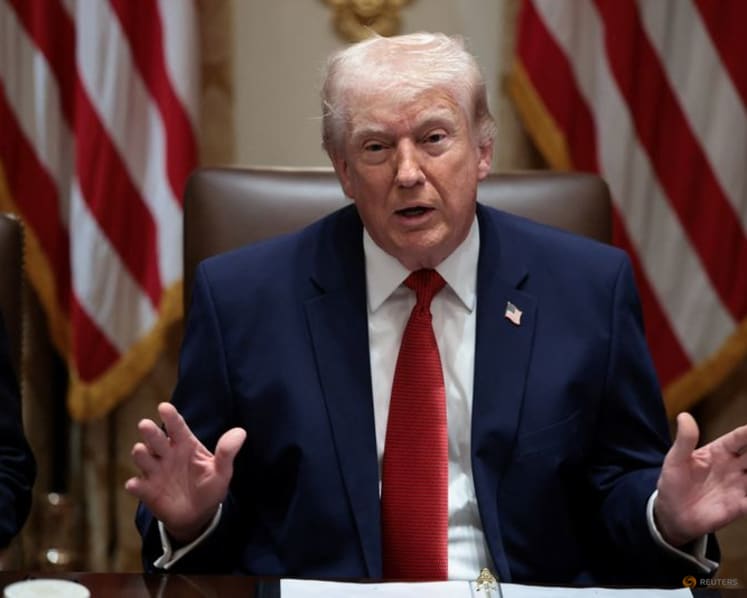
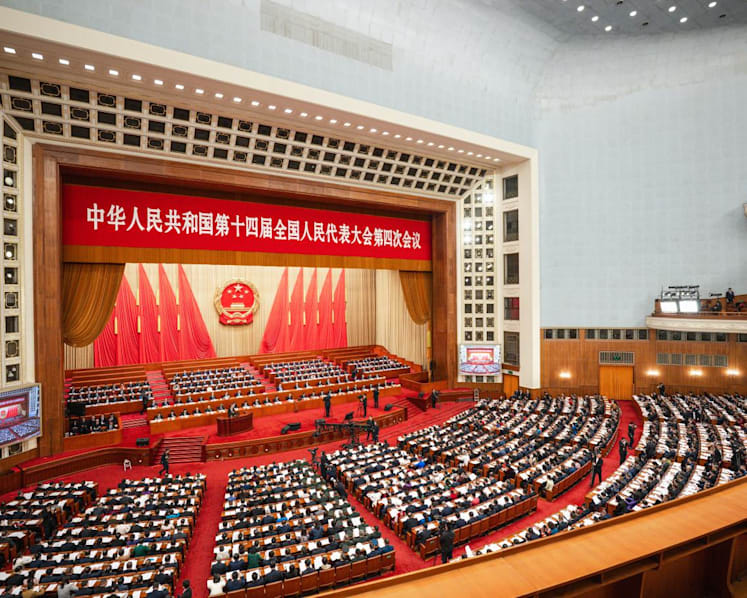
Second, China is prioritising stable Sino-American relations in the short to medium term and this dynamic figures prominently in Beijing’s calculations in the Middle East. In fact, during the annual Foreign Minister’s Press Conference at the tail end of the Two Sessions, Wang Yi did not directly call out President Donald Trump or the US when he commented on the Iranian conflict and stuck to general criticisms against military interventionism and unilateralism.
Instead, he struck a hopeful and measured tone, characterising 2026 as a “big year” for US-China relations, stressing “head-of-state-diplomacy” and noting that it was “heartening to see that the presidents of the two countries have led by example”.
It is also important to point out that China has not reacted negatively to Mr Trump’s postponement of the Trump-Xi meeting in Beijing to May, accepting Washington’s rationale for the deferral.
As Beijing gears up for the 21st Party Congress – one of its most consequential ever – in 2027, external stability is seen as the key to internal stability.
A "FICKLE FRIEND"?
Nicholas Burns, former US Ambassador to China, argued that China has hurt its global ambitions by failing to offer effective support to Venezuela and Iran, rendering it a “fickle friend”. There may be a degree of truth in this claim, but it overstates the reputational damage and imposes an unrealistic set of expectations that Beijing has never actually sought to meet.
It must be stressed that non-interventionism has been an enduring feature of China’s statecraft. Beijing’s preference for non-military tools – including economic coercion and cooperation, soft power, ideological alignment, grey zone tactics and so forth – has long been a mainstay in Chinese foreign policy.
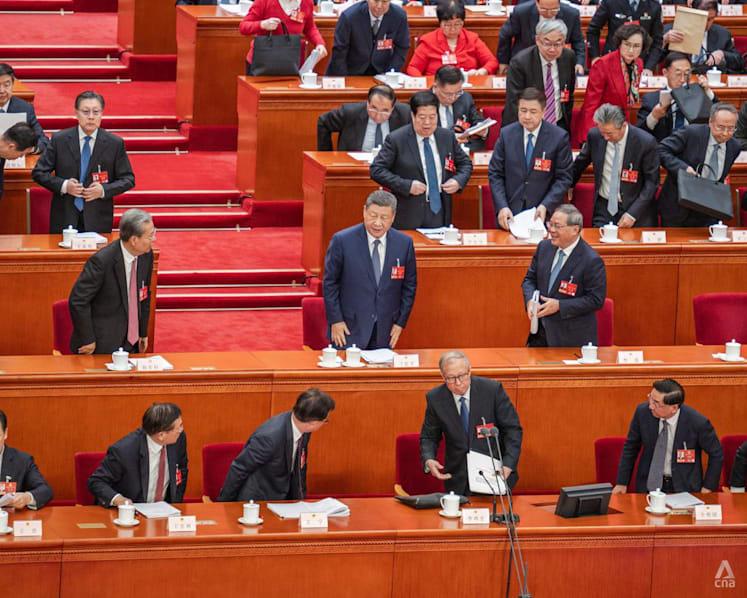
China’s reactions also demonstrate to its partners and friends the limits and possibilities of their relationship: Chinese support offers an ideological, diplomatic and economic shield but not a military one. In that connection, this crisis gives us a glimpse into the global role Beijing envisions for itself – one that prioritises economic continuity, multilateralism and non-interference over the high-risk duty of a security guarantor.
Beijing has arguably seized a unique window to advance the moral appeal of this vision, which purports to support institutional multilateralism over American unilateralism. However, a contradiction remains: As long as China maintains its “hard security” restraint, there seems to be a cap on how far China will go to protect its interests abroad and the extent to which its partners can rely on it as a credible security provider.
Already, there is renewed debate within Chinese policy and academic circles if this restraint is serving China’s interests well. Whether or not this will precipitate a harder security turn, however, remains to be seen.
Dylan MH Loh is an Associate Professor at the Public Policy and Global Affairs programme at Nanyang Technological University. He is the author of "China’s Rising Foreign Ministry" (Stanford University Press, 2024).