Commentary: India is having its AI moment at global summit
Behind the star-studded AI Impact Summit, there’s a question of whether India can shape the future of AI and be a model for the Global South, says former foreign correspondent Nirmal Ghosh.
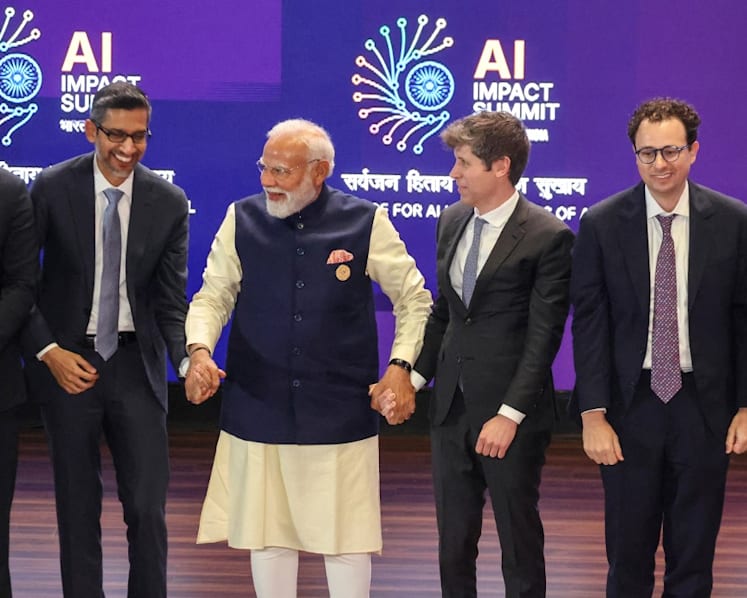
India's Prime Minister Narendra Modi (centre) takes a group photo with AI company leaders including OpenAI CEO Sam Altman (second on right), Anthropic CEO Dario Amodei (right) and Google CEO Sundar Pichai (left) at the AI Impact Summit in New Delhi on Feb 19, 2026.
(Ludovic Marin / AFP)

This audio is generated by an AI tool.


SINGAPORE: Even amid the chaotic crowds on Monday (Feb 16), the opening day of India’s AI Impact Summit in New Delhi, there was no mistaking the optimism.
And it is backed by real money: United States tech giants have announced new projects, from Google’s plan to build new subsea cables from India to Nvidia teaming up with Indian firms to provide advanced processors for data centres.
The country expects more than US$200 billion over the next two years to be invested in its AI ecosystem in a vast market of over 1 billion people.
But behind a flashy summit, beneath this optimism, there lies a gap between ideas and reality in India – and a deeper question of whether India can shape the future of AI and not just be its fodder for training.





BETWEEN ASPIRATIONS AND REALITY
Perhaps the biggest challenge for most countries trying to effectively harness AI is to make it relevant to ordinary people in their everyday lives.
Tech leaders at the summit spoke of an AI-empowered society, seemingly far from the lived reality of many hundreds of millions.
Expectations are high, but delivery is still at a relatively small scale.
Based on estimates from some projects, the number of farmers using AI-driven apps could run from 200,000 to over 400,000 per project, but well over 200 million Indians are estimated to be engaged in some form of agriculture. Likewise, adoption of AI tools among small- and medium-sized enterprises (SMEs) also remains at only around 15 per cent to 20 per cent.
But the gap will narrow more rapidly as investment pours in, as the government supports it, and as applications capture the imagination and deliver real benefits.
UNEMPLOYMENT, A MAJOR CONCERN
But while AI can enhance productivity and create new jobs, it is also expected to make many current jobs obsolete. This disruption needs to be well-managed when unemployment is already a problem. The official unemployment rate in June 2025 was reported at 5.6 per cent.
A Reuters poll in July 2025 found wide scepticism of that figure, with over 70 per cent of surveyed economists saying the data is not accurate. For example, working one hour a week or engaging in unpaid family labour is considered employment.
Some of those surveyed suggested the actual rate could be between 7 per cent to as high as 35 per cent. The authorities have rebutted this claim.
Further job erosion across sectors will deepen India’s unemployment crisis, many analysts warn. If India doesn’t build strategic capacity, it risks taking on all the social disruption of AI without sharing in the benefits.
Former World Bank economist Dr Maria Monica Wihardja, for example, maintains that power has shifted from government to tech giants, not to the people who use the technologies. “The risks of AI are existential,” she told me.

RACE FOR DOMINANCE
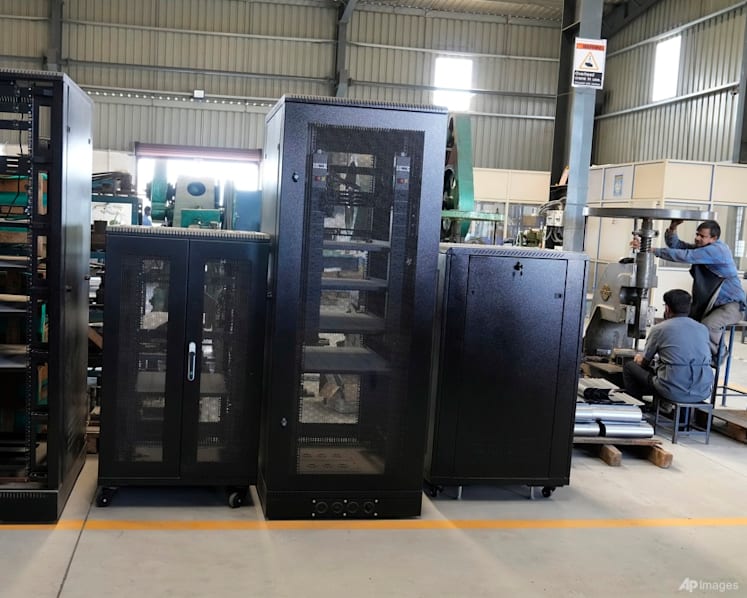
AI is thus far dominated by American and Chinese companies, with Indian developers lagging.
It is too early to tell whether that is a disadvantage for India, which has its own strengths in terms of the scale at which AI will be applied. Yet, that raises the question whether Indian data will mainly serve to improve the AI models of foreign companies pouring investment into India’s infrastructure.
But there is a difference between fundamental research and applications. “India never had the research muscle, as we simply do not have the R&D budgets that these economies have,” Amit Joshi, Professor at IMD Business School in Lausanne told me. “The real question is how we leverage what others develop and apply it to change our business models and operating models.”
The AI Impact Summit marked a potential watershed in this respect, with at least three Indian companies – Sarvam, Gnani.ai and BharatGen – announcing advanced models.
LEADING THE GLOBAL SOUTH
There is also a geopolitical aspect to the application of AI in India. India is positioning itself as the voice of the Global South, as Shruti Rajagopalan, an economist at George Mason University’s Mercatus Center, wrote earlier this month.
Given India’s talent pool and large startup ecosystem, it has a natural advantage. “India has demonstrated the ability to innovate frugally, at scale and for contexts suitable for developing countries,” she wrote.
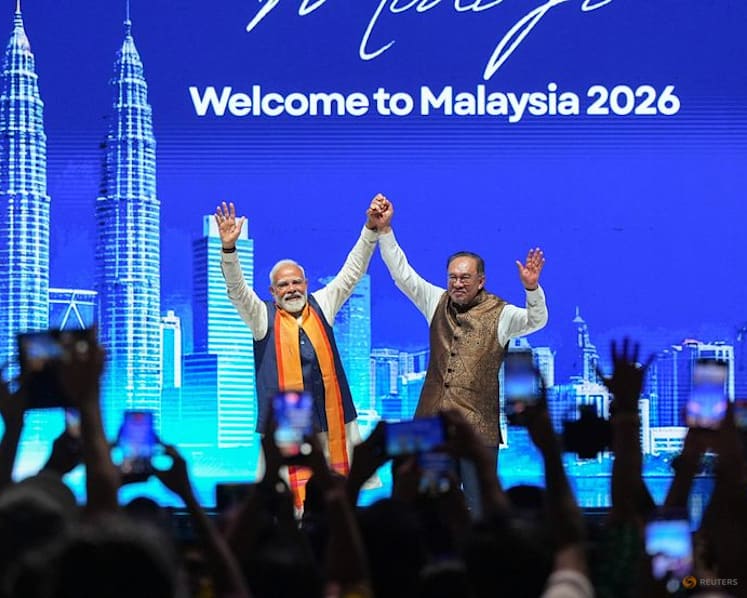

The advanced AI models launched by Indian companies appear to be exactly that. India’s answer is to develop its own AI solutions for its own needs, with a “build in India” model in which data sets are developed and integrated in India, which will in turn enhance training in India itself.
It is tempting, and easy, to be put off by India’s glaring imperfections. But India has always been known for the inherent chaos of its spectacle – “a million mutinies now” the writer VS Naipaul famously called it in his 1990 book of the same title – and it needs a spectacle to capture the imagination and propagate an idea.
The AI Impact Summit, whatever its imperfections, may indeed have done just that.
Nirmal Ghosh, a former foreign correspondent, is an author and independent writer based in Singapore. He writes a monthly column for CNA, published every third Friday.