Commentary: India and Malaysia show what middle powers can do amid a rupture in world order
Most middle powers are now at their most open period to work with others to diversify outside of the US and China, says political analyst James Chai.

This audio is generated by an AI tool.


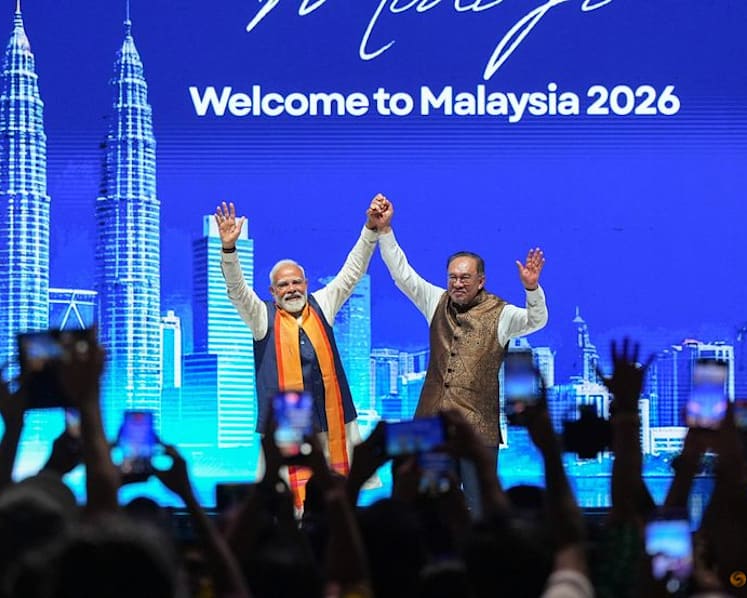
KUALA LUMPUR: Chemistry between leaders matters a lot in bilateral relations. So it helps that Indian Prime Minister Narendra Modi was friends with Anwar Ibrahim before the latter became the Malaysian prime minister.
Mr Modi had promised his “dear friend” that he would go to Malaysia after missing the star-studded ASEAN summit in Kuala Lumpur in October 2025. And he made it his first foreign visit in 2026.
Mr Anwar made sure Mr Modi felt welcome, by preparing a ceremonial welcome and send-off complete with guard of honour with the First Battalion from the Royal Malay Regiment, students waving Indian flags and cultural performances.
It also helped that both leaders shared their love for the Tamil language and actor MG Ramachandran. At home, Mr Anwar always talked of his love for Indian culture and literature, including how much the Sanskrit epics Mahabharata and Ramayana influenced him during his time in prison. “[Anwar]” sings very well," Mr Modi said on stage.





This is not a trivial detail in today’s fragmenting world. These personal connections were arguably why Malaysia was able to attract so many world leaders to KL last year; this goodwill helps mobilise trade deals and partnerships beyond pure economic considerations.
For Malaysia, this matters much more with India.
FLURRY OF TRADE DEALS AFTER DECADES OF STALEMATE
Malaysia’s 3 million Indian population is the third-largest Indian overseas community. The people-to-people ties in tourism, education and cultural exchanges formed the backdrop to bilateral trade steadily increasing to nearly US$18.6 billion in 2025.
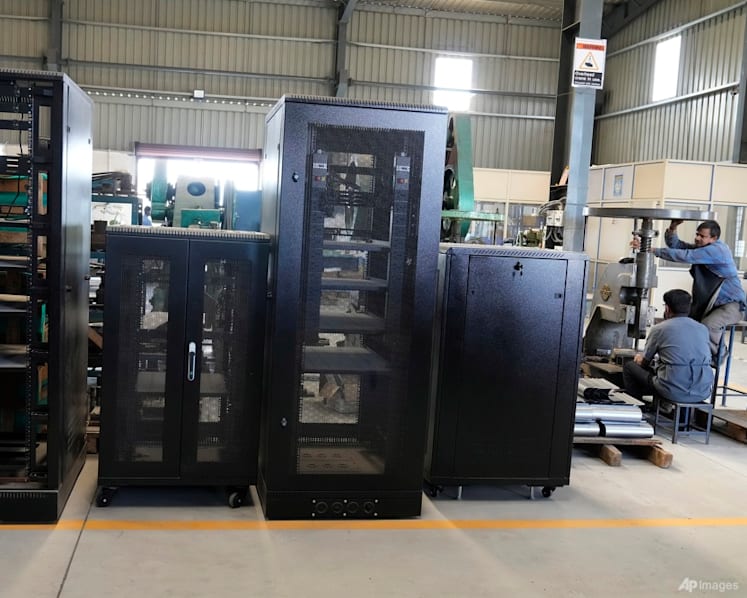
Malaysia certainly has value to offer. In recent years, India was the largest market for Malaysian palm oil exports, a crucial item that affects the cost of food. At the same time, India’s recent semiconductor mission could benefit from Malaysia’s partnership as it had a 50-year head start in backend manufacturing with the support of multinationals, the pioneering companies that established operations in the early 1970s (locally known as the “Eight Samurai”).
That is why these were the standout items in the memorandums of understanding signed, besides reaffirming their comprehensive strategic partnership since 2024, that also covers defence, education, trade and culture.
However, for a midsized economy like Malaysia, it is sometimes less about what it has and more about the larger story it represents.
These India-Malaysia agreements are a prelude to a larger India-ASEAN deal – an upgraded ASEAN-India Trade in Goods Agreement (AITIGA) – that is in the works.
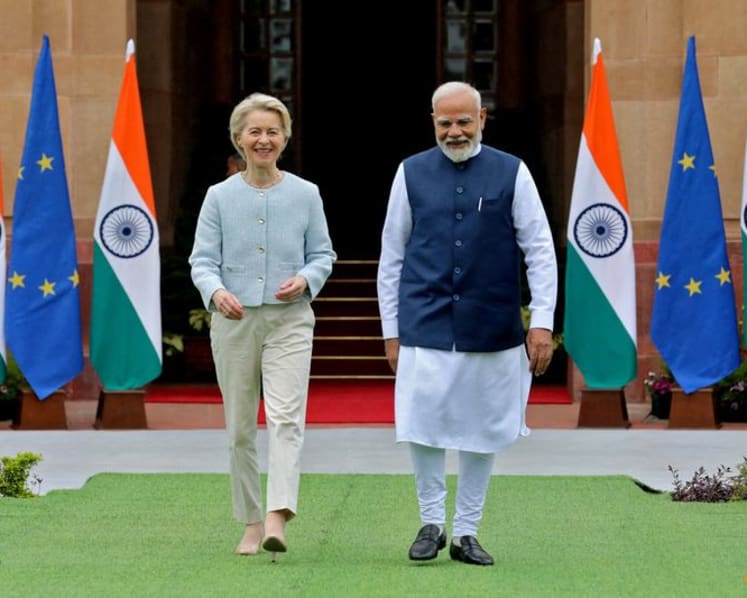
India has just concluded the “mother of all deals” with the European Union, covering nearly 2 billion people and US$140 billion trade in goods. It has also signed deals with the European Free Trade Association (Switzerland, Norway, Iceland, Liechtenstein), Australia, and is negotiating with the United Kingdom. The EU has also been active in signing these deals, by signing a mega deal with Mercosur (South American states) just weeks earlier.
What is notable about the EU-Mercosur and EU-India deals is that they were signed after a 20-year negotiating stalemate and were accelerated on the heels of the United States-China trade war. The need to diversify and strengthen middle power cooperations is now backed with concrete actions, and a narrative driven by the understanding of a “rupture” in world order.
It would be unsurprising if the India-ASEAN trade deal is concluded soon, against all possible stalemates.
DIVERSIFYING OUTSIDE OF US AND CHINA
Mr Modi’s India is an ambitious nation. With the world’s largest population that is young, technologically savvy and predominantly middle class, it has the future on its side.
The International Monetary Fund counts India as the fastest-growing major economy in recent years with 6.4 per cent real gross domestic product growth. Its nominal GDP just crossed US$4 trillion and will likely surpass Japan and Germany by 2030 and become the largest in the world in another decade.
To prepare for that prospect, Mr Modi set his sights high with the Act East Policy in 2014 that seeks to make India a pole of influence in the Indo-Pacific. That plan must have Southeast Asia with it.
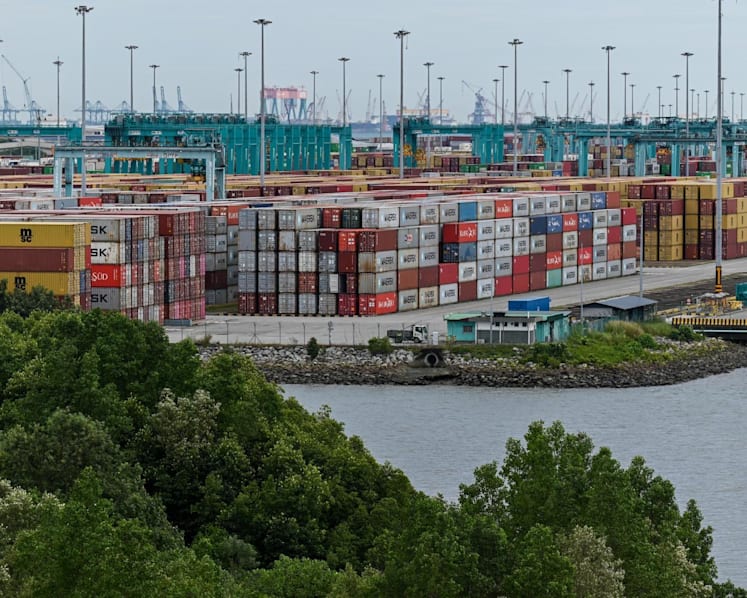
Malaysia’s ASEAN chairmanship in 2025 won it regional praise, and its geographical and technological importance (such as for semiconductors and data centres) makes it an important node into the region.
Most middle powers are now at their most open period to work with others to diversify outside of the US and China.
While these efforts are necessary, they are unlikely to lead to a significant change in how dependent middle powers are to great powers.
The US and China are still – and will likely continue to be – the largest trade partners for these middle powers and remain firmly at the frontier of technology, both in terms of talent, innovation, supply chain control.
For instance, India and Malaysia could work on semiconductors and it will likely boost local innovation, expand entrepreneurship and create jobs that are important for national development.
But it is highly unlikely that it would result in leading-edge products that will compete with the world’s best. That takes decades of government subsidies, private sector genius, density of talent and an ecosystem of innovation.
SECURITY, PROSPERITY, AUTONOMY
That is not to say that middle power deals are unimportant. Quite the opposite: Even the India-Malaysia deal opens a new frontier that would not otherwise exist, and an India-ASEAN one would be significant in covering a population size (2.1 billion) larger than the EU-India “mother of all deals”.
Over time, middle powers will also likely build institutions and issues-based alliances on top of these free trade deals to mobilise larger-scale partnerships. With enough coordination, replacing certain trade goods from US-China might even be possible, even at a lower technology standard.
The only reality that middle powers would have to contend with is that they cannot escape the “impossible trinity” that you cannot have security, prosperity and autonomy at the same time.
If they want more autonomy in deciding their future outside of US-China’s control, they have to sacrifice some prosperity. Since no middle powers are ready to accept this trade-off, they will have to just do more by trading more with great powers and middle powers.
The India-Malaysia deal is an indication of a busier world that still holds an idealism of chasing the impossible trinity.
James Chai is a Visiting Fellow at ISEAS-Yusof Ishak Institute, with a newsletter on global affairs. He writes a monthly column for CNA, published every second Friday.