India accelerates push to diversify economic partners amid global trade uncertainty
Observers say India’s strongest bargaining chip remains its economic size and growth potential – a powerful draw even for a more protectionist America.

This audio is generated by an AI tool.


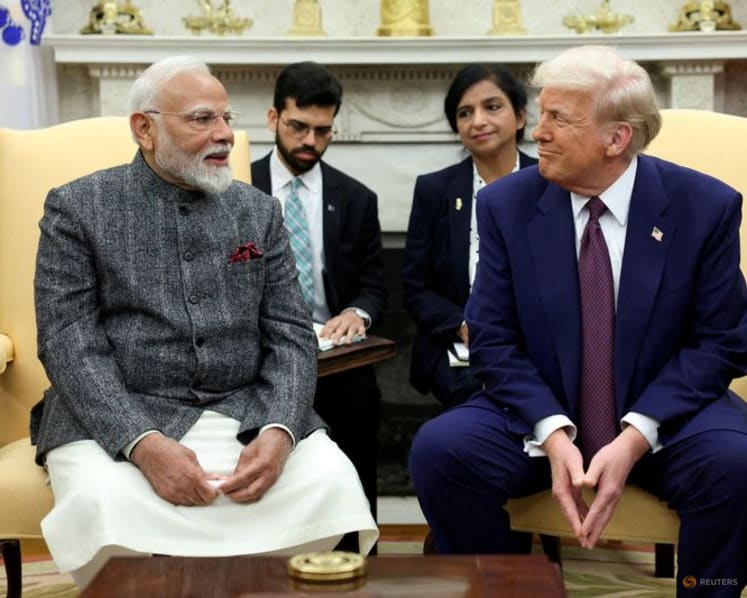
NEW DELHI: India has hailed its interim trade framework with the United States as a win for both sides, breaking months of deadlock in talks with its largest trading partner.
Under the deal announced on Feb 2, US tariffs on Indian exports will fall to 18 per cent from as high as 50 per cent, in exchange for India halting purchases of Russian oil and lowering certain trade barriers.
Commerce Minister Piyush Goyal described it as a “golden letter” moment for India’s economic future, adding that “every sector is excited about the possibilities this opens up”.
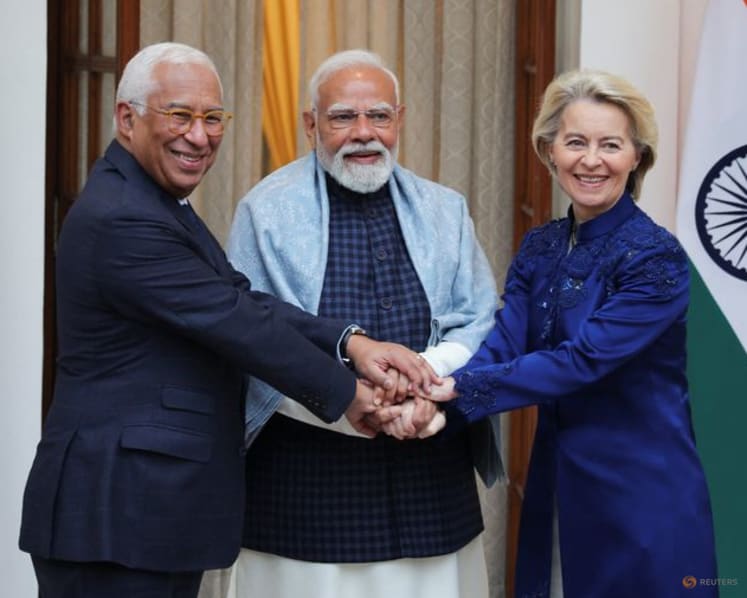
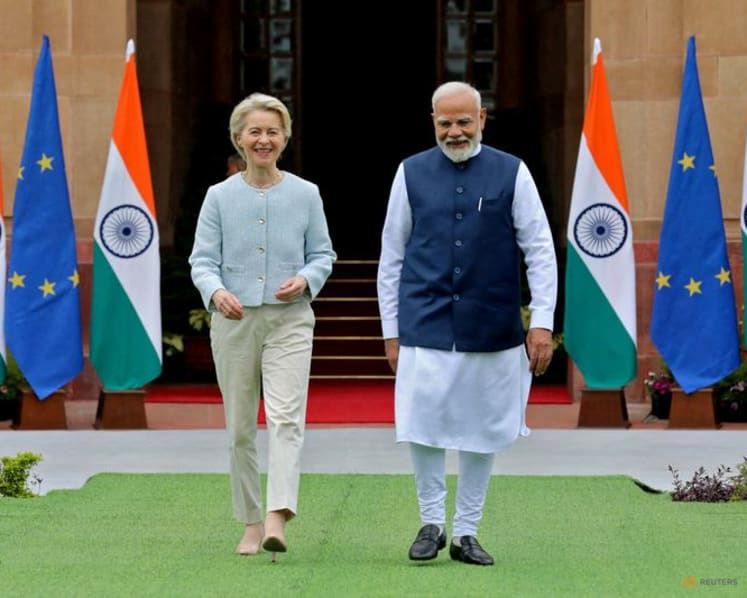
The agreement came just days after India and the European Union wrapped up negotiations on a long-awaited free trade pact, part of New Delhi’s push to diversify its economic partnerships amid global trade uncertainty.





EU DEAL AS LEVERAGE
Experts said the haste with which the India-US framework was announced suggests the EU deal may have acted as a catalyst.
“I think it (sent) a message to the US that there are other partners. The Indian economy has been resilient,” said Harsh Pant, vice president of studies and foreign policy at think-tank Observer Research Foundation.
“This kind of diplomatic signalling remains an important variable in how you want to project your confidence in your ability to navigate the relationship with the US.”
As trade talks with the US dragged on – and as Washington threatened additional tariffs – India moved quickly to conclude agreements with Britain, New Zealand and the EU, all within the past year.
It marks a notable shift for a country that has traditionally been cautious about opening its developing economy to advanced markets.
Observers say India’s strongest bargaining chip remains its economic size and growth potential – a powerful draw even for a more protectionist America.
While exporters have broadly welcomed the trade framework with the US, analysts are urging caution.
The Indian government has neither confirmed nor denied Washington’s claim that New Delhi will stop buying Russian oil.
According to the joint statement, India will eliminate or reduce tariffs on all US industrial goods and on a “wide range” of food and agricultural products.
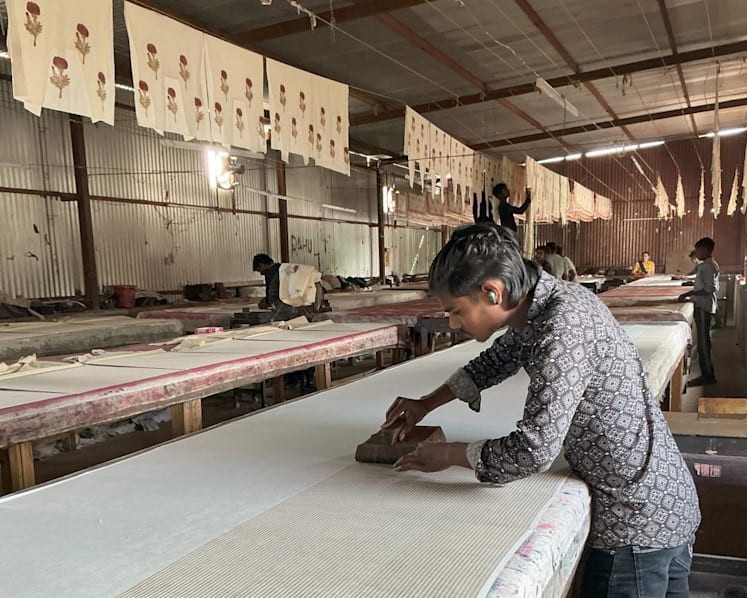
However, the 18 per cent tariff will still apply to many Indian exports, including textiles and leather goods.
LIMITS OF EU GAINS
With the EU, experts say it could take months before the trade pact comes into force, and even then, the scope for rapid growth may be limited.
“The EU is a fairly saturated market, (and) not a very high growth market at this stage,” said Arpita Mukherjee, a professor at the Indian Council for Research on International Economic Relations.
“However, it is a mental assurance … that probably protectionism will not take place and there will be no rollback of the current regime.”
India’s engagement with the EU also extends beyond trade, encompassing deeper strategic ties.
India is only the third Asian country, after Japan and South Korea, to have a defence partnership with the bloc.
Analysts say this signals the EU’s intent to fill a vacuum created by shifting US policies, particularly in the Indo-Pacific, though they caution that Europe faces significant constraints.
“I think in the short term, it will be very difficult,” said the Observer Research Foundation’s Pant.
“The EU as a whole does not have the kind of capabilities for power projection that America has.”
India is now widening its outreach further, exploring a trade treaty with Gulf nations.
The broader focus remains on cooperation among like-minded countries to uphold a rules-based global order, even as US commitment appears uncertain.