Commentary: Japanese investment in China keeps rising despite political tensions
A decline in diplomatic relations masks a surge in Japan’s economic ties to China, says this researcher.
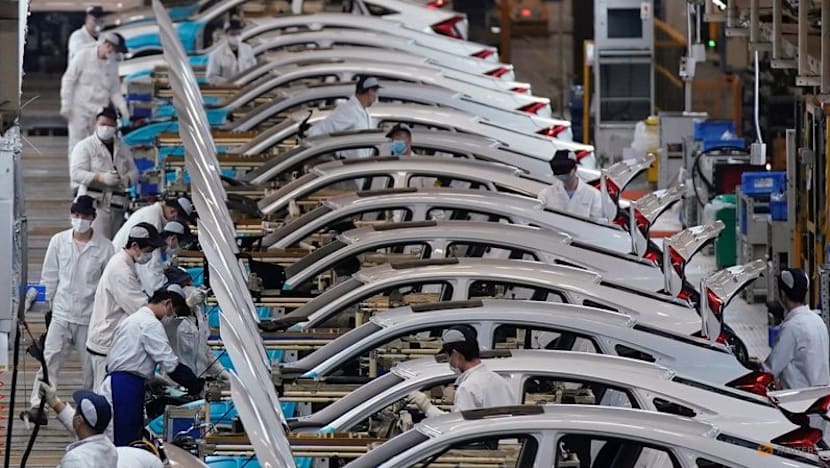
Employees work on a production line inside a Dongfeng Honda factory in Wuhan, China, April 8, 2020. REUTERS/Aly Song/File Photo
TAIWAN: For China-Japan relations, 2026 feels like a strange moment, perhaps the worst of times, and the best.
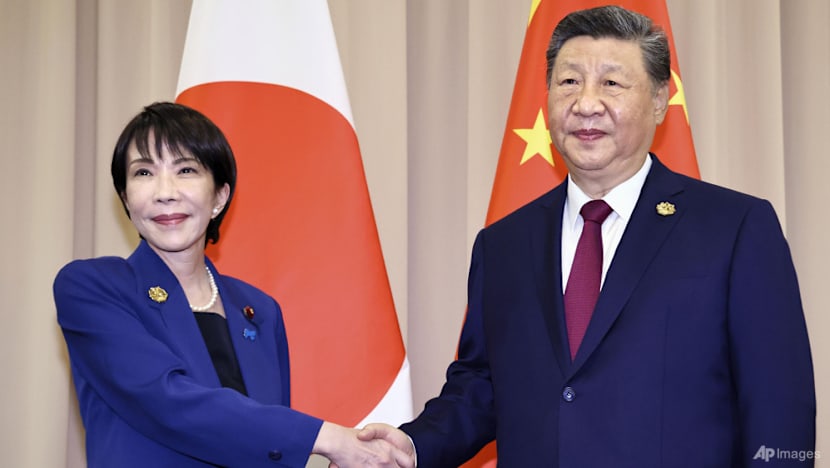
Japan’s Prime Minister Sanae Takaichi won a landslide victory in the snap election on Feb 8, a move she framed as a way to consolidate support for a tougher foreign policy after declaring that a Chinese military threat to Taiwan would prompt a Japanese response, even after that position had been heavily criticised by Beijing.
As Beijing increasingly uses trade pressure and military signalling to push back against Tokyo, including restrictions on rare earth exports, the relationship between the two countries is entering a new phase.
In 2026, it looks less like uneasy cooperation and more like the early stage of a new Cold War. And yet, the data tells a far more confusing story. At a time when Tokyo and Beijing appear to be drifting further apart politically, Japanese capital is moving in the opposite direction.
Despite diplomatic relations sinking to a new low, figures from China’s Ministry of Commerce show that Japanese foreign direct investment (FDI) into China surged by 55.5 per cent year-on-year in the first three quarters of 2025.
This spike stands in stark contrast to China’s broader investment downturn. In 2025, China’s total utilised FDI (that is, foreign investment that has actually been made rather than just planned or promised) fell to 747.77 billion yuan (about US$109 billion), down 9.5 per cent from the previous year, marking the third consecutive annual decline.
The popular narrative of “foreign capital fleeing China,” however, only tells part of the story. While total investment value dropped, the number of newly established foreign-invested enterprises reached 70,392, up 19.1 per cent year-on-year.
Japan was not an exception. Swiss investment in China jumped 66.8 per cent, British investment rose 15.9 per cent, and the United Arab Emirates recorded 27.3 per cent growth, driven largely by its interest in green energy and the digital economy.
Behind these numbers lies a more calculated shift in Beijing’s thinking: a move away from growth-first logic toward a strategy where security comes first.
With the launch of China’s 2026–30 Five-Year Plan, technological development has been redefined as a matter of national survival. Beijing is now pursuing what it calls “targeted openness”. Manufacturing is broadly opened, while foreign capital is selectively steered toward sectors such as artificial intelligence, electric vehicles and digital services.

China is increasingly positioning itself as a testing ground where advanced energy systems and data-driven technologies converge. By anchoring Japanese and European technologies inside its system, Beijing hopes to ensure that any future sanctions against China would face strong resistance from domestic interest groups in those economies.
Chinese policymakers appear convinced that, even with tighter regulations and the effect of its Anti-Espionage Law, multinational companies will not be able to walk away from China’s market. Takaichi seems well aware of this reality. Having achieved a historic general election victory, she will likely argue that Japan is no longer simply following Washington’s lead but is instead emerging as a rule-setter in the Indo-Pacific.
FROM “THE WORLD’S FACTORY” TO EMBEDDED SURVIVAL
This paradox is not abstract. It is already reshaping how businesses operate on the ground and it is reflected in the experience of many Japanese residents living and working in China.
In 2011, the Japanese expatriate population there peaked at around 150,000. At the time, China was still widely seen as “the world’s factory”.
Many Japanese individuals and small business operators moved to China, drawn by lower labour costs and expanding industrial capacity. Manufacturing and supplier-based activities formed the backbone of this presence, supporting a sizable Japanese community and dense networks of everyday commercial exchange.
That same year, however, tensions over the contested Senkaku/Diaoyu Islands erupted. Beijing imposed rare earth export restrictions on Japan, and China-Japan relations never truly recovered. The effects were felt beyond diplomacy. Rising nationalist sentiment directly affected many Japanese residents, reshaping how political risk was understood at both personal and business levels.
The COVID-19 pandemic further unsettled this already fragile environment. Supply chains were disrupted, operating conditions became less predictable, and many Japanese businesses reconsidered their presence in China, even as high-level political engagement between China and Japan continued.


By 2026, the number of Japanese nationals living in China had fallen to below 100,000. Yet those who remained did not simply hold on.
For small and medium-sized business owners who stayed, the trade-offs were clear. Periodic surges of anti-Japanese sentiment continued to pose social and personal risks, while years of accumulated investment and local partnerships made relocation increasingly difficult. In the past, many sourced semi-finished goods from China for export. Today, they are more likely to be embedded directly within China’s supply chain, a shift that for many has become a form of structural integration.
THIRD-COUNTRY CHANNELS AND THE RISE OF “TECHNOLOGY CUSTODY”
Small and medium-sized businesses are not the only ones staying. Japan’s industrial giants are doing the same.
Despite rising political tensions, major Japanese firms are increasingly adopting an “In China, for China” strategy.
Japan is a member of the RCEP, the world’s largest free trade agreement (FTA), which enables member states to trade and invest more freely within its framework. Now, Japan is leveraging these benefits by investing heavily in high-end manufacturing and R&D within China, its largest trading partner.
Honda, for example, announced a deep partnership in 2025 with Momenta, a leading Chinese autonomous-driving company. Japanese automakers understand that in the age of electrification and intelligent vehicles, walking away from China’s R&D ecosystem risks global marginalisation.
More intriguing, however, may be the rise of “third-country channels”.
Countries like the United Kingdom and Switzerland, both global offshore financial hubs, are emerging as indirect gateways for China to access Western capital and technology. Saudi Arabia, driven by its energy transition agenda, has also begun channelling capital into Chinese technology and new-energy sectors.
We are already seeing US companies investing in China’s pharmaceutical industry via Saudi Arabia. It is likely that by 2026, more Japanese firms, seeking to hedge against geopolitical risk, will invest in China through subsidiaries or joint ventures based in third countries. What matters here is not where the capital originates, but how it is legally and statistically classified.
As of 2025, China and Switzerland are negotiating an upgrade to their FTA, which officials say could expand cooperation into digital trade and AI. Given China's strategy of channelling foreign investment into specific industries, Switzerland may evolve into a "technology custody centre" in 2026.
Foreign investors, such as those from Japan, may establish their Asian R&D headquarters under Swiss entities before forming joint ventures with Chinese partners, giving these investments the legal appearance of neutrality.
At the same time, China and the UK have restarted their economic and financial dialogue.
In January 2026, UK Prime Minister Keir Starmer visited Beijing and promoted closer economic ties, including agreements to expand cooperation in services trade and launch a feasibility study toward a potential bilateral services trade agreement. In theory, multinational firms could use London-based financial structures to facilitate investment cooperation with China. Depending on ownership and reporting arrangements, such structures may affect how investments are formally recorded, although this would vary case by case.
In the Middle East, Saudi Arabia’s Vision 2030 offers another potential route for regional economic engagement. Japan and Saudi Arabia have expanded cooperation in energy transition, industrial development, and emerging technologies, including AI. Several Japanese companies have established regional headquarters in Saudi Arabia as part of the kingdom’s investment reforms.
As Saudi investment in China continues to grow, such structures could provide Japanese firms with indirect exposure to opportunities linked to China’s latest Five-Year Plan, depending on regulatory and ownership arrangements.
Sanae Takaichi’s victory in Japan’s 2026 election presents Japanese voters with a new model of behaviour with a deliberate division of political and economic strategy. Politically and militarily, Japan confronts China with its toughest stance yet. Economically and technologically, however, Japanese firms continue to deepen their ties with China through joint funds and partnerships based in Saudi Arabia, Switzerland or the UK.
Japan is demonstrating a form of nintai: a capacity to absorb pressure while maintaining economic flexibility. This approach may well become a new template for how the world engages with China.
Ryan Shih is an independent researcher and journalist focused on East Asia’s geopolitics and supply chains. This commentary first appeared on the Lowy Institute’s site, The Interpreter.