Commentary: Myanmar’s flawed election is also a test of ASEAN credibility
International observers have criticised Myanmar’s polls amid a civil war as a sham, but ASEAN leaders have been deliberately cautious, says RSIS' Tan See Seng.

People queue to cast their votes at a polling station during Myanmar's general election in Naypyidaw, Myanmar, on Dec 28, 2025. (File photo: Reuters)

This audio is generated by an AI tool.


SINGAPORE: Amid a civil war it triggered with a coup nearly five years ago, Myanmar’s military junta is overseeing a carefully phased and heavily restricted election that few – if any – are treating as legitimate.
Official results of the first phase showed the pro-military Union Solidarity and Development Party (USDP) winning most of the 102 lower house seats. Another 100 townships went to the polls in the second phase on Sunday (Jan 11), with 63 more scheduled to do so on Jan 25. In total, the election effectively covers only 80 per cent of the country.
What stands out is the glaring absence of any real opposition to the military (or Tatmadaw).
The National League for Democracy (NLD) led by Nobel laureate Aung San Suu Kyi forced to disband in 2023, after sweeping the last election in 2020) only to be overthrown by the Tatmadaw in February 2021. Other anti-junta parties have also refused to participate this time, so the election features only State Administration Council-endorsed parties, including the junta’s main proxy USDP.





The SAC also passed an election law that threatens severe punishment for anyone caught criticising or disrupting the election. In December, the junta said it was seeking to prosecute more than 200 people under the new law.
WHAT A VENEER OF LEGITIMACY COULD BRING
Why is the government in Myanmar bothering with an election that has already been dismissed as a sham exercise by international observers, including the United Nations Special Rapporteur on the human rights situation in Myanmar, and the junta’s critics at home?
It is a charge the junta has rejected. “The election is being conducted for the people of Myanmar, not for the international community … Whether the international community is satisfied or not is irrelevant,” said SAC spokesperson Zaw Min Tun.
Ironically, the election is aimed at acquiring a semblance of political legitimacy. Although the junta has kept up the fighting against various armed ethic minority groups, it is possible that the SAC thinks that it cannot rely solely on repression and forced co-optation to maintain its authority – at least not over the long haul.
To ensure its continued hold on power, the SAC apparently believes that it must possess a veneer of credibility and the pseudo-legal justification of its right to rule – even if that is achieved by a charade.

A big motivator is that the SAC regime has to demonstrate its ability to stabilise a country wrecked by civil war. Authoritarians often rely on “performance legitimacy”, staking their credibility on their ability to deliver economic development, national stability or even basic public services.
During the short-lived Arab Spring of 2011, Libya’s Gaddafi regime collapsed after a civil war fuelled by widespread dissatisfaction with the performance and corruption, while Tunisian strongman Zine El Abidine Ben Ali was ousted following popular anger against his perceived unresponsiveness to a dire economic situation.
A BALLOONING HUMANITARIAN CRISIS
With a protracted humanitarian emergency on its hands and a third of its population in dire need of urgent assistance, the SAC regime may be forced to turn to others for help – not unlike in the aftermath of Cyclone Nargis in 2008, when the Association of Southeast Asian Nations (ASEAN), the United Nations and other international actors provided humanitarian relief.
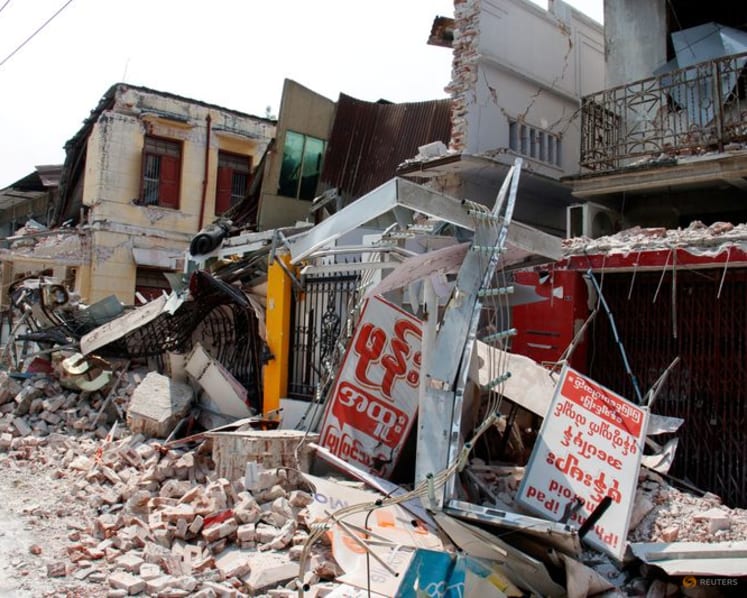
While ASEAN stepped in with recovery and relief efforts following the March 2025 earthquake in Mandalay, the combined weight of Myanmar’s ballooning humanitarian crisis from natural disaster and civil war is such that the junta may be impelled to seek even more help.
It is possible that junta chief Min Aung Hlaing and his generals believe that outside actors could be persuaded to work with his regime in aiding Myanmar’s recovery if it can claim that it has the consent of its people.
Whether the junta is prepared to accommodate the interests of the country’s ethnic minorities as part of that process – one of five conditions stipulated in ASEAN’s Five-Point Consensus on Myanmar, hitherto ignored by the SAC – is uncertain.
But with ethnic groups mostly unrepresented in the election, the Tatmadaw’s persistent Bamar-Burmese ethno-nationalist agenda appears fundamentally unchanged.
COULD ASEAN RE-ENGAGE MYANMAR?
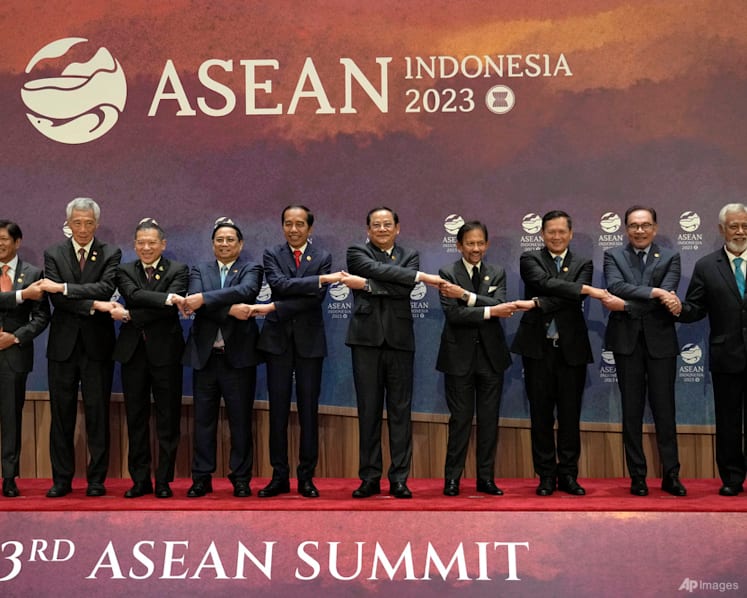
Ultimately, the quest for credibility is not just for Myanmar but ASEAN as well. After the 2021 coup, the bloc barred Myanmar generals from participating in high-level meetings due to the SAC’s failure to make progress on the Five-Point Consensus.
The reality is that regional neighbours like Thailand and Cambodia have begun re-engaging with the SAC through trade, energy and even military cooperation.
ASEAN had opted not to send observers to the election, but Vietnam and Cambodia were among those that sent delegations in the first phase, according to Myanmar’s Ministry of Information.
Faced with its own perceived irrelevance vis-a-vis Myanmar, the electoral process, flawed as it is, could provide a way forward for ASEAN to re-engage with the SAC. Notably, in contrast to the global derision towards the election, ASEAN leaders have been deliberately cautious in their response.
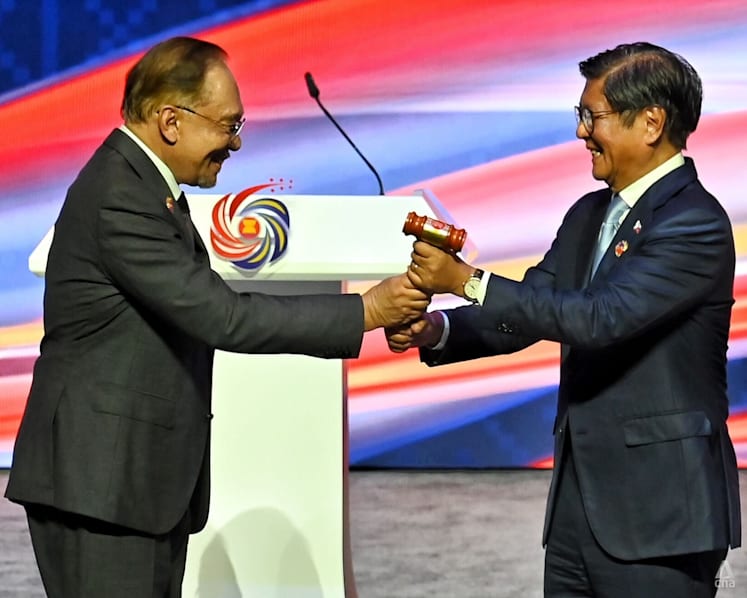
Speaking as then-outgoing ASEAN chair, Malaysia’s Prime Minister Anwar Ibrahim said: “Any assessment will proceed in a sequenced manner, guided by the need to reduce violence, avoid actions that could deepen divisions or confer premature legitimacy, and preserve the possibility of an inclusive and credible pathway forward."
Rather than treating its Five-Point Consensus dogmatically as a hill on which to die, it may make better sense for ASEAN to return to what it has traditionally done best – flexible engagement.
Tan See Seng is research adviser for the S Rajaratnam School of International Studies and senior associate at the Centre for Liberal Arts and Social Sciences at Nanyang Technological University.