Commentary: Nepal’s next prime minister won big – it comes with bigger expectations
Balendra Shah swept Nepal’s post-uprising election as the outsider. Governing is an entirely different challenge, says Rishi Gupta from the Asia Society Policy Institute.

This audio is generated by an AI tool.


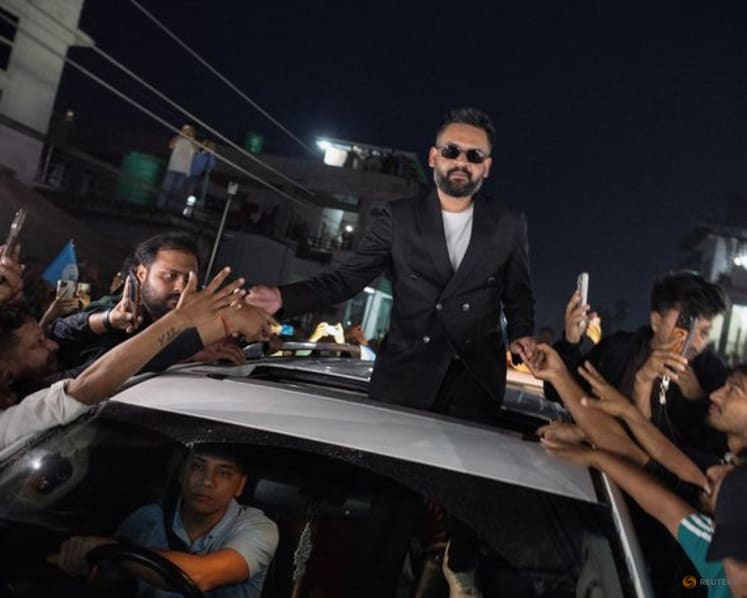
NEW DELHI: The 35-year-old mayor of Kathmandu is set to become Nepal’s youngest elected prime minister, just six months after his predecessor was ousted following Gen Z protests against nepotism, corruption and poor governance.
Balendra Shah gets described as a former rapper or a rapper-turned-politician in media reports, but it’s more than an eye-catching headline. It’s a strong signal of how he represents voters’ belief that lasting reform would only be possible by supporting an outsider to Nepal’s political establishment.
The people of Nepal delivered a historic mandate on Mar 5 to the youth-backed Rastriya Swatantra Party (RSP), a party founded only in 2022. To the surprise of election pundits and Nepal observers, Mr Shah led RSP to a landslide victory just shy of a two-thirds supermajority. Of the 275 seats up for grabs in parliament, the RSP captured a total of 182 seats – 125 through direct election and an additional 57 via the proportional representation system.
This has never been achieved in its democratic history. Not even the Maoist Centre, the architects of Nepal’s democracy who overthrew the monarchy, were able to accomplish this during the country’s first democratic elections in 2008.





Voters turned a protest movement into a government mandate, but their agenda is an ambitious one.
BEYOND THE YOUTH VOTE
Whether the RSP could translate its Gen Z momentum into support among Nepal’s broader electorate was an open question heading into the election.
The results suggest that the party succeeded. Mr Shah’s appeal as a relative outsider, combined with the RSP’s reputation for fielding good, qualified candidates, helped extend its reach beyond youth voters.
The Gen Z movement had put the flaws of Nepal’s establishment political parties on full blast: ageing leadership, power struggles and 17 years of unsustainable coalition governments, none of which lasted a full five-year term.

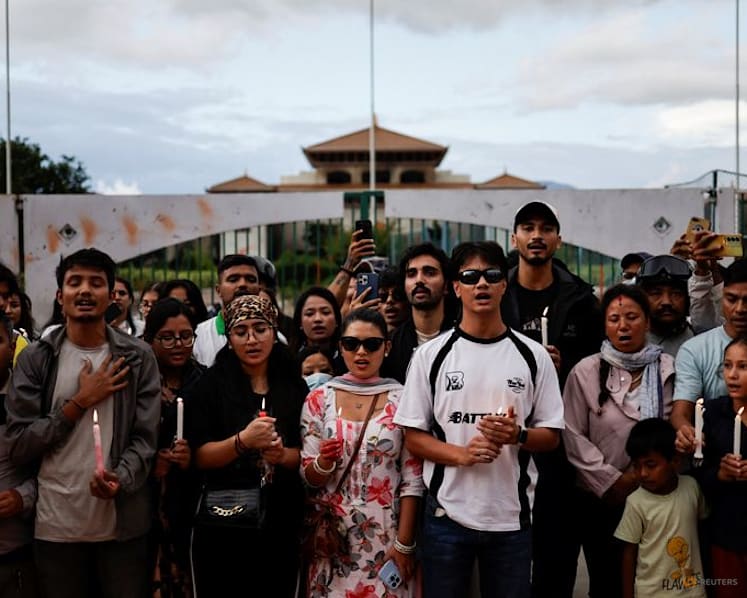
Gen Z angst led to the removal of Prime Minister KP Sharma Oli but it was not directed only at him or his Communist Party of Nepal-UML. Rather it lashed out against the entire political apparatus represented by the big party players, including the Nepali Congress and the Maoist Centre.
Mr Shah’s RSP fit the bill. Gone are the old political elite – and to add insult to injury, Mr Shah defeated Mr Oli in his own constituency.
A DIFFERENT MANDATE
But a big electoral victory brings bigger expectations,
From the creation of a constitutional monarchy in the 1990s to the establishment of a democracy in 2008, it has always been the people driving Nepal’s political transformations.
The Gen Z movement marks a different kind of transition. The protesters’ demands were not for a new political system but for the existing system to work better for them. They expect the new prime minister to address governance issues, nepotism, inclusiveness, financial transparency, employment and educational opportunities at home.
Mr Shah faces this immense task, especially as he has positioned himself as a populist. His past role as mayor of capital city Kathmandu built his reputation as an efficient administrator and as someone who challenged the old guard. He ran as an independent candidate in the 2022 mayoral election.
A numerical advantage in parliament may help Mr Shah push through meaningful reforms, but numbers alone won’t determine success. The government’s most demanding constituency will be the Gen Z voters that drove the RSP’s rise. They are likely to push for action and be impatient for results.
AN OUTSIDER STILL NEEDS TO BE A STATESMAN
As prime minister, Mr Shah will need to be savvier and more sensitive on both the domestic and international fronts.
As mayor, he was criticised for being disruptive and for lacking a human touch in an effort to ease Kathmandu's congestion that displaced structures and hawkers. He’s also known for his brash online presence, exemplified by a midnight Facebook post in November 2025 in which he directed expletives at India, China and the United States.
Balancing relations with its neighbour will be a foreign policy priority. Over the last 10 years, anti-India sentiments have taking centre stage in issues such as the alleged 2014 border blockade or the 2020 territorial dispute. These emotions run hot among the very Nepali youth who voted Mr Shah into office, and he will need to deflect pressure to move away from dependency on India.
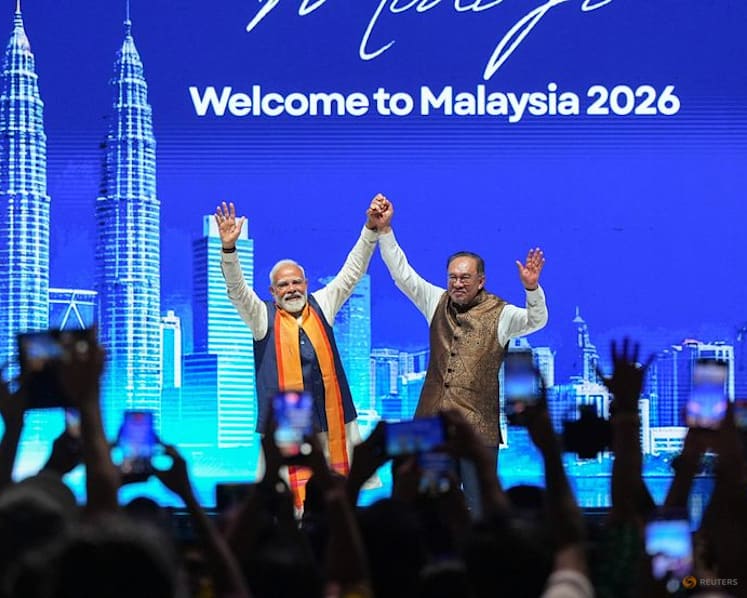
Interestingly, Indian Prime Minister Narendra Modi’s greetings on X (formerly Twitter) to Mr Shah and RSP chairman Rabi Lamichhane, and their responses, have been positive and forward-looking. Both sides know the future course of the relationship will be crucial to regional peace.
But Mr Shah is also entering office as millions of Nepalis are stuck in the Gulf countries amid the United States and Israel’s escalating war against Iran. Past governments have struggled to facilitate emergency rescue operations for Nepalis stuck in conflict zones.
How he handles this situation will be closely watched. The Nepali diaspora is an important constituency: Remittances from workers abroad account for close to 26 per cent of gross domestic product and many overseas Nepalis expressed support for him over social media despite not being able to vote abroad.
A NEW NEPAL, AGAIN?
Each movement that led to major political transition had brought hopes of a “Naya Nepal”, a new Nepal that is a forward-looking with a development-oriented economic and political structure. Yet successive governments have struggled to break the same cycles of corruption and malaise.
Mr Shah’s mandate is strong. But the expectations are enormous and there has been a long pattern of disappointment.
Rishi Gupta is Assistant Director at the Asia Society Policy Institute, New Delhi. Views are personal.