







Commentary: US, Russia and Ukraine keep talking past each other on peace
No breakthrough in Abu Dhabi meeting, but Europe’s unity against US President Donald Trump over threats to annex Greenland gives Ukraine a glimmer of hope, says international security professor Stefan Wolff.
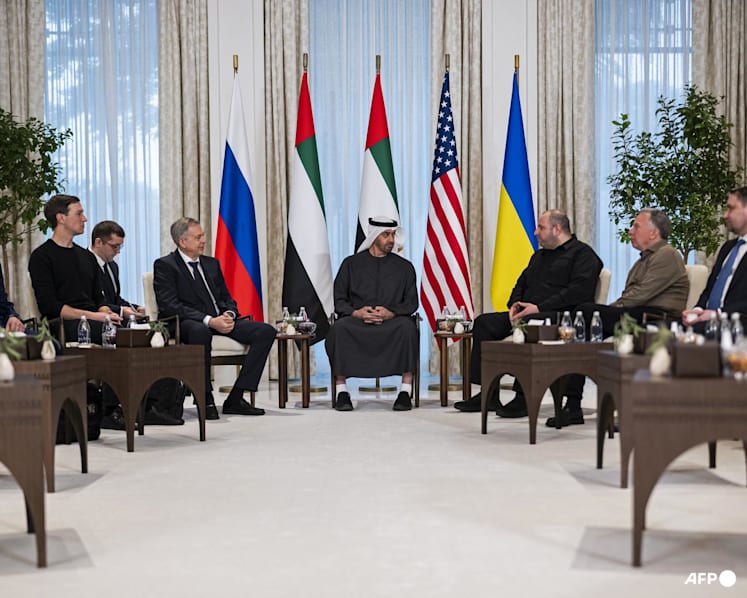
UAE President Sheikh Mohamed bin Zayed al-Nahyan (centre) speaking with the heads of delegations participating in the UAE-hosted trilateral talks between the US, Russia and Ukraine, at the Al Shati Palace in Abu Dhabi, on Jan 23, 2026. (Photo: Handout via AFP/UAE Presidential Court)

This audio is generated by an AI tool.


BIRMINGHAM, England: The first official three-way talks between the United States, Russia and Ukraine since the war began in February 2022 had been a sign of progress. But they ended without a breakthrough on Saturday (Jan 24), with follow-up discussions likely, but not certain before the end of the week.
It is hardly surprising that a peace agreement continues to elude the negotiators and mediators.
Ukrainian President Volodymyr Zelenskyy said at Davos just days earlier that this was “the last mile”. Crucially, he pointed out repeatedly, an agreement on post-war security guarantees had been finalised with American leader Donald Trump.
IRRECONCILABLE DIFFERENCES ON TERRITORY
Above all, a fundamental disagreement between Moscow and Kyiv over the status of territory remains. Russia formally annexed four regions in Ukraine in September 2022 but still does not fully control them after nearly four years of fighting. Neither side appears to be willing to budge.





Russian President Vladimir Putin appears convinced that if he cannot get Mr Zelenskyy to withdraw, he will eventually be able to capture the remaining parts of Ukraine’s Donetsk region – some 5,000 square kilometres – by force, just as he has almost done with Luhansk. At the current rate of Russia’s military progress, this could easily take another year.
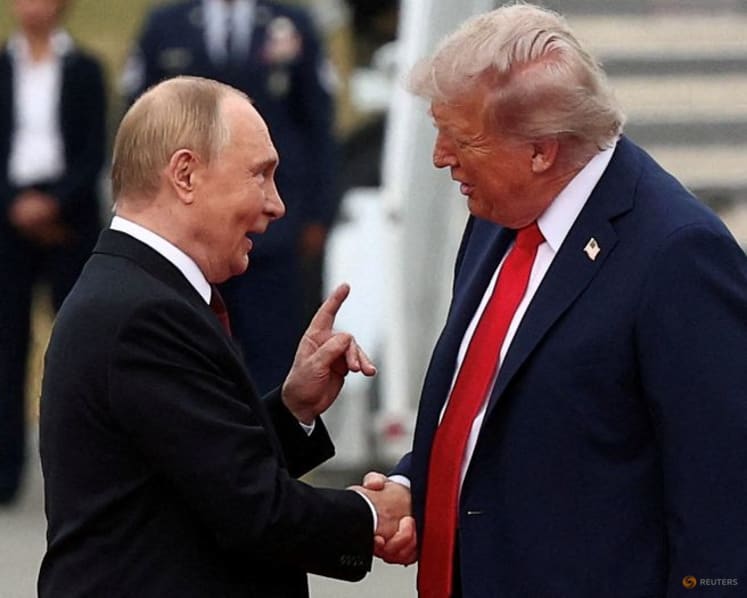
There is no guarantee that the Kremlin would stop there. Russia’s current offer to freeze the frontlines in Kherson and Zaporizhzhia in exchange for full control of Donetsk – according to the “Anchorage formula”, which the Kremlin calls the agreement between Mr Trump and Mr Putin at the Alaska summit last August – could be taken off the table at any time.
Mr Zelenskyy rejects the idea of giving up any territory that Russia has not been able to take by force. Ukrainian public opinion is largely behind him on this. In addition, the Ukrainian president cannot simply give away territory, at least not in a legal sense. The Ukrainian constitution requires that any such deal be approved in a referendum.
More important even are strategic considerations. Those areas in the Donbas that Ukrainian forces still hold are part of the country’s best developed defensive lines, including several so-called fortress cities. Handing these over would leave Kyiv much more exposed in the future and give Moscow an improved staging ground for renewed offensives.

NO GOOD-FAITH NEGOTIATION
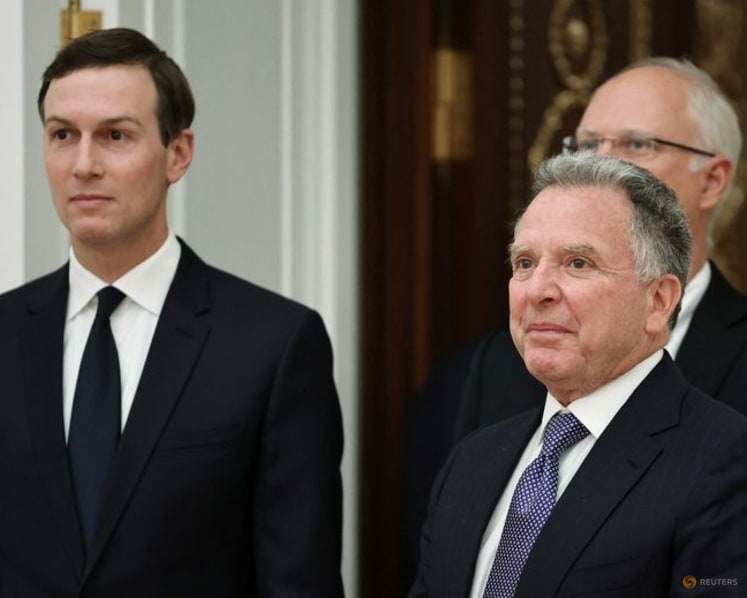
All of this should be fairly obvious to any mediator, and it is hard to see how the American team, led by Steve Witkoff and Jared Kushner, can be blind to these facts.
If they were hoping to apply pressure on either or both sides to make concessions, their strategy has not, for now, worked.
Even in the chaotic foreign policy process of the Trump administration, it seems clear that American pressure on Russia is unlikely to be forthcoming in a meaningful way. The Kremlin appears acutely aware of this.
Mr Putin’s spokesman, Dmitry Peskov, made it very plain before the start of the trilateral discussions in Abu Dhabi on Friday that Russia’s demand for full control of the Donbas remained in place. Overnight, Russia then carried out another devastating strike against Ukraine’s energy infrastructure, which is already teetering on the brink of collapse.
These are not the signals of good-faith negotiations.
Putting its territorial demands under this new term “Anchorage formula” also tries to establish a fait accompli that gives the impression of a properly negotiated deal crucially agreed by Mr Trump. It flatters the dealmaker in Mr Trump, presents a potentially significant win for Mr Putin, and casts Mr Zelenskyy in the light of the unreasonable spoiler if he rejects an “agreement” he had no part in negotiating.
AMERICA IS NOT THE ONLY GAME IN TOWN?
After more than a year of so far fruitless efforts, Mr Trump’s team still does not seem to understand that pressure on Kyiv alone is also not going to get anyone closer to a deal. US support remains important for Ukraine and gives Washington leverage over Mr Zelenskyy. But US support is no longer the only game in town.
Mr Zelenskyy’s European partners remain steadfast in their backing and are slowly picking up their game. The fact that Europe stayed united and faced Mr Trump down over his threats to annex Greenland – if need be “the hard way”, until he recently ruled out doing so by force – will also weigh positively in Mr Zelenskyy’s calculations.
With an even deeper rupture in the transatlantic alliance avoided for now, Europe will be both less distracted by threats from America and more focused on becoming strategically independent from the United States.
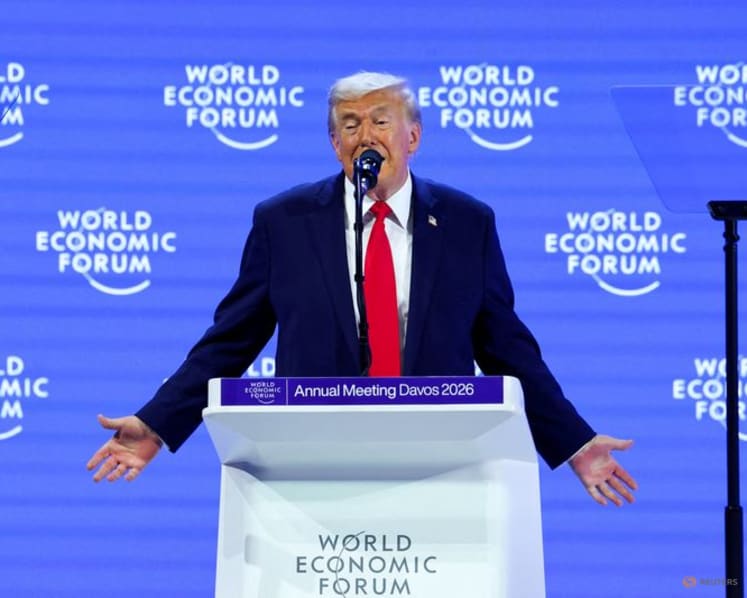

Nor is it entirely clear that American mediation would be ready for an actual deal between Russia and Ukraine. The agreement on American security guarantees Mr Zelenskyy spoke of after meeting Mr Trump in Davos still requires the leaders to sign on the dotted line.
Given the way in which Mr Trump has treated America’s hitherto closest allies just over the past few weeks, one might wonder how much American security guarantees can really still be relied upon.
A deal on rebuilding Ukraine in the event of a peace agreement is also nowhere near in sight. Russia balks at the idea of reparations and suggested that some US$5 billion worth of its assets that are currently frozen in the United States should be used for the reconstruction of the Ukrainian territories that the Kremlin has illegally occupied. This is clearly a non-starter for Kyiv and Brussels alike.
The fact that all sides agreed in Abu Dhabi that they will continue discussions is obviously positive. Whether this implies that an actual negotiation process will now get underway and what its format and direction will be, no one knows.
As Ukrainians continue to suffer through a very harsh winter, a ceasefire, let alone a peace agreement, seems as far out of reach as ever.
Stefan Wolff is Professor of International Security at the University of Birmingham.




