Commentary: Push for more disclosures on executive pay, dividends is necessary amid Singapore stock market’s revival
Concerns about how the latest proposed disclosure rules could be a strain for small and mid-cap listed firms on the Singapore Exchange are weak oft-repeated arguments, says former financial journalist Ven Sreenivasan.

This audio is generated by an AI tool.


SINGAPORE: Should listed companies disclose what goes into how they pay their senior management and board members? Should they share more about their dividend policies and maintain coherent investor relations practices?
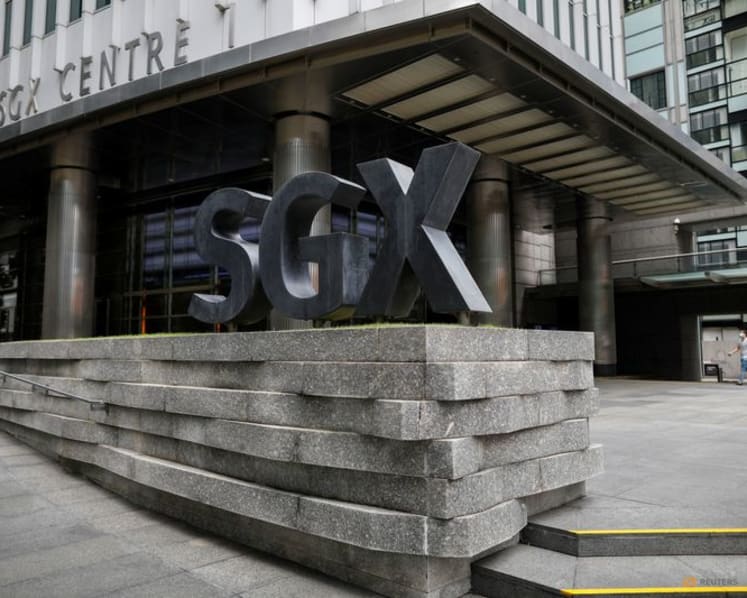
Going by a public consultation launched on Apr 22, the regulatory arm of the Singapore Exchange thinks so as it describes its latest proposed measures as necessary to raise baseline standards for corporate transparency and boost shareholder value.
Proposed rules include requiring companies to disclose all the key performance indicators used to determine executive pay in their annual reports. Crucially, companies must explain how these indicators align with long-term value creation for shareholders.
The Singapore Exchange Regulation (SGX RegCo) also wants companies to describe their dividend policies in the annual reports, as well as maintain a website and an investor relations policy to “facilitate regular two-way communication” with investors.





Currently, companies have to disclose only the remuneration of directors and the chief executive officer in their annual reports.
There are also “comply-or-explain” provisions under the Code of Corporate Governance to nudge listed firms to be transparent on their remuneration policies, as well as do more in the areas of dividend policy and investor relations.
Yet, about two-thirds of the largest issuers listed on the local bourse do not disclose that they have an investor relations policy, while a sizable proportion have chosen not to disclose their dividend policy.
SGX RegCo data also shows two-thirds of listed firms opting not to disclose metrics that link the remuneration of key office holders to performance that builds long-term value.
As SGX RegCo’s chief executive Tan Boon Gin puts it, there is “room for disclosure requirements to level up”.
NOT A BAD THING FOR SMALLER FIRMS
Unsurprisingly, some have raised concerns about how small and medium-sized companies, especially those already struggling with tight operating margins, could face the strain of higher costs forced upon them by these new disclosure rules and compliance requirements.
But these are weak oft-repeated arguments.
For a start, companies list to raise capital and boost their profile. The decision to become a listed firm would have been made with full knowledge of the costs involved, which in Singapore, can be found publicly on SGX’s website. With listing comes compliance – it is a given, in any market.
The problem is that many firms, especially small and mid-caps, remain in a state of stasis after the initial public offering. They face low liquidity, limited investor interest and undervaluation, but they exist in this purgatory state because of a lack of transparency about their operations and strategy. With little investor relations effort, the market does not know who they are or what they do.
The latest measures are precisely what these smaller listed companies need.
Granted, the cost of compliance could rise a little but financial help is available. As part of the “Value Unlock” programme announced last November, listed firms can tap on grants to build capabilities in corporate strategies, capital management and investor relations.
Subject to market support, the changes are slated to kick in from 2027 onwards, and reflected in annual reports in 2028. That is still some way to go for companies who reckon they need more time to prepare.

A MOVE IN THE RIGHT DIRECTION
The proposed listing rule changes may appear to be different and surprisingly “aggressive” compared to the raft of initiatives announced last year, such as streamlining listing processes and doing away with its financial watchlist.
But they are important, especially those that aim to boost transparency in dividend policies and enhance investor relations, and will fulfill investors’ needs for more and better information on their investments.
The disclosures regarding director and board remuneration may run counter to Asian culture, which instinctively values privacy on matters such as salaries and incomes. That said, there are many who reckon that, as publicly listed companies, this is information that should be available for investors to compare how management is being compensated relative to creating shareholder value.
Overall, this is a move in the right direction to boost investor confidence and corporate valuations.
It is also a natural progression for a maturing market like Singapore, which has been one of the best performing markets in the region over the past year, thanks to government-led efforts to revitalise the local market including the S$6.5 million Equity Market Development Programme.
Given how shareholder expectations have increased in tandem with the market's recovery, these latest proposed changes are timely and necessary.
Ven Sreenivasan is a former editor and journalist who has covered financial markets, economic and corporate news and aviation for more than 30 years.