Commentary: Southeast Asia’s youth dividend is becoming a liability
Youth unemployment threatens to dampen confidence in the region’s economy, deepen inequality and strain public finances, says UOB economist Enrico Tanuwidjaja.

General view of the Job Fair at Trilogi University in Kalibata, Jakarta, June 12, 2025. (Photo: Ridhwan Siregar/CNA)

This audio is generated by an AI tool.


SINGAPORE: Southeast Asia is home to over 680 million people, with more than 50 per cent under the age of 30 – an enviable demographic profile that should be a powerful engine for growth. As workers, consumers, entrepreneurs and innovators of today and over the next few decades, these youth represent the region’s much-touted demographic dividend.
But this promise is fraying. In August, scenes of social unrest in Indonesia were fuelled by youth upset over the rising cost of living and widening income gap. In Singapore, young people are taking longer to find jobs and their economic anxieties have been acknowledged by the government.
Across the region, the unemployment rate for those under 24 years is much higher than that of the general population. Beneath the surface lies a deeper malaise – labour market mismatches, underemployment and a widening skills gap, especially in high-growth sectors like technology and green energy.
Left unaddressed, youth unemployment threatens to dampen confidence in the region’s economy, deepen inequality and strain public finances further. The demographic dividend can quickly become a liability.





A REGION STRUGGLING TO PROVIDE JOBS FOR ITS YOUNG
Across Southeast Asia, the youth unemployment crisis is playing out in different ways, shaped by each country’s economic structure.
The least pessimistic statistics come from Thailand, with an unemployment rate of 5.9 per cent among those aged 24 and below. But this figure, as of the second quarter of this year, conceals a lack of high-value job creation and widespread underemployment. Agriculture still employs nearly a third of the workforce, offering low wages and limited career progression.
In Singapore, the COVID-19 pandemic accelerated the demand for tech-related skills in areas such as artificial intelligence, data analytics and cybersecurity. Yet, the local talent pipeline has not kept pace, leaving a persistent skills mismatch years after the pandemic. Among those under 30, the unemployment rate was 5.7 per cent as of June, according to Ministry of Manpower (MOM) data.
The good news, at least, is that those who are employed tend to be in permanent roles. From 2024 to 2025, the proportion of resident employees aged 15 to 24 years in contract positions declined from 29 per cent to 27 per cent and the proportion in casual or on-call positions declined from 13 per cent to 7 per cent, according to a November MOM report.
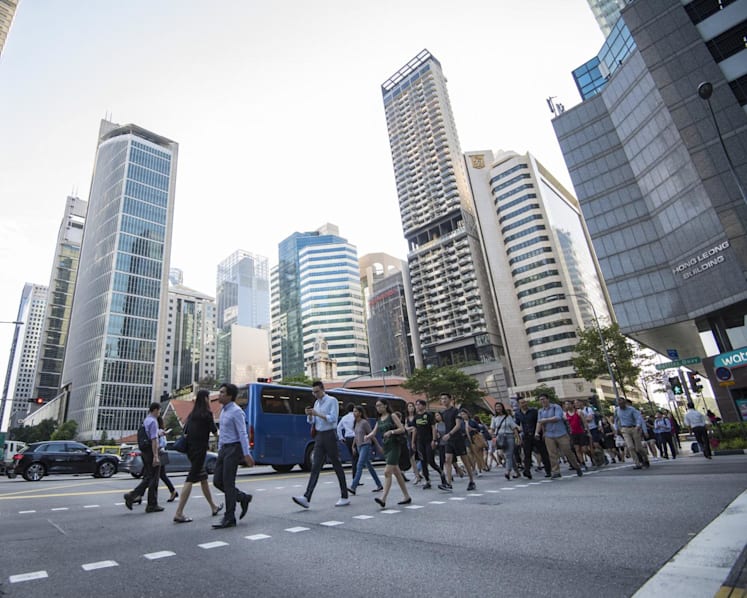

In Malaysia, about 10 per cent of youths under 24 were unemployed as of August. Labour market mismatches have improved since the COVID-19 pandemic, but wage growth remains sluggish particularly in skilled sectors. Young graduates often find themselves overqualified in their roles and may resort to multiple informal jobs to get by.
Indonesia, Southeast Asia’s most populous nation, faces the steepest climb. About 16.2 per cent of those under 24 years old were unemployed in February, according to the latest available statistics. In addition, more than half of the workforce is employed informally, often in low-productivity sectors like agriculture, food delivery and ride-hailing – roles that do not provide job security, benefits or long-term career prospects.
Government initiatives such as the Pre-Employment Card, which provides funding to jobseekers for skills training, have been promising, but wage growth remains weak. The digital economy, while growing, has yet to absorb enough young workers to make a dent in resolving the problem.
What unites these four economies is a shared diagnosis: The job market is demanding skills that many young people lack.
Our statistical analysis shows that job vacancies and unemployment are rising in tandem – a sign that the skills mismatch problem is getting more acute and deterring the job market from functioning efficiently. For young jobseekers, this could mean longer periods of unemployment or underemployment, lower starting salaries and a growing sense of disillusionment.


INVESTING BOLDLY IN YOUTH
Youth unemployment threatens economic and social stability. Beyond immediate costs, it fuels brain drain as skilled graduates seek opportunities abroad, depriving countries of future growth drivers. This is already playing out in Indonesia, Thailand and Malaysia.
Unemployment also delays key life milestones such as family formation and home ownership, weakening consumption and long-term resilience.
Governments must act decisively. Singapore’s GRIT scheme, which offers subsidised traineeships and on-the-job training, is a step in the right direction. Similar initiatives should be scaled up across the region, alongside reforms to align education with industry needs, strengthen vocational training and foster industry-academia collaboration.
Indonesia, with a large informal sector and high youth unemployment, faces a particularly acute challenge. It needs labour market reforms, including education system improvements and strategic investment in job-creating sectors such as manufacturing and logistics. The government has revised its National Education Law to extend mandatory schooling from nine to 13 years, a move that could significantly boost long-term employability.
Crucially, Southeast Asia must invest boldly in its youth – even if it means breaching fiscal limits temporarily. Strategic spending on skills, infrastructure and job creation is not a cost but an investment in future productivity and stability.
Equally important is regional synergy. Southeast Asian economies should leverage each other’s strengths and expand intra-ASEAN trade, which stands at just 22 per cent of total trade compared with over 50 per cent in the European Union. Greater collaboration can unlock opportunities in sectors such as electric vehicles, healthcare and manufacturing.
For example, Singapore, Malaysia, Indonesia, Thailand and the Philippines can partner to train young workers and develop the electric vehicle and healthcare sectors. Vietnam and Indonesia can build on their strengths in manufacturing and textiles, setting up factories to employ young workers and export to other Southeast Asian markets.
These projects will pay for themselves many times over through higher growth and social stability. Structural reforms and sustained cooperation are essential if the region is to realise the potential of its youth – before its demographic dividend turns into a demographic reckoning.
Enrico Tanuwidjaja is ASEAN economist at UOB.