Commentary: UMNO has ambitions for Malaysia's next general election but little room for manoeuvre
Being part of Prime Minister Anwar Ibrahim’s unity government has helped UMNO retain some relevance, but this will bring a different challenge come election time, says Asian Studies professor James Chin.
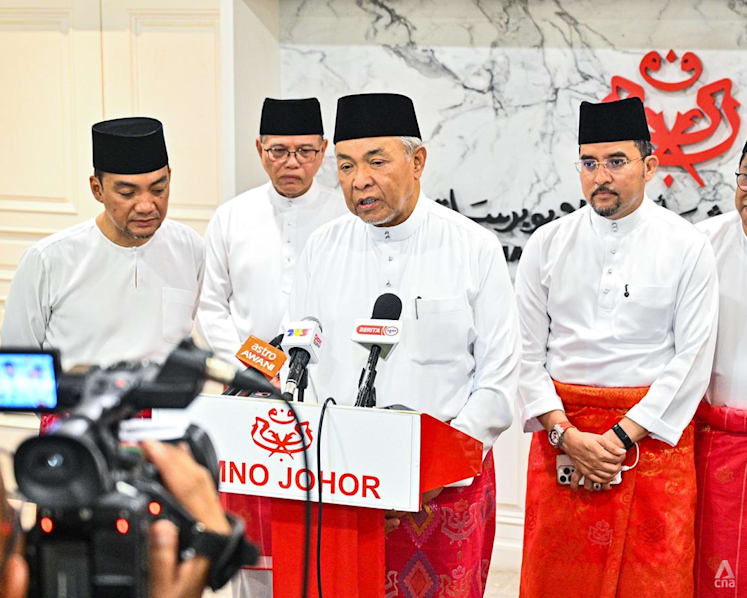


HOBART, Australia: Barisan Nasional (BN) is “almost certain” to go solo at Malaysia’s next general election while leaving room for “understanding” with other coalitions, said Dr Ahmad Zahid Hamidi in an interview before anchor party United Malays National Organisation (UMNO) marked its 80th anniversary on Monday (May 11).
This was a striking declaration in the lead-up to the 16th General Election (GE16) by the UMNO president and BN chairman, projecting confidence for a coalition that wants a return to its historic dominance. But it comes across as anniversary bravado, not yet a grounded strategy.
The numbers tell a sobering story. BN went from sweeping 133 seats in 2013 to a shocking defeat in 2018, winning only 79 seats in the 222-seat parliament. In the 2022 GE15, BN collapsed further to just 30 seats.
This sharp trajectory suggests structural decline. And though GE16 must be held by February 2028, it is widely speculated to be held by year end. If so, UMNO may be running out of time to fix its problems.





THE SHADOW OF NAJIB RAZAK
A core reason is UMNO’s persistent image as a party tainted by corruption.
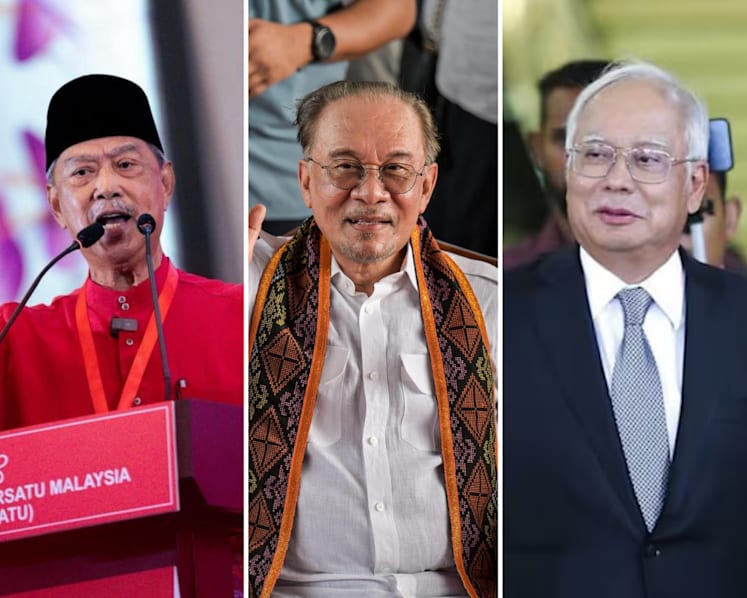
The party has not been able to shake the 1MDB scandal, which erupted publicly in 2015. It is the reason former leader Najib Razak is currently serving a six-year jail term in Kajang prison, after which he is set to start another 15-year sentence handed down in December 2025 on 25 separate charges related to 1MDB.
UMNO has also continued pushing for a full pardon for Najib. At the party general assembly in January, Mr Zahid said that the party’s support for its former leader had “never changed” and made a plea to Malaysia’s king to show “compassion toward Najib”.
This could further alienate Malay voters, BN’s traditional base. While loyalists see a conspiracy, a Merdeka Centre poll after Najib’s initial conviction in 2020 found nearly six in 10 Malay voters agreed with the court’s decision to find him guilty.
Mr Zahid himself has faced charges related to corruption, criminal breach of trust and money laundering. But he has since been granted a discharge not amounting to acquittal on 47 charges related to the misuse of funds from his charitable foundation Yayasan Akalbudi. His application for a full acquittal is still pending.
All this reinforces the narrative that reform is impossible under the current guard.

LOSS OF TRUST AND CREDIBILITY
The erosion of trust was already showing in GE15.
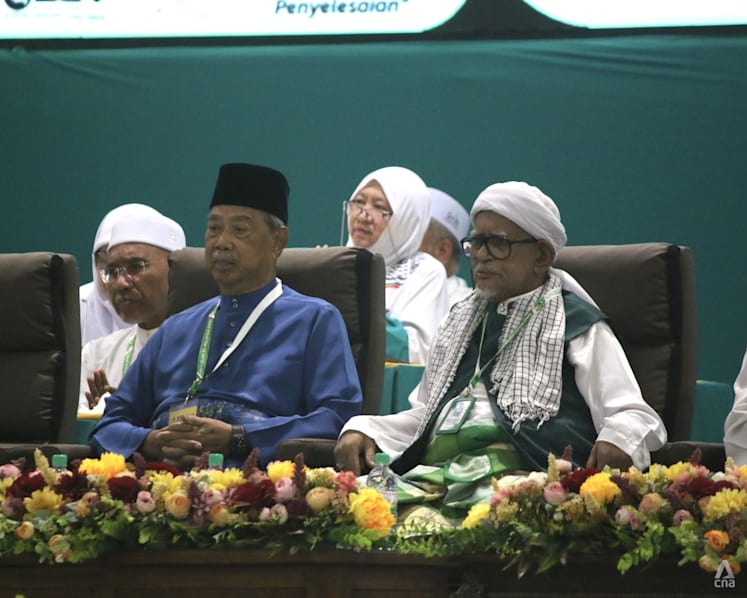
Malay voters propelled the other Malay-centric coalition Perikatan Nasional (PN) to 74 seats. Of these, 43 were won by the religious conservative Parti Islam Se-Malaysia (PAS), with the “green wave” particularly pronounced among younger Malays.
Research and polling consistently show PAS emerging as the primary vehicle for conservative Malay-Muslim aspirations. PAS chief Abdul Hadi Awang has also kept a lower profile of late, likely due to his declining health, which has helped PAS by reducing the controversial statements he often made that alienated moderates.
Bersatu, the other main PN party that was once touted as a home for ex-UMNO members, has weakened due to infighting and breakaways. PN is now effectively PAS-driven, giving it a clearer ideological appeal on Islam, Malay rights and anti-establishment sentiment.
Being part of the federal government has helped UMNO retain some power, but it has also damaged the party’s credibility among the core Malay base.
Before GE15, Mr Zahid had vowed “No Anwar, No DAP”, referring to the Democratic Action Party within Prime Minister Anwar Ibrahim’s Pakatan Harapan coalition which he had framed as anti-Malay. He has since had to actively defend UMNO-DAP ties within the unity government, so much so that people are calling the relationship UMDAP.
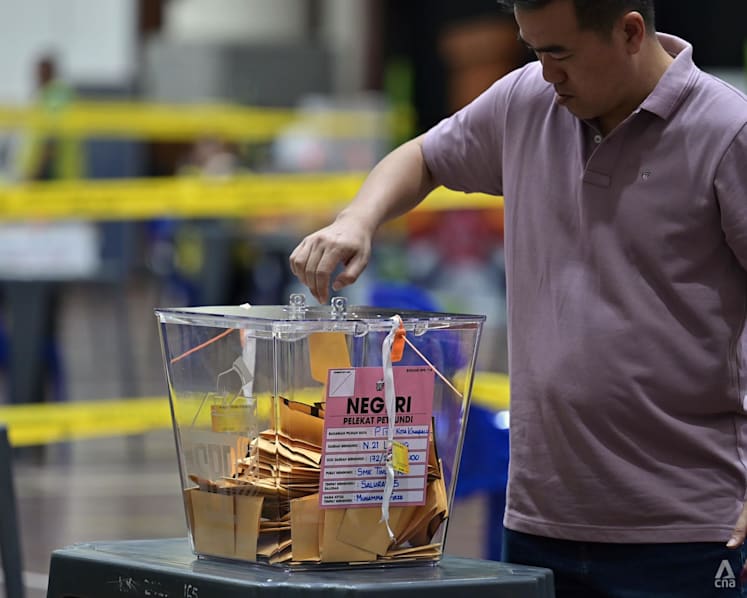
In the six state elections of 2023, UMNO performed even worse, winning a dismal 19 out of 108 seats contested. This pattern of decline and lost ground in Malay heartlands revealed a party struggling for relevance.
DEFEND, NOT CRITICISE, GOVERNMENT PERFORMANCE
UMNO has limited room for manoeuvre, given its role in government. As part of Mr Anwar’s unity government, it shares responsibility of Malaysia’s economic performance, which is currently facing myriad pressures, mostly from uncertainties linked to the Iran war.
UMNO will have to shoulder blame for any economic downturn, for public dissatisfaction with rising costs, stagnant wages and a challenging job market. The finance ministry has proposed cutting nearly RM6 billion from health and education budgets.
And UMNO must now defend, not criticise, government performance.
Against this backdrop, the political reality is that UMNO is not in a position to fully break from coalition politics.
Contesting solo risks three-cornered fights that historically benefitted PAS. Without PH or other alliances shoring up support from non-Malay voters, UMNO’s ceiling in mixed or urban seats drops sharply.
The party’s machinery, once formidable and historically backed by a deep election chest, now shows signs of weaker grassroots mobilisation and difficulty attracting new talent.
BETWEEN AMBITION AND REALITY
UMNO cannot keep operating in its pre-2018 mode. Without a clean break from the Najib-era old guard, revival seems improbable.
Mr Zahid’s bold talk carries the optimism of UMNO’s 80th anniversary celebrations rather than cold electoral arithmetic.
The party retains pockets of loyalty, experience in governance and some organisational muscle. A strong performance in select seats could still give it bargaining power post-GE16 but it is unlikely to be able to get back the prime ministership.
To meet its ambitions, UMNO would need a generational shift: new faces untainted by pre-2018 baggage, genuine anti-corruption reforms, and a refreshed appeal to both conservative and moderate Malays. Current signals suggest continuity over reinvention.
As Malaysia heads toward GE16, UMNO must be careful not to trap itself between nostalgia for past glory and the harsh realities of a transformed political landscape.
James Chin is Professor of Asian Studies, University of Tasmania, and Senior Research Associate, Tun Tan Cheng Lock Institute of Social Studies, Malaysia.