







Commentary: Will Cuba be the US’ next misadventure?
Mired in a Middle Eastern mess, President Donald Trump may be tempted by an opportunity for an easy win, says Max Hastings for Bloomberg Opinion.
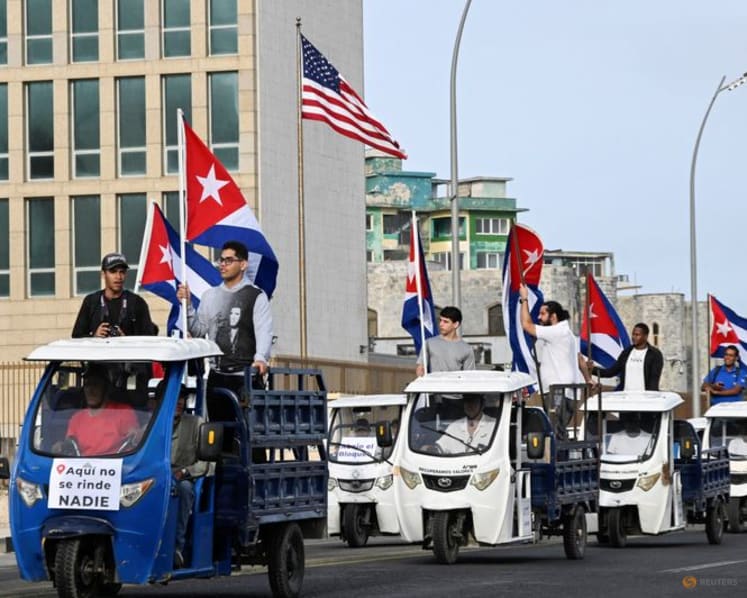
LONDON: America’s armed forces are heavily committed in the Middle East, but there are whispers around the White House that they have been warned to stand by for a new intervention against Cuba.
As usual with this president, no final decision has been taken. But United States President Donald Trump sees a window of opportunity to act in the Caribbean, where the 67-year-old Castro regime is tottering under the weight of US sanctions, the cut-off of Venezuelan oil and its own awesome incompetence.
Last Monday (Apr 13), the president said that the US may “stop by Cuba” when finished with Iran.
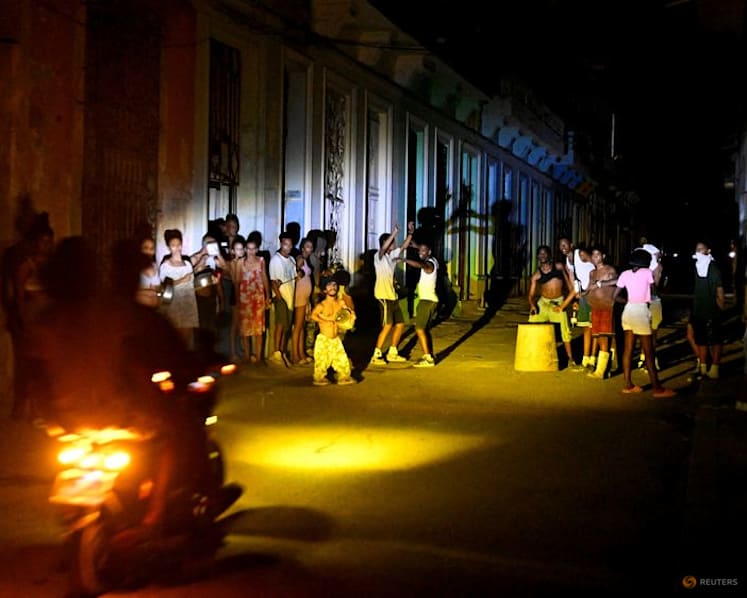
A quarter of the island’s 11 million population, including most of its middle-class professionals, have quit home in the last five years, for many destinations. The economy is on its knees. Hunger is rife. Despite a delivery of Russian oil, electricity blackouts are routine. Only a few privileged people, with access to US dollars and the black economy, are prospering.
The temptation for Trump, mired in a Middle Eastern mess which promises no glory for himself, is that here seems an opportunity for an easy win, which would be popular with many Americans of all parties.
UNLIKELY TO MEET SERIOUS RESISTANCE
It is unlikely that US forces landing on the island would meet serious resistance. Cuban President Miguel Diaz-Canel, whose departure Washington demands, said defiantly earlier this month: “Stepping down is not part of our vocabulary.” But his recent release of more than 2,000 political prisoners from Cuban jails reflects the weight of American pressure, and vulnerability of the regime.
There is a realistic prospect that, if American forces land, within days much of the population will dance in the streets. So desperate is their condition that any alternative to Castroism seems to offer more than what they have got.
Think of the potential photo opportunities waiting for the president, as his siren advisers may well be telling him now: Here is one of the few destinations on earth where, once American forces have secured the island, if he himself visits he is likely to receive a riotous welcome as the people’s deliverer. Success might be transformative for the Republican Party’s prospects in the midterm elections.
And yet, the Trump administration’s recent global antics have deprived it of any fragment of moral authority. A downside risk to hitting Cuba is that unexpectedly heavy resistance might create a bloodbath. Even if occupation proves easy, Trump could immediately seek to restore Cuba’s former status as a de facto American colony.
Four years ago, I published Abyss, an account of the 1962 Cuban missile crisis. In an interview with an American podcaster, I said that one problem in the country’s historic relationship with Cuba is that many Americans believe that, because the island lies just 90 miles off the continental mainland, Washington has rights to decide what goes on there.
“But surely we do have such rights,” my interviewer said.
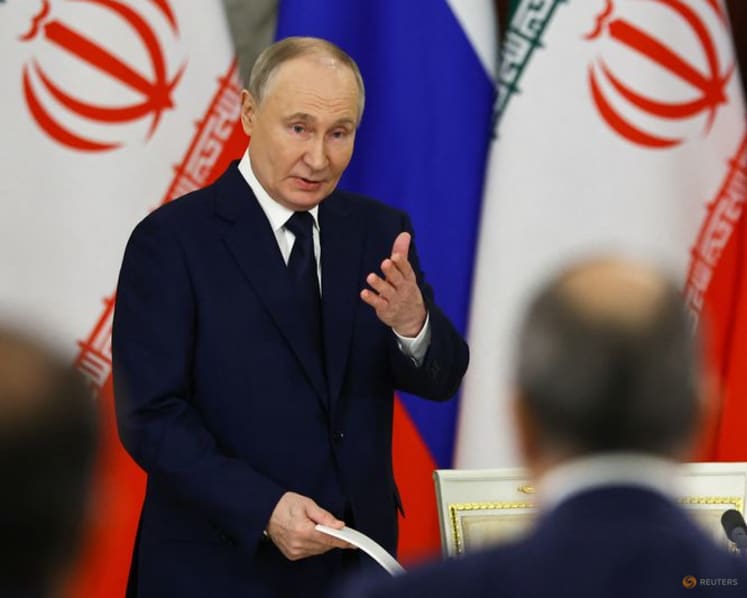
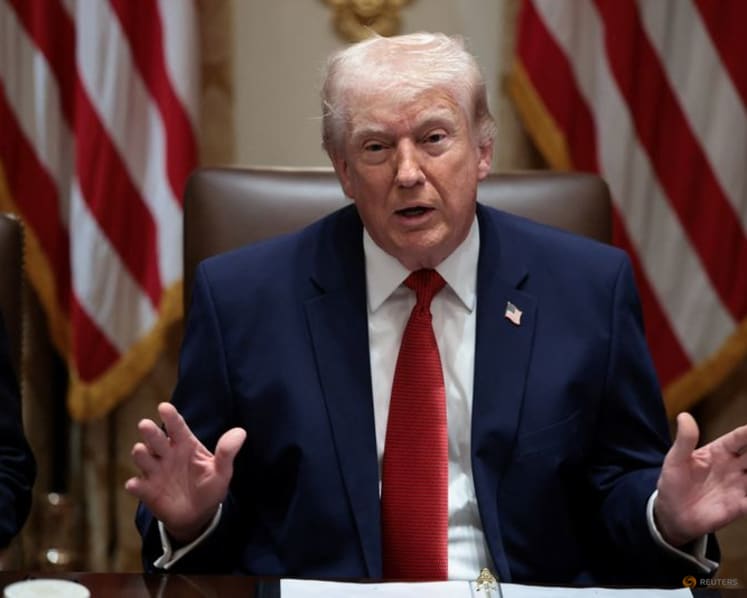
I suggested such a claim matches the one Russian President Vladimir Putin advanced to justify his attempt to seize Ukraine. Trump doctrine explicitly asserts a right to decree what happens across America’s hemisphere. A president who claims dominance over Canada is unlikely to hesitate about strong-arming Cuba.
BUT CUBANS COULD END UP EXPLOITED AGAIN
But the past offers serious warnings. The ruthless exploitation of Cuba by American companies in the pre-Castro era, when President Fulgencio Batista ruled and half the population starved, brought shame upon the US. They exported home the profits from sugar, cigars and utilities. The Las Vegas mafia bought gambling licenses in exchange for suitcases of cash. US ambassador Earl Smith played canasta with Batista, and was heedless of the cruelties of the SIM secret police and excesses of US investors.
Popular loathing for Batista as an American puppet made the guerrilla triumph of Castro in January 1959 wildly popular with every Cuban except the property-owning classes.
In my book I quoted a woman who looked back on the revolution and said: “Fidel gave Cubans back their self-respect.” They even enjoyed defying Washington’s will through the years that followed, until the privations of communism became unbearable, and Soviet aid was cut off.
Cuba’s current condition owes much to the gross mismanagement of its rulers, but plenty also to decades of American sanctions, designed to force regime change. The danger of a Trump-led putsch is that if rampant capitalism follows, the Cuban people could quickly find themselves back where they left off.
Among 3 million exiles in Florida, to whom the GOP owes political favours, the most assertive are itching to fly back home and seize the economic levers with all the dollars at their command. “We have a lot of great Cuban-Americans,” Trump said on Apr 13, “all of whom just about voted for me, and they were treated very badly [by the Cuban regime].”
That last bit is true, but exile revenge, backed by American force, would be disastrous if unchecked. The popular mood could quickly turn against the Yanqui liberators if Trump and his people allow renewed economic exploitation.
WILL TRUMP CHOOSE A DIPLOMATIC PATH OR A FAST WIN?
Some Cuba watchers argue that the smartest US route would be to lift economic sanctions and seek a diplomatic path to expelling the regime. But that may not be easy.
The corrupt army-run conglomerate GAESA controls large parts of the economy, just as the Islamic Revolutionary Guard Corps owns the most profitable elements of Iran. It may be hard to dispossess GAESA without deploying American force.
Moreover, advocates of a diplomatic path to regime change are thinking about relatively long-term measures such as lifting sanctions in return for guarantees of a free election within, say, a year. Yet Cuba has been a one-party state for so long that there is no real underground opposition, only Florida’s exiles.
And Trump – and even more so his party, fearful of disastrous November elections – is looking for a fast win, such as the Marine Corps might deliver.
A likely course, in step with the strategy Trump has adopted toward other foreign governments he dislikes, is an ultimatum demanding that the top Cubans quit, followed by the commitment of US forces if Havana refuses to comply. Secretary of State Marco Rubio has been dallying with the grandson of the country’s most celebrated revolutionary, 94-year-old Raul Castro. The elder Castro no longer holds formal office, but still wields immense influence.
There are fears that Trump’s people might settle for a victory such as they achieved in Venezuela – securing US influence and a headline success, while leaving most of the regime’s leaders in place, to continue doing whatever they choose to their own people.
But in Trump country nothing is assured, and little is ever off the table except defiance of his demands. The core facts remain: The president wants a fast win and Cuba appears to him ripe for the plucking.
It seems plausible that, over the weeks ahead, Trump will seek to shift the headlines from the Middle East to the Caribbean. He has openly speculated about deploying his military there, saying “sometimes you have to use it. And Cuba is next.”
Trouble is, this administration’s record in foreign affairs is almost uniformly calamitous – Venezuela not excluded, if the interests of its people are considered. Whatever else the world needs right now, the last thing is American bayonets on Cuban beaches.




