China’s ‘emotional value’ phenomenon is redefining goods, services and society
“Emotional value” is China’s latest catchphrase determining how people spend and behave, but also reflective of modern-day anxieties.
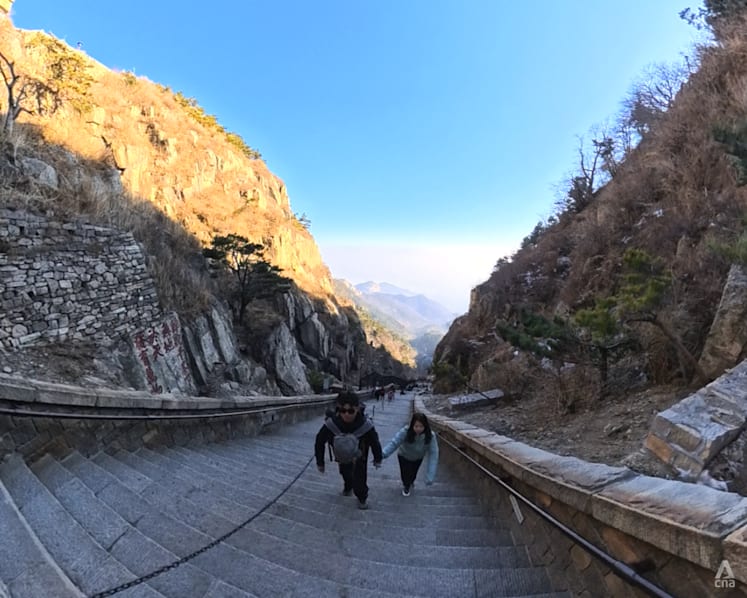
Xiao Meng, a companion climber, holds the hand of CNA correspondent Krystal Chia during their ascent up Mount Tai in Shandong – a gesture meant to provide comfort and encouragement. (Photo: CNA/Emil Wan)

This audio is generated by an AI tool.


TAI’AN, Shandong: Along the 7,500 stone steps of Mount Tai, 24-year-old Xiao Meng is making his 200th ascent of the sacred mountain.
Dubbed the leader of China's Five Great Mountains, Mount Tai rises 1,545m above sea level in the eastern Shandong province.
For more than 2,000 years, Chinese emperors visited the mountain to pray.
Today, it is a popular destination among domestic travellers and seen as a test of one's physical and mental endurance.





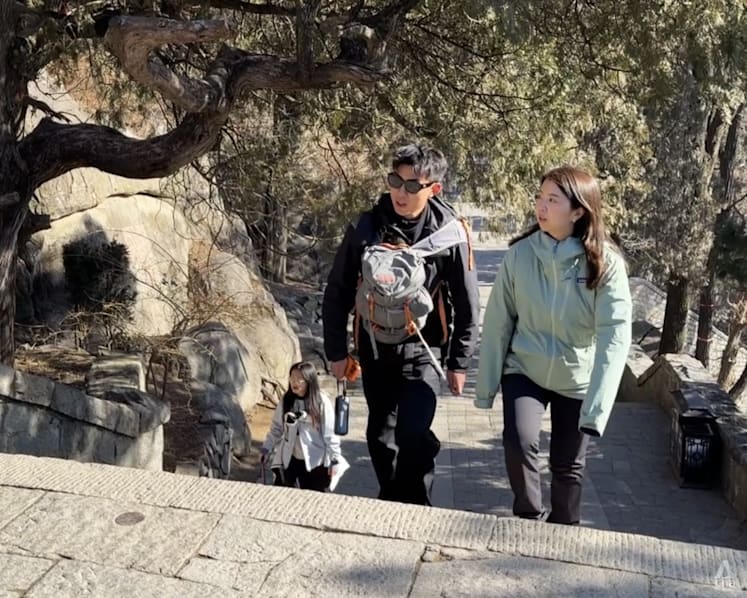
Despite carrying two bags – his own and his client's – Xiao Meng climbs steadily past other fatigued hikers struggling along the ascent.
“As long as clients want to climb, we guarantee that we can bring them to the peak, 100 per cent,” he said, extending his hand to support his exhausted client.
Xiao Meng, as he only wants to be known, is not a typical tour guide, but a “pei pa” – literally, a “companion climber”.
He does everything a tour guide does: explains the area’s history and landmarks, takes photographs and ensures his clients’ safety. But he also provides physical and emotional support.
He provides the essentials such as food and water, holds clients' hands, keeps conversations flowing, offers endless encouragement and, if requested, even carries exhausted climbers for short stretches.
Xiao Meng’s job is part of China’s growing so-called “emotional economy”, where consumers are no longer paying only for a product or service’s practical value, but for the feelings it evokes, be it excitement, comfort, joy or novelty.
Such experiences are increasingly described in China as “qing xu jia zhi”, or “emotional value”.
Following buzzwords such as “lying flat” and “involution”, this has become the latest catchphrase capturing the mood of Chinese society.
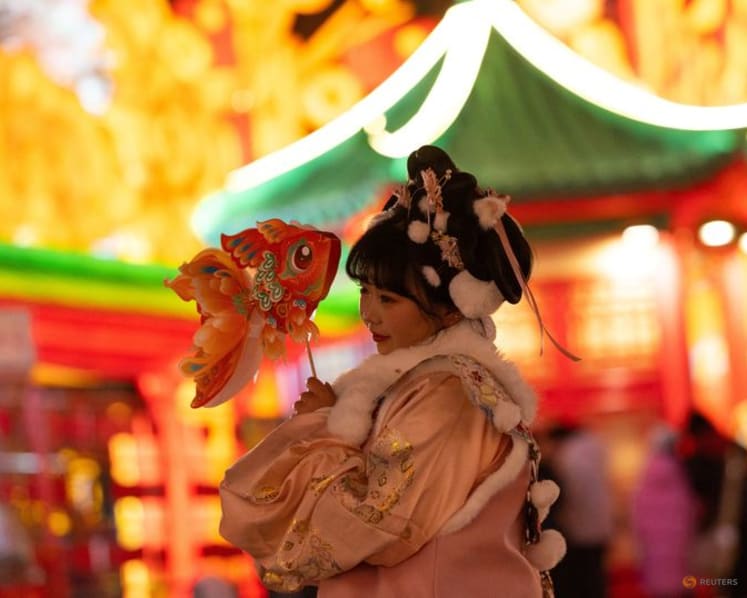
Initially a term used in economics and marketing research, it went mainstream during Pop Mart’s Labubu craze in 2024, when analysts used it to explain why consumers were willing to spend significant sums on collectible toys.
The concept has since expanded across a wide range of goods and services in China.
Everyday products are now branded with cartoon characters, restaurants and retail spaces offer themed experiences, and a growing “companionship economy” – including services like Xiao Meng’s – has emerged.
THE BUSINESS OF COMPANIONSHIP
Xiao Meng was introduced to the companion climbing role by a friend last April, after graduating from a sports university.
“Many people ask if we get tired – of course we do, especially if we're climbing at night. But we are used to this, and it has almost become muscle memory,” said the Shandong native.
He charges 700 yuan (US$100) a day, in line with market rates. He can reach Mount Tai’s summit in just two hours and 15 minutes, far quicker than the roughly six hours most amateur climbers take.
Xiao Meng admitted that providing emotional support during climbs can be mentally draining, but the work also gives him a sense of satisfaction.
“If a client is feeling low and I have to keep cheering her up, that can be exhausting. But when we finally reach the summit and she is so happy, my fatigue fades away,” he told CNA.
Sometimes, there are unusual requests. Xiao Meng recalled organising a climb involving 24 companion climbers for just two clients who simply wanted to have a lively atmosphere. The team even brought durians up the mountain to share during the trip.
He has also carried a bouquet of flowers for a client's marriage proposal, and a weighing scale so a client could compare her weight before and after the climb.
However, like many companion climbers, Xiao Meng establishes clear boundaries upfront to keep the relationship professional. Socialising with clients after the climb, such as drinking together, is considered off-limits.
Many say the companion climbing trend originated on Mount Tai because of the mountain’s gruelling ascent, which often pushes climbers to emotional extremes. Online, there is even a saying that couples who climb Mount Tai together will either get married or break up.
Companion climbing exploded in popularity last year, and quickly expanded across China. There are now WeChat groups with hundreds of companion climbers, along with referral systems and commissions.
Most companion climbers are men – many of them graduates from sports universities – although there are also female companion climbers.
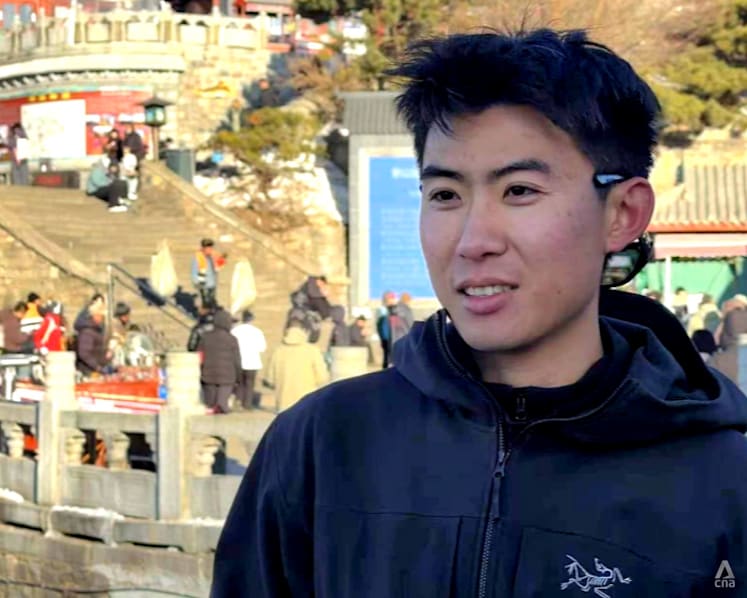
Xiao Meng had initial doubts about the career prospects of companion climbing, but later saw the strong demand for the service and the emotional value it provides.
“Some clients are unable to reach the summit alone and they'd have regrets if they came from far away. Solo travellers might also think it's boring to climb alone and want to have a better experience enjoying the joys of climbing,” he said.
“This is an uplifting job that allows me to meet all kinds of people and also keeps me fit. Compared with perhaps many young people today who are idle or unwilling to work, this role is full of positive energy.”
“TRULY REVOLUTIONARY” CULTURAL SHIFT
China’s emotional consumption market is projected to exceed 4.5 trillion yuan (US$662 billion) by 2029, up from 2.72 trillion yuan in 2025, according to Guangzhou-based consultancy iiMedia Research Group.
Against the backdrop of traditional Chinese society, this phenomenon represents a profound cultural shift, said Ji Yingchun, a sociology professor at Shanghai University.
“Traditionally, Chinese family and social life operated under a patriarchal, patrilineal and hierarchical framework,” she said.
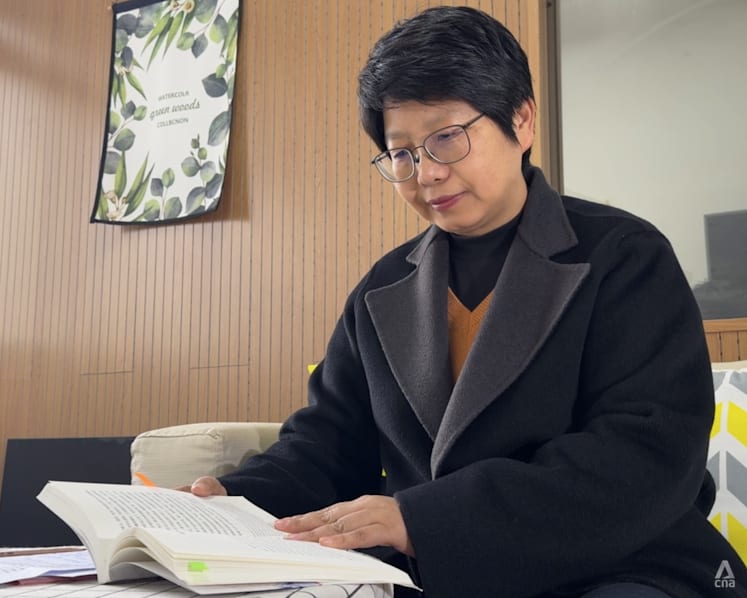
Confucian teachings also encourage people to be prompt in action and reserved in speech, and not to over-indulge in emotions.
“Society didn’t (use to) focus much on emotional exchange and interactions,” she added. “The changes we are seeing today are truly revolutionary.”
Experts across sociology, psychology, economics and consumer strategy say the rise of emotional consumption is largely driven by anxiety and uncertainty about the future.
Ji explained the phenomenon through two sociological theories: Ulrich Beck’s “Risk Society”, which argues that modernisation creates both wealth and widespread insecurity; and Hartmut Rosa’s “accelerated society” theory, which notes that the increasing pace of modern life leaves individuals feeling intense time pressure and loneliness.
JOB ANXIETY LINK TO EMOTIONAL SPENDING
Since China’s reform and opening-up in 1978, the country’s economy grew at an average annual rate of 8.9 per cent through 2023. China’s digital revolution also produced some of the world’s largest technology companies.
But that momentum weakened when the COVID-19 pandemic hit, compounded by a prolonged property crisis.
China has set an economic growth target of 4.5 to 5 per cent this year, its lowest since 1991. Youth unemployment has also remained elevated for years, most recently at 16.3 per cent in April.
ANZ Bank senior China strategist Xing Zhaopeng said there is a correlation between China’s youth unemployment rate and emotional spending.
The bank estimates that a quarter of the 30 million people unemployed in China are youths aged 16 to 24. Another 12.7 million university graduates will enter the job market this year, further squeezing employment opportunities.
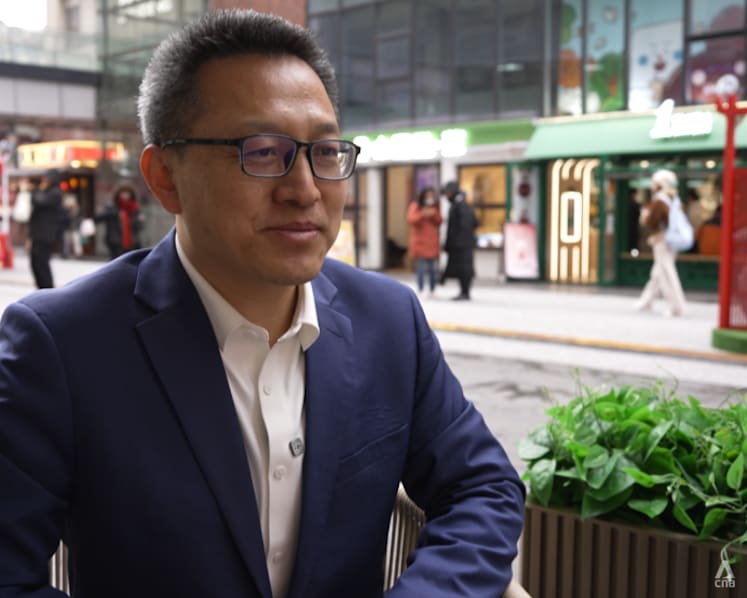
“We don’t see a reversal in the unemployment trend this year, with young adults still bearing economic pressures,” Xing said. “When people can’t see long-term hope, they seek short-term psychological comfort and fulfilment instead.”
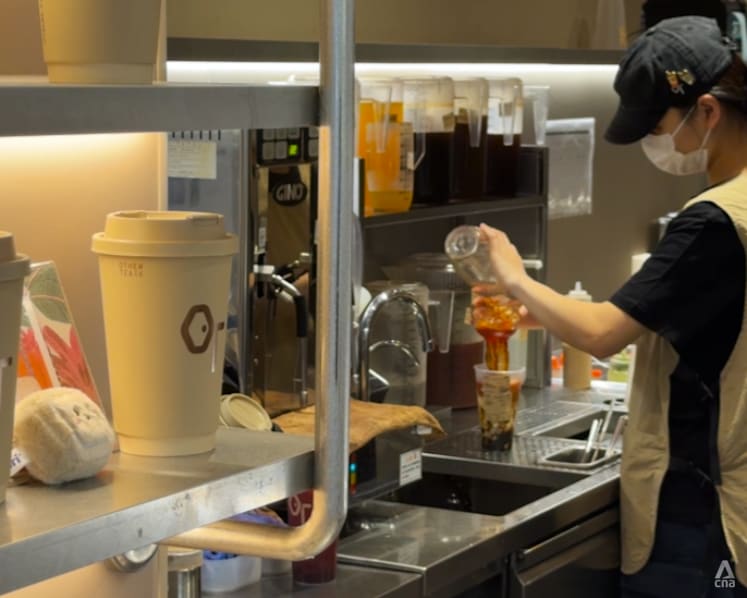
The bank has forecast strong growth this year for sectors tied to emotional consumption, including milk tea, toys and games.
RISKS OF CHASING EXTERNAL FULFILMENT
The Labubu frenzy may have eased, but other collectibles are gaining popularity.
At Pop Mart’s Crybaby exhibition in Shanghai in December, visitors queued to buy various products related to the toy character perpetually on the verge of tears.
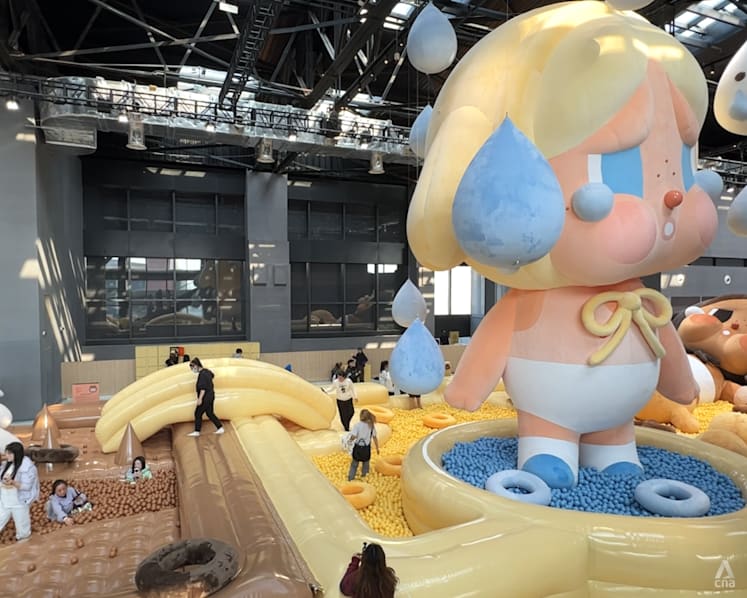
“Crybaby can help to relieve stress,” said one visitor, explaining his fascination with the toy. “Normally, an adult won't cry, but Crybaby can cry in place of you, and that improves one's mood.”
His comment reflects the psychology behind China’s growing emotional economy.
“Several core human needs lie beneath this qing xu jia zhi trend,” said Selina Lin, a clinical psychologist at Parkway MediCentre Xintiandi.
Humans inherently crave recognition and connection, and toy characters can serve as an extension of the self, she said.
However, she warned that emotional spending can become a double-edged sword.
Consumer behaviour, including opening blind boxes, often triggers dopamine – a neurotransmitter linked to reward-driven behaviour, improved moods and pleasure. While dopamine is essential for survival, it can also become addictive.
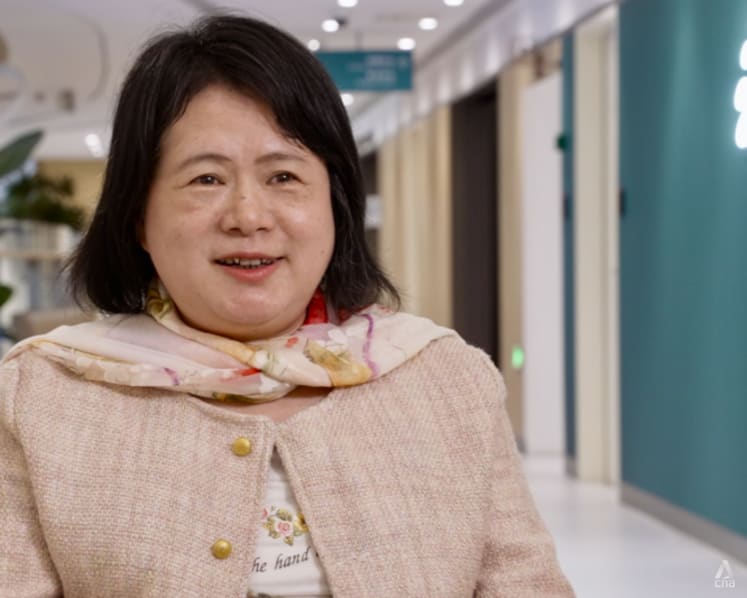
“We cannot fully rely on the external world for fulfilment. Instead, we can absorb these positive experiences to build a more solid and resilient self,” Lin said.
As consumption trends evolve and Chinese society continues to modernise, experts believe the pursuit of emotional gratification is here to stay.
China’s former vice-minister of commerce Wei Jianguo described emotional consumption as a “trillion-yuan new growth pole” that is key for macroeconomic balance, according to state media.
“Qing xu jia zhi was once a little-known academic term but it is now the thematic word for China’s young people,” said Shanghai University’s professor Ji, adding that China’s modernisation has accelerated individualism and people’s sense of self.
“It reflects the changes of an entire generation and is a cultural barometer of our times.”