Decoding Beijing's 2026 economic jargon - and why it matters
The language of China's 2026 government work report reveals the tensions shaping its economic strategy, say experts.
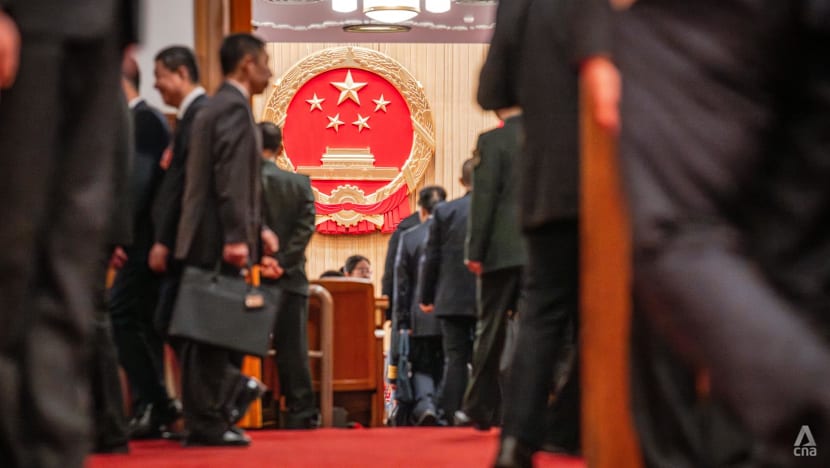
Delegates enter the Great Hall of the People for the opening ceremony of China’s National People’s Congress in Beijing on Mar 5, 2026. (Photo: CNA/Hu Chushi)

This audio is generated by an AI tool.


BEIJING: Chinese Premier Li Qiang’s annual government work report has long been viewed as the country's economic scorecard.
But it is also a coded statement of intent - a carefully calibrated signal of policy direction in which the prominence, sequencing and framing of key terms can matter as much as the headline targets.
From “intelligent economy” and “unified national market” to curbing “involution” and “investing in people”, this year’s vocabulary points to a recalibration: less emphasis on speed and scale, and greater focus on reform, resilience and the quality of growth.
“The most notable shift this year is arguably renewed emphasis on reform,” said Guo Shan, a research economist and partner at Hutong Research.





Five key phrases from this year's report capture where that agenda is headed - and what Beijing thinks it will take to get there.

INTELLIGENT ECONOMY
Among the standout phrases in this year's government work report was the introduction, for the first time, of a "new form of intelligent economy".
Chen Changsheng, deputy director of the State Council Research Office and a member of the work report drafting group, told reporters on Mar 5 that it was "a brand-new concept" aimed at "expanding the breadth and depth of AI empowerment of all industries, opening up new space for economic growth, cultivating new models, and strengthening new driving forces".
The idea builds on China’s AI-Plus initiative, which includes a target of achieving over 90 per cent penetration of AI agent applications by 2030, the final year of the 15th Five-Year Plan.
This year’s report also named AI agents for the first time and referenced open-source development thrice.
Brian Wong, a fellow at the Centre on Contemporary China and the World at the University of Hong Kong (HKU), said it signals that AI is now meant to be treated as core infrastructure and fully integrated into all aspects of the economy.
This, he added, requires genuine public-private partnership and points to Chinese companies like DeepSeek as proof that state-led efforts alone cannot deliver on the promise.

At the same time, the document called for employment protection measures in response to China’s rapid AI development.
“I think the Chinese leadership has yet to find an answer to this serious dilemma,” Wong noted, even as Beijing recognises the destabilising effects AI automation could have on entry-level jobs - and the political risks that follow.
UNIFIED NATIONAL MARKET
Another phrase that featured prominently in this year’s report was “unified national market” - referring to Beijing’s long-standing ambition to eliminate the patchwork of local regulations, protectionist policies and market barriers fragmenting the domestic economy.
Lin Han-Shen, China director at The Asia Group advisory firm, described it as “the basic foundation of the entire domestic policy agenda this year”.
The term appeared prominently in the Chinese text of this year’s report and, unlike previous years when it was framed as guidance, was paired with binding legislation - signalling that Beijing may be moving from principle to enforcement, experts said.


Guo flagged the commitment to consumption tax reform and described it as “far more expansive than anticipated”.
The move, she said, would mainly involve redistributing tax revenues to local governments through transfer payments.
Wong said the bigger obstacle lies in how provincial officials are judged. Their performance metrics reward them for boosting their own region, not for working with others - and may even encourage competition.
Bloated state-owned enterprises at provincial and local levels have entrenched patterns of territorial competition that resist coordination from the top, he added.
“Short of any drastic changes to the accountability mechanisms and the metrics by which cadres and officials are assessed, I do not see room for the kind of harmonisation that will be required,” Wong said.
INVOLUTION
Involution - or “neijuan” in Chinese - began as campus slang describing the futility of working harder without getting further ahead. Over time, it evolved into shorthand for destructive competition.
The 2025 government work report acknowledged it. This year’s report attached an enforcement toolkit.
At last year’s National People’s Congress (NPC) in March, President Xi Jinping called for taking “initiative to address issues such as local protectionism, market division and 'rat race' competitions”.
By December’s Central Economic Work Conference, the unified national market legislation and the rectification of “involution-style competition” were paired as a single reform priority - a deliberate linkage, analysts said.
This year’s report goes further. It called for strengthening anti-monopoly and anti-unfair competition enforcement, tightening fair competition review mechanisms and deploying four instruments simultaneously - production capacity controls, standards guidance, price enforcement and quality supervision - to foster “a healthy market ecology”.
“Rat-race competition has genuinely moved from diagnosis to enforcement language - that’s the real story,” said Lin from The Asia Group.
Wong identified three reasons why Beijing is acting - fear of a deflationary spiral, concern about trade backlash from European and Southeast Asian markets and wage suppression that involution produces for frontline workers.


SERVICE CONSUMPTION
Another term elevated in this year’s government work report was “service consumption” - appearing four times as a standalone policy category, with its own action programme, budget line and delivery mechanisms.
Lin from The Asia Group said that the creation of a formal action programme confirms that service consumption has moved beyond rhetoric and crossed over into official policy territory.
Guo argued that services employ 60 per cent of China's workforce, and that job insecurity - not lack of desire to spend - is the real constraint on household consumption.
Creating stable service-sector jobs is therefore the key, not just issuing vouchers, she added.
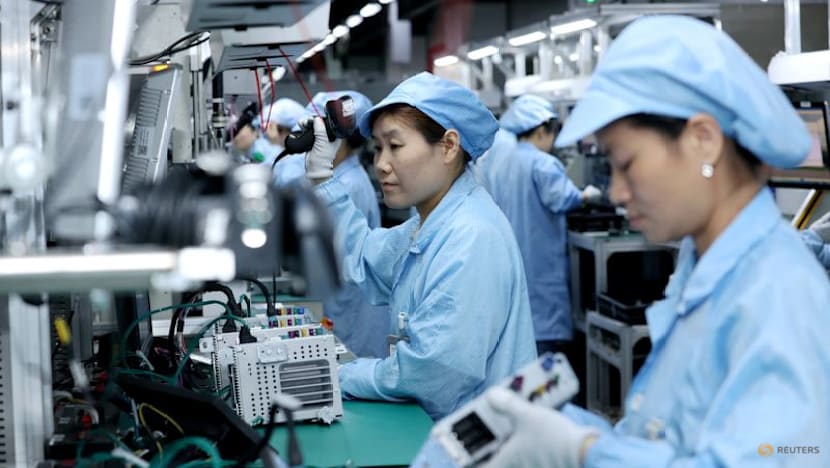
Analysts said this shift suggests that Beijing sees supply-side reform in China’s service sector, rather than demand stimulus, as the intended lever.
“Chinese society - organically, but also with encouragement from the government - is shifting away from merely consuming for the sake of necessity to consuming for the sake of experience,” said Wong from HKU, pointing to emotional value as an emerging driver.
It reflects a deeper ambition, he said.
Beijing’s goal is not just to generate more spending but also to cultivate “a middle-class ethos”, Wong said.
“Comfort is not enough,” he said. “The Chinese government is set on ensuring that citizens lead not just comfortable but moderately prosperous lives.”
“You can't rebalance the economy if you don't create alternative conduits for people to spend their disposable incomes,” he added.


INVESTING IN PEOPLE
Two phrases were paired throughout the report - investing in “physical things” and “people”.
Lin described “investing in people” as “the counter-narrative to pure infrastructure spend”.
It comes with a concrete new mechanism: the Urban and Rural Residents Income Growth Plan, first called for at December's Central Economic Work Conference.
HKU’s Wong traced the concept to the early years of Xi’s administration but said COVID and the first Trump trade war delayed its full articulation.
“Investment in people, whilst having been an important principle for a decade, was only able to gain proper policy salience after China emerged from that double whammy,” he said.
On what would actually shift household behaviour, Wong pointed to the safety net.
Short of revitalising the real estate sector, he said, improving social security and instilling confidence in long-term economic prospects is the only viable path to unlocking consumption.
“You don't need to worry as much about saving for a rainy day” if the safety net holds, he said - and that, in his view, is the precondition for everything else.
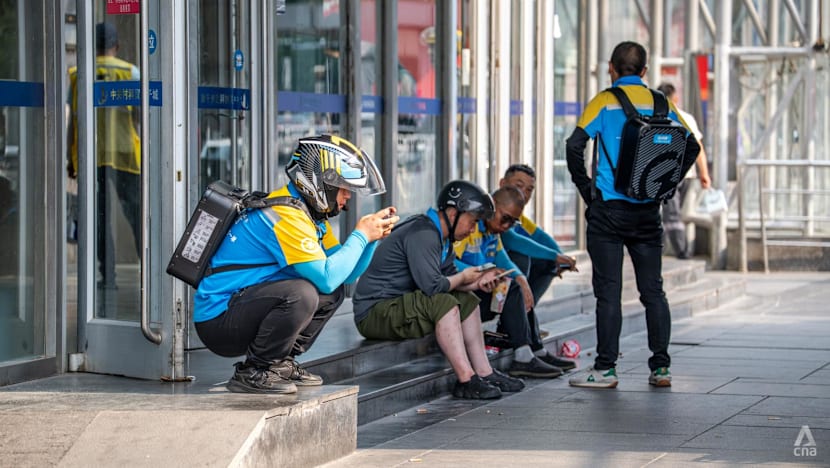
Taken together, the language in this year’s report suggests a leadership preparing for a more calibrated phase of development, as Beijing sets the lowest GDP growth target in decades at 4.5 to 5 percent.
Amid external shocks, analysts said the emphasis is on self-sufficiency and resilience, with a pivot from quantity to quality.
In that sense, the report reads less like a rallying cry for rapid growth and more like a blueprint for durability.