All perks, no proposals: Why China’s cash and marriage rewards aren’t getting more singles to say ‘I Do’
From cash rewards to wedding vouchers, local governments across China are rolling out incentives to revive marriage rates. But can policies really change hearts?
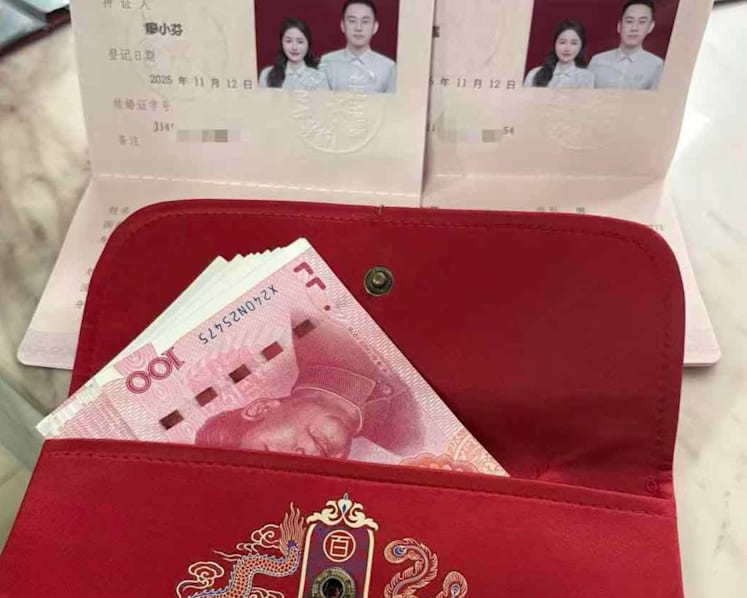
Cash incentives totalling 1,500 yuan received by Liao and her husband when they registered their marriage in Lyuliang, Shanxi province. (Photo: Liao Xiaofen)

This audio is generated by an AI tool.


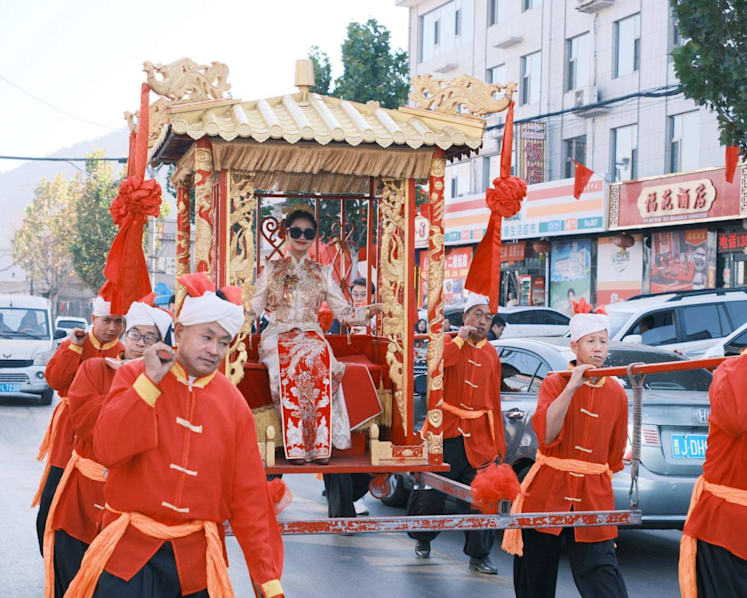
SHANGHAI: On the morning of her wedding, Liao Xiaofen sat inside a red bridal sedan chair, draped in a traditional crimson ensemble - part of the pageantry that has defined Chinese marriage rituals for centuries.
Eight men lifted the carriage into the chilly autumn air, beginning a slow procession down a narrow village road.
Her husband’s hometown in Lyuliang, Shanxi province, had transformed for the occasion.
Lanterns in auspicious scarlet and silk banners lined the streets, while gongs crashed and horns blared. The groom rode ahead on horseback, flanked by matchmakers and musicians.
“It felt like an ancient wedding parade,” Liao said, adding that the ceremony on Nov 15 was dignified and unforgettable.
“(It was) the highest level of marriage a girl could hope for,” she told CNA.
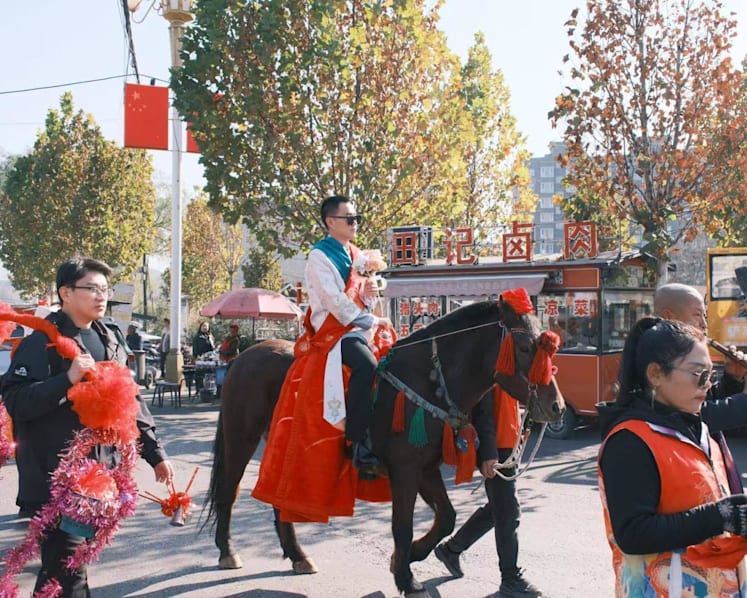
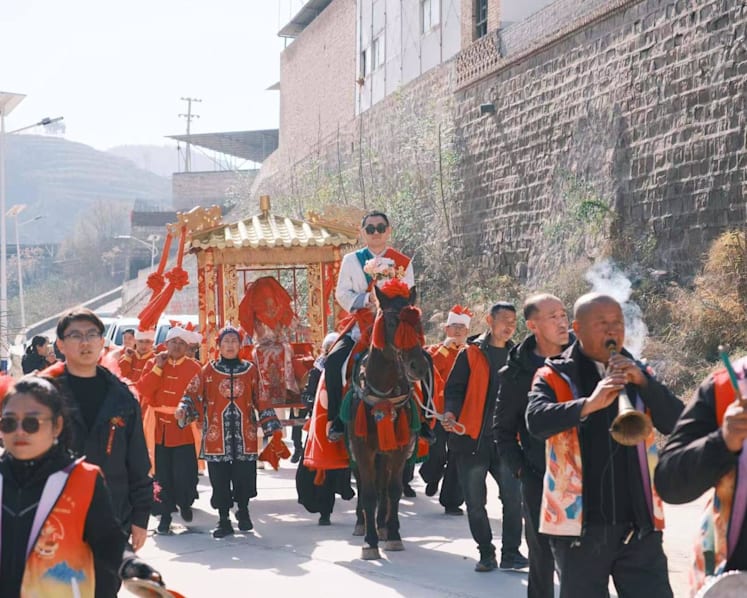
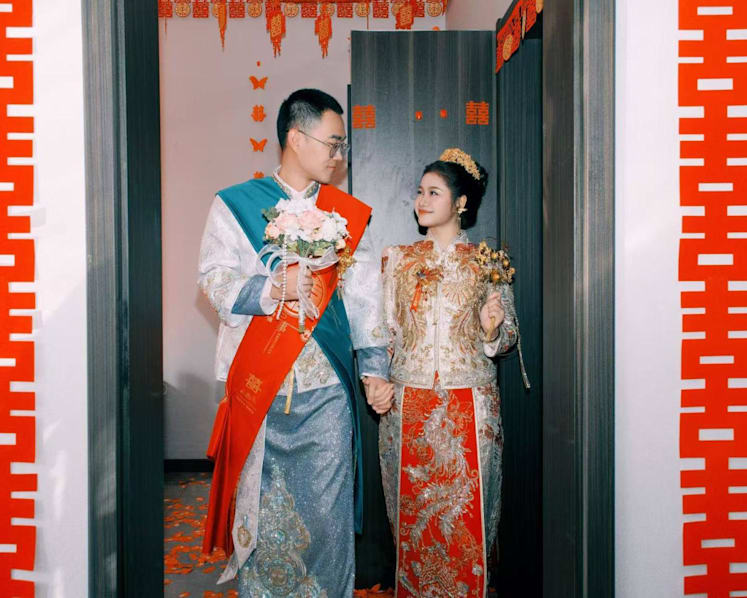
Liao, 29, grew up in Guangdong province but chose to hold her wedding in Shanxi, largely drawn by the elaborate customs and sense of grandeur.
What further cemented her decision, she said, was how local authorities offered cash incentives to couples who registered their marriage there.





“Since there was a reward … we were very happy. It made the whole experience feel even more meaningful,” she said.
The couple visited the local civil affairs bureau days earlier, where they received their marriage certificate along with 1,500 yuan (US$212) in cash. They have not spent it.
“(The money) is in my drawer, untouched,” Liao said.
“I feel blissful just looking at it.”
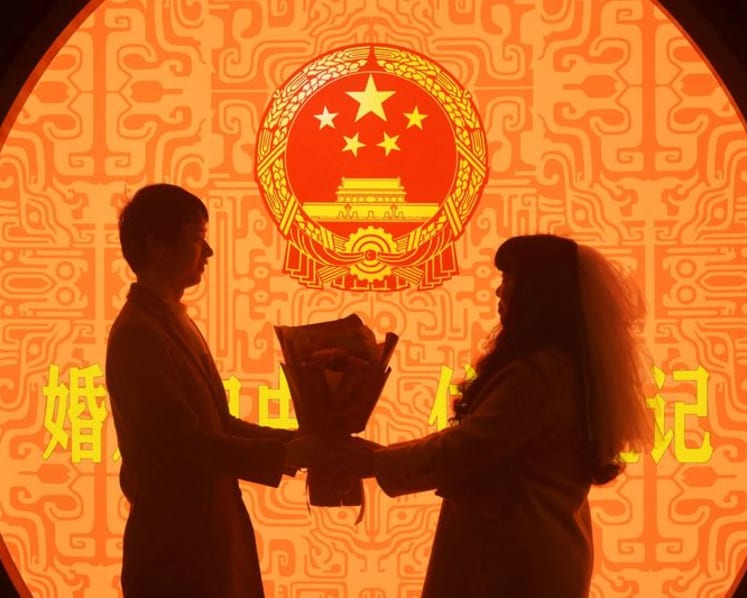
The cash was a bonus - a cherry on top - for couples like Liao and her husband who were already planning to marry. But in China’s rural areas and smaller cities, such subsidies are no small gesture.
In 2024, the monthly per capita disposable income of China’s rural residents was about 1,900 yuan - so a 1,500-yuan cash bonus can represent a noticeable share of spending power in many rural areas.
Throughout 2025, local governments across the country have intensified efforts to encourage couples to wed.
In Zhejiang province, cities like Ningbo, Hangzhou, Pinghu, and Shaoxing’s Keqiao district rolled out wedding voucher schemes for newly registered couples, valued at up to 1,000 yuan.
Others are experimenting with different kinds of wedding perks: themed mass ceremonies, vouchers for wedding photography, honeymoon discounts, and even holding vow ceremonies at nightclubs - all deployed in the hope of nudging up marriage registrations and, ultimately, birth rates.
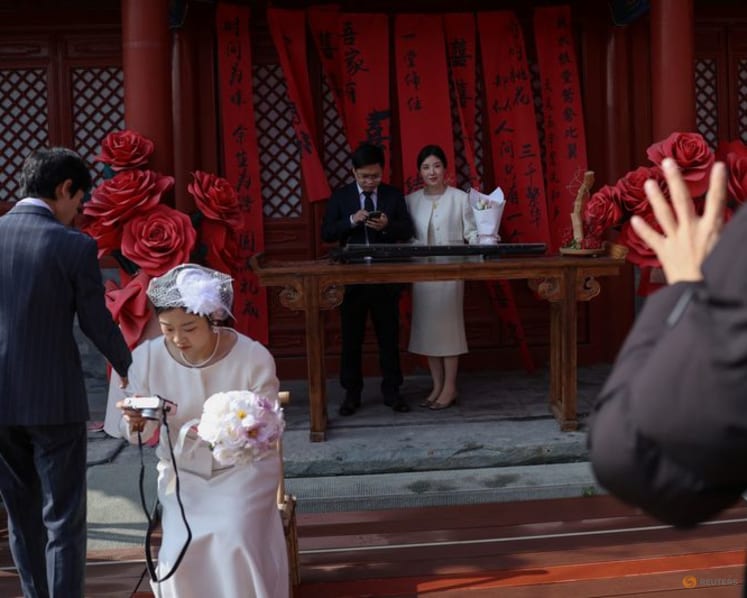
But experts said it will take more than vouchers and subsidies or lump-sum bonuses.
“There are many factors causing declining fertility rates,” Yi Fuxian, a demographer and senior scientist at the University of Wisconsin-Madison, told CNA.
“Cash subsidies can only relieve things a little bit,” Yi said, pointing to other deep-set issues in society like rising living costs and housing prices as well as high unemployment rates.
“If young people can’t find jobs, then they absolutely cannot get married, and cannot have children,” he added.
“In the past, people would marry in their early twenties - but now, they only marry in their thirties.”
They would be much older and that would mean more trouble conceiving and bearing children as a result, he added.
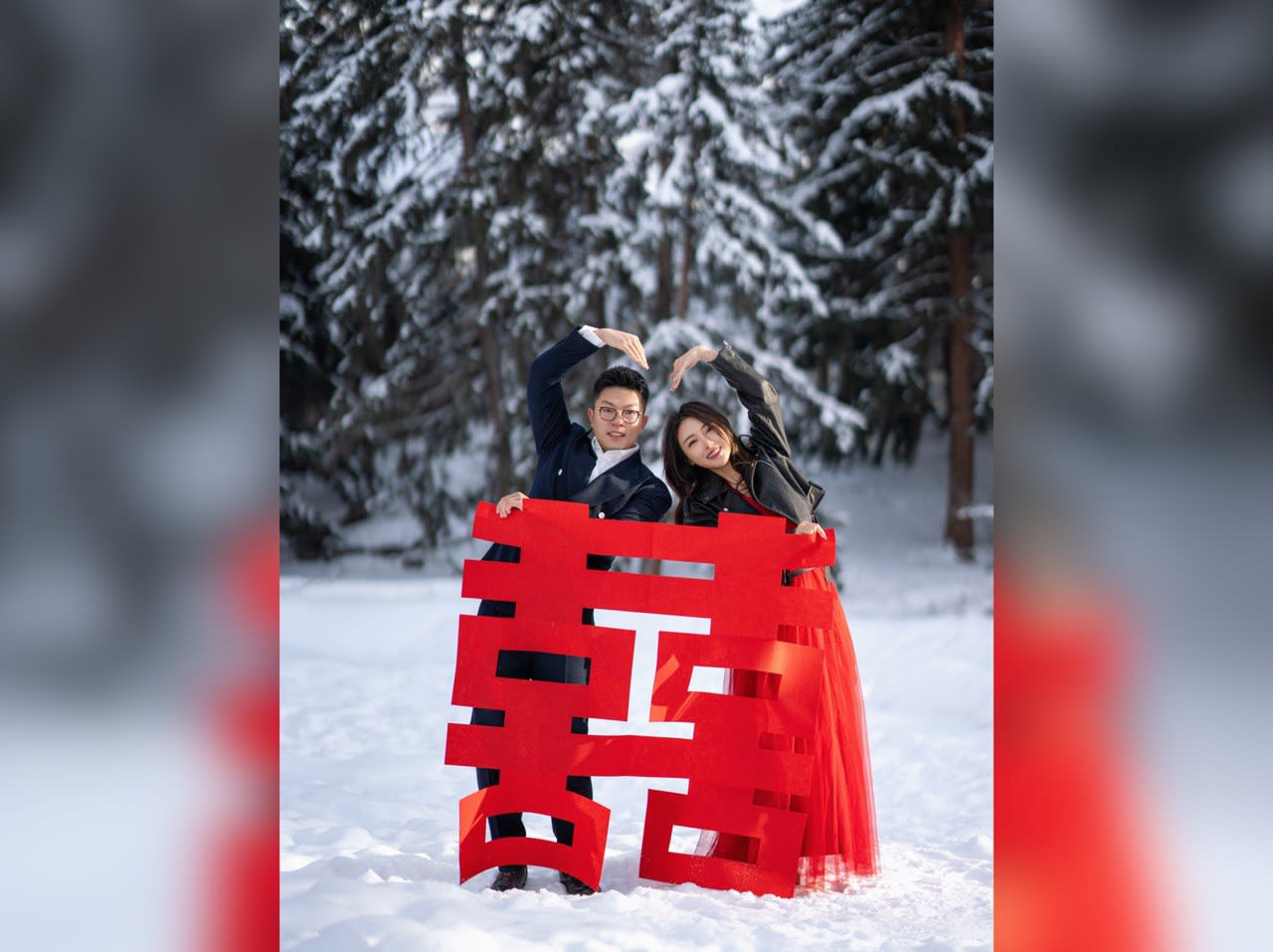
OPTING OUT
Birth rates in China have continued to fall - and marriage rates, closely tied to fertility, have slipped to historic lows.
Even with a modest rebound this year, the number of registered marriages has more than halved over the past decade.
In 2024, 6.1 million couples tied the knot, a drop of nearly 55 per cent from 2013, according to figures from China’s Ministry of Civil Affairs.
Government data also showed that nearly 30 per cent of 30-year-olds remained unmarried in 2023 - more than double the share a decade earlier, when only 14.5 per cent were single at the same age.
In the first nine months of this year, 5.15 million couples registered their marriages, up from 4.75 million in the same period last year.
Analysts, however, noted that the uptick was largely driven by recent reforms to simplify the registration process rather than a cultural return to marriage.

Among those hesitant to wed are many young Chinese women, increasingly questioning whether marriage is worth the trade-offs.
For Su Meng, a 32-year-old Shanghai tech worker, the answer is no.
Financially independent, she sees little incentive to enter a legal union. “Marriage is something I will deliberately avoid, and I think this attitude is becoming more common among young Chinese women,” she told CNA.
While she’s not against the concept of marriage, even calling it “romantic”, she believes laws in China offer women limited protection.
“Many of us feel that getting married is basically no different from not getting married,” she said. “In fact, a lot of young people feel that marriage is like signing a contract that sells your personal freedom.”
Su pointed to laws like China’s mandatory 30-day divorce “cooling-off” period, which applies even to uncontested separations. During this window, either spouse can unilaterally withdraw, effectively restarting the clock.
While the rule was introduced to prevent impulsive decisions, Su believes it may instead prolong emotionally or even physically unsafe relationships - especially for women.
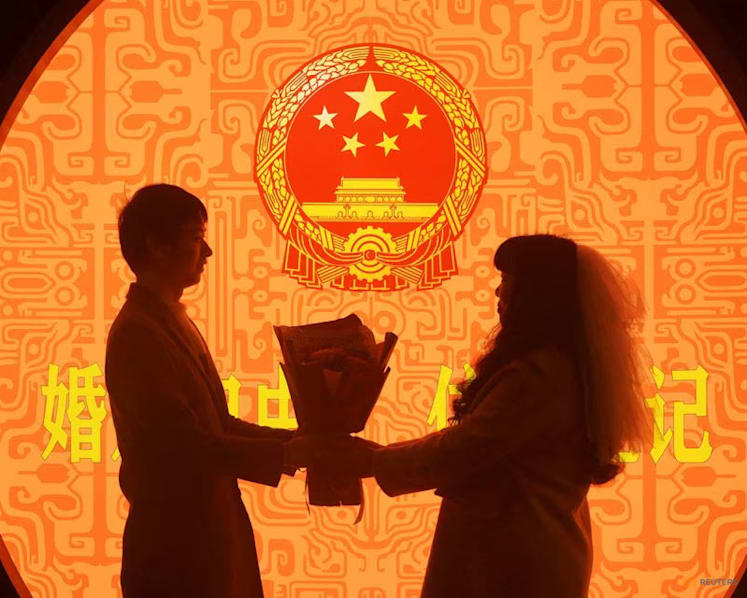
Domestic violence is another key concern.
Mu Zheng, an assistant professor at the National University of Singapore’s Department of Sociology and Anthropology, told CNA: “In China, it is still quite an ambiguous concept.”
Mu noted that verbal and emotional abuse are often dismissed as private matters despite their serious consequences, especially as mental-health issues rise in urban areas.
“Many of these private familial issues should be brought into the public discourse,” she argued. “If the state wants us to get married to support a functional society, then to what extent can it protect us?”
Meaningful change would require legal reform, dedicated resources and greater accountability, said Mu.
“There should be more state-sponsored support, such as social workers,” she said, particularly for families facing trauma or conflict. “But definitely, it is far from enough.”
China’s shifting social landscape has also changed public perceptions of marriage.
“From emotional companionship to financial security, many of the traditional functions of marriage have weakened,” Mu said.
“As Asian women, once you enter marriage, traditional expectations kick in. But the strong independent women of today can support themselves, so marriage becomes less attractive.”
Gender inequality at home remains a major deterrent, she noted.
“Women are still primarily responsible for caregiving and unpaid work,” she said.
For many, the risks feel disproportionately high. “The rules of the game work against you. If you understand the game, you may decide you don’t want to play,” said Su.

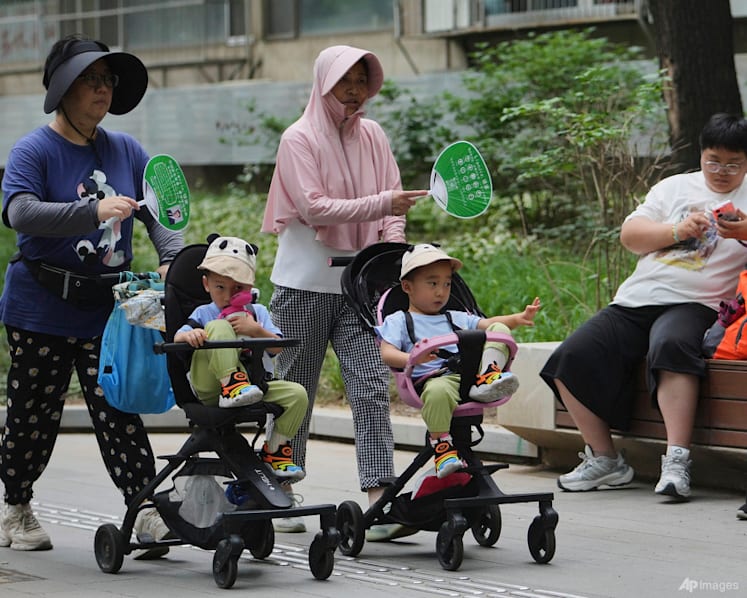
“Marriage feels like going bungee jumping when someone tells you there’s a 10 to 30 per cent chance you’ll be injured, no one will protect you, and the perpetrator will be lightly punished,” Su added.
“Would you jump? I absolutely would not. Marriage today feels exactly like that.”
“People tell me (that I) think too negatively about marriage but that’s how life works,” she said.
“When you do risky activities, you buy insurance. So what is the insurance for marriage? What is the safety net?”
Su’s outlook reflects a broader mood rather than an outlier, said Mu, the sociologist.
Women “don't want to compromise anymore”, she said.
“Even if (they) find ‘Mr Right’, (they are) still thinking about the complications, and so why bother?”
China’s marriage rates are plunging — and with fewer weddings come fewer babies. Chinese Matchmakers follows the people racing to revive love and marriage in a nation where finding “the one” has never been more urgent.
Still, some young Chinese women are open to the idea of marriage - but strictly on their own terms.
At 28, Yang left her family home in Harbin for Shanghai, seeking independence and perhaps a compatible partner.
Her parents, however, see her unmarried status as a personal failure.
“I moved to Shanghai even if it meant eating instant noodles, squeezing into crowded subways, working 9-9-6 or even 0-0-7,” she said. “Because I’m afraid of going back home - even afraid of talking to my parents.”
To them, marriage and childbirth are obligations, not choices, she said.
“If you talk to them about marrying for love, they scoff,” she said.
A visit to Shanghai’s famous matchmaking corner in People’s Park further disillusioned her.
The scene, dominated not by single folks but by elderly parents exchanging details of their adult children, felt transactional.
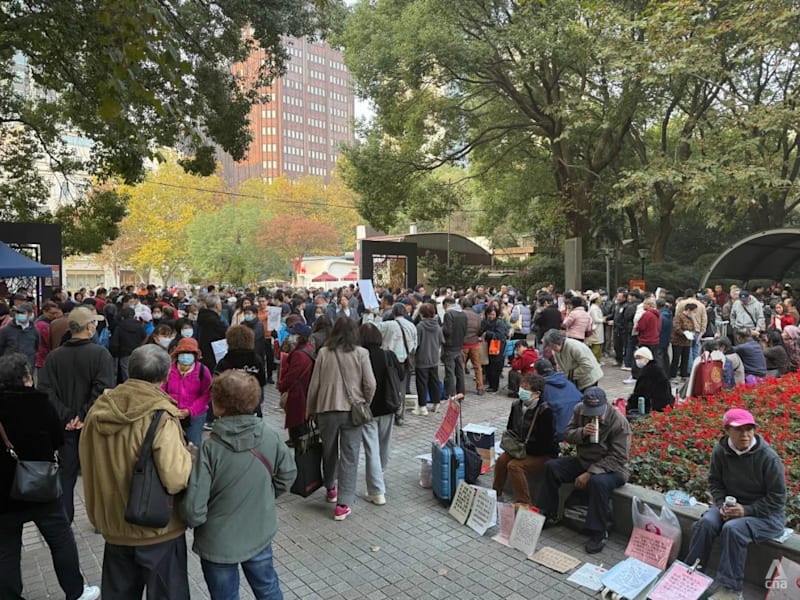
“It’s less about young people wanting to get married, and more about anxious parents trying to solve a ‘problem’,” she said.
“I used to believe true love conquers all,” Yang added. “I genuinely wanted to find someone and build a home together.”
She still hopes to find a partner - but not at the expense of settling.
“Marriage is a blessing only if I find someone I truly want to spend the rest of my life with,” she said.
“It’s not about reaching a certain age where both sides compromise and make do.”
She believes that a healthy marriage can bring stability.
“When two people face problems, there is always a way to solve them,” she said.
“From an economic perspective, marriage can even bring more benefits for women - at the very least, you have a marital home, and if your husband earns a decent income, you wouldn’t need constant financial anxiety.”
CASH PERKS, DEEP PROBLEMS
Most local incentives come in the form of vouchers tied to minimum spending requirements. For example, spending 2,000 yuan to unlock a 100-yuan discount.
These coupons can typically be redeemed only on wedding-related expenses such as photography, banquet bookings, jewellery and honeymoon travel.
Pujiang county in Jinhua has taken a similar approach, issuing eight vouchers per couple, each worth 100 yuan off purchases above 200 yuan.
Only a handful of places offer direct cash. Lyuliang, where Liao married, gives eligible newlyweds 1,500 yuan at the registration counter with no application needed.
In Guangzhou’s Baiyun district, Nanling village recently introduced “marriage-plus-childbirth” packages offering up to 80,000 yuan for first marriages and up to 120,000 yuan for childbirth - as long as the marriage lasts at least a year.
Related:
But despite this wave of enthusiasm from local governments, analysts doubt that short-term financial incentives can meaningfully reverse China’s slumping marriage rates or ease the country’s demographic strain.
“It is basically impossible,” said Yi of the University of Wisconsin-Madison.
“To fundamentally change things, you would need disruptive reforms across the entire social, economic, cultural, educational, employment, real estate, industrial and government model.”
Experts said China’s new subsidies echo earlier experiments in Japan, South Korea and parts of Europe - most of which failed to significantly boost marriage or birth rates.
“Compared with other countries, China’s current policies are not new,” Yi said. “These small efforts do not have much impact.”
But while limited in effect, incentives are not entirely misplaced, said Mu from NUS.
They may serve to nudge those already inclined to marry but held back by practical barriers, she added. “Such policies still make sense for couples on the fence,” Mu said.
The deeper resistance, however, lies in unresolved structural issues - particularly around legal protections within marriage. “Individuals’ rights within marriage should be better recognised and protected,” said Mu.
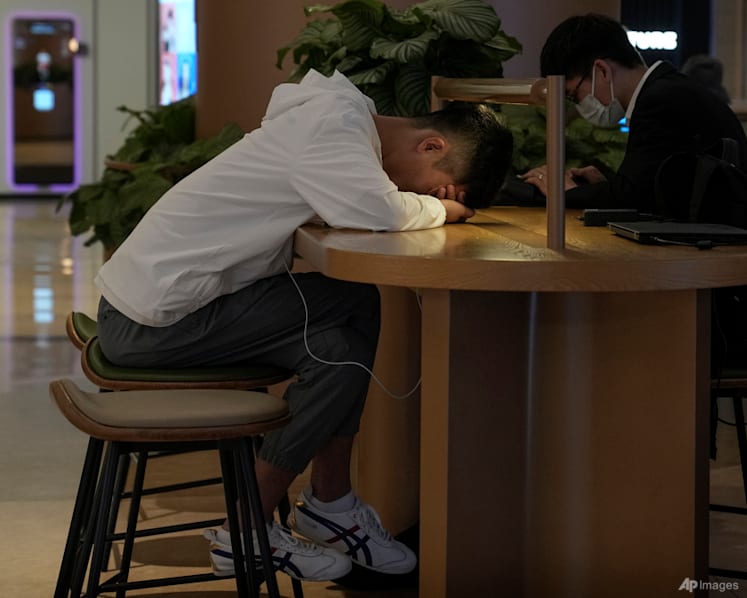
The challenge is also cultural.
In many of China’s hypercompetitive megacities, many young adults feel emotionally drained.
For some, even romance feels like another burden.
“We are living in a society that is too busy, too overwhelming for people to reflect on what they really want,” Mu said. “To really pursue a balanced and quality life.”
For Chinese couples who do marry, children are no longer a given. Many young adults are choosing long-term cohabitation or dual-income, no-kids arrangements, free from inherited expectations.
“On the bright side,” Mu said, “rising freedom and individualism mean the younger generation has more options.”
Liao, the newlywed, believes the decision to start a family must be guided not by pressure or fear, but by timing and confidence in one’s plans.
“If a child comes, I will be very happy; if a child does not come, it’s worth waiting. We live our married life as usual.”
Her advice to others and to herself is simple. “Don’t get married just for the sake of marriage,” she said. “When choosing a partner, think for yourself and don’t let worldly expectations influence you.”
“The right partner can shelter you from wind and rain. The key is to find the right person - even if it takes time. You must marry for love.”
“There are only relationships that are ready for marriage - never an age by which one must marry. That’s all there is to it.”