analysis East Asia
Proposed US-China ‘Board of Trade’ may steady ties but expectations diverge ahead of Trump-Xi summit
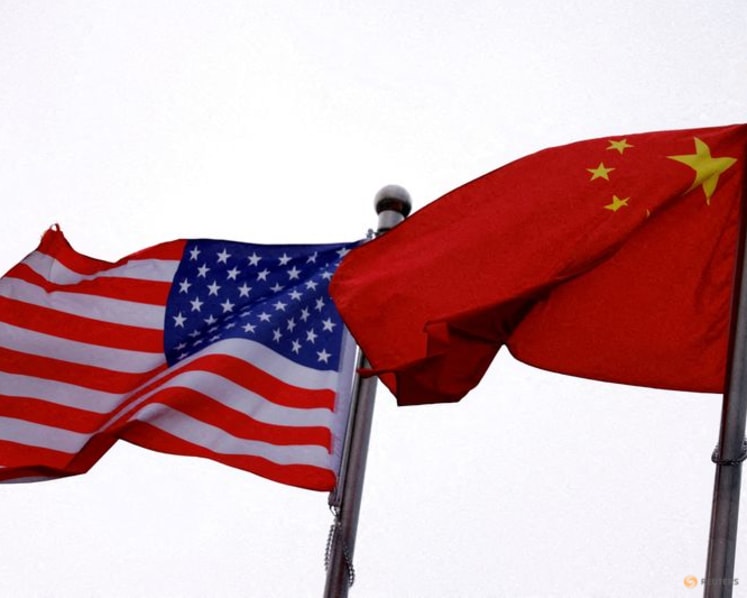
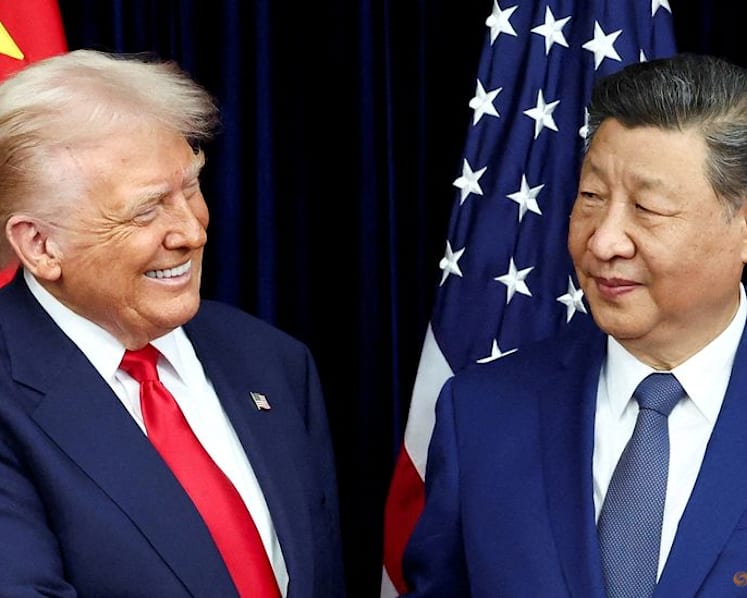
As trade disputes loom over this week’s meeting between US President Donald Trump and his Chinese counterpart Xi Jinping, proposals for a “Board of Trade” and a separate “Board of Investment” may be on the table.

This audio is generated by an AI tool.


SHANGHAI: Could a proposed US-China “Board of Trade” help stabilise ties ahead of this week’s summit between US President Donald Trump and Chinese leader Xi Jinping?
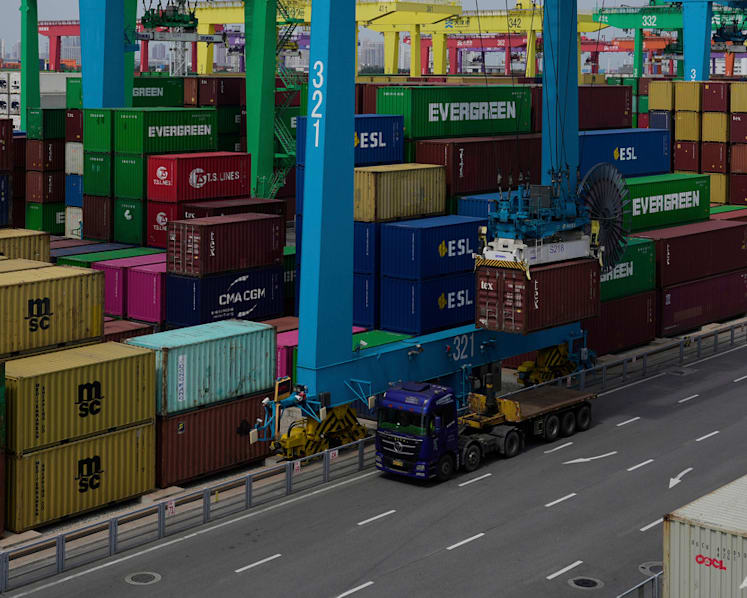
Analysts say it signals a deeper shift in Washington’s approach - from pushing for structural reforms in China’s economy to negotiating the terms of trade itself: what each side buys, sells, and in what volumes.
US Trade Representative Jamieson Greer, who first outlined the proposal in March, said the mechanism would create a channel to formalise the kinds of goods traded between the two rivals.
He added that there have been discussions about a possible US-China “Board of Investment” to address issues related to investment, such as roadblocks facing specific company investments in the US or China.
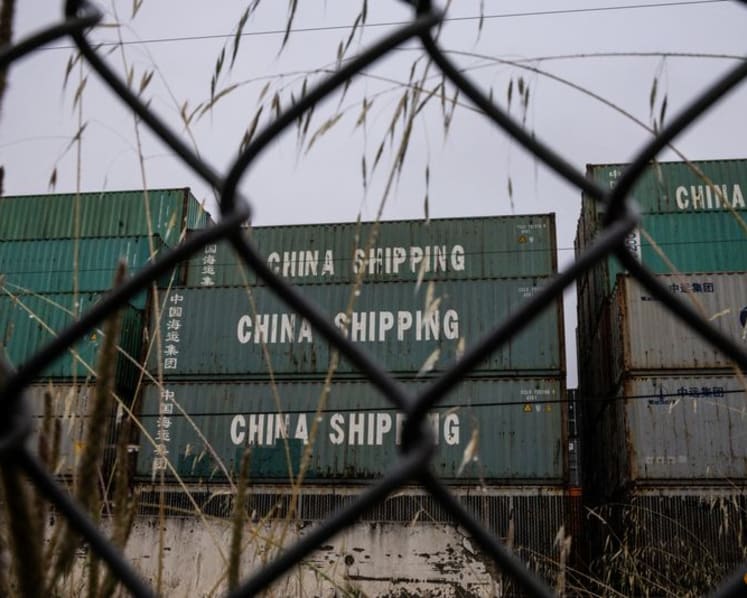
More recently, Greer said American officials discussed the concept in a call with Chinese Vice Premier He Lifeng on Apr 30, describing it as a tool that could help manage economic ties.
He had "candid, in-depth and constructive exchanges" with US officials, while China expressed “solemn concern” over recent US restrictive trade measures, according to a report published by state news agency Xinhua.
Both sides agreed to enhance consensus, manage differences and strengthen cooperation, it added.
The readout did not mention the Board of Trade.





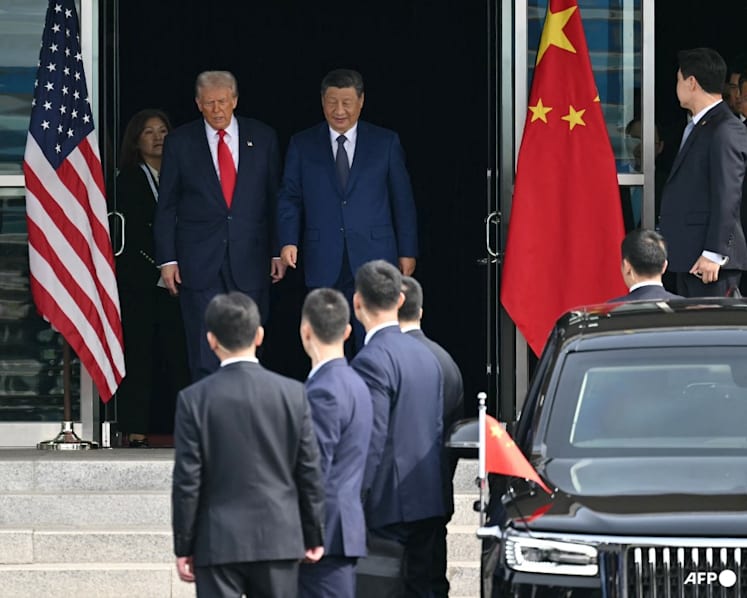
The mechanisms could be considered by Trump and Xi when they meet in Beijing later this week - the first visit to China by a sitting US president since Trump's state visit in November 2017.
But analysts told CNA the boards may carry very different meanings for each side.
For Washington, the proposal appears aimed at managing trade in non-sensitive sectors such as consumer goods and agriculture, while keeping more strategic industries off the table.
For Beijing, however, its appeal may be more strategic: greater predictability, reduced tariff volatility, and a dedicated bilateral channel where China believes it has sufficient leverage to negotiate with the US on a more equal footing.
THE UPSIDE - AND THE TRADE-OFFS
Analysts who spoke to CNA are split on what the proposed boards would mean for China.
For some, it reflects pragmatic acceptance. Years of volatile ties - marked by tariff escalations and investment restrictions - may push Beijing to accept a managed-trade framework.
Henry Gao, a trade law professor at the Singapore Management University (SMU), described it as choosing “the lesser evil” - less desirable than the World Trade Organization (WTO)-based system, but “still preferable to ongoing instability”.
“China recognises that returning to a fully normalised relationship under the current US administration may be difficult,” Gao said.
Others see the shift as working in China’s favour.
Dexter Tiff Roberts, a nonresident senior fellow at the Atlantic Council’s Global China Hub, called the proposal “a huge victory” for Beijing, noting that longstanding US concerns over state subsidies and economic structure no longer appear central.
Instead, Washington is focusing on negotiations, Roberts said - from “demanding that China change its economic structure” to “sitting down and jointly deciding what to sell to each other and in what quantities”.
The trade board proposal marks a sharp departure from earlier US policy, Roberts said, adding that Beijing increasingly sees itself in the “driving seat”.

That shift comes as the multilateral route has effectively stalled.
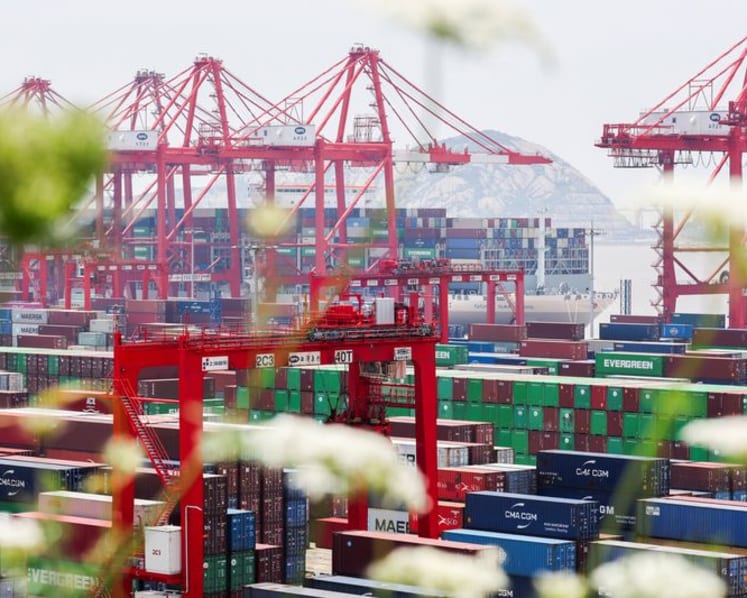
While China has traditionally preferred to engage the US through the WTO, its dispute settlement system has been weakened since 2019 after Washington blocked new appointments.
“It took 15 years for China to join the WTO … so the WTO matters very much for China,” said Tu Xinquan, dean of the China Institute for WTO Studies at the University of International Business and Economics (UIBE).
Since 2018, negotiations have largely been bilateral - “and strictly speaking, these agreements all violate the rules”, Tu said.
Bilateral engagement is now more acceptable to Beijing, which sees itself negotiating from a position of greater parity, he added.
Still, uncertainties remain. Wang Dan, China director at the Eurasia Group, questioned whether Beijing would even accept the framing of a “US-China Board of Trade”.
“It’s good for China to have negotiations going with the US (but) I don't think it would just take those boards as they are,” Wang said.
“China’s red line is: this trade board cannot hurt Chinese trade interests.”
Tu suggested a potential advance-notification system for tariff or export control changes.
For instance, if the US is going to be raising tariffs or adjusting export controls, could there be a month's notice?
Advance warning would give Chinese companies time to prepare, he added.
“The US and China are already in a state of economic war - but parties at war can still negotiate, can still communicate,” he said.
Analysts cautioned that any such bilateral mechanism may prove fragile, pointing to precedent.
A four-pillar dialogue launched after Trump and Xi’s first meeting in 2017 collapsed within 18 months, overtaken by the trade war.
Tu said bilateral agreements have “no strong binding force”, adding that great power agreements can be “torn up at will”.
This week’s summit in Beijing comes after years of escalating tariffs, a partial truce reached in Busan in October last year, and months of follow-up talks.
The broader tariff landscape has also shifted. In February, the US Supreme Court ruled that the International Emergency Economic Powers Act does not authorise the president to impose tariffs, undermining the legal basis for some of Trump’s tariffs.
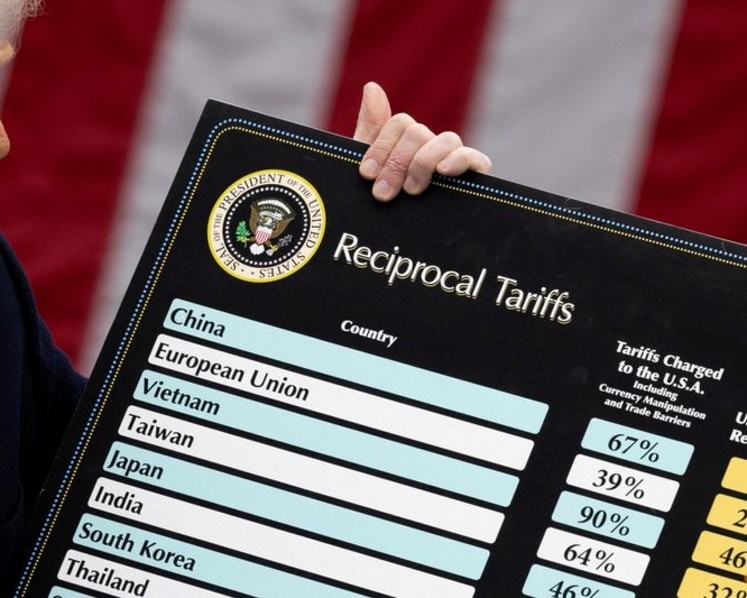
Tariffs, however, remain elevated. The average US duty on Chinese imports stands at about 34 per cent, while China’s tariffs on US goods are roughly 31 per cent, according to the Congressional Research Service.
WHAT’S ON - AND OFF - THE TABLE?
The US is expected to push for agricultural market access, including expanded purchases of poultry, beef and soybeans. But such deals remain price-sensitive and politically driven.
Analysts said the substance of negotiations is unlikely to break new ground.
A previous Phase One agreement - which committed China to buy an additional US$200 billion in US goods - ultimately fell short, with only about 58 per cent fulfilled, according to the Peterson Institute.
Atlantic Council’s Roberts said China has since diversified its trade and is less dependent on US agriculture. Purchases, he said, are now partly a “political lever”.
China’s core demand, UIBE’s Tu added, is not reciprocity but parity. “As two great powers … we want a state of equality.”
More sensitive areas - including semiconductors, advanced technology and rare earths - are unlikely to be included. “I don’t think either side would give up this leverage,” Wang said.
Wendy Cutler, a former US trade official and now senior vice president at the Asia Society Policy Institute (ASPI), said the two sides have different views of the proposed trade board’s role.
“The US sees it as a venue to manage trade in non-sensitive sectors, while Beijing seems to view it as a vehicle to engage and cooperate,” she said.
“If it's used by the US to reduce the large bilateral trade surplus that China enjoys with the US, it may be of less interest to Beijing.”

THE HARDER SELL
While the proposed Board of Trade appears aimed at managing goods flows, the proposed Board of Investment would have to contend with a much more sensitive question: whether Chinese companies should be allowed to build, acquire or expand physical operations in the US.
Chinese direct investment in the US has fallen sharply. Only 2.6 per cent of China's total outbound FDI in 2025 went to North America, down from 27 per cent a decade ago, according to Rhodium Group data.
Chinese electric vehicle maker BYD has emerged as one of the clearest test cases.
While Trump has at times signalled openness to some Chinese manufacturing investment in the US, Chinese EV investment remains politically contentious in Washington.
UIBE’s Tu said that the US wants manufacturing it can control, citing the Taiwan Semiconductor Manufacturing Company (TSMC) as an example.
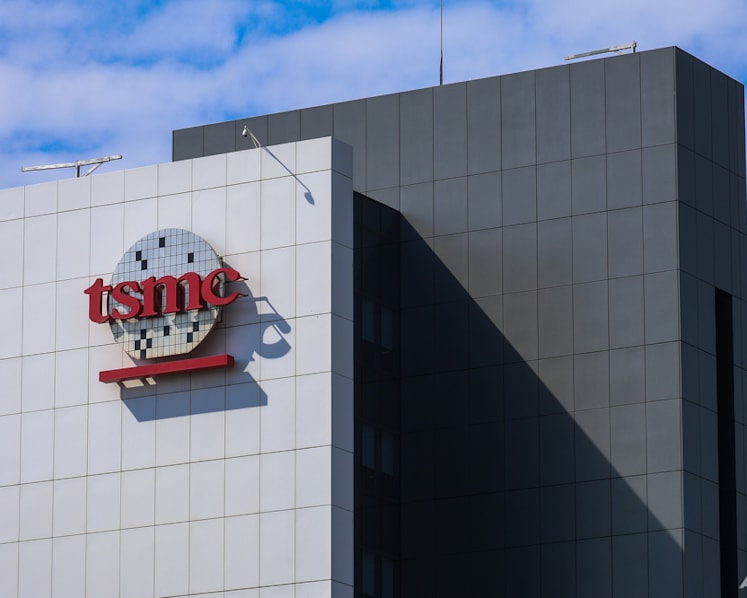
Headquartered in Hsinchu in northwestern Taiwan, TSMC is the world's largest contract chipmaker. It manufactures advanced chips for tech giants like Apple, Nvidia and Qualcomm.
Last year it announced a major US investment expansion of US$165 billion, aiming to build new factories and packaging facilities in Arizona.
“TSMC is the kind they can control, because the upstream and downstream are all in US hands … But Chinese companies are a different matter,” said Tu.
“Many Chinese companies are state-owned enterprises, or have state shares - that's even harder, in my view.”
Whether trade or investment boards can actually stabilise ties between the world’s largest economies remains uncertain.
Eurasia Group’s Wang said communication itself is key.
“At some point, this will be normalised,” she said, adding that such talks “can last easily for decades, and it is a very important stabilising factor for China”.
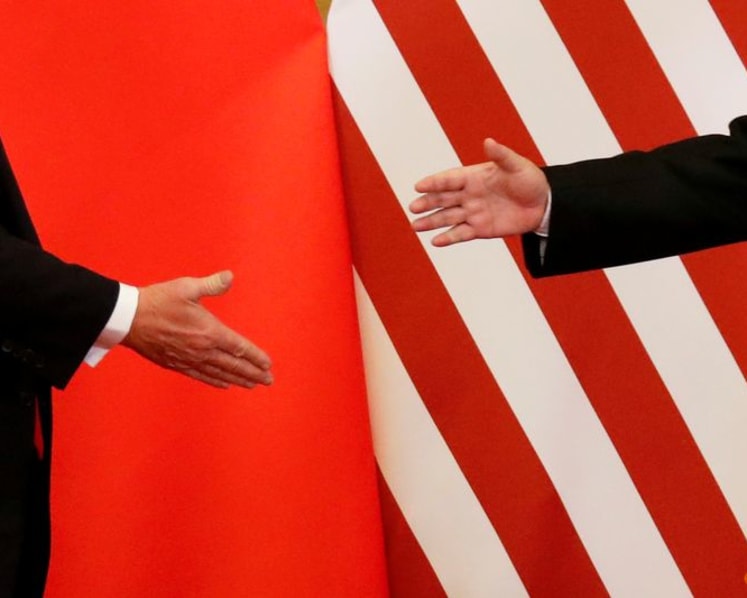
UIBE’s Tu said the mechanism could help set the tone for leader-level engagement.
“When the two leaders meet, if we're fighting a trade war every day, the feeling isn't very comfortable,” he said.
Cutler from ASPI cautioned against overpromising.
“It's typically easier to announce the establishment of mechanisms versus substantive outcomes at summit meetings,” she said.
Rather than a grand bargain, analysts said the boards may serve primarily as a way to manage friction - reducing surprises and preventing disputes from escalating.
Tu said it is ultimately a way of containing damage rather than repairing the system.
Regardless of what happens at this week’s summit, the longer-term trajectory is clear, Wang said.
“These two countries have to design a future trade order together - and that's just something that must happen.”