







Budget 2026 debate: MPs call for SkillsFuture to be more targeted, personalised for workers
MPs raised concerns ranging from "choice paralysis" on the SkillsFuture platform to being more selective about which courses to fund. They also made suggestions about how to further extend support for families, including measures to help address the low fertility rate.

SkillsFuture is Singapore's national movement for upskilling and reskilling. (File photo: iStock/mapo)

This audio is generated by an AI tool.


SINGAPORE: Members of Parliament on Wednesday (Feb 25) called for SkillsFuture Singapore to be made more responsive to workers' needs, as debate on the national budget entered its second day.
They also raised concerns about ageing public housing estates, calling on the government to expand maintenance support for older Housing and Development Board (HDB) blocks.
MP Melvin Yong (PAP-Radin Mas) acknowledged that SkillsFuture has successfully embedded a culture of continuous learning, but warned of a "structural weakness" at its core: too many course options and too little guidance, leading to "choice paralysis".
He proposed integrating artificial intelligence to generate personalised training recommendations based on a worker’s experience, career trajectory, aspirations and life stage.





Lower-income workers experienced stronger gains, according to statistics on real household income growth over the past decade. The findings reflect deliberate policy choices and affirm the impact of the Progressive Wage Model (PWM). MP Melvin Yong said this in parliament on Wednesday (Feb 25). On the local qualifying salary (LQS) requirement, he proposed three actions for the government to consider. He also said that beyond government support measures, the most sustainable answer to cost-of-living pressures remains wage growth, which ties back to the PWM, LQS and tripartite resolve.
He also called for the platform to be linked with the National Trades Union Congress' (NTUC) AI-powered Career Coach portal, which offers job matching, resume writing support and interview practice.
“SkillsFuture must therefore shift from being course-centric to being worker-centric,” he said.
“If we are serious about AI, let us use AI to empower every worker – not just those who are already digitally fluent.”
MP Poh Li San (PAP-Sembawang West) spoke against funding courses without strategic intent.
“We cannot just fund courses willy-nilly,” she said. “No number of Japanese pastry lessons or scented candle classes will get us where we need to be to compete against a world which is AI-enabled and technology-powered.”
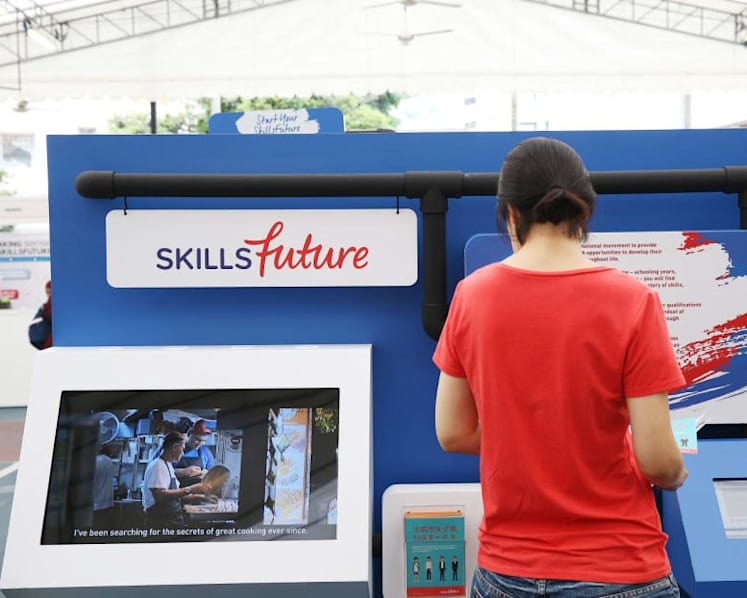
She called for training to be anchored in institutes of higher learning and the Institute of Technical Education, with market-recognised certifications. To help mid-career workers stay competitive, she also proposed that the government fund retraining or reskilling for workers every 10 years from the age of 40.
Several MPs welcomed the government’s decision to merge SkillsFuture Singapore with Workforce Singapore (WSG), saying the move would end long-standing fragmentation between training and employment support.
MP Wan Rizal (PAP-Jalan Besar) said workers have been uncertain whether upskilling would truly improve their job prospects.
“This structural reform improves coordination between training, career guidance and, most importantly, job matching,” he said. “It begins to address the fragmentation that I raised previously.”
AGEING HDB ESTATES
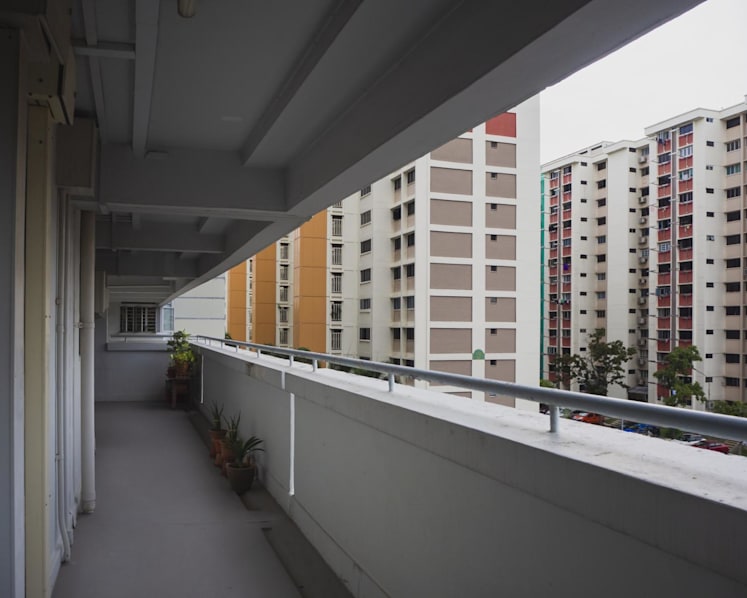
On housing, MPs Joan Pereira (PAP-Tanjong Pagar) and Liang Eng Hwa (PAP-Bukit Panjang) urged the government to do more to address the deterioration of older public housing blocks.
Ms Pereira said not all HDB buildings age the same way, and that some residents, such as those in the Henderson Crescent area, are facing persistent problems in their homes.
In parliament on Wednesday (Feb 25), MP Joan Pereira made an appeal to the government “to invest more expeditiously” in the rejuvenation of Singapore’s older Housing and Development Board (HDB) estates as more of them cross the 50-year mark. She called for HDB to review its Home Improvement Programme (HIP) policy and consider an additional round of HIP to take into account specific issues faced by a particular HDB estate. She also called upon the Ministry of National Development to review the criteria for the Voluntary Early Redevelopment Scheme on a case-by-case basis, depending on the particular condition of the blocks.
“When one has to deal with unexpected and recurring problems, such as water ingress, mould and spalling concrete, our homes can become sources of stress and anxiety instead,” she said, adding that repeated repairs also strain household finances.
She asked HDB to review its Home Improvement Programme (HIP) and consider an additional, more flexible round of improvements tailored to the specific needs of affected estates. This would also keep flats attractive to prospective buyers, she added.
Mr Liang said budget surpluses could be directed towards enhanced grants for ageing estates, covering repairs for water seepage and structural deterioration, subsidies for flats without lift excess and expanded funding for barrier-free accessibility improvements.
“As our housing stock matures, proactive maintenance support would increasingly be needed to upkeep the estates and to sustain quality liveability,” he said.
PROPERTY TAXES
Ms Pereira also raised the burden of property taxes on elderly residents in private estates, suggesting that given Singapore's budget surplus, taxes could be better calibrated with longer-term support for owner-occupiers, especially retirees.
“The anxiety is real, especially as they are no longer earning an income, and yet face increasingly higher property taxes that they are paying for, out of their own savings,” she said.
But MP Xie Yao Quan (PAP-Jurong Central) flagged growing pressure on Singapore's finances, citing a Ministry of Finance projection that government spending will increase to around 19.5 per cent of gross domestic product by 2030.
While total revenue is estimated at 19.4 per cent of GDP in 2026, Mr Xie said it was unclear whether that figure could serve as a reliable guide for future years.
To meet long-term spending needs, he argued that Singapore should tax assets more significantly. Asset-related taxes – comprising property tax and estate duty – currently stand at an estimated 0.9 per cent of GDP for the 2026 financial year.
“We should aim to raise property tax collections to 1.2 per cent of GDP in the long term, and focus on the top tier of residential properties,” he said.
Can the revenue mix in Budget 2026 be sustained? Can it become a viable blueprint for fiscal security in subsequent budgets? That is the key question when it comes to "fiscal marksmanship", said MP Xie Yao Quan. Speaking in parliament on Wednesday (Feb 25), he said that Singapore’s fundamental mission is about raising revenues structurally to around 19.5 per cent of GDP by 2030 to meet the country’s long-term spending needs. “It is fiscal marksmanship not year-to-year, but over many years,” he said, adding that raising the Goods and Services Tax has been essential in helping the country achieve fiscal marksmanship for the long term.
Mr Xie also called for stamp duty to be made "much more progressive", proposing a new tier for residential properties above S$5 million (US$4 million), taxed at a marginal rate of 15 per cent.
“We can and should raise asset-related taxes quite a bit more to meet our long-term future spending needs,” he said.
EVERY CHILD PRECIOUS TO SOCIETY
Noting that Singapore's total fertility rate has remained below 1 for several years, MP Foo Cexiang (PAP-Tanjong Pagar) suggested several measures that he said may be seen as an attempt to "slay several sacred cows".
Among them was a call to remove policy distinctions between married and unmarried parents. Currently, unmarried parents are not eligible for the Baby Bonus Cash Gift and receive lower housing grant subsidies.
"I do not believe that there is any Singaporean that will wake up one day and decide to have a child without getting married, just because we change our policy stance," he said.
Mr Foo also proposed extending additional childcare and after-school student care subsidies to non-working mothers, removing means-testing for subsidies for children with special needs, and streamlining the adoption process.
He pushed back against suggestions that such changes would undermine long-standing principles, stressing that the importance of a strong family nucleus and means-testing should remain.
"But equally important is that we take care of each and every child, regardless of their parents' circumstances," he said. "Let us not let the heartbreak or the regrets of one generation affect the chances of success of the next."
MP Nadia Ahmad Samdin (PAP-Ang Mo Kio) said the recent expansion of shared parental leave marked a substantial shift and should be built upon.
She suggested calibrating childcare leave according to the number of children a couple has, normalising career pauses and strengthening workforce re-entry pathways, enhancing flexible work arrangements and improving access to larger homes or housing located closer to extended family.
"This is the invisible infrastructure of fertility," she said. "When parents trust the system, there is less anxiety about parenthood and there may be a greater willingness to give it a go."




