







59 cases of large-scale cross-border vape smuggling detected in 2025 with help of foreign intelligence
Around 230,000 vapes and related products were seized in total, while over 10,000 online advertisements, including those found on messaging platforms, were removed in the last two years.
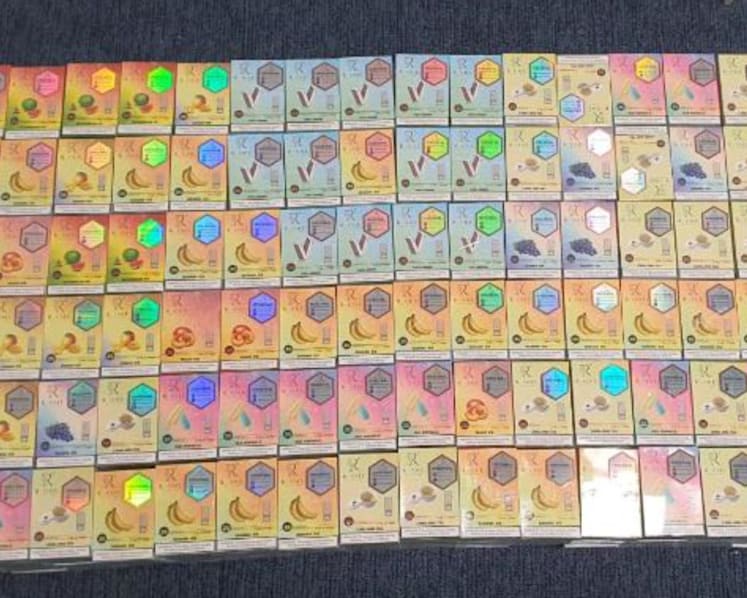
A photo of e-vaporisers and related components seized at the checkpoints by ICA officers. (Photo: Health Sciences Authority)

This audio is generated by an AI tool.


SINGAPORE: A total of 59 cases of large-scale cross-border vape smuggling were detected last year by authorities here with the help of intelligence from counterparts abroad, said Minister of State for Health Rahayu Mahzam on Tuesday (Feb 3).
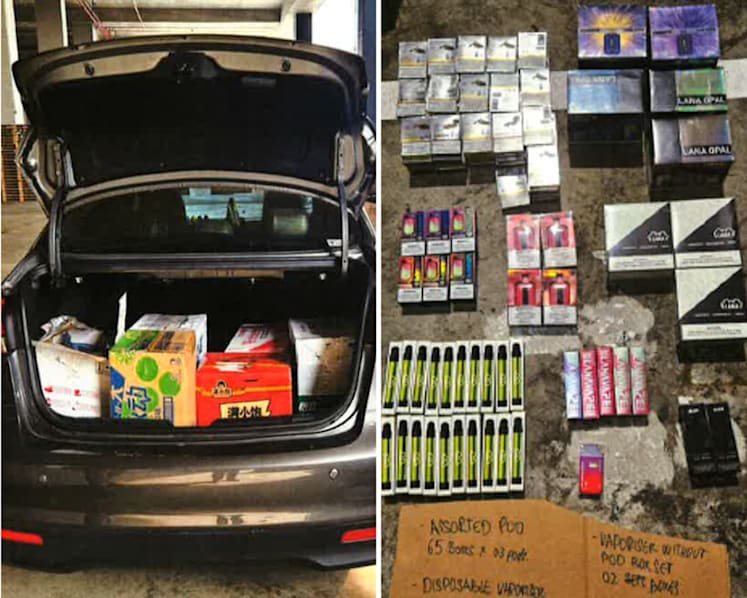
Around 230,000 vapes and related products were seized, Ms Rahayu said in parliament.
“The Immigration and Checkpoints Authority, Central Narcotics Bureau and Singapore Police Force engage in information sharing with their foreign counterparts,” said Ms Rahayu.
“With the help of intelligence sharing, in 2025, joint operations with Health Sciences Authority (HSA) and ICA detected 59 large-scale smuggling cases, seizing around 230,000 e-vaporisers and related products.”





She was responding to a question from Mr Jackson Lam (PAP-Nee Soon) on how the Health Ministry works with overseas platforms and foreign jurisdictions to disrupt cross-border vape supply chains, and how effective current blocking and takedown measures for online vape listings have been over the past two years.
Ms Rahayu, who is also Minister of State for Digital Development and Information, said that HSA works with e-commerce, social media and messaging platforms to remove such online listings.
“HSA also collaborates with the Infocomm Media Development Authority (IMDA) and the Online Criminal Harms Act Office under SPF to block e-vaporiser websites targeting locals,” she said.
“Over 10,000 online advertisements, including those found on messaging platforms, were removed in 2024 and 2025.”
Ms Rahayu shared that approximately 99 per cent of the sites taken down to date were linked to overseas posts appearing on platforms like Facebook, Instagram, TikTok, WeChat, YouTube and Telegram. The remaining were from more local platforms like Carousell and Lazada, she added.

ENFORCEMENT AND EDUCATION
The Singapore authorities will continue to look at how to improve enforcement efforts, but “we are not without levers”, said Ms Rahayu.
HSA uses bots to conduct surveillance daily, targeting commercial sites and also trawling and identifying other offending sites that need to be taken down, she said.
“This is complemented by the efforts by HSA officers who look at the social media sites,” added Ms Rahayu.
“We also work off ad hoc tip-offs from public and partner agencies, and also once the offending sites are taken down, we will work together with IMDA and SPF OCHA (Online Criminal Harms Act) office to actually block specific vape commercial sites.”
She noted that tackling vapes is an ongoing effort with a multi-pronged approach.
“It is not just about the enforcement, but also about educating the public and our people in understanding and reporting some of these sites that are available online,” she said.
Harsher penalties for vaping offences came into force on Sep 1 last year, with etomidate - the anaesthetic agent that has been found in vapes - listed as a Class C drug under the Misuse of Drugs Act.




