From Raffles Hotel to Yeo's and Tiger Beer, can homegrown brands keep their Singapore links alive after going global?
As Tiger Beer prepares to shift its production overseas, Singaporeans are asking a question that goes beyond dollars and cents: When a homegrown brand is no longer made here, or owned by Singaporeans, does it still belong to us?

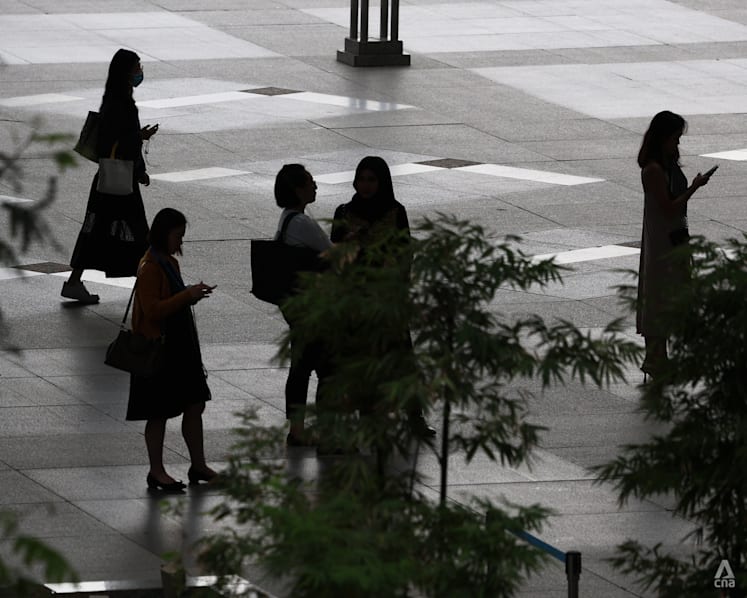
On Mar 24, 2026, APB Singapore announced that it would shift all Tiger Beer production to its regional breweries. A week later, Yeo Hiap Seng said that it would consolidate its can manufacturing to Malaysia. (Illustration: CNA/Nurjannah Suhaimi)

This audio is generated by an AI tool.


Whenever the question of "Who wants beer?" is uttered at Ms Jazlyn Koo's family gatherings, the public relations manager knows that a crate of Tiger Beer cans will be brought out soon.
"If you wanted something else, you'd have to ask for it," the 32-year-old said.
It's a similar story across the island: Come evening at coffee shops across all corners of Singapore, bottles of Tiger inevitably come out to rest on granite tables and beer buckets adorned with the familiar feline roaring before a palm tree.
For many Singaporeans such as Ms Koo, Tiger Beer has always been an iconic brand intimately associated with their small nation since it was launched by Malayan Breweries in 1932.
So naturally, strong reactions sprouted on social media when news broke of its production being offshored to Malaysia and Vietnam, and that its 36-year-old Tuas brewery would be phased down progressively by the end of 2027.
"It feels like we've now lost another piece of what we can truly call ours," Ms Koo said.
To be exact, Tiger Beer has been under the stewardship of Heineken for more than a decade, as the Dutch giant acquired full control of Asia Pacific Breweries (APB) Singapore in 2012.
Mr Kenneth Choo, managing director of Heineken Asia Pacific, had said in the announcement of the offshoring on Mar 24 that "Singapore will remain the home of Tiger Beer, and we will continue to invest in its future".
While negative sentiments online were in part due to the cutting of around 130 job roles over the next two years, people also questioned the extent to which Tiger Beer can still be considered "Singaporean".
Some asked, with a hint of sarcasm, for instance: Does the tourism icon Merlion need to be stationed here for it to be a Singapore icon?
How can Tiger be a Singapore beer if it is produced elsewhere?





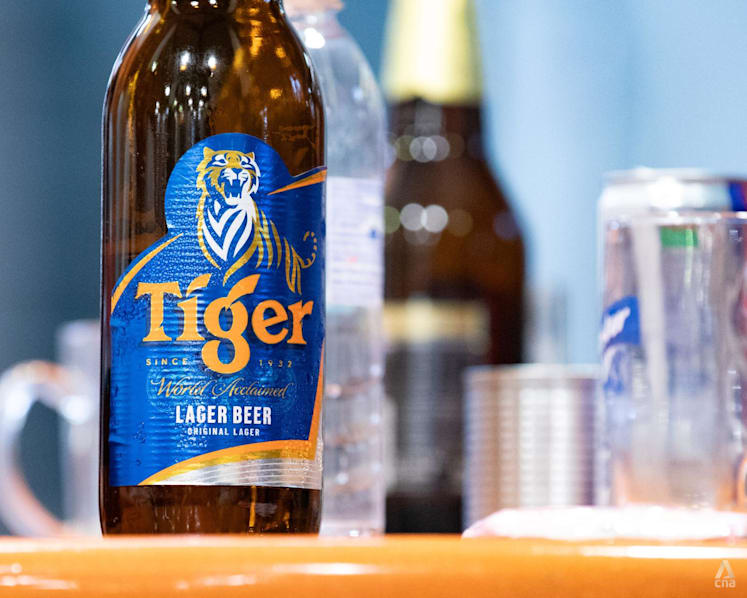
Barely a week later, Yeo Hiap Seng, the maker of Yeo's beverages, said that it would consolidate its can manufacturing to Malaysia, laying off 25 employees in the process.
Established in Singapore in 1938, Yeo's first made its name in the domestic market through its soy sauce, and in the 1950s, it diversified into other products such as canned curry chicken, bottled soy milk and other Asian drinks.
The announcements by two Singapore icons made back-to-back led some people to wonder: "Which Singapore brand is next?"
Dr Samer Elhajjar, senior lecturer from the department of marketing at the National University of Singapore (NUS) Business School, said that this discomfort is a rational response.
"Brands are part of national memory and industrial identity. When an iconic brand stops producing locally, people are not only mourning a beverage or a can line.
"They are reacting to the sense that another piece of everyday nationhood has become more abstract," he added.
"In small states especially, brands often carry outsized symbolic weight because they are among the few globally visible artefacts of national identity. So the discomfort is cultural, economic and psychological all at once."
Similar discussions and concerns about losing heritage brands have arisen before, such as in 2005 when Raffles Holdings, which owned Singapore's iconic Raffles Hotel, announced it was selling the hotel to United States-based Colony Capital, along with a portfolio of 40 other hotels and properties worldwide, for S$1.72 billion, or around US$1.05 billion at the time.
The hotel has since changed hands again and is now owned by Qatar's Katara Hospitality and managed by France's Accor.
In 2008, the much-loved Robinsons Department Store was bought by the Al-Futtaim Group of Dubai for S$600 million, or around US$410 million at the time.


More recently in 2025, Malaysian retail group Macrovalue acquired Cold Storage Singapore, the nation's oldest supermarket chain, and Giant supermarket in a deal worth S$125 million.
However, Singapore brands and experts believe that ownership, and production for that matter, are just two of several factors that make a brand "Singaporean" – and that its roots can be preserved in more ways than one.
SINGAPORE BRANDS AS NATIONAL SYMBOLS
There is no single formula for a brand to chart its path to becoming a Singapore icon, of course.
Even then, Dr Elhajjar said that a brand is strongest as a national symbol when it is born, made and owned or controlled in Singapore.
Once one or more of these layers are peeled away, the brand does not automatically stop being Singaporean, but its "Singaporean-ness" becomes more symbolic and less tangible.
"That is why Tiger can still feel Singaporean even if production moves, and why Yeo's can still feel Singaporean even as part of its manufacturing footprint shifts.
"In both cases, the origin story still matters, but origin alone is not enough," he added.
Take Raffles Hotel, for example. The establishment possesses a storied history dating back to 1887, when it was established by Armenian hoteliers, the Sarkies Brothers, on the same Beach Road site where it remains today.
Within its elegant colonial-style exterior, luminaries such as Charlie Chaplin, Michael Jackson and Queen Elizabeth II have spent nights in its lavish rooms throughout the decades.
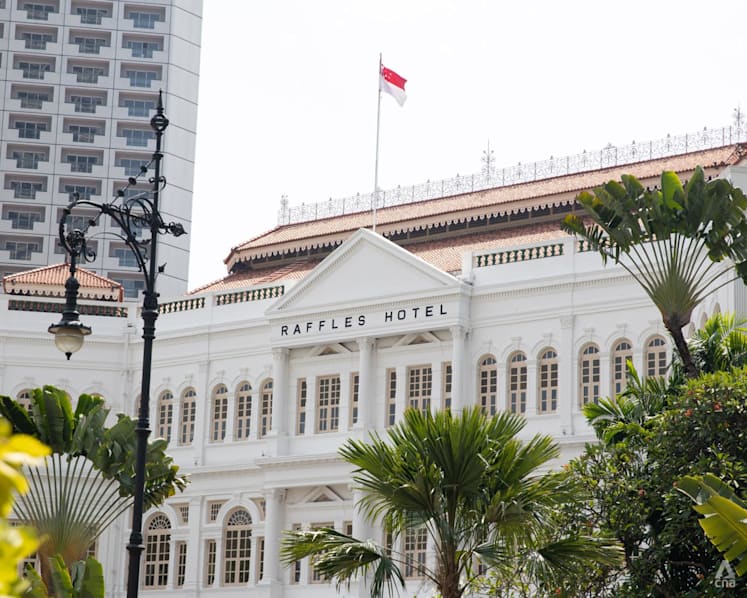
The hotel was gazetted as a national monument in 1987 on its centennial, even though its significance as a Singapore icon never really needed to be debated.
Its sale in 2005 and subsequent acquisitions may have muddied that status slightly, but despite foreign ownership and an expansion of Raffles-branded hotels to 24 properties internationally, experts said that its identity as a symbol of Singaporean colonial heritage remains largely unblemished.
Mr Mark Pointer, chief executive of Superbrands Singapore and a specialist in media and brand communication, said: "The global renown of the Singapore property is so significant that it serves as the foundational pillar for the brand’s entire international marketing and positioning.
"In essence, the global brand has been constructed around the heritage of the Beach Road original. Across all digital and physical touchpoints, it is always presented as the 'North Star'."
Mr Pointer said that its management has done so by thoughtfully exporting famed features unique to the Singapore experience to every other property around the world.
"For instance, the hallmark of personalised butler service – a tradition born here – is now a non-negotiable standard globally.
"Similarly, the concept of the 'Long Bar' has been integrated into its international locations, ensuring that while the geography changes, the distinct 'Raffles' atmosphere remains anchored in its Singaporean roots."
What about Tiger Beer? Even though the brand has not been Singapore-owned for more than a decade, people still associate the pale lager with the Little Red Dot.
After all, it has deep roots here.
Born in 1932 out of a deal between Singapore company Fraser & Neave and the Dutch Heineken in the wake of World War I, it was the first ever beer to be brewed locally and quickly dominated the Malayan beer market before being exported internationally.
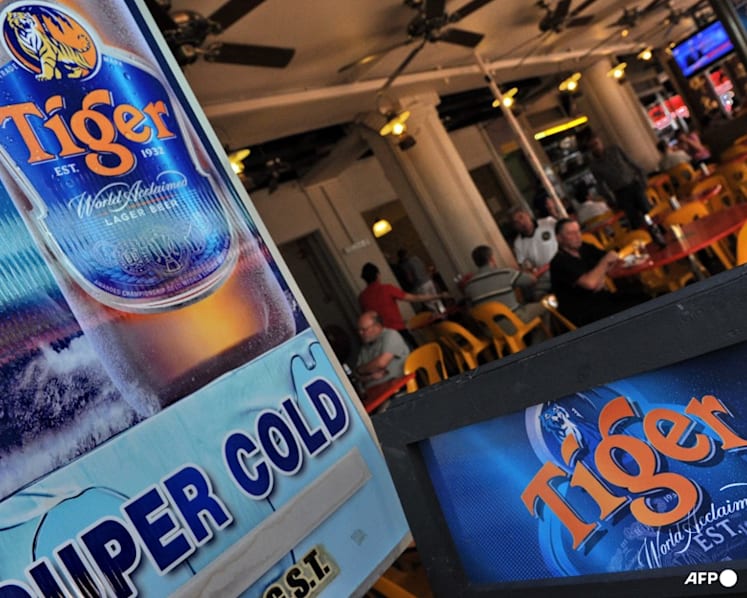
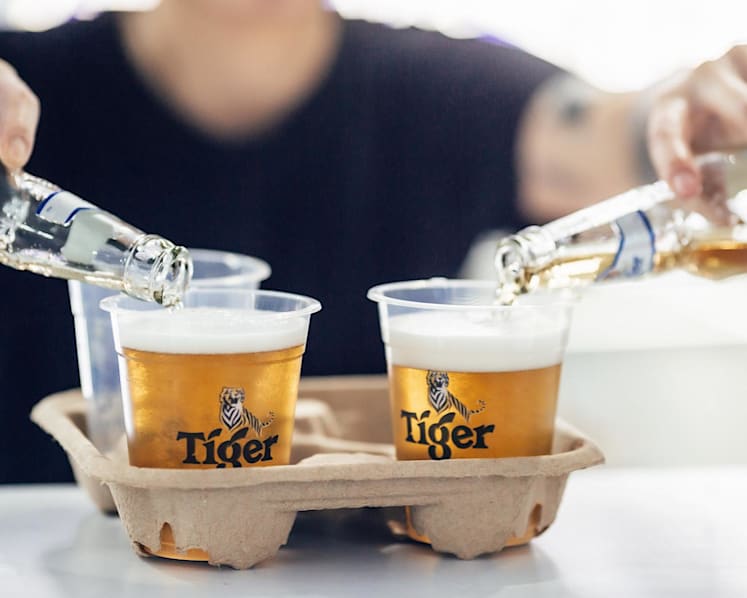
Associate Professor Seshan Ramaswami of marketing education at the Singapore Management University (SMU) said that even after the latest announcement, Tiger Beer will likely continue to be seen as a Singapore brand for the foreseeable future.
"Not many may know that the brand was acquired by Heineken through its acquisition of APB in 2012. And not many may care, I suspect."
He added: "For almost a century, Tiger has been connected to Singapore. That connection, in the minds of millions of beer drinkers worldwide, will mean more than the outsourcing of production to other countries … (if it) does not change the taste of the beer perceptibly."
Having said that, a brand can still lose its iconic status over time. Take the case of Robinsons Department Store, founded in Singapore by Philip Robinson and James Gaborian Spicer back in 1858.
The descent and eventual shuttering of the once-beloved shopping destination occurred under the Al-Futtaim Group, which took over in 2008.
Sentiments at the time of Robinsons' exit suggested that the new owners of the iconic retailer did not understand the Singapore market well and failed to maintain its relevance to Singaporeans.
For instance, an author for a Singapore fashion blog, Style on the Dot, wrote after the closure of its last Singapore stores in 2020: "The way many see it, Robinsons has (ceased) to be a Singaporean brand the way we remember it when Dubai-based Al Futtaim Group bought (over) Robinsons & Co in 2008.
"Although the company did grow the Robinsons brand in the Middle East – in Dubai and Riyadh – there is no emotional connection to the brand or the appreciation of Robinsons' place in the social, economic and retail history of our city."
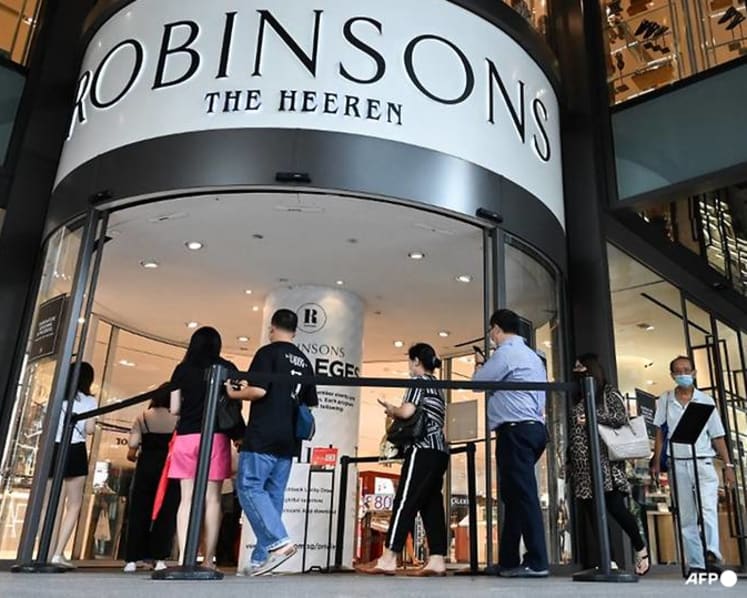
Indeed, Dr Elhajjar from NUS Business School said that in cases of foreign ownership of a brand, big decisions about its future may no longer be made with Singapore in mind, thus diluting its "Singaporean-ness" in the process.
"Over time, the priorities can shift from serving local customers, employees or communities, to serving shareholders or markets overseas," he added, though he did not refer to the Robinsons case specifically.
"The brand might still look Singaporean on the surface, but the choices shaping it day‑to‑day are no longer rooted here."
However, Assoc Prof Ramaswami from SMU said that Robinsons' demise may also be because department stores are a "dying format across the world", and so it is difficult to attribute foreign ownership as the sole reason for Robinsons losing its relevance to Singaporean shoppers.
DOES LOCATION MATTER AT ALL?
Ownership of a brand is one thing, but does the manufacturing location still influence the product's national identity? Perhaps not.
As Assoc Prof Ramaswami pointed out, many of the world's best-known brands have long moved their production away from their countries of origin.
American sports giant Nike manufactures most of its shoes in Asia, Sweden's Ikea has production hubs for its furniture all around the world, and the list goes on.
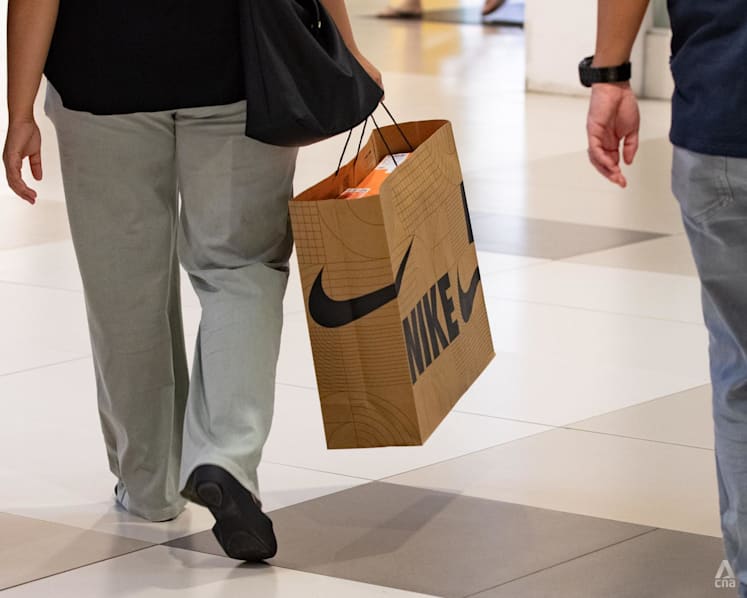
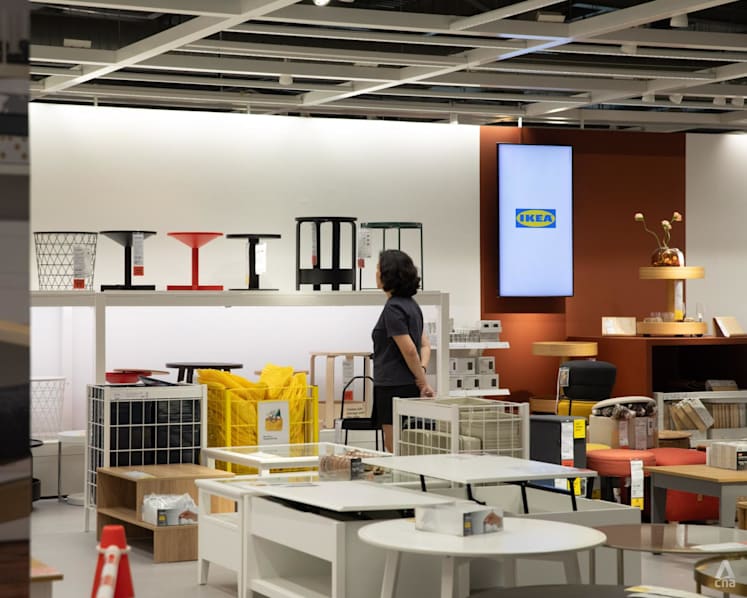
Furthermore, while the offshoring of Tiger Beer and Yeo's is notable, it is not unexpected.
The moves are part of a broader pattern in traditional, high-volume and lower-margin manufacturing sectors such as food-and-beverage and consumer packaged goods, the Singapore Manufacturing Federation (SMF) observed.
The federation's president Lennon Tan said: "The cost differential for land, labour, utilities and logistics between Singapore and our regional neighbours, especially Malaysia and Vietnam, has widened considerably in recent years.
"That makes it increasingly difficult for companies to justify large-scale commodity production here."
What this means is that Singapore will likely see more companies adopting the "hub-and-spoke" or "Singapore+1" model, where firms retain their headquarters, brand management and research-and-development (R&D) functions domestically while relocating volume production to lower-cost hubs.
It is a model that the government has encouraged with the Johor-Singapore Special Economic Zone, for instance.
Similarly, both Tiger Beer and Yeo's have stated that they will continue to have a Singapore presence despite their respective offshoring plans.
For Tiger Beer, Heineken said that it will build customer and consumer functions here to support key import markets, and build on its global GenAI Lab located here to support productivity and decision-making across the world.
Yeo's said that its Senoko facility will continue to serve as the company’s headquarters, cross-border logistics hub and smaller-scale manufacturing centre.
So with such production structures increasingly commonplace, Assoc Prof Ramaswami said that what makes brands identifiable with their country of origin is consistent design and branding practices.
Still, some would argue that location and brand identity are closely intertwined.
Dr Elhajjar said: "People will start asking – if it is no longer made here, employing people here and embedded in daily industrial life here, what exactly remains local besides the logo and the story?"
INTANGIBLE TRAITS CAN DEFINE BRANDS
Nostalgia aside, as brands change ownership and redraw lines of production, one should also ask whether the intrinsic link to a product's country of origin is a good thing in the first place, or if there is any real value in preserving those roots.
Mr Jorg Dietzel, an international brand consultant who taught in SMU for two decades, believes that there isn't a blanket answer to the question.
"It goes back to positioning. What does the brand stand for, and does the country of origin contribute something?"
The Singapore brand in itself invokes sentiments of cleanliness, no-nonsense efficiency and service – a narrative that brands such as Singapore Airlines would do well to maintain close associations with, Mr Dietzel said.
In such cases, brands with strong roots in their home nation should continue preserving them even if it offshores production or is acquired by a foreign entity.
Otherwise, pinning an entire brand strategy on national identity may backfire.
"You can control inherent values. But if you're too dependent on secondary, 'outside' values, it could become dangerous," Mr Dietzel said.
"If a strong aspect of your brand is American-ness – for example, for Coca Cola or McDonald's – you could face challenges and even potential boycotts if the US is criticised politically."
In small states especially, brands often carry outsized symbolic weight because they are among the few globally visible artefacts of national identity. So the discomfort is cultural, economic and psychological all at once.
A number of homegrown firms interviewed by CNA TODAY said the "Singapore brand" represents more than that, and that it helps to shape their brand's identity even as they venture abroad.
Homegrown furniture brand Castlery recently announced that it would open its first brick-and-mortar store in the US city of New York, and its co-founder and president Declan Ee said that the brand's design philosophy came about as a result of the small nation: small spaces, practical living and making products work across different life stages.
"Singapore's limitations became our design brief, and that brief travels," he added. "In our sector, customers don't simply buy a sofa because something is 'from Singapore', they buy it because it works for them."
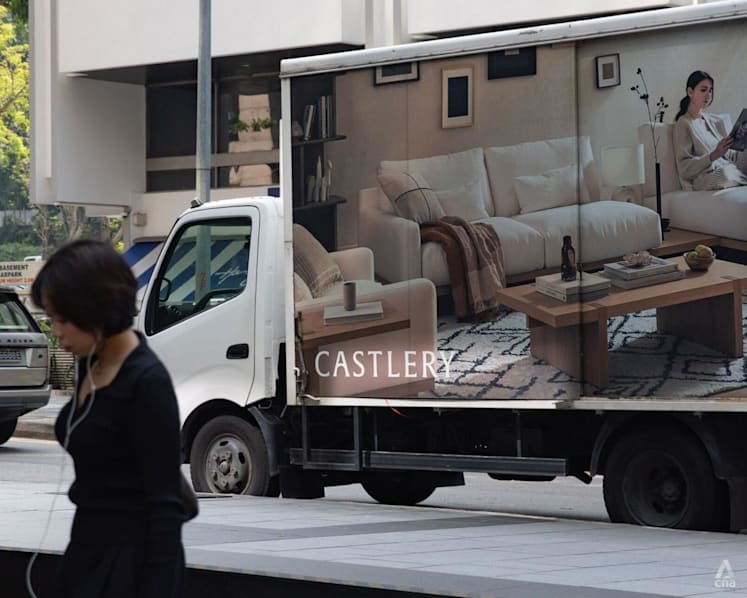
Preserving a brand's cultural roots also provides an advantage in a world where "many brands look interchangeable," Dr Elhajjar from NUS said, because "roots create trust, distinctiveness and cultural depth".
Food retail chain Old Chang Kee, for instance, said that its Singapore "DNA" gives its brand authenticity and is what differentiates the business in markets such as Indonesia, Malaysia and the United Kingdom.
"This is best expressed through our signature Curry'O (puff). It brings together diverse culinary influences – spices rooted in Indian cuisine, shaped by Malay and Chinese interpretations into something that is now distinctly Singaporean," the company said.
Furthermore, just mentioning that a brand is "from Singapore" has also helped to open doors for smaller businesses.
Ms Melinda Sutikno, founder of women's activewear brand Anya Active, said: "When we expand into markets like Indonesia, the 'made in Singapore' signal carries real weight.
"It stands for quality standards, credibility and a certain level of intentionality in how we build things."
MAKING BRAND HERITAGE TANGIBLE
When a Singapore brand expands overseas, the smarter approach would be not to insist that everything must stay "local".
Instead, it should ask which parts of the brand's identity should remain anchored at home, Dr Elhajjar said.
"Brands can preserve roots by keeping high-symbolism functions in Singapore – brand leadership, strategy, R&D, design, archives, flagship experiences or limited-edition production."
They should also try making the heritage tangible, in the form of museums, cultural collaborations and public-facing experiences, he added.
Some international brands have done this well.
Guinness, for instance, is brewed and sold across the world, yet it still feels inextricably Irish because of what Dr Elhajjar called a strong "cultural anchoring".
Its advertising leans into Irish pub culture, music and communal moments.
And the Guinness Storehouse in Dublin, one of Ireland's most visited attractions, keeps the beer's origin story physical and present.
Then there is Lego. It is global, yet still unmistakably Danish because the country remains central to the toy giant's design philosophy, narrative and institutional identity, Dr Elhajjar said.
Its headquarters have stayed put in Billund, Denmark, where visitors may go on guided three-day tours around the home of Lego founder Ole Kirk Kristiansen.
The brand's visual language remains clean and functional, and its business decisions prioritise long-term quality over short-term trends, he added.
"All of this signals stewardship, restraint and responsibility, which align closely with Nordic cultural values."
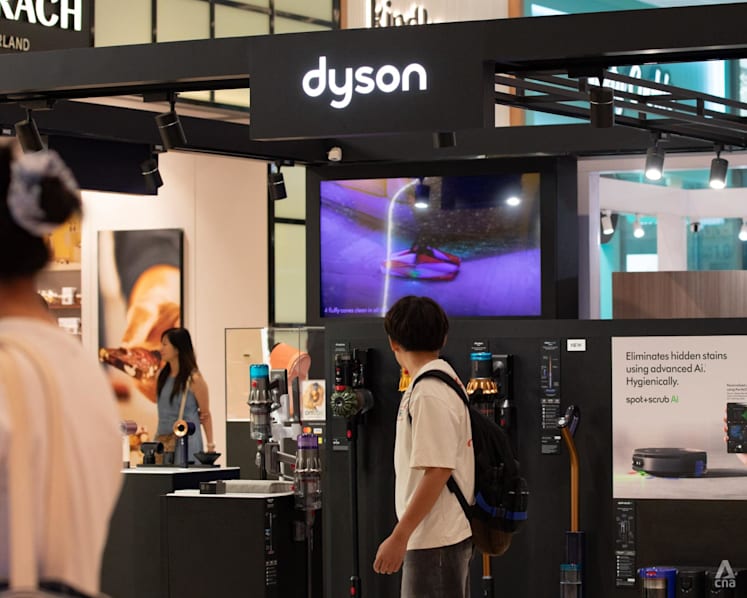
In an example closer to home, Dyson moved its global headquarters to Singapore in 2019, but it has never let go of its British identity, Mr Pointer from Superbrands said.
Its Wiltshire campus in England remains the brand's spiritual home, housing R&D facilities that double as monuments to engineering obsession, such as a Harrier Jump Jet in the car park and a Lightning Jet hanging from the cafe's ceiling.
The Dyson Institute of Engineering and Technology, also in the United Kingdom, ensures that the next generation of engineers is trained where it all began.
Ultimately, for marketers and academics, the matters that make a brand truly Singaporean are questions of strategy and positioning.
For ordinary Singaporeans though, they are rather more personal.
Till today, whenever Ms Koo hears someone ask "What's the time?", her instinct is still to respond in jest that "It's Tiger time!" – the tagline of a particularly memorable advertising campaign from the 1980s.
She said this is perhaps why she feels sentimental that the pale lager will no longer be brewed here.
"I do feel it's a bit of a waste given how iconic Tiger Beer is to Singapore. That said, I also get the commercial reality behind the decision," she added.
"I'd rather it survive and stay relevant, even if it’s not brewed locally."
Tiger Beer remains a fixture at coffee shop tables and family gatherings across the island for now. But whether it remains of Singapore, in any meaningful sense, is a question that its drinkers are only starting to sit with.