







Trump is signalling a tactical shift in Minnesota after deadly immigration crackdown: Analysts
Following two fatal shootings at the hands of federal agents, analysts say United States President Donald Trump is adjusting his tone amid growing political pressure.
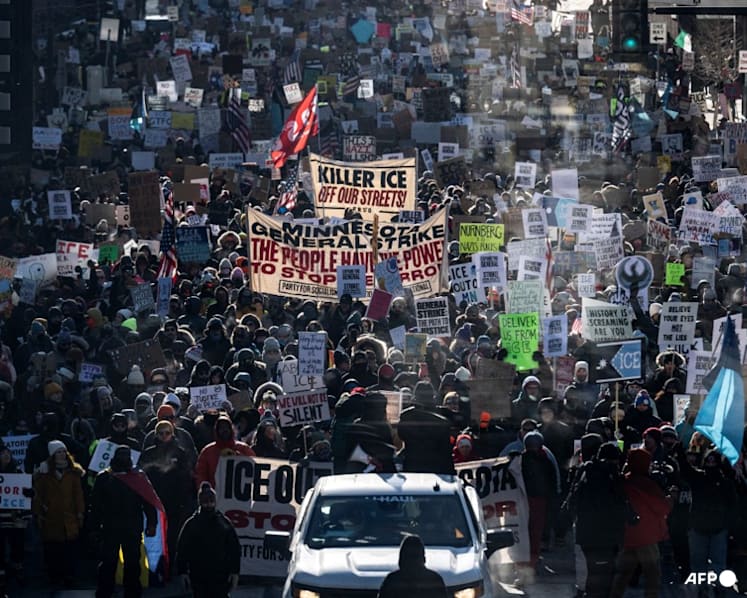
Protesters against Immigration and Customs Enforcement (ICE) march through the streets of downtown Minneapolis, Minnesota, on Jan 25, 2026. (Photo: AFP/Roberto Schmidt)

This audio is generated by an AI tool.


United States President Donald Trump appears to be adjusting his approach to immigration enforcement in Minnesota after two deadly shootings within three weeks at the hands of federal agents, said experts.
Trump’s softer tone, including reaching out to local leaders and deploying a senior official to the state, suggests an effort to calm tensions and stabilise the situation, the analysts told CNA.
The shootings have fuelled protests and exerted growing political pressure on his administration.
However, the president – whose border security agenda has won him significant support among many voters – has said any reduction in federal deployments would depend on cooperation from Minnesota authorities.
As many as 3,000 Homeland Security personnel – including US Immigration and Customs Enforcement (ICE) officers – had been deployed in Minnesota since December as part of Operation Metro Surge, an enforcement mission officials described as one of the largest to date.
The crackdown has since spiralled into legal battles and rare public dissent within the Republican Party.





MOVES TO DE-ESCALATE TENSIONS
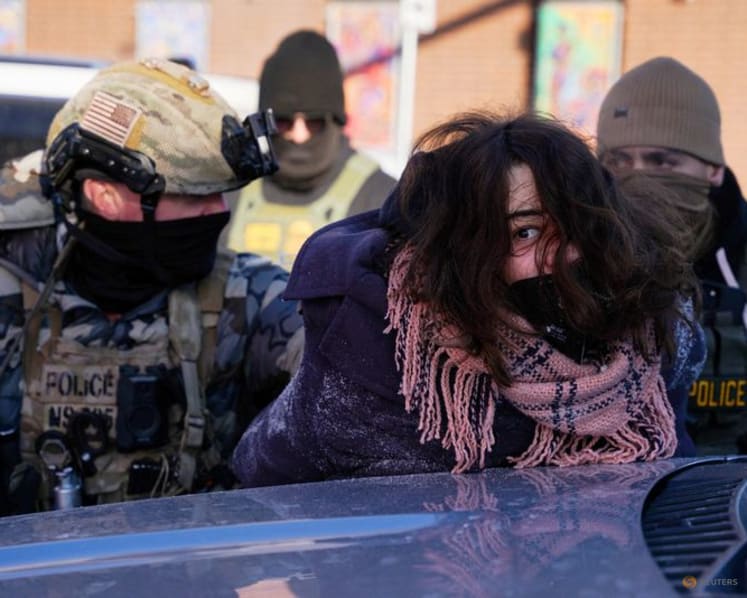
Minnesota’s crisis was triggered by the fatal shootings of two US citizens during federal enforcement operations.
Intensive care unit nurse Alex Pretti was killed on Saturday (Jan 24) during a confrontation with immigration agents, weeks after the death of Renee Good, a mother of three, in a separate incident.
Video footage of Pretti’s shooting, showing him holding a phone moments before he was shot, spread rapidly online.
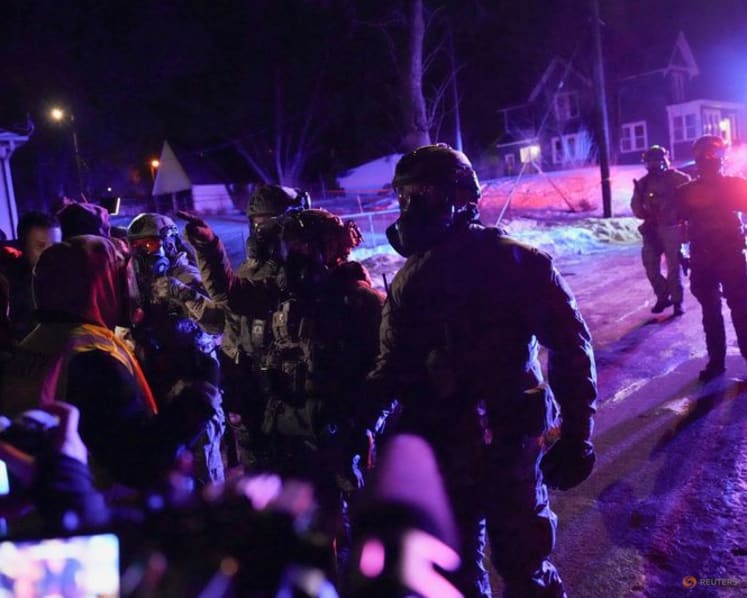
The footage fuelled protests in Minneapolis and neighbouring cities and intensified calls for independent investigations.
Federal authorities say multiple probes are ongoing, including by the Federal Bureau of Investigation (FBI).
Trump said he had spoken directly with Minnesota governor Tim Walz and Minneapolis mayor Jacob Frey on Monday, describing the conversations as “very good”.
He also signalled openness to reducing the federal presence in Minneapolis and announced he was sending his border security point man, Tom Homan, to Minnesota.
Rick Mullaney, executive director of the Haskell Public Policy Institute at Jacksonville University in Florida, said the second fatality had “caused a flash point” and “a general recognition that there is a serious, serious problem”.
Trump officials had branded Pretti, 37, a "domestic terrorist" in the immediate aftermath of the shooting. White House Press Secretary Karoline Leavitt later dialled back the tone, calling the killing a “tragedy”.
Mullaney told CNA938 that the administration’s initial response worsened tensions, particularly statements made before investigations were complete.
The deaths – and the reaction to them – have become “a potential dramatic political liability for the Trump administration”, he said.
Trump’s engagement with state and city leaders reflected the need “to de-escalate, to lower the temperature, to find an off ramp”, Mullaney added.
SOFTER TONE, BUT NO POLICY RETREAT
Trump’s decision to send Homan – a senior immigration enforcer – has been viewed by some as a possible shift away from the large-scale, high-visibility raids that drew criticism in Minnesota.
US media have also reported that border patrol commander Gregory Bovino, a controversial figure in the Minnesota operation, is leaving Minneapolis.
Despite the change in tone, the White House has stressed that the country’s broader immigration agenda remains intact, including the deportation of undocumented migrants with criminal records.
Leavitt said there was no retreat from enforcement and that federal authorities remain focused on deporting “the worst of the worst”.
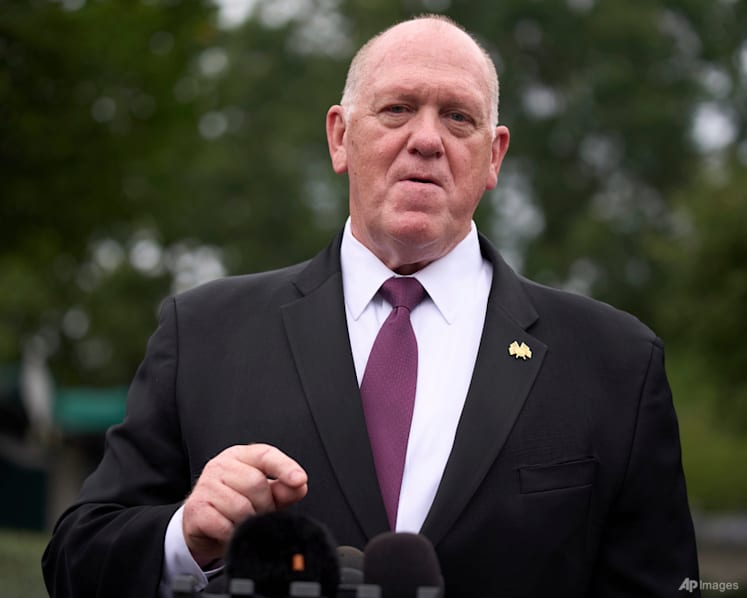
David Schultz, a political science professor at Hamline University in Minnesota, said it is too early to conclude that Trump has changed his strategy.
“If the whole purpose is to deploy (Homan) as a way of negotiating and finding an end game … it’s good,” Schultz told CNA’s Asia First.
“If (Trump’s) sending him here to dig in policies, then it’s not good. We just don’t know yet.”
Schultz added that Minnesota officials remain cautious, having seen earlier hopeful signs of compromise fail to materialise.
Related:
UNEASE WITHIN THE REPUBLICAN PARTY
Analysts also noted a growing discomfort within Trump’s own party over the violence, including among his allies.
“We’re starting to see this erosion of support – especially among Republicans,” Schultz said, describing the moment as unprecedented.
“We’re seeing, I think, for the first time in this version of the Trump presidency, Republicans in Congress and many prominent Republicans starting to break with the president.”
Several Republican figures have publicly urged restraint.
House Oversight Committee chairman James Comer suggested federal agents should pull back from Minneapolis.
Republican Chris Madel on Monday dropped out of the Minnesota governor race, saying he could not remain in a party inflicting “retribution on the citizens of our state”.
Even Texas Governor Greg Abbott, one of Trump’s most reliable allies, has called for federal authorities to “recalibrate”.
Schultz said the shootings have altered how Trump is viewed beyond his core supporters.
“Trump has lost, according to the polls, those swing voters that helped him so much in 2024,” he said.
WHY MINNESOTA IS DIFFERENT
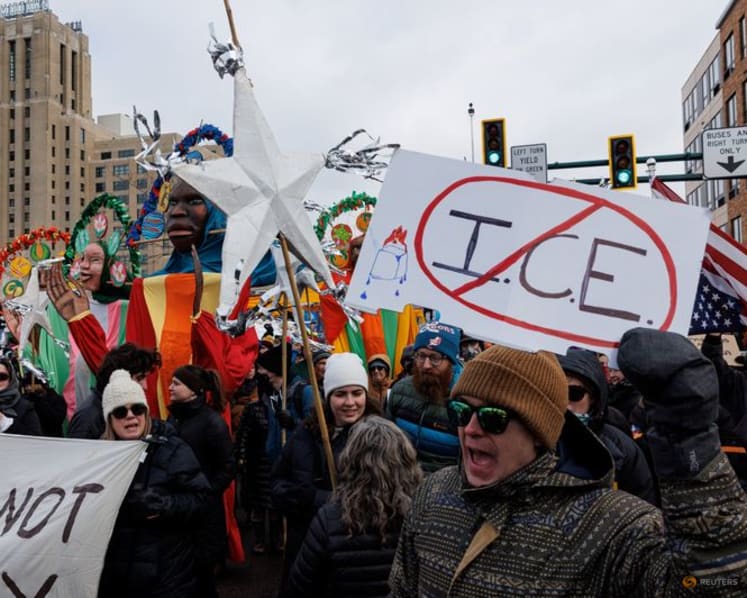
Minnesota’s recent history has intensified resistance to federal enforcement, say observers.
The state remains deeply shaped by the murder of George Floyd nearly six years ago, which sparked global protests and led to sustained civilian monitoring of law enforcement.
“People take very seriously … the idea that people should be able to peacefully protest and peacefully monitor,” Schultz said.
Mullaney said Minnesota’s Democratic leadership believes the state has been singled out, citing its “sanctuary” policies, which restrict how much local police and state agencies can assist federal immigration enforcement.
Federal authorities argue they face resistance to enforcing immigration laws, while state officials say federal tactics are reckless and inflammatory, Mullaney noted.
“You have a clash of competing narratives here,” he said.
LEGAL AND POLITICAL STAKES AHEAD
Several legal cases against federal agencies are now in the courts.
Minnesota’s attorney general has filed lawsuits challenging the scale and conduct of the federal immigration operation, while judges have ordered the preservation of body camera footage and other evidence linked to the fatal shootings.
Courts are also considering whether federal authorities overstepped their powers by deploying large numbers of agents without coordination with state and local officials.
Meanwhile, Congress is approaching a vote on funding for the Department of Homeland Security, which oversees ICE.
Schultz said the outcome could affect how aggressively the administration can pursue immigration enforcement.
“We’re going to have a vote in Congress regarding funding … that’s looking like that’s not going to pass, which basically means the potential of trimming back of authority,” he said.
Mullaney added that immigration remains politically sensitive ahead of the 2026 midterm elections.
While Trump enjoyed early support for his immigration policies, “that support has been declining”, he added.
WAY FORWARD FOR DEMOCRATS
Developments in Minnesota have strengthened Democratic leverage compared with earlier confrontations, such as over government shutdowns, noted Schultz.
He added that in the past few days, “the support for Democrats on their position in terms of saying we have to limit ICE … has grown immensely”.
But Schultz cautioned that leverage does not guarantee success, warning that Democrats “have to be careful in terms of how they play it”.
Mullaney echoed that warning, saying some proposals risk alienating voters who still support some elements of immigration enforcement.
“It would be a mistake … to suggest that you abolish ICE,” he said, adding that there remains bipartisan backing for border security and deporting “criminal illegal immigrants, or those who have orders that they be deported”.
“There is a pathway for the Democrats again,” Mullaney said, but their “danger is overplaying their hand”.




