







US capture of Venezuela’s Maduro sparks debate on state interference; what China and India’s responses reveal
Beijing condemned the move as a violation of Venezuela’s sovereignty and international law, while New Delhi called for restraint and a peaceful resolution.

This audio is generated by an AI tool.




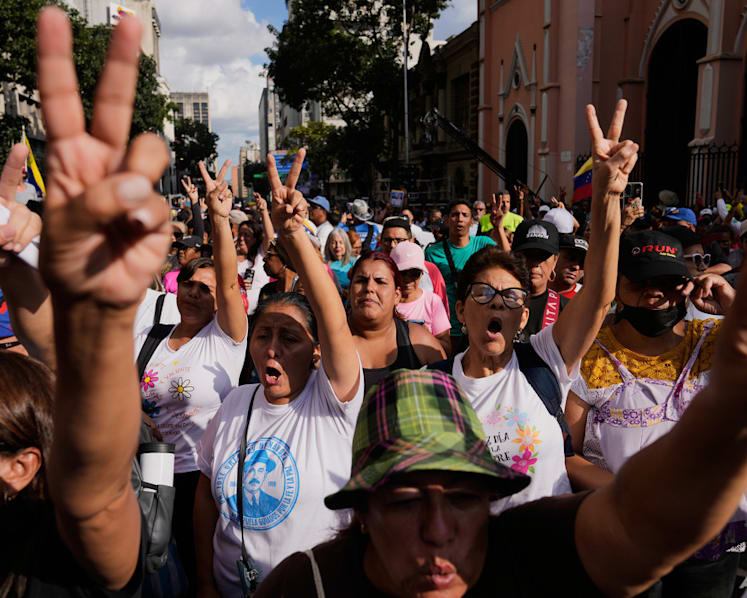
SINGAPORE: The United States’ dramatic seizure of Venezuelan President Nicolas Maduro earlier this month has renewed scrutiny over the limits of state interference and sovereignty.
The military operation in Venezuela’s capital, Caracas, has also drawn responses from Asia’s two largest powers, China and India, highlighting how differing strategic and economic interests shape their reactions to Washington’s actions.
Beijing condemned the move as a violation of Venezuela’s sovereignty and international law, while New Delhi called for restraint and a peaceful resolution.
ASIA'S TWO LARGEST ECONOMIES
Chinese Foreign Minister Wang Yi on Jan 4 said Beijing cannot accept any country acting as the “world's judge”, adding that “the sovereignty and security of all countries should be fully protected under international law”.





Dylan Loh, associate professor of public policy and global affairs at Nanyang Technological University, said China’s response was largely expected, noting that Beijing was among “the strongest and most unequivocal” in condemning the US.
He contrasted this with the broader European response, which he described as more muted.
“They made the usual references to international law, operating within UN principles and whatnot, (but) they have skirted around the issue by not directly calling (US President Donald) Trump or the US out in the direct way that China has done,” he added.
India’s Ministry of External Affairs released a statement the day after the US action, saying developments in Venezuela were “a matter of deep concern”, while urging all parties to address issues peacefully through dialogue.
Chong Ja Ian, associate professor of political science at the National University of Singapore (NUS), said China has made long-standing commitments to supporting Venezuela and has significant economic exposure through investments and loans.
India, by contrast, has a far more limited relationship with Caracas, he noted.
“What the US intervention into Venezuela has demonstrated is that for all the support that the PRC (People’s Republic of China) provides – economically, politically, diplomatically – at least when it's far away, there's little that Beijing can practically do if other actors so choose to sort of intervene and try to reconfigure the politics.”
ENGAGING SOUTH AMERICA
These contrasting reactions reflect not only diplomatic posture, but also different levels of engagement in South America.
China has overtaken the US as the region’s largest trading partner.
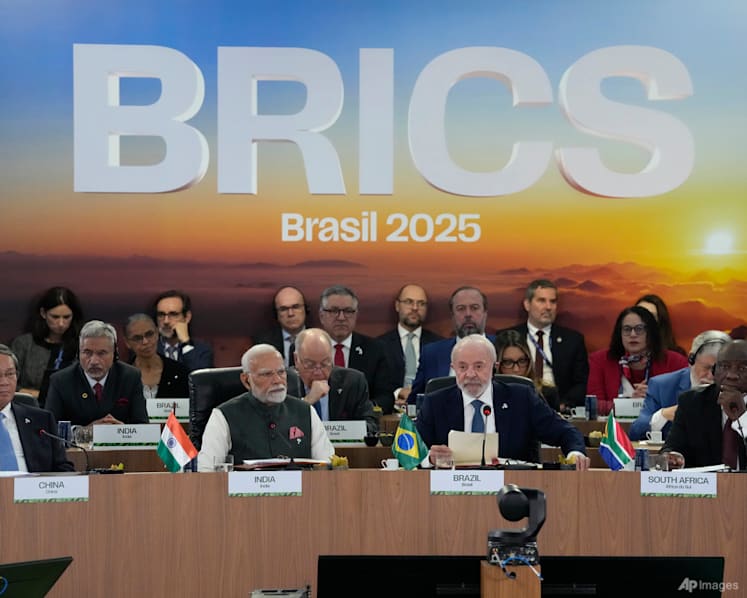
India has far less economic engagement with the region, even with Brazil, with which it forms the core of the BRICS grouping alongside China, Russia and South Africa.
“India's response to such crises generally reflects national interests, and it acts only when these interests are in any way undermined,” said Karthik Nachiappan, a fellow at the NUS’ Institute of South Asian Studies.
India’s direct trade and energy ties with Venezuela have declined sharply in recent years due to US sanctions and shifting global energy flows, he added.
At the same time, India has become far more reliant on Russia for energy supplies, he noted. “So India has become much less economically exposed to Venezuela than in the past.”
The BRICS grouping, which has expanded in recent years, now represents about half of the world’s population and nearly 40 per cent of global economic output.
While some view the bloc as a potential counterweight to the Group of Seven (G7), critics argue that internal divisions – from strategic interests to regional priorities – limit its ability to act cohesively, whether in crisis mediation or coercive diplomacy.
“What we see with BRICS, essentially, is that they are not a military alliance of any sort, but what they seem to be more focused on … is to get away from the US dollar domination of their economies,” said Chong.
“The US move in Venezuela … doesn't quite take away from those broader concerns,” he added.
“The response across the BRICS countries has been pretty uneven, (suggesting) that as a grouping, they don't have a common position on the US taking of Nicolas Maduro.”
MULTIPOLAR WORLD
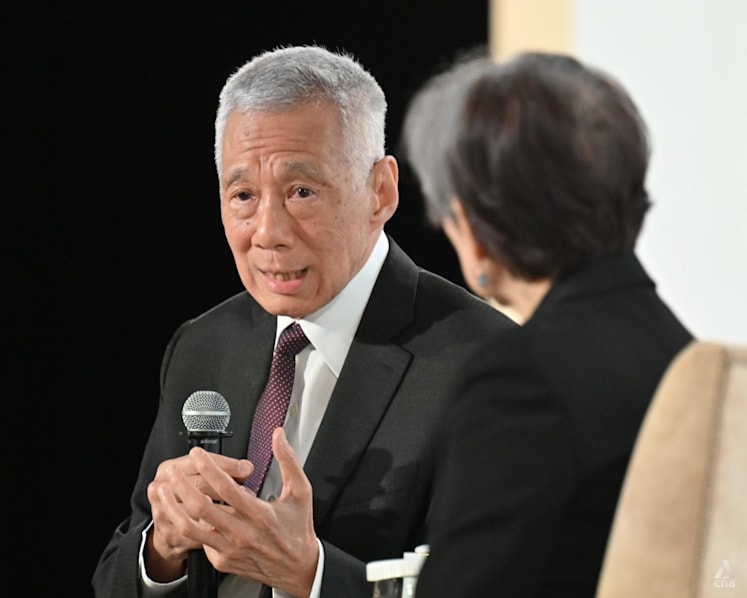
Some observers said the episode underscores how, in an increasingly multipolar world, major powers are carving out spheres of influence and asserting informal red lines based on their interests.
This may mean that for regions where their interests overlap, such as Southeast Asia, there may be more friction among them,” said Chong.
“But major powers compete, that's what they do. The cost will be borne by the middle and smaller powers that get caught in between.”
Trump is slated to visit Beijing in April, following a trade truce agreed during a meeting with Chinese President Xi Jinping last October.
But developments in Venezuela could further complicate the already delicate relationship between the world’s two largest economies, raising questions about the tone and substance of the much-anticipated meeting.
Loh said: "Between now and April, there's a lot of daylight for something to really go bad or go okay, I think there's scope for that.”




