‘Lesson written in blood’: How Hong Kong’s deadly Wang Fuk Court fire exposed systemic failures
The disaster killed 168 people and displaced thousands, laying bare lapses in construction safety while leaving survivors and families struggling to rebuild their lives and seek answers.
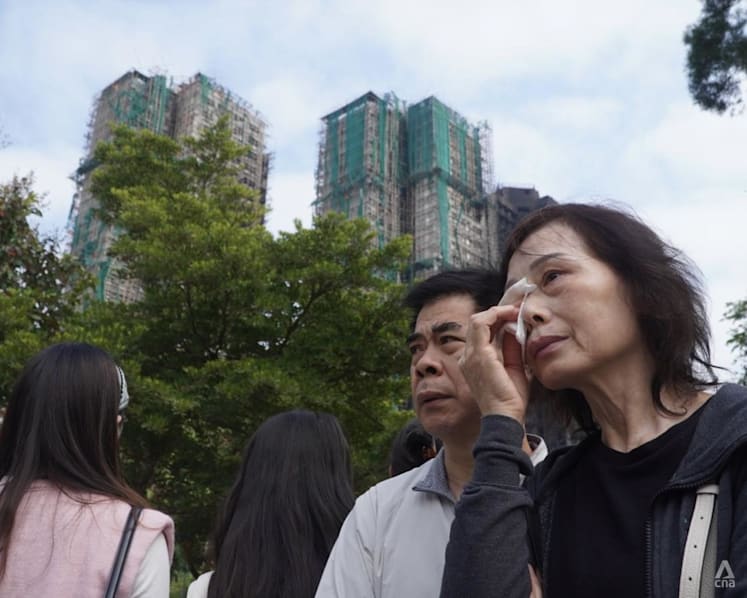
Survivors of Hong Kong's Wang Fuk Court fire, with the apartment complex in the background. (Photo: CNA/Lu Jiaxin)

This audio is generated by an AI tool.






HONG KONG: Luzar Wu was still asleep in his student hostel when he got the news – his home at Wang Fuk Court, about 40km away, was ablaze.
The estate, a government-subsidised apartment complex in Hong Kong’s Tai Po district, was under renovation at the time.
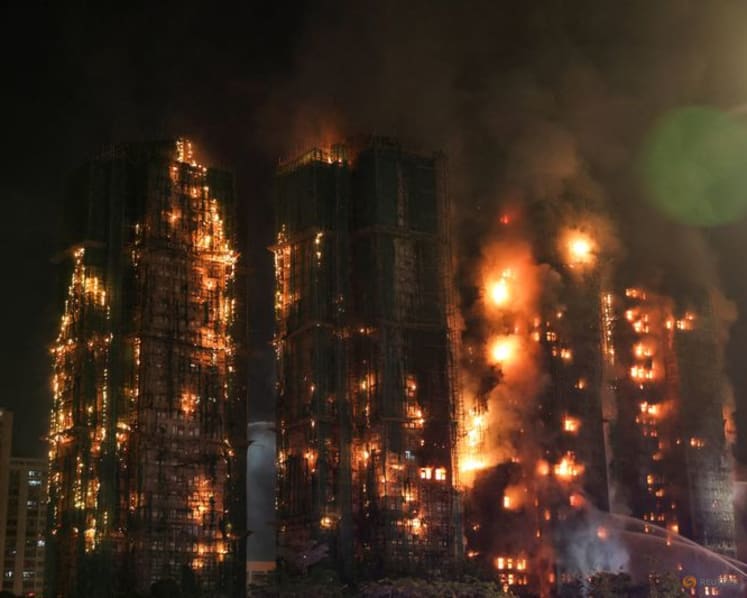
The fire started at Wang Cheong House before spreading to Wang Tai House, where the Wu family lived. Within an hour, seven of the estate’s eight towers were burning.
“I woke up around 3.10pm, checked my phone and saw my friends saying: ‘Hey, your home is on fire’,” Wu told CNA.
“I thought: ‘Don’t joke about things like that.’ Then I looked at the family WhatsApp group and saw there really was a fire.”
But for the 21-year-old and his family, the inferno that broke out on Nov 26, 2025 did not cost them just their home.
It claimed the life of their Indonesian helper Siti Fatonah – one of 10 foreign domestic workers who died in the fire along with 158 other victims, in what would become Hong Kong’s deadliest blaze in decades.
Wu’s mother Lisa recounted how Siti had left the apartment around 3.05pm, according to closed-circuit television footage. That was the last they saw of her.
When the family could not find her among the dead, they fanned out to hospitals before identifying her body two days later, with the help of a necklace Madam Wu had given her for her birthday.
The younger Wu said that before he left his home for the student hostel, he had taken a photo with Siti – a keepsake he would forever cherish.
“I never imagined that not only would it be the last photo of us together, but also the last photo of me with my home.”
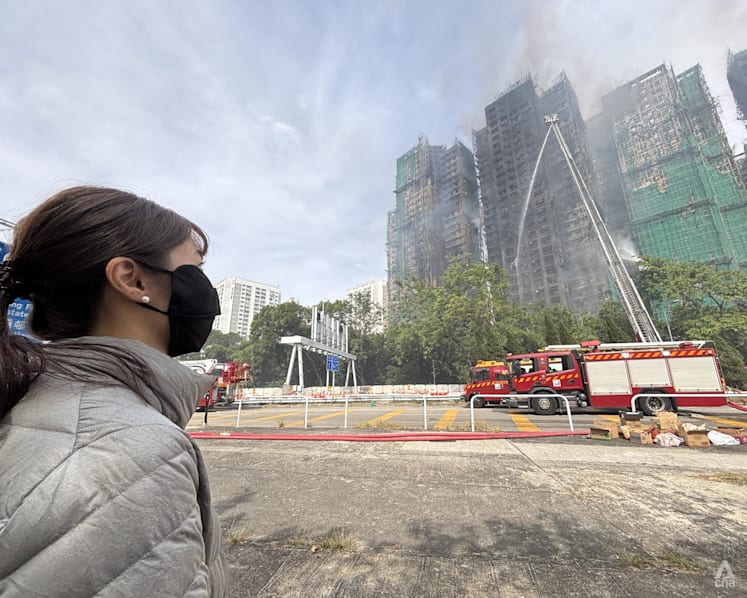
The massive fire, which took more than 43 hours – almost two whole days – and over 2,300 firefighters to put out, reached far beyond the walls of the Wus and many other families in Wang Fuk Court.
It tore apart routines built over decades in a tightly knit neighbourhood, where the nearly 5,000 residents – more than a third of them older than 65 – knew each other by face.
Now displaced and scattered across the city’s hostels and temporary flats, they began returning to the apartment complex last month for the first time to collect what is left of their belongings.
CHAIN OF LAPSES
Investigators determined that the fire was likely caused by a lit cigarette, citing various CCTV footage showing smoke emanating from a lightwell that was later found to be full of trash and cigarette stubs.
Residents had complained for months about workers smoking on site, and hearings later showed footage of construction workers lighting up.
But that was just the spark to a series of wider failures.
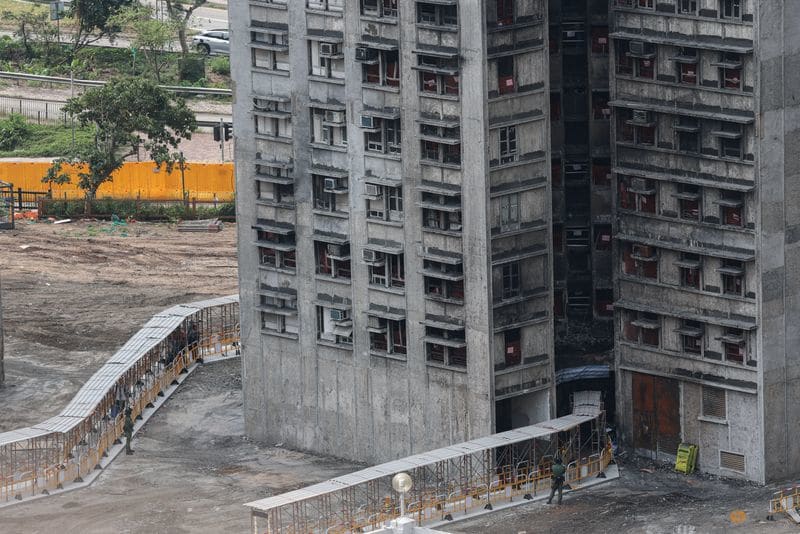
The disaster exposed a chain of lapses, from procurement and oversight to the materials used around Wang Fuk Court.
The blaze spread so rapidly that it raised immediate questions about the renovation works around the buildings, fire alarms that did not go off, empty water tanks, and the safety materials used on the site.
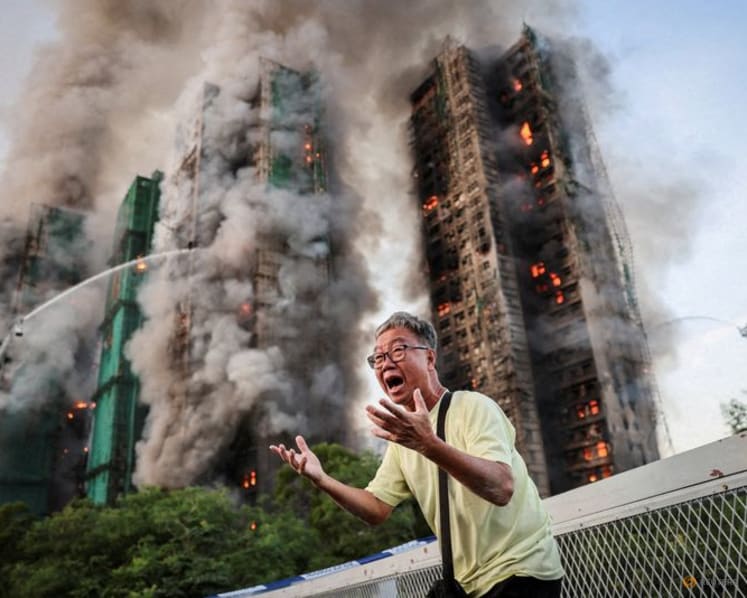
Construction workers had reportedly replaced fireproof windows with wooden boards in stairwells, which were critical escape routes.
Meanwhile, scaffolding nets – meant to help carry out the renovation safely – became part of the fire’s path. Contractors had mixed cheaper substandard nets with compliant ones and faked safety certificates, according to investigations.
Flames moved quickly from one block to another, giving residents little time to react and rescuers little room to work.
Some bodies were later found in corridors, others in blackened staircases – so badly burned that rescue teams had trouble identifying them.
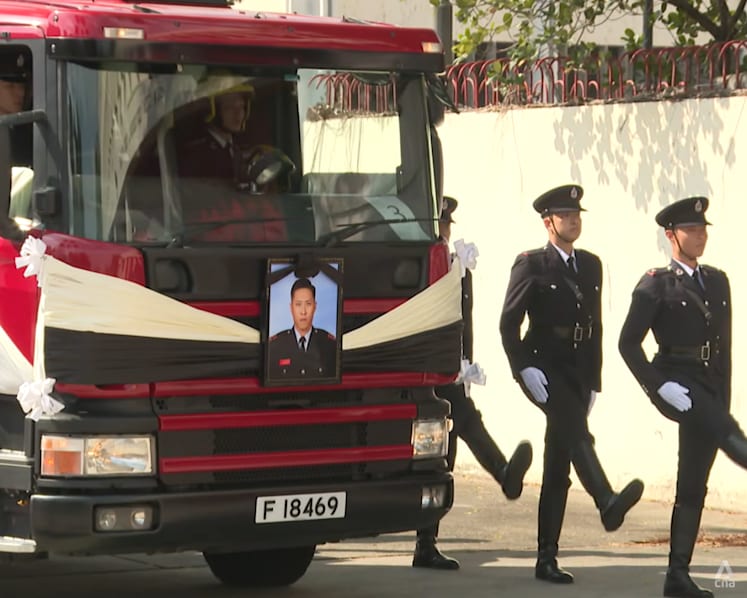
Firefighter Ho Wai-ho’s body was found on the ground floor, 10 minutes after he radioed for help from the 30th floor of Wang Tai House. According to reports, he could not identify which block he was trapped in.
Tragically, the 37-year-old was just a month away from tying the knot with his fiancee when he was killed in the line of duty.
VULNERABILITY OF FOREIGN DOMESTIC WORKERS
The tragedy also exposed the vulnerability of foreign domestic workers in Hong Kong, especially those employed in homes to care for elderly residents.
More than 200 of them lived in Wang Fuk Court, with many – including Siti Fatonah – still in the flats when the fire broke out that fateful afternoon. Of the 10 who died, one was from the Philippines while the others were from Indonesia.
For days afterwards, social workers, employers and volunteers fanned out across hospitals, shelters and temporary housing to find them.
One helper who survived was Vame Mariz Wayas Verador, who had been working for a family in Wang Tai House.
She grew emotional recounting how she ran down 17 floors with her employer’s two-year-old son in her arms, while the older woman followed slowly behind her. She still sees the fire when she shuts her eyes, she added.
“I was crying then. I prayed to the Lord: ‘Do not let me die in this building. I need to get out of the building, where all three of us would be safe. I want to go home to the Philippines alive.’”
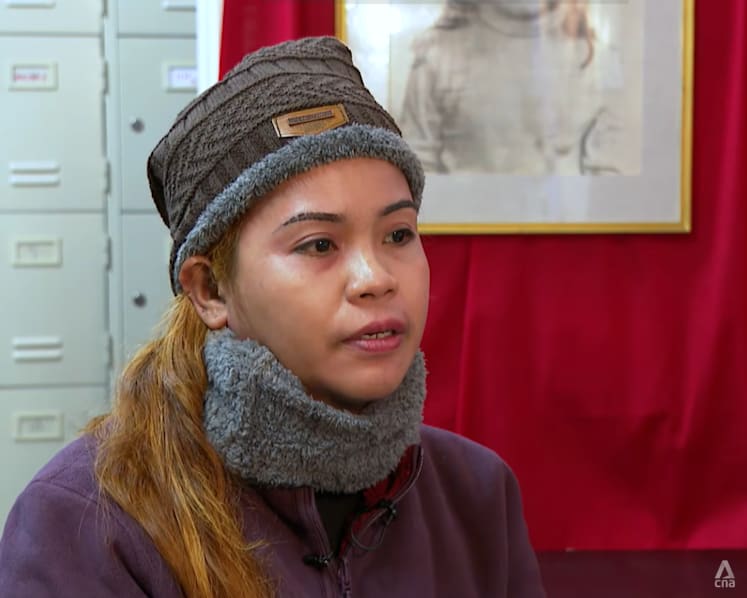
While they were reunited with the rest of the family shortly after, Verador’s ordeal did not end there.
A few weeks later, she was terminated by her employers and moved into a shelter. She was told it was due to their financial difficulties.
Her story mirrors that of other helpers who had lost their jobs, their homes and, in some cases, their sense of security in a city where they worked for years.
The Hong Kong government has allowed helpers in Verador’s situation to remain in the city for three months, with possible extensions while they search for a new job. Their medical fees have also been waived until the end of 2026.
Job offers have streamed in but are not always a match, said social workers, who became the main point of contact for many anxious helpers.
GRIEF FROM AFAR
For the families of the helpers who died, the aftermath was shaped by grief, bureaucracy and distance.
In Indonesia, some families had to wait for weeks before post-mortem examinations and identification procedures were completed in Hong Kong.
Social workers told CNA that scammers had also begun approaching bereaved families, pretending to offer help and asking for money for DNA testing or paperwork.
The helpers’ bodies were repatriated almost a month after the fire, facilitated by the Indonesian Consulate General in Hong Kong. The costs were covered by Indonesia’s foreign affairs ministry.
One of the victims, Sri Wahyuni, had left her home of Blitar – located about five hours from the provincial capital Surabaya – for the first time to work overseas. Her body was found hugging that of her 93-year-old employer.
She left behind her husband and three children, who were able to renovate their home as well as buy a motorcycle and car within two months of her working in Hong Kong.
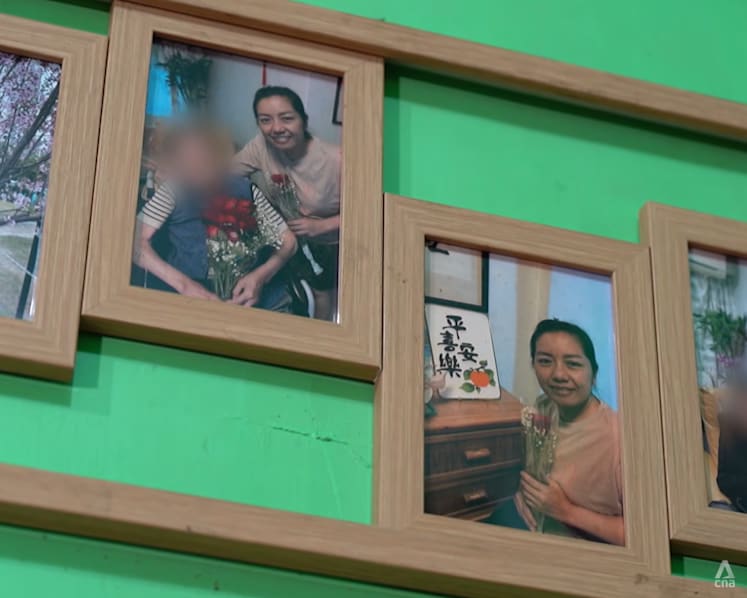
Wahyuni’s relatives, along with the families of the other domestic workers who died in the fire, are getting compensation of about HK$800,000 (US$100,000) – a sum that would have taken Wahyuni more than a decade to earn.
But to her husband Sugeng Widodo, her life was priceless.
“Money cannot replace a life. But it’s okay, I've made my peace with it. I’ve accepted it; I’ve said it was all destiny,” he said.
MORE THAN 30 ARRESTED
Back in Hong Kong, the fire became a political and regulatory reckoning.
The city’s Chief Executive John Lee said the disaster reflected “gross negligence” in different parts of the maintenance works. He promised systemic reform, setting up an independent committee chaired by a judge to investigate the cause of the rapid spread of fire.
The city’s authorities gave the committee nine months to complete its probe, after which it must submit a report to Lee. It convened its first public hearing in March – four months after the fire.
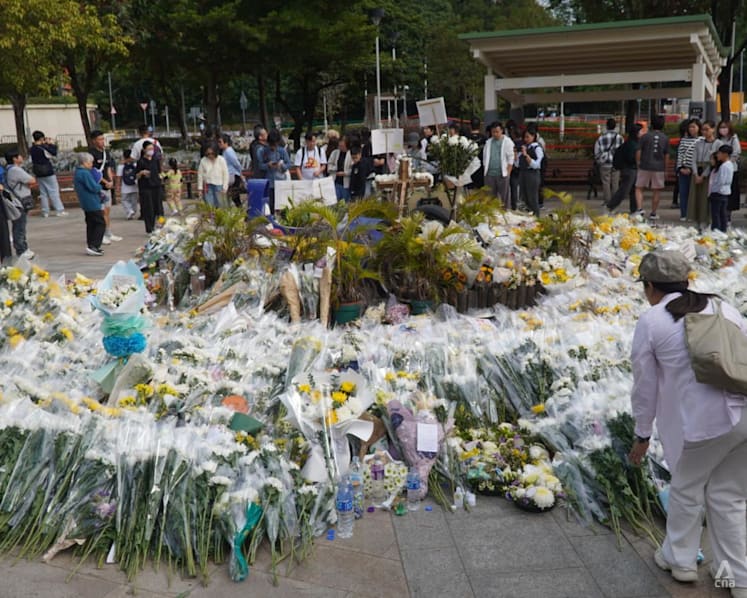
Several high-ranking government officials from various departments who testified before the committee acknowledged that they fell short.
The Fire Services Department, Buildings Department and Labour Department had conflicting views over jurisdiction and what constituted fire risks. The apparent lack of oversight meant that residents' complaints were essentially not addressed.
The Housing Bureau's Independent Checking Unit had also given contractors advanced notice about inspections, which investigators say could have allowed them time to cover up lapses.
Hong Kong’s police and anti-graft agency have opened separate criminal and anti-corruption investigations.
As of mid-April, the police have arrested 39 people for manslaughter and fraud, among other offences.
The Independent Commission Against Corruption has hauled up 23 people, including project consultants and other subcontractors for suspected bribery, fraud and money laundering.
Those arrested include directors from Prestige Construction, the company carrying out the renovation.
Authorities are probing allegations of corruption in the tender process.
Prestige Construction secured the renovation project despite having a history of safety violations. At more than US$42 million, it was the most expensive proposal among 57 options. At least two bid-rigging syndicates are believed to be involved.
Wang Fuk Court residents were not consulted as well and were simply told to pay around US$23,000 for the works.
The government has also moved to overhaul construction site rules.
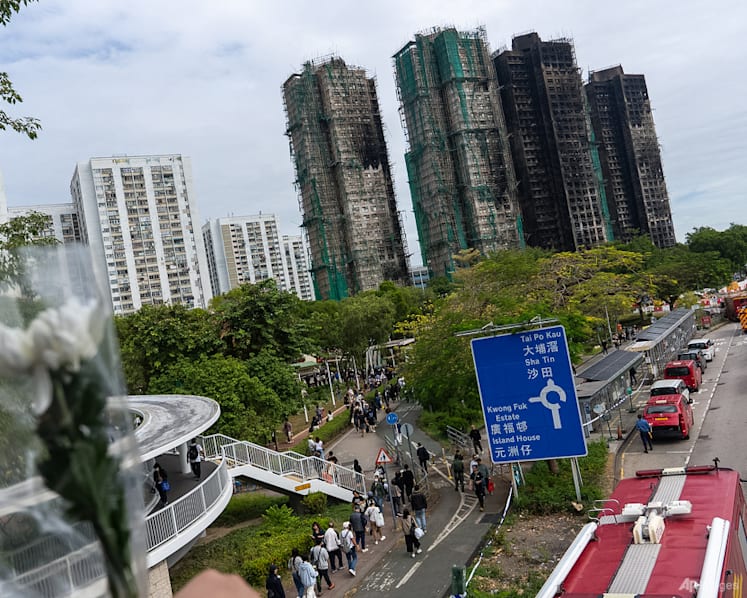
Scaffolding nets were removed across the city days after the fire, while new guidelines require tighter traceability of samples and more rigorous testing.
Labs were told to log the movement of materials more carefully, and samples had to be collected in ways that reduced the chance of manipulation.
REBUILDING LIVES
Many residents said they feel the response came only after the worst had already happened.
They now have to try to piece together homes, routines and identities from what remains.
Among the survivors is a resident who asked to be known only as Brutus – a decision she made to protect her elderly parents from reliving their ordeal in the media.
From the first day of the fire, there was no time to process what had happened, she told CNA.
Instead, her days were consumed with logistics – finding temporary shelter, arranging documents, and shuttling her parents between Hong Kong and Zhongshan, a city in southern China where they stayed for three weeks after the fire.
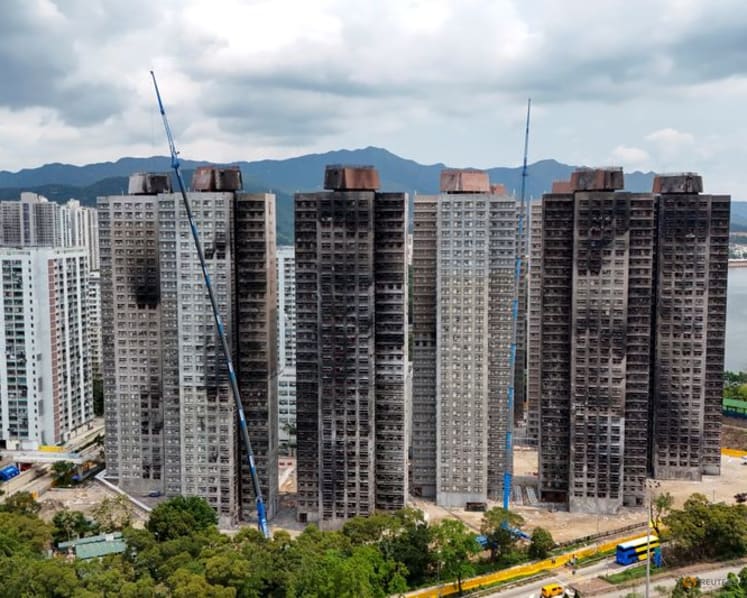
Her family had lived in Wang Chi House, the only block in Wang Fuk Court left physically unscathed. But even then, returning home was not an option.
“Your home is still intact and nothing happened to it, yet you still feel as if it has already been destroyed,” she said.
For her father, who lived there for 40 years, the displacement has been especially difficult. Decades of routine that included morning tea, familiar faces and daily walks were abruptly severed.
“Every day he asks: ‘When are we going back?’,” Brutus added.
Weeks after the fire, the family was eventually offered a unit at a transitional housing project – part of the government’s relief scheme for displaced residents.
For Luzar Wu and his family, they are mulling housing options in Fanling district – 11 minutes by train from Tai Po – under the resettlement scheme.
In February, the government announced it will not rebuild the seven damaged towers at Wang Fuk Court. Instead, it will acquire them and offer residents two options: A cash payout or a flat exchange.
Residents of Wang Chi House were initially left out of the scheme. But as many expressed preliminary interest to join, the government said it will consider including the block if 75 per cent of residents agree to sell their property titles by end-June.
The Wu family estimated that their burnt flat is valued around HK$3.5 million under the conditions of the scheme. Regardless of either option, they said they still need to top up funds to get a similar-sized apartment.
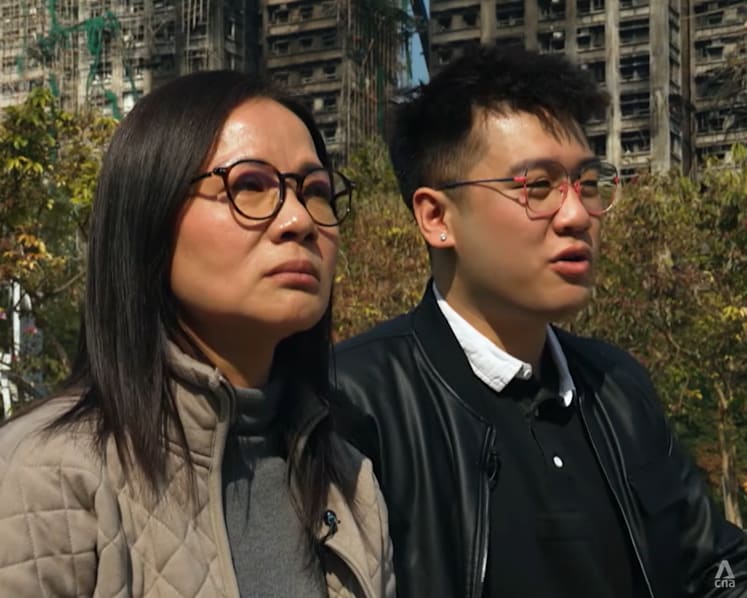
They also said they miss the sense of camaraderie and security in Tai Po, where neighbours greeted each other in hallways and people looked out for one another.
“When I was little and went downstairs to play, sometimes I would fall, and it was always those grandmas and uncles who helped me,” said Wu.
“Now, I don’t even know if they are alive or gone.”
The fire did more than claim 168 lives – it forced a city to confront uncomfortable questions about safety, responsibility and trust.
For Wu, those questions come with a sense of urgency.
“We hope that by being the worst-case example, Hong Kong won’t do this again,” he said.
“It’s a lesson written in blood.”