







Indonesia steps up bid to become regional data centre hub
Indonesia’s large digital economy and access to land and power are drawing global cloud companies, but balancing growth with sustainability and talent needs remains a key challenge, say industry players.
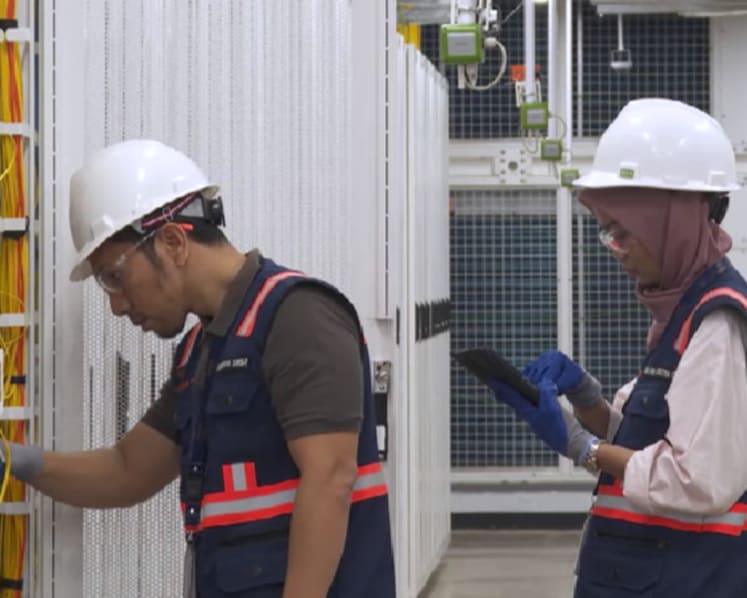
As data centre investment accelerates, Indonesia is also racing to develop the talent needed to run these facilities.

This audio is generated by an AI tool.




JAKARTA/KARAWANG: Indonesia’s data centre industry is expanding rapidly, driven by its booming digital economy and rising demand for artificial intelligence and cloud services.
Nearly 200 data centres of varying sizes are already operating across the country.
More are on the way, as global tech giants and regional players ramp up investments and the country positions itself as a potential data centre hub amid growing competition in Southeast Asia.
ATTRACTIVE LOCATION FOR GLOBAL TECH
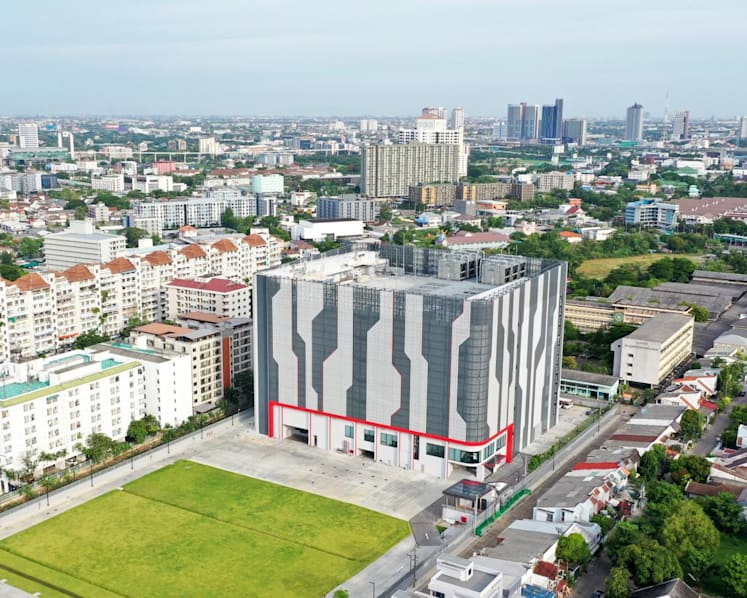
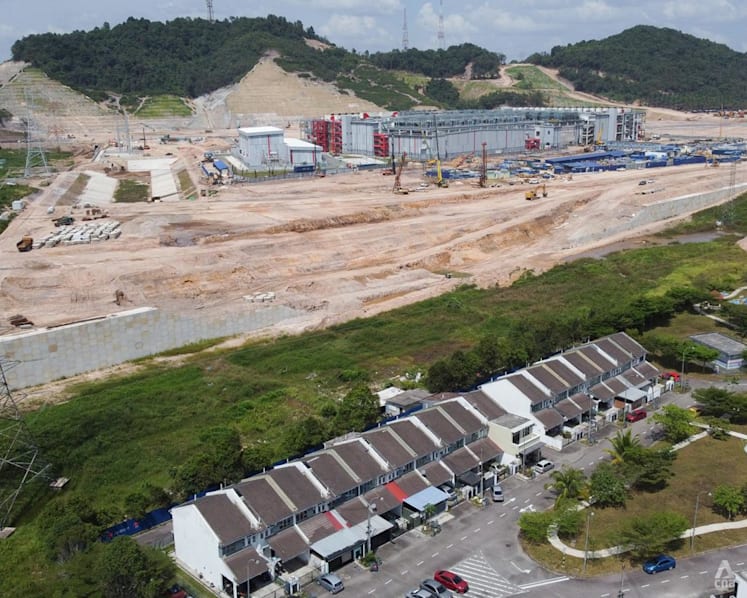
In West Java, Microsoft is building a new 48-megawatt data centre at the 1,400ha Karawang International Industrial City.
The facility is expected to begin operations later this year and is part of the company’s US$1.7 billion investment in Indonesia.
The tech firm plans to build three more facilities at the site. Once completed, it will house five data centres, forming a major regional cluster.





Indonesia’s appeal to massive cloud service providers such as Microsoft lies in its position as Southeast Asia’s largest digital economy, along with access to land and power, say industry players.
The government is also taking an active role in supporting the sector’s growth.
"Since data centres are part of our priority in attracting investments coming to Indonesia, this should then be given a very dedicated treatment,” Indonesian Investment Promotion Deputy Minister Nurul Ichwan told CNA.
This could be done through regulations, incentives and creating a favourable investment climate for such companies, he added.
Other Indonesian regions are also competing to attract operators.
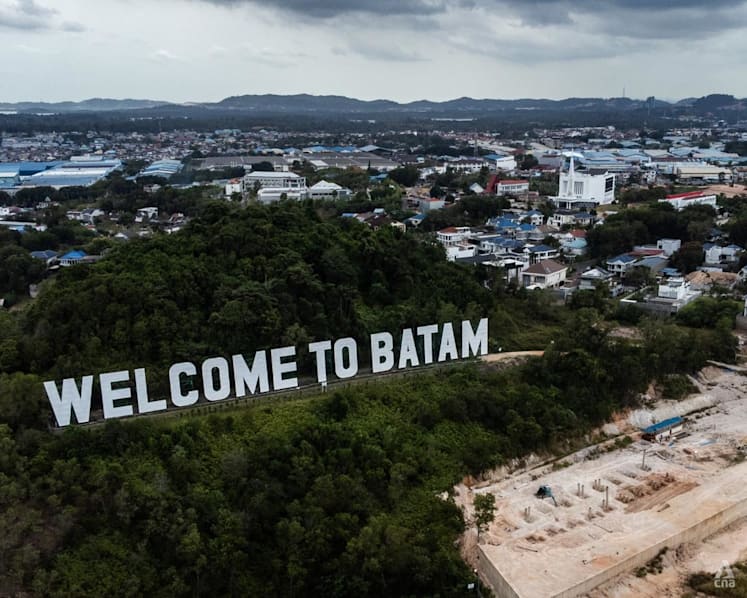
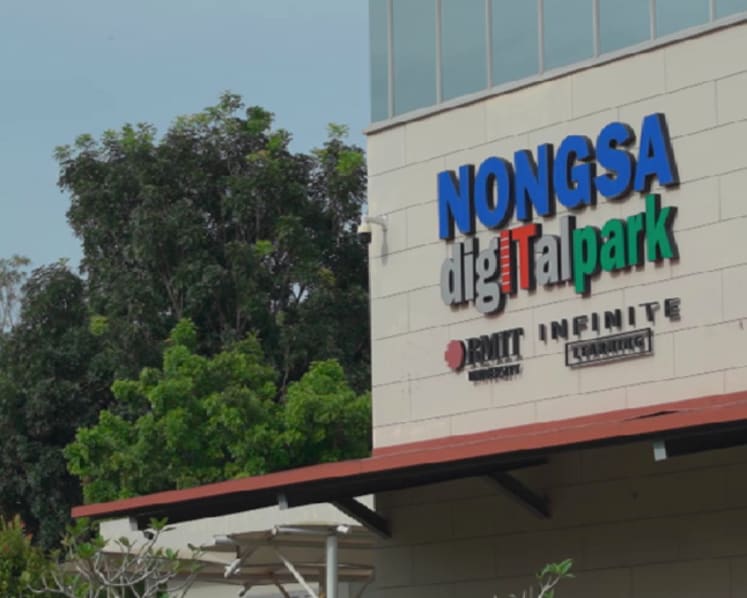
In Batam, about an hour by ferry from Singapore, Nongsa Digital Park – a special economic zone (SEZ) – has attracted multinational firms and digital training institutes. It forms part of efforts to build a wider digital ecosystem there, a model that observers say could be replicated in other parts of the country.
POLICY AND LAND CONSTRAINTS
Alongside global tech firms, regional operators are also expanding their footprint. Digital Edge, headquartered in Singapore, operates two data centres in central Jakarta.
Its newest facility, EDGE2, opened in 2024 and has a capacity of 23 megawatts, with space for more than 3,400 server racks.
It also operates data centres across Asia-Pacific, with Indonesia its largest market by both investment value and power capacity.
Its upcoming CGK Campus in Bekasi, West Java, is expected to deliver up to 500 megawatts – its biggest infrastructure project so far, with the first phase scheduled to be ready by end 2026.
The company is urging authorities to designate more data centre clusters as SEZs, which can offer fiscal and non-fiscal incentives to attract investment.
"The more the government can designate a place for SEZ especially in areas where there's plenty of land, water, power and connectivity, it will be very helpful to attract more data centre investment in Indonesia,” said Stephanus Oscar, CEO of Digital Edge Indonesia.
He also called for more streamlined permit and approval processes for building such facilities.
However, the strong demand for data centres is starting to tighten land supply in parts of Greater Jakarta, and their potential impact on local communities and the environment is a cause for concern.
Farazia Basarah, country head of real estate firm JLL Indonesia, said developers comply with both local and national regulations to minimise disruption to nearby communities, with data centres typically located about 1km to 5km away from residential areas.
She added that sites must also meet strict environmental criteria, including being located in areas with low flood risk, with the land expected to remain safe from flooding for up to 50 years.
POWERING GROWTH SUSTAINABLY
As the industry expands, so does pressure to manage energy and water use.
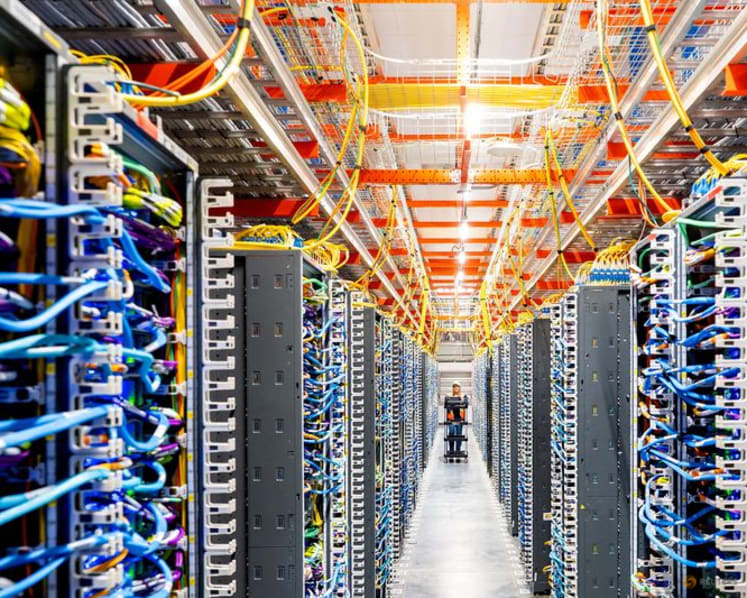
Data centres require a constant supply of electricity and must operate around the clock to avoid disruptions. Much of that power goes to running servers and cooling systems.
To address this, companies are investing in cleaner energy sources.
Microsoft’s president of cloud operations and innovation Noelle Walsh said the company works closely with utility providers and is partnering Indonesia’s state electricity firm PLN on a 10-year renewable energy supply.
"(PLN) will provide 200MW of solar energy onto the grid here. And that gives us the opportunity to use more green power,” she added.
Data centres also generate enormous heat as they process information and rely heavily on water-based cooling systems to prevent servers from overheating.
Microsoft has pledged to become “water positive” by 2030, meaning it aims to return more water to the environment than it uses.
However, the growing water demand is raising concerns in some parts of Indonesia.
In Batam, for example, where supply depends largely on rainwater reservoirs, observers have warned that data centre expansion must be carefully managed to avoid straining limited resources.
Geothermal energy is another option. Digital Edge is using the renewable power source for its Jakarta facilities and plans to extend this to its Bekasi campus.
The new facility will also deploy direct-to-chip cooling to support AI workloads powered by GPU (graphics processing unit) chips, which generate significantly more heat, said Oscar.
Instead of circulating cold air, a closed-loop system sends liquid coolant directly over the chips, where it absorbs and carries heat away.
In data centre operations, connectivity is just as critical as power and cooling. To ensure stability and low latency, Digital Edge uses horizontal directional drilling – a method of laying cables underground without surface excavation – to install its fibre infrastructure.
"We install our cables about 6m underground to reduce the risk of disruption from roadside construction and other infrastructure works,” said Oscar.
A PUSH FOR GREENER STANDARDS
To support these efforts, data centre efficiency and carbon emissions will soon be measured under a new sustainability index.
The Indonesian Data Centre Provider Association, an industry body representing professionals and operators in the sector, plans to launch a new rating system this year.
It will measure energy efficiency and environmental performance, reflecting growing expectations from investors and customers.
"The push for the new standards is because investors, operators, even the users right now, demand to see this happening in the daily discipline of the data centre," said Erick Hadi, the association’s head for talent development and industry certification.
Observers say the rating system could eventually be linked to tax incentives, but would need national implementation and government support.
But adopting greener technologies can be costly, and may require both regulation and incentives to drive change, experts say.
"You need to have either the regulation in place to force (data centre operators) or you have to have a favourable policy to encourage them,” said William Lee, senior research director at market intelligence firm IDC Asia-Pacific.
He added that while sustainability may not be an immediate concern right now, it is likely to become a significant issue as the industry grows.
Singapore, in particular, has introduced more formal sustainability standards and benchmarks for the data centre industry, with Malaysia also making progress in this area.
BUILDING THE WORKFORCE TO MATCH GROWTH
As data centre investment accelerates, Indonesia is also racing to develop the talent needed to run these facilities.
Thousands of new jobs are expected to be created in the coming years, spanning roles in IT, engineering and facilities management.
This is opening up new career paths for young Indonesians like 19-year-old Azka Algian Putra Bahari.
For Azka, data centres were once unfamiliar territory. In 2024, he took a leap of faith and enrolled in the Nusantara Data Centre Academy, part of its first intake of trainees.
“At first, I wasn’t confident. Everyone else seemed really good at IT. I started doubting myself,” he said.
“Our first lesson was on basic infrastructure. Honestly, I didn’t understand it at first. But I kept trying. I worked on building my confidence, with support from my parents.”

The academy, established in 2022, aims to address a critical talent shortage in the fast-growing industry.
It integrates industry-focused training into vocational schools and polytechnics, combining classroom learning with hands-on experience.
“We don’t just teach theory … Besides being trainers, we’re also industry practitioners. We share our knowledge with the students,” said facilitator Nawi Jaya, who is also founder and CEO of PT Jaya Karya Integrasi, a data centre consultancy and management company.
“For example, when explaining a switchboard, we bring an actual unit. We show them what it looks like, and they try operating it themselves,” he added.
Students also undergo six-month industry internships to gain practical exposure at operational data centres.
A GAP BETWEEN INDUSTRY AND EDUCATION
But challenges remain, as data centres are highly secure facilities and companies are often unable or unwilling to share operational knowledge or grant access for training.
“People are not allowed to share about what they do. This creates a big gap in the data centre industry – which needs the talent – but also (in) the education sector," said Hadi, who is also founder of the Nusantara academy.
"I don't see that we are going to be able to overcome (this) unless the operators start to openly collaborate with training institutions,” he added.
Some companies are starting to bridge that gap.
"Our partnership with Nusantara is very beneficial … because it provides on-the-job training. So, the students can learn from us how we operate and manage our data centres. And, in time, those talents can be absorbed into the market," said Digital Edge’s Oscar.
Microsoft is also supporting workforce development through its AI training curriculum, adapted for the Indonesian context. The company said it has trained more than 1 million people in partnership with government agencies.
For Azka, who now works as a data centre technician, his next move will be to continue his studies in mechatronics – a field that is increasingly relevant to the industry, given the need to design and maintain complex systems in data centres – and he hopes to inspire the next generation to power Indonesia’s digital ambitions.





