







‘Social media is like fire’: Some wish Indonesia’s planned social media ban for youths can come sooner
Some parents and experts question how realistic enforcement will be, whether children will find ways to bypass the restrictions, and how digital literacy can go in ensuring young people’s online safety.

This audio is generated by an AI tool.


JAKARTA: Like many of her peers, Rufaida Khansa As Salamiyah uses her mobile phone to capture memories, including that of family vacations. She then uploads these videos onto her YouTube account.
But the 10-year-old - who prefers to go by Aida - may soon lose access to that account by the end of the month. The Indonesian government had announced that it plans to ban access to social media for those under the age of 16 from Mar 28.
Communications and Digital Affairs Minister Meutya Hafid said that move would make Indonesia the “first non-Western country” to introduce age-appropriate access restrictions in the digital space.
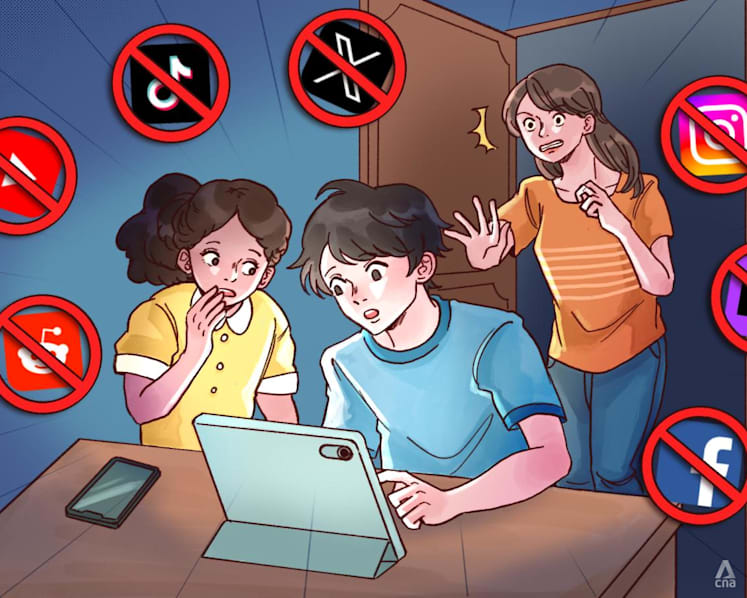
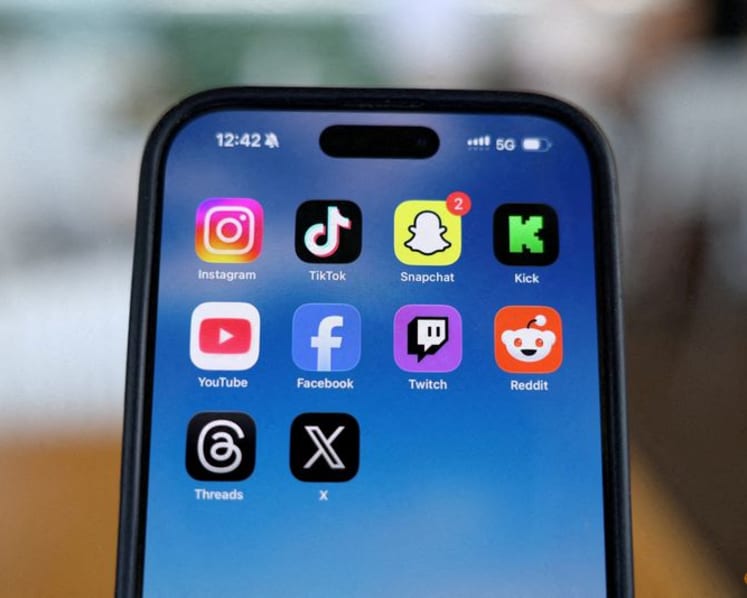
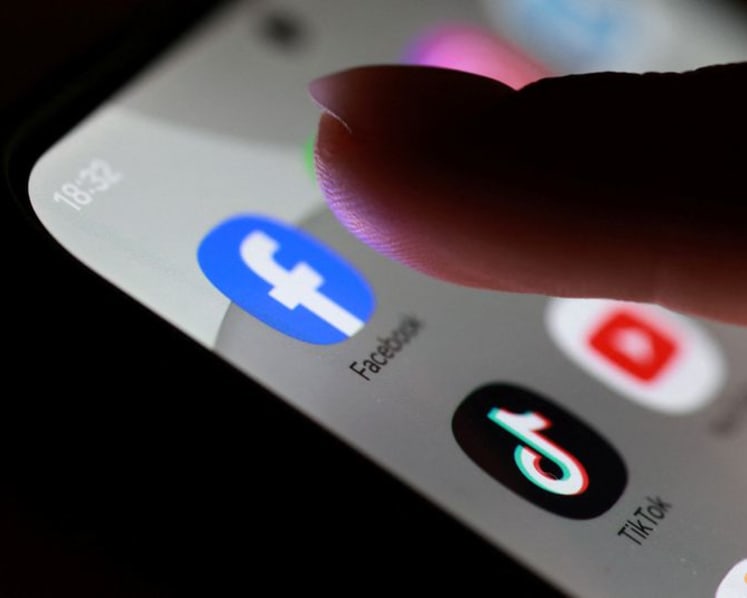
In announcing the regulation last week, Meutya said that parents ”no longer have to fight alone against the giants of the algorithm” as the accounts belonging to children under 16 on "high-risk" platforms will start to be deactivated, beginning with YouTube, TikTok, Facebook, Instagram, Threads, X, Bigo Live, and Roblox.





In doubling down on the government’s efforts, Meutya on Wednesday (Mar 11) said that her ministry will work with others closely to provide “more comprehensive protection for children”.
“Collaboratively, we have all agreed to carry out acceleration measures leading up to Mar 28, so that efforts to protect children in the digital sphere … can be implemented more effectively,” she was quoted as saying by Antara.
And while Indonesia’s planned move appears to have received broad support from parents, IT experts and child psychologists whom CNA spoke to, some question whether the move will genuinely protect children from harmful online content.
They also caution if the social media ban may be too overly restrictive on a generation that has grown up as digital natives.
“DIGITAL EMERGENCY”
Aida’s mother, 40-year-old Vilna Rosana, told CNA that she supports the policy and agrees that Indonesia is facing what the communications minister had described as a "digital emergency".
"This is an emergency … children are frequently exposed to dangerous content (online)," Vilna said, calling on her past experience as an elementary school teacher when she discovered that some of her students had been exposed to pornographic materials online.
The homemaker said that she had hoped that Indonesia would tighten its rules on social media usage for children after learning of a similar policy in Australia that took effect in December requiring TikTok, YouTube, Snapchat and other sites to remove accounts held by under-16s.
A "major task" to safeguard our children: Indonesian minister
Communications and Digital Affairs Minister Meutya Hafid on Wednesday (Mar 11) reiterated that the move to ban social media for under-16s reflects the Indonesian government’s effort to provide broad protection for children in the digital space.
Indonesia has a far larger child population than countries that have implemented similar policies, meaning that the number of Indonesian children who must be protected is "significantly higher", she said, as reported by Antara.
Meutya noted that Australia, for example, targets around 5.7 million children under similar regulations while Indonesia has roughly 70 million children.
Beyond the scale of implementation, she added that public understanding of how to use the digital space responsibly must also be addressed to ensure the effectiveness of the policy.
“This is certainly a major task, but we must take steps to safeguard our children. It is not easy, but it is something we must go through. With confidence, from the results of today’s meeting we are optimistic that despite the challenges, God willing, we can implement it effectively and efficiently,” Meutya said.
The minister was referring to a coordination meeting attended by Cabinet Secretary Teddy Indra Wijaya, Home Affairs Minister Tito Karnavian, Primary and Secondary Education Minister Abdul Mu’ti, Religious Affairs Minister Nasaruddin Umar, Minister of Population and Family Development Wihaji, and Minister of Women’s Empowerment and Child Protection Arifatul Choiri Fauzi.
In December, Australia became the first country to ban social media use for children under 16, blocking access to platforms including TikTok, Alphabet’s YouTube and Meta’s Instagram and Facebook.
The move by Australia drew criticism from major technology companies and free speech advocates, but was welcomed by parents and child advocates. Firms are required to enforce stringent age verification measures such as identity checks or facial scanning to comply with the new rules.
Platforms are using a mix of methods to determine users’ ages, including age inference based on online activity, age estimation through selfies, and official documents such as identification cards or bank account details.
When asked about the possibility that Aida’s YouTube account - which CNA observed has 78 subscribers and 97 uploaded videos - could be removed, Vilna said it would “not be a major issue” as she plans to explain the situation to her daughter.
"It is not something very important. We can ask ‘what the purpose of making the videos is: for memories or to be seen by other people?’
“We can explain that if they are deleted from YouTube, the videos can still be saved. If the goal is simply to share them with family, we can do so through my Instagram account or WhatsApp," she said.
For Nurcahyanti, 40, the upcoming ban could not come at a better time after observing behavioural changes in her son, Alvin. She alleged that the boy has been cyberbullied on Roblox - a massive online platform and game creation system where users can play, create, and share millions of user-generated 3D experiences.
Alvin, who turns 10 in April, has had a Roblox account for the past five years after an older sibling helped create one for him. Over the past two years, Alvin’s gaming intensity has increased to as much as eight hours a day, often stopping only when his phone battery runs out and when he is at school.
He has made in-game purchases costing up to 200,000 rupiah (US$12) per month, even setting aside money from his daily allowance.
When she reviewed the chat feature on Roblox, Nurcahyanti found messages containing harsh language from Alvin’s online peers. It was then that Nurcahyanti discovered that Alvin had been experiencing cyberbullying.
"If Alvin did not want to play, he was threatened that his account would be hacked. Alvin even cried because (of it). I reassured him and told him no one would be able to hack his account.
"Children are already too addicted. If his Roblox account is deleted because of a government policy, he might be more willing to accept it than if I were the one deleting his account or removing the (online) game from his phone,” she said.
NEED TO BE COGNISANT OF MINORS’ RESPONSE
Lydia Agnes Gultom, a clinical psychologist for children and adolescents at Klinik Utama dr. Indrajana, told CNA that losing access to one’s social media accounts can trigger emotions similar to experiencing a loss.
It often “becomes part of one’s identity, social relationships such as connecting with new friends, and a personal life archive”, she said.
She cautioned that a ban on social media for minors needs to be approached with realism.
"We need to acknowledge that teenagers are digital natives - they are capable of navigating the online space. Teenagers need internet access for their intellectual needs and development. We cannot pull them out of their world," she told CNA.
The psychologist, who also serves as a social counsellor at the Ministry of Women’s Empowerment and Child Protection, added that not all children see social media purely as entertainment.
"Children who have gained benefits and created work through social media will certainly feel deeply disappointed (with the planned ban)."
According to Agnes, adolescents aged 13 to 16 are typically in what psychologists describe as the “identity versus role confusion stage”, during which social media often becomes a key space for constructing self-identity.
Without proper explanation and support of the planned ban, "there is a risk that adolescents may experience a crisis in the form of identity disruption, because the digital space has already become an integral part of their world".
She further pointed to the potential for unintended consequences of the planned ban, including falsifying age information in ways that could undermine the credibility of age assurance mechanisms, or migrating to social media platforms with weaker oversight.

CIRCUMVENTING THE REGULATION
The practice of children falsifying their ages to gain access to social media sites was acknowledged by all of the parents whom CNA spoke to, even as experts warn that age verification remains a challenge in many countries.
For 16-year-old Harioseno Damarsasongko, it was his mother who had set up an Instagram account for him when he was 12. A year later, Harioseno set up his own TikTok account after entering junior high school.
"I entered a fake birth year when registering," said Harioseno. "It’s easy. Many children can lie about their age. There’s no need to be completely honest."
Heru Sutadi - the executive director of research and advocacy body Indonesia ICT Institute - said that existing systems generally rely on self-declared age information from users, “making them relatively easy to manipulate”.
"Some social media platforms only ask for the year of birth, so children under 16 can simply claim to be over 16," he said.
"Platforms can also argue that the registered account belongs to an adult, not a child, and therefore feel they have no obligation to restrict access."
He also highlighted various ways users circumvent rules, "for example by entering a false date of birth, using a parent’s account, or using a VPN to bypass regional restrictions".
He stressed that the effectiveness of the policy does not depend solely on age declarations, but also on parental supervision, child-safe platform design and adequate digital education.
Meanwhile, Ika Idris - a social media analyst and co-director of the Monash Data and Democracy Research Hub - said the more fundamental issue is not merely age restriction, but how platform governance and algorithm design are regulated.
For Ika, the key question is not only whether children need protection, but whether existing systems are designed to keep anyone, including adults, glued to their screens.
Bimantoro Kushari Pramono, lecturer in human-computer interaction at Universitas Indonesia, told CNA that systemically, social media platforms are “indeed designed to keep users engaged for as long as possible”.
Their business model, he added, is based on the attention economy, meaning algorithms continuously display the most engaging content according to users’ preferences.
"The problem is that the state fundamentally does not have access to these algorithms because they are proprietary business assets of platform companies. As a result, the government’s ability to control how these algorithms operate is actually very limited," said Bimantoro.
In such a situation, the most realistic policy option for the state is to control user access rather than control the algorithm itself.
"So age restrictions can be seen as an effort by the state to reduce children’s exposure to algorithmic systems that are intentionally designed to be highly addictive," he said.
Beyond algorithm design, Ika also pointed to the possibility of implementing more protective privacy settings for children’s social media accounts.
"For instance, default settings that are restrictive, which users must consciously change," she said, adding that with this approach, protection would not rely on user initiative but would be embedded from the outset.
Ika said that other design interventions could also be considered, ranging from screen-time reminders to enforced pauses before users return to the screen. For Ika, such measures would be more concrete than merely imposing administrative restrictions.
On the other hand, she raised concerns about the assessment mechanism stipulated under the new regulation, which requires platforms to conduct self-assessments and submit the results to the Ministry of Communication and Digital Affairs.
"But who verifies those results?" she asked.
"The ministry must have verification capacity - expert resources, algorithm auditors, platform design auditors - and a clear verification mechanism,” she said while cautioning that the verification process should not end up restricting access to public information.
PARENTAL GUIDANCE NEEDED
Psychologist Agnes said that in her counselling sessions, she frequently incorporates digital child protection education for parents by applying the principle of monitoring without spying.
"Parents are encouraged to continue respecting their children’s needs, their privacy, and to build warmth and openness with them," she said, emphasising that the process cannot be done instantly and requires consistency from parents.
She stressed the importance of the principle of connection before correction.
"Connection with children, closeness and openness need to be established first before we can guide or correct them. Children are more likely to accept what we say when they trust us. Digital agreements made within the family can be implemented more easily."
Agnes said that parents need to acknowledge feelings of rejection or sadness that children may experience in response to the planned policy.
Hani Noor Ilahi - an Indonesian doctoral student at the University of Western Australia - said that she brought her three children with her and enrolled them in local schools.
Amid the shifting dynamics, she told CNA that she uses social media as a way to maintain closeness with them. She and the children follow one another’s accounts and routinely share light-hearted content.
The habit has helped her grasp her children’s sense of humour as well as their patterns of interaction. At the same time, Hani also monitors their digital activities through access to their social media accounts.
"I also have broad access to view and check the content of their social media. I know where their algorithms are directing them, their activities, the content they like, what activities they have been engaged in, and who they are connected with. I will check all of that."
Meanwhile, Vilna said that she applies a screen time rule agreed upon with her three children, including Aida. They are given 20 minutes each day which can be used to watch videos on YouTube.
"We used a timer, we set a 20-minute alarm, and after that we took the phone," she said, adding that her children are only allowed to access digital games on weekends.
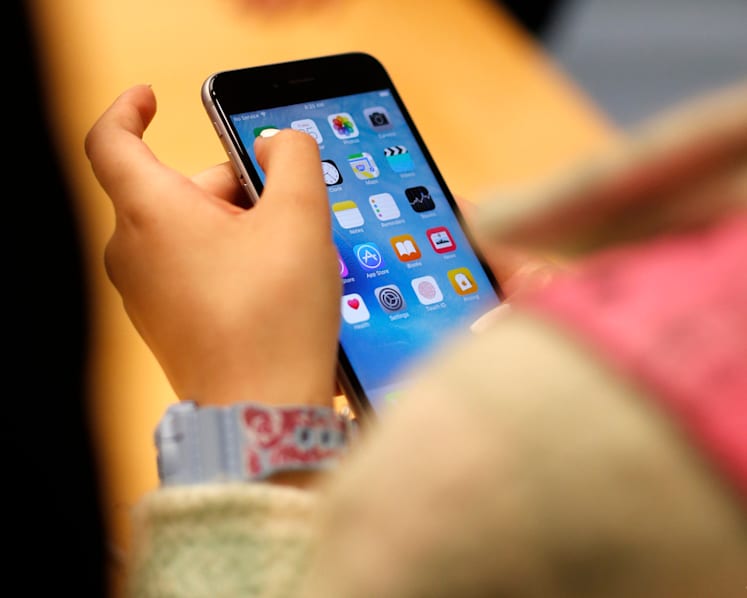
Sekar Ayu, Harioseno’s mother, said her son first accessed Instagram through her phone. And even if the teenager now has his own TikTok account, Ayu said supervision has not been entirely relinquished.
It is now accompanied by routine conversations about the content he consumes, particularly gameplay and comments related to games.
Speaking to CNA, Harioseno admitted he has frequently encountered harmful content such as online gambling and cyberbullying, but chooses to scroll past it.
"In my view, it is dangerous. For me, I just skip it because my digital literacy is quite good, but many other children have low digital literacy and are vulnerable to its impact," he said.
Now 16, Harioseno is unlikely to be affected by the social media ban. Ayu, in fact, sees social media as exposing her son to social and political issues that they later discuss at home.
"Our dinner table is lively with discussions like that, and I think it is good that he is starting to understand current social and political conditions, so they become topics for our conversations," she said.
However, concerns remain. "To me, social media is like fire. In the hands of adults, fire can be used for cooking. In the hands of children, fire can burn down a house, or burn themselves," she said.
Ayu agrees with banning social media for children, but believes the key lies in parental guidance and digital literacy. "I trust him because I am confident he has sufficient digital understanding, but other children may not."
"And in this economy, where parents may already be exhausted from meeting economic needs, not all parents are able to provide that kind of digital literacy education," she said.

Meanwhile, Ika highlighted behavioural adaptation and the socio-economic impact of restricting access to social media.
According to her, the challenge of behavioural adaptation must be taken seriously.
"Social media has become part of daily life: a source of information, entertainment, community, and even digital income for some children who are creators or gamers who monetise. If access is suddenly closed, how will they adapt?"
She urged the government to provide alternatives so children can remain productive without social media.
"Can the government provide alternative activities, such as programmes at community centres or public libraries? In remote areas, the challenges may be even more complex," she said.
This view is echoed by Nurcahyanti, Alvin’s mother, who hopes for tangible programmes from the government.
"I hope the government also provides regular programmes such as visits to museums or educational venues so that children’s free time is not filled only with playing games," she said.
Regarding gaming addiction, Nurcahyanti once took Alvin to see a psychiatrist.
He no longer asks for money to top up Roblox, although he still plays for around eight hours a day. Nurcahyanti plans to enrol him in Quranic lessons so that his free time is not entirely spent on Roblox.
Meanwhile, Vilna has chosen to remain actively involved in supervising her children’s gadget use from an early age. For her, that involvement demands energy and time, but it is a long-term investment.
"It is better for us to be tired now, guiding our children while they are still young and under our supervision. It is better for us to see them cry now than for us to cry over their future later," she said.
Additional reporting by Izzah Aqilah Norman.





