







Commentary: Anthropic’s Mythos AI marks a cybersecurity moment Singapore cannot ignore
Even if Anthropic’s claims about its new AI model are overstated, the deeper challenge Mythos represents is very real, say NCS cybersecurity chief Foo Siang-tse and strategic adviser Shashi Jayakumar.


This audio is generated by an AI tool.




SINGAPORE: Cybersecurity researchers tend to be a hard-bitten lot. Yet even the most jaded took notice when Anthropic announced Claude Mythos Preview on Apr 7. Here was a frontier AI lab withholding its most powerful model for being too dangerous to release to the general public.
Independent verification remains limited. But if Anthropic’s claims hold up under scrutiny, Mythos has, in days, surfaced more “zero-day” vulnerabilities than the world's adversaries collectively deployed in a decade.
Mythos reportedly discovered thousands of software flaws - called zero-days because they were unknown to developers and could be immediately exploited - across every major operating system and browser, including flaws dating back decades.
The claims were startling, compared to what the industry had seen so far. Google's threat intelligence team, drawing on one of the most comprehensive industry datasets, tracked 75 zero-days exploited in the wild across the global software ecosystem in 2024, and 90 in 2025.





The broader research community has not had the chance to fully assess what Mythos can do, beyond Anthropic’s handpicked coalition of 12 launch partners. Early signals suggest some of the headline findings may be less unique than advertised. Even if marketing hype runs ahead of reality, Mythos’ capabilities are almost certainly real, directionally.
HISTORY RHYMES WITH MYTHOS
Anthropic cannot indefinitely contain a capability this valuable. There have already been credible reports of unauthorised users gaining access to Mythos on the very day of its limited release, reportedly via a vulnerability in a third-party vendor's environment.
We have seen where this leads.
In 2017, EternalBlue, a Microsoft Windows exploit developed by the United States National Security Agency and kept under some of the tightest access controls imaginable, was stolen. The Shadow Brokers, a hacking group with reported links to Russian intelligence, publicly released the code.
Within a month, the WannaCry ransomware used this exploit to tear through unpatched systems worldwide, causing major disruption notably in the United Kingdom healthcare system. The NotPetya attack that followed crippled multinational companies like shipping giant Maersk and caused an estimated US$10 billion in damage.
Machines running protocols with known vulnerabilities – such as the one exploited by EternalBlue nearly a decade ago – still persist, often due to legacy applications that rely on older systems.
Even if Anthropic’s claims were overstated, its ability to accelerate the discovery of more system vulnerabilities makes Mythos a far bigger prize. And the groups trying to obtain it, successors to the Shadow Brokers, and others will not stop until they do.


A WAKE-UP CALL FOR ORGANISATIONS LARGE AND SMALL
Even before Mythos, the threat felt asymmetric and the pace overwhelming.
Frontier AI tools will only amplify this further and accelerate offence faster than defence can respond.
The current conversation around “using AI to defend against AI” is too narrow. It tends to focus on the technology closest to users and applications. Sophisticated attackers, such as those behind the Volt and Salt Typhoon campaigns that the US has attributed to China, operate deep in the forgotten plumbing of systems that nobody audits or checks.
Attackers iterate at machine speed with little consequence for failure. Defenders are slowed by the realities of their job: Security patches get reverse-engineered the moment they ship, and organisations have some necessary level of internal friction. Change control, compliance reviews, procurement cycles and the fear of breaking production systems can add weeks where attackers need hours.
No single product will neutralise a threat like Mythos. And organisations cannot practically chase down every last vulnerability. But surrender is not a strategy.

WHAT DOES “DEFENCE” LOOK LIKE NOW?
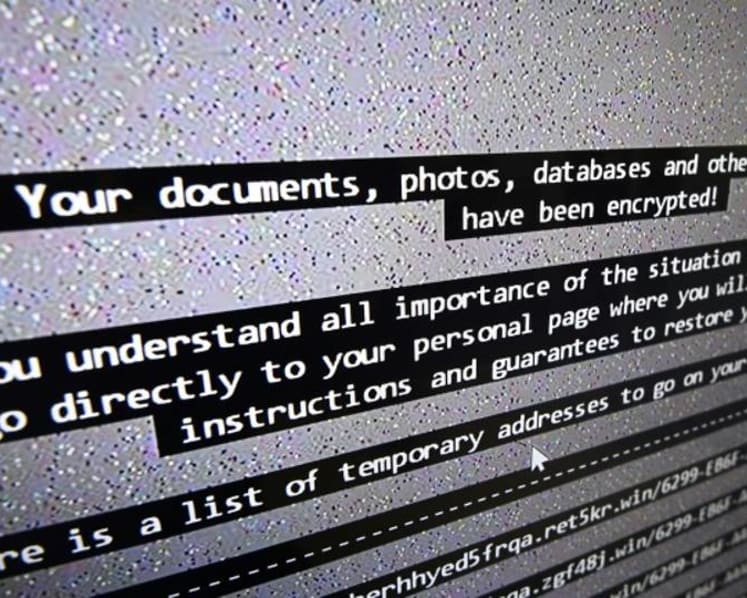
There are practical moves to close the gap: Know what you are actually running, especially the old systems nobody thinks about. Assume that any part of your infrastructure you cannot see into may already be compromised. Plan around how fast you can detect and recover from an incident, rather than fantasising about keeping every attacker out. Stress-test your incident response plan before you need it, not during.
Smaller firms may in fact find some of this easier to act on than their larger counterparts.
What will make a difference is disciplined investment across three fronts.
First, sharpen, speed up and integrate what you already have before chasing new categories. The era of comfortable five-year contracts with “preferred” vendors is over; parts of the security stack may need refreshing annually to keep pace.
Second, build threat hunting and red-team capabilities in-house. This cannot be outsourced. Skilled cyber testers who can simulate real attacks must continuously upskill to think the way actual adversaries do.
Third, ensure that every employee knows that security is also their problem, not just the security team's. Just as almost anyone can now ship code with AI, everyone also needs to be more alert to social engineering and unusual behaviour in their day-to-day work.
SHOULD THERE BE CONTROLS?
But such practical ways to survive do not resolve the deeper challenge Mythos represents. The longer-term question is whether there should be more regulation.
This is not a call for immediate legislation. The issue is less about gaps in the rulebook and more about the need for agencies to study such emerging dual-use tools with potential malicious applications and evolve policy in step with the technology.
A tool-specific regime imposed prematurely risks being obsolete within a year, given the pace of technological developments. In a timely advisory issued days after Mythos was unveiled, Singapore's Cyber Security Agency (CSA) wisely chose not to focus on Mythos specifically but set out best practices for organisations facing adversarial threats from frontier AI models.
A calibrated approach is more likely to work - one that combines industry responsibility, secure-by-design principles, and targeted regulatory levers applied at the right moment.
Singapore, which has moved thoughtfully and early on technology governance, from the Personal Data Protection Act to the Monetary Authority of Singapore’s AI guidelines for financial institutions, is well placed to model that kind of measured leadership.

A THREAT NO ONE CAN DEFEND ALONE
Mythos also leads to questions previously considered theoretical: What happens when an AI system becomes capable enough to conduct offensive cyber operations autonomously? And what if that capability escapes controlled conditions?
The answer, as EternalBlue demonstrated and as Mythos threatens to demonstrate again at greater scale, is not something any single organisation, vendor or regulator can absorb alone.
Organisations, individuals and governments are now undertaking AI transformations – they cannot afford to let cybersecurity lag. AI and cybersecurity practitioners must work in lockstep.
At the national level, Singapore’s cyber defenders have clearly grasped this. CSA issued an open letter on Tuesday (May 5) to the boards and senior leadership of Critical Information Infrastructure (CII) owners.
The letter noted that “frontier AI has materially shifted the cybersecurity baseline for CIIs” and stated in no uncertain terms that these developments demanded board-level attention and should not simply be delegated to IT departments. CSA also requested that the boards commission a review of whether their cybersecurity risk posture remained adequate in light of frontier AI development.
What the letter did not say, but which is clearly evident between the lines, was this message: Never waste a crisis. The Mythos moment is as good a reminder as any that the time to build resilience is now, not after the next breach.
Foo Siang-tse is Chief Information Security Officer and senior partner at NCS. Shashi Jayakumar is Founder and Executive Director of SJK Geostrategic Advisory, a geopolitical and security risk consultancy firm.





