Commentary: What we can learn from how Iran and US have used cheap ‘disposable’ drones differently
While the Iran war has not spilled out of the Middle East, defence planners from Asia will look closely at how it is being fought, says defence writer Mike Yeo.
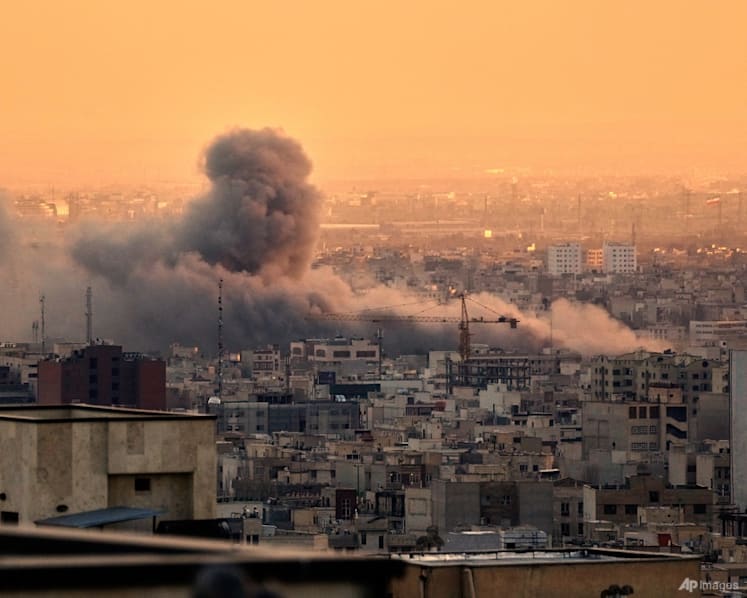
A plume of smoke rises following a US-Israeli military strike in Tehran, Iran on Mar 3, 2026. (Photo: AP/Vahid Salemi)

This audio is generated by an AI tool.


SINGAPORE: Smaller, cheaper and effectively disposable aircraft are rewriting the rules of modern warfare – and its latest battlefield are the skies over Iran.
Since Israel and the United States launched their attacks on Iran on Feb 28, both sides have used low-cost kamikaze drones extensively. But how they have used these so far has differed sharply.
The Ukraine war is widely recognised as the first full-out drone war, due to the immense usage.
Ukraine has said it deploys about 9,000 different types of drones a day, while one think tank found that Russia launched more than 4,400 one-way drones in January alone. Drones were reportedly responsible for up to 80 per cent of those killed or injured on both sides. In a somewhat ironic turn, the US has asked Ukraine for help to fight Iranian drones.
Lessons from these early drone wars will be important in developing countries’ own military playbooks.
A GAME OF DRONES
Iran’s drone objective is to deplete the air defence stocks of Israel, the US and the Gulf countries hosting US military facilities that Iran has targeted in its retaliation.
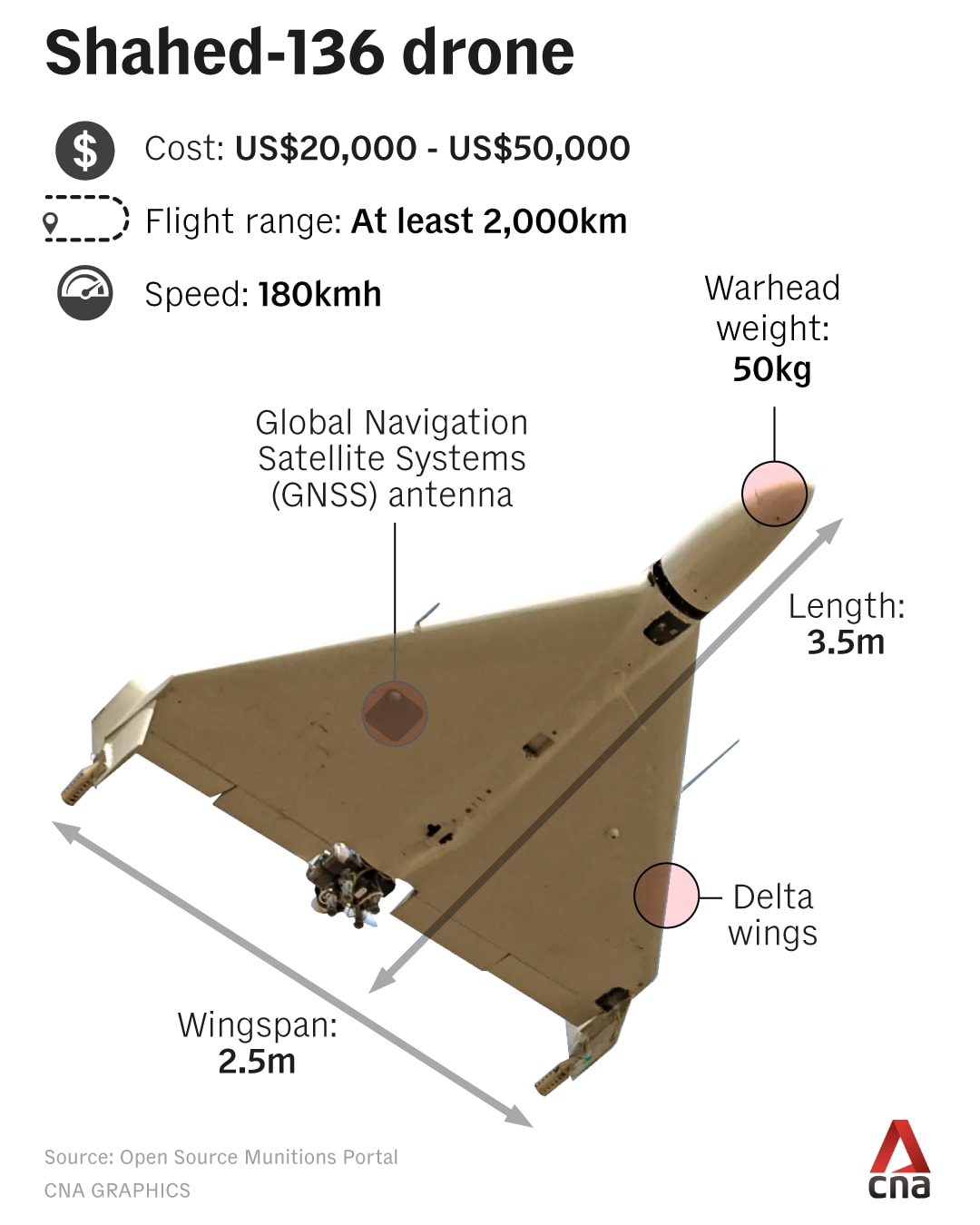
Its drone of choice is the Shahed-136. It is essentially a guided bomb that is flown into a target and detonated. It is slow and simple, and quick and cheap to manufacture.
And that is precisely the point. Iran does not need every drone to get through enemy air defences, just enough to saturate and overwhelm air defences or force the use of expensive, limited interceptor missiles. This was Iran’s play in the 12-day war last June that managed to pierce Israel’s sophisticated air defence system, as well as Russia’s approach to attacking Ukrainian infrastructure.
This time, Iran deployed waves of drones interspaced with missiles and scored some successes. Geolocated videos from social media of the ongoing conflict in Iran has shown that these drones have struck at least two military targets, including the base of the US Navy’s 5th Fleet in Manama, Bahrain and a US Army facility in Kuwait.
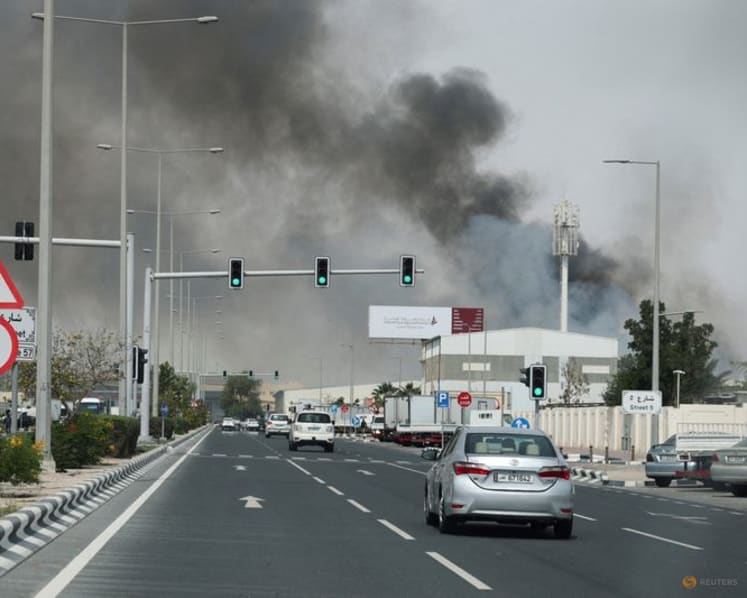
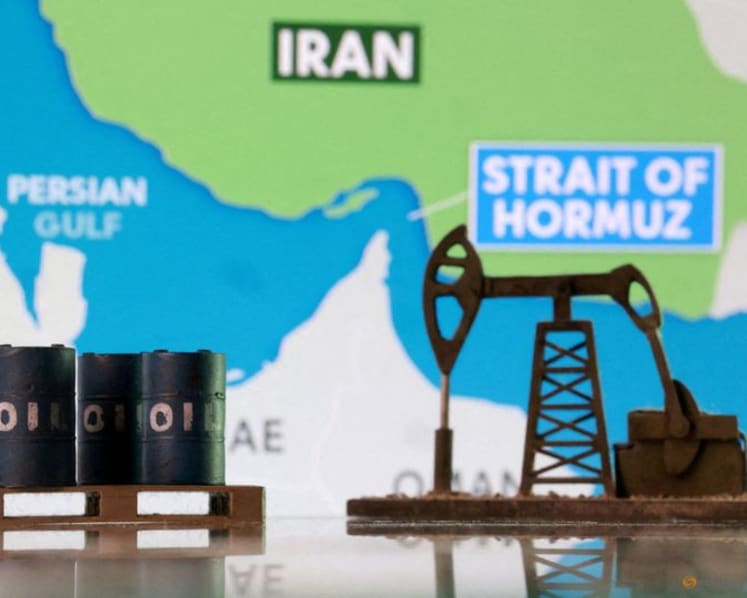
These massed attacks appear to be having an effect, with the UAE’s defence ministry revealing that it intercepted 26 out of 35 (or 74 per cent) of Iranian drones launched at it on Tuesday (Mar 10). This was a significant drop from previous days of the conflict, having downed about 90 per cent to 95 per cent of larger numbers of drones in earlier waves.
This suggests that the US – the world’s most powerful military – still has gaps in its ability to defend itself against such new tactics. It is something that US defence officials have reportedly acknowledged, with Defence Secretary Pete Hegseth and Chairman of the Joint Chiefs of Staff General Dan Caine admitting that the drones have posed a bigger challenge than expected.
US HAS ITS OWN CHEAP DRONE
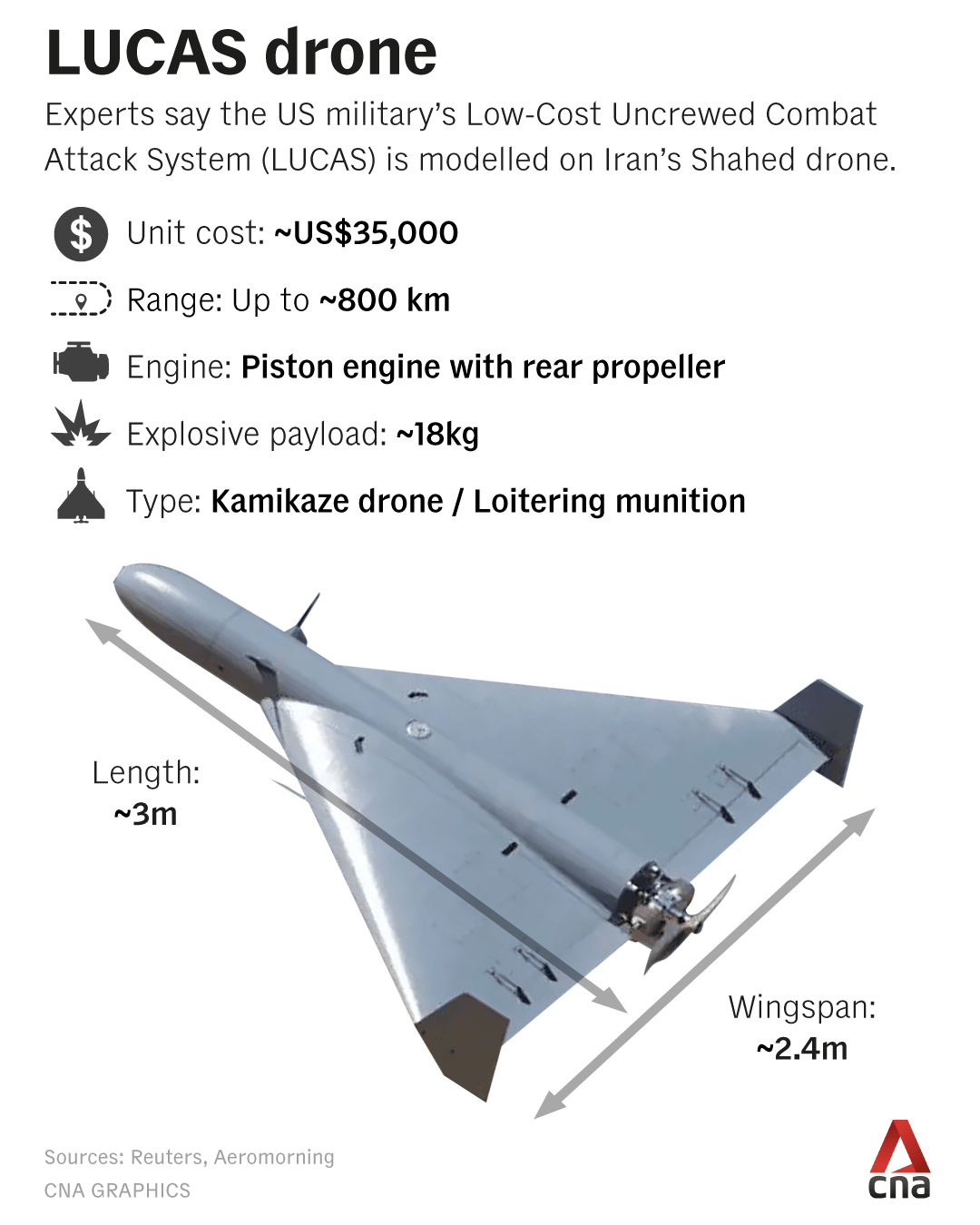
It is perhaps a testament to how effective the Shahed has been that the US has reverse engineered and is employing its own version. The Low-cost Uncrewed Combat Attack System (LUCAS) made its first combat appearance in Iran.
But where the Shahed is a tool of asymmetric warfare for Iran to bleed a technologically superior adversary, the LUCAS is about cost-effectiveness. From intercepting enemy missiles and drones to striking infrastructure, the US$35,000 drone holds its own against a US$2.4 Tomahawk cruise missile or a US$13 million THAAD interceptor missile.
A key factor in the current conflict is that the US and Israel rapidly established air superiority by degrading Iran’s air defence network that had already been severely weakened last June.
This has meant that Israeli and American aircraft and drones have managed to operate over Iran with little opposition as they worked through a list of targets which included Iranian supreme leader Ayatollah Ali Khamenei and Iranian missile and drone launchers. These strikes are primarily being carried out with manned aircraft but also with larger drones that are built to provide near-constant surveillance and launch munitions, not as kamikaze weapons.
Videos posted on social media purportedly taken from inside Iran show Israeli Hermes 900 and US MQ-9 Reapers in the air.
These have long endurance – the Reaper can stay in the air for up to 27 hours and the Hermes 900 up to 36 hours. They can maintain constant surveillance over Iran for much longer than manned aircraft, which need to refuel and are limited by the need for their pilots and crews to rest between missions.

IMPLICATIONS FOR ASIA
While the Iran war has not spilled out of the Middle East, defence planners from Asia will have registered the sharp implications of how it is being fought.
First, LUCAS shows that the US is complementing its arsenal of high-end missiles with significantly cheaper and expendable assets. The US is already changing the way it will operate in the event of conflict in the Indo-Pacific, shifting away from operating large force grouping out of fixed bases in favour of smaller, more agile forces fighting from dispersed locations and the LUCAS could fit into this strategy.
One-way attack drones, with a relatively small and flexible deployment footprint, will likely figure prominently in the US force posture in the Indo-Pacific alongside a smaller number of more capable but more expensive weapon systems. This is the kind of asymmetric capability that the US is seeking, while China has been making advances in military capability.
Next, the US is burning through a prodigious amount of ballistic missile defence interceptors against Iranian ballistic missiles.
Even before the Iran war, experts had warned that the US and its Indo-Pacific allies do not have, and is producing nowhere near enough, the number of interceptors it needs should a conflict break out against China. This could call into question a vital aspect of the ability of the US military to conduct operations in the Indo-Pacific.
It is perhaps a salutary lesson to defence planners about over-reliance on smaller numbers of high-tech, expensive weapons, and that it might be worth investing in a large quantity of cheaper, less sophisticated systems to work alongside them for maximum effect.
Mike Yeo is the Indo-Pacific Bureau Chief for defence media outlet Breaking Defense. He has more than a decade of experience as a defence journalist, specialising in regional defence and security matters.