







Commentary: Where the new Hermes 900 drone sits in Singapore’s military toolkit
Drones have become key assets in modern warfare and a wide range is needed for the SAF's full spectrum of operations, say Thomas Lim and Ian Li from the S Rajaratnam School of International Studies.
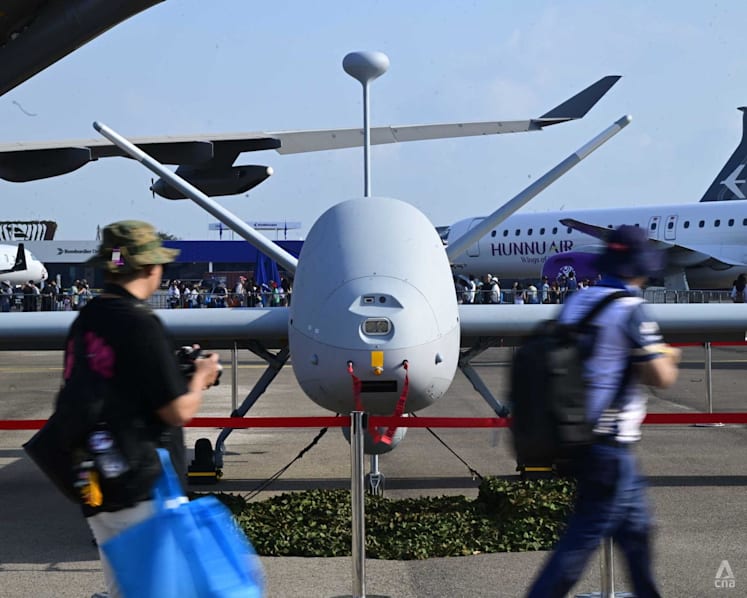
An RSAF Hermes 900 unmanned aerial vehicle on display at the 10th edition of the Singapore Airshow, on Jan 31, 2026. (Photo: CNA/Wallace Woon)

This audio is generated by an AI tool.




SINGAPORE: The Singapore Airshow 2026, open to the public from Saturday (Feb 7), will be the first public display of one of the Singapore Armed Forces (SAF)’s latest assets: the Hermes 900 (H900) Unmanned Aerial Vehicle (UAV) that will replace the older Hermes 450 (H450) fleet.
This comes at a time when drones – the term often used interchangeably with UAVs – have become firmly established on modern battlefields.
In Singapore, there has been a concerted drive to incorporate lessons from recent conflicts such as the ongoing Russia-Ukraine war. Ukraine reportedly deploys a staggering 9,000 drones daily for reconnaissance or strategic strikes against a more powerful invader.
The use of military drones is not new to Singapore. The SAF first employed them in 1978 and has greatly expanded its assets and capabilities since.





Given the range of UAVs the SAF already has in its arsenal, what more do the H900s bring to the table?
MAINTAINING A VARIED TOOLKIT
The first thing to understand is that drones are simply unmanned assets that can function without a human operator on board and aerial drones, in this case, can fulfil a variety of battlefield roles.
High-end UAVs like General Atomics’ MQ-9A Reaper can perform complex tasks such as Intelligence, Surveillance, Target Acquisition and Reconnaissance (ISTAR) and strike missions – roles traditionally fulfilled by manned systems.
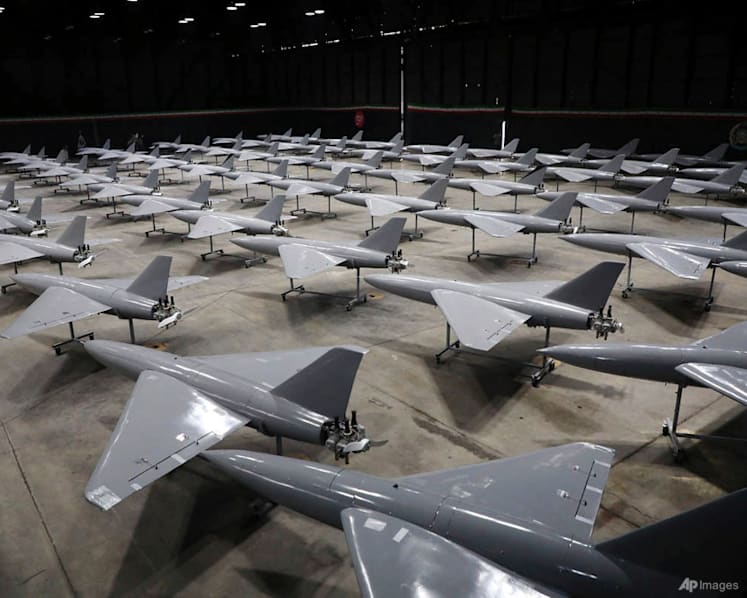
On the other end of the spectrum are cheap “kamikaze” drones such as the Iranian-made Shahed-136, which has been extensively employed by Russia in the war in Ukraine. While the latter are qualitatively inferior, they can be produced at a fraction of the cost, or even with 3D printers – an attractive prospect for actors looking to obtain a battlefield edge on a shoestring budget.
The flexibility that UAVs possess means that there is no “one-size-fits-all” drone strategy. Depending on how they are used, UAVs could be seen as substitutes for their manned counterparts, more efficient alternatives to existing hardware, or even as munition themselves.
For instance, the addition of cheap First Person View drones to the average Ukrainian infantry section’s arsenal has allowed them to hunt and destroy Russian tanks from greater distances, providing a safer alternative to typical options such as shoulder-launched projectile systems, which require the operator to be in the line of fire.
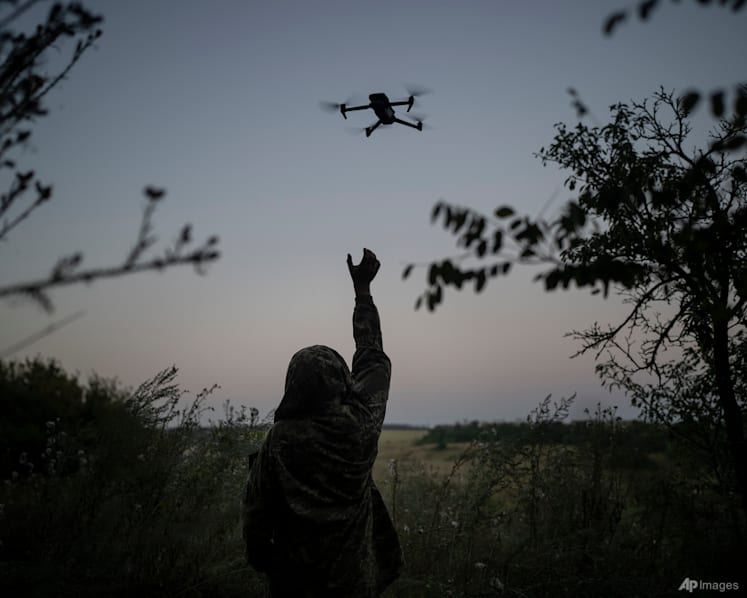
UAVs really come into their own in the air littoral, the low-altitude airspace generally below 10,000 feet that has emerged as the most highly contested battlespace in modern warfare.
This layer of the air domain is typically challenging for high-end aircraft to operate within, given the larger degree of airspace congestion due to civilian air traffic, and greater exposure to anti-air options. The potential risks are more palatable with cheaper UAVs which can be operated without placing a pilot directly in harm’s way.
Just like a mechanic’s toolbox, a drone arsenal must have a wide range of tools for all types of jobs.
WHY THE HERMES 900?
The H900 has its place in the SAF’s toolkit.
Like the H450 it replaces, the H900 is capable of operating at high altitudes above the air littoral and is more of a high-end surveillance option, with its primary role envisioned as one of intelligence gathering and enhancing situational awareness to aid in the SAF’s mission planning.
At the same time however, the H900 is not a like-for-like replacement. For one, it is significantly larger, weighing twice as much (1,000kg), and has a larger wingspan and overall length. This means a trade-off in terms of manoeuvrability.
However, the larger size means it can carry heavier payloads and travel longer distances. More on-board space also allows for electronics and sensors to be installed, supercharging its combat potential.
This enables the H900 to fill an important gap in Singapore’s wider surveillance network, so it can maintain oversight of Singapore’s waters further out from shore. A closer pulse on critical sea lines of communication such as the Malacca Strait and the South China Sea, is integral to Singapore’s security and survival.
It is worth noting that Singapore is not the only country to acquire the H900 – Switzerland, Canada, Brazil, Philippines and Thailand have likewise chosen to incorporate it for both military and civil usage. This supports its credibility and value in a variety of operational scenarios.
This would enhance the SAF’s potential interoperability with like-minded partners in multilateral settings such as the Malacca Straits Patrol and Exercise Rim of the Pacific. Analogous to the use of Android and Apple devices, belonging to the same ecosystem allows for more seamless integration during deployments.

THE “SAF 2040” VISION
Acquiring the H900 is just one part of the SAF’s broader modernisation plans.
Notably, while UAVs are traditionally associated with the Republic of Singapore Air Force (RSAF), the next-generation plans for SAF 2040 also intentionally bring drones into the Singapore Army and the Republic of Singapore Navy’s (RSN) warfighting setup. One main objective is to improve cross-service integration.
In this vein, a range of UAV assets such as the RSAF’s Heron 1 and the Army’s VELOCE-15 mini-UAV have featured together in earlier iterations of Exercise Wallaby and Exercise Forging Sabre(XFS), two of the SAF’s largest overseas joint drills meant to refine its warfighting doctrine and strengthen inter-service coordination. Those trials have continued into last year’s iteration of XFS, alongside other UAVs under experimentation, such as the Skydio X10, Neros Archer, and Ascent Spirit UAVs.
The acquisition of the H900 is thus more than just adding another string on the bow – it improves what is an already wide-ranging UAV toolkit. More importantly, in line with the SAF 2040 transformation journey, its addition enhances the SAF’s overall ability to respond to a wider range of security challenges in both war and peace, allowing it to continue to fulfil its mission in a more turbulent world.
Thomas Lim is an Associate Research Fellow and Ian Li is a Research Fellow, both with the Military Studies Programme at the S Rajaratnam School of International Studies (RSIS).




