IN FOCUS: Slowing adoption, limited capacity - inside Singapore’s animal rescue groups
Is goodwill enough to keep animal welfare groups running in the face of slowing adoption and rising costs?
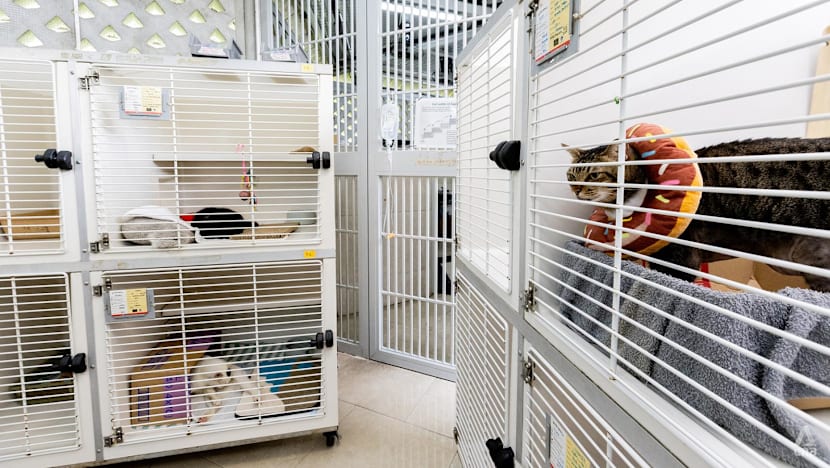
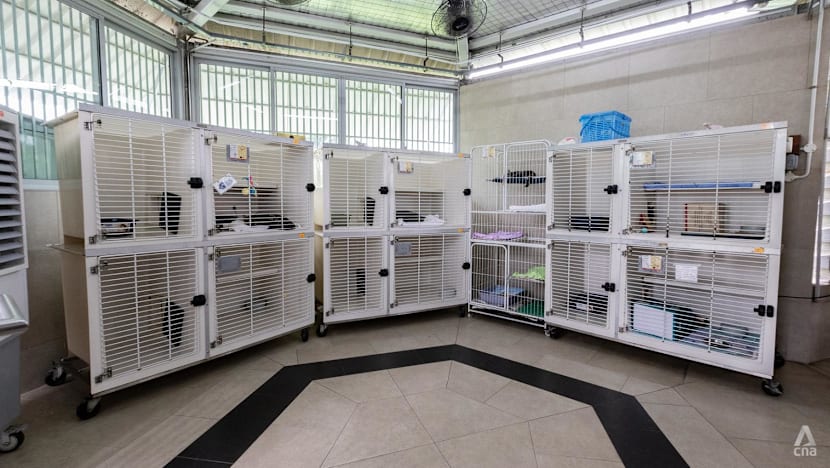
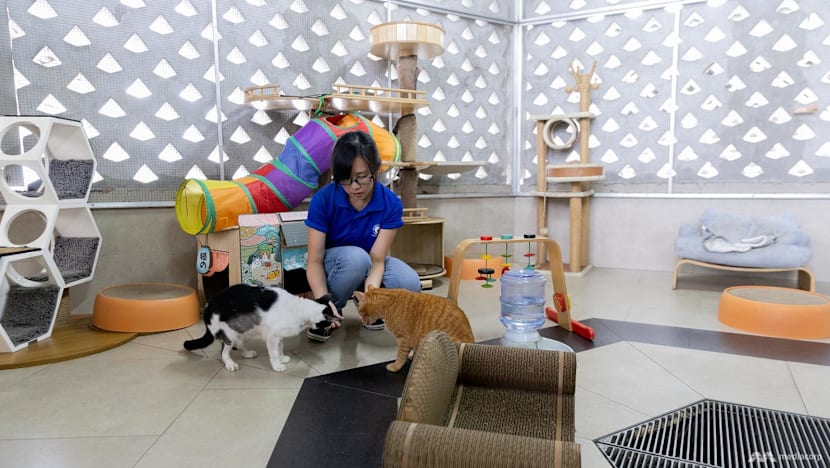
Cats in their enclosure at the Society for the Prevention of Cruelty to Animals on Jan 15, 2026. (Photo: CNA/Ili Mansor)

This audio is generated by an AI tool.


SINGAPORE: At first glance, empty cages at the Society for the Prevention of Cruelty to Animals (SPCA) may seem like good news. Their occupants may have gone on to their forever homes.
But they may also point to a less visible reality – that more animals are being housed elsewhere in the facility, requiring intensive or ongoing treatment.
Some of these facilities operate at near-full capacity most days, providing round-the-clock care for animals with nowhere else to go.
SPCA is one of the many animal welfare groups that form the backbone of Singapore’s animal rescue system.





The government, through the Animal and Veterinary Service (AVS) under the National Parks Board (NParks), sets policies, regulates animal management, and enforces welfare laws. But some of the day-to-day rescues fall on a network of animal welfare groups, shelters, fosterers, and community caregivers.
These organisations and individuals respond to abandoned pets, injured or displaced wildlife, running predominantly on philanthropy and volunteer goodwill.
Some have run into a hard time.
The strain on shelters has been thrust into the spotlight following the recent news of Animal Lovers League, one of the largest and longest-serving shelters in Singapore.
Last year, the beleaguered shelter lost its tenancy at The Animal Lodge in Sungei Tengah following rental arrears and allegations of neglect.
Its struggles have renewed questions about the sustainability of Singapore’s animal rescue system – and how it depends on charities and individuals to absorb growing demand.
The authorities are aware of around 15 animal shelters in Singapore, 13 of which are at The Animal Lodge, a facility in Sungei Tengah that houses both shelters and commercial businesses such as pet breeders and boarders.

RESOURCE STRAIN
Several groups pointed to broader pressures on the local rescue ecosystem, such as rising animal intake and funding challenges faced by charities.
At the Animal Concerns Research and Education Society (ACRES), now marking its 25th year as a wildlife sanctuary, staff exhaustion led to the end of its round-the-clock rescue hotline in 2024 after around 15 years.
"I felt like it's not sustainable. There was a lot of human fatigue, leading to people leaving ACRES," said Mr Kalai Vanan Balakrishnan, the CEO of ACRES, a wildlife advocacy group and registered charity.
Before stopping the hotline between 1am and 7am, ACRES typically received around a handful of calls a week during that period.
Despite the shorter operating hours, demand for help has continued to rise.
In 2023, the organisation received 13,407 calls. That number rose to 15,203 in 2024 and reached a record high of 16,459 last year.
The number of animals rescued has climbed in tandem – from 2,813 in 2023, to 3,539 in 2024, and 3,763 last year.
Many calls do not result in rescues. Some animals disappear by the time ACRES arrives and others may not require intervention, but each call consumes manpower and time.
Dependent on donations, ACRES needs about S$150,000 (US$118,000) a month to cover operating costs, including salaries and animal care. At the same time, the cost of animal feed and the needs of its rescues grow.
Its annual financial statements show an increase in spending over the last three years – from S$1.18 million in the financial year of 2022 to 2023, to S$2.05 million last financial year – although income has kept pace.
The non-governmental organisation's (NGO) single biggest expenditure is on salaries, Mr Kalai Vanan said. ACRES has about 30 full-time employees.
"When I joined ACRES, I was bringing back S$900 a month and that was doing long shifts," he said. "That was 16 years ago, but you know the same thing now is impossible. Nobody will work for that money.
"So over the years, our pay scale-up definitely improved, and that doesn't mean that it's more luxurious. It just has to be done, if not you can't do this work."
While NGOs from other countries can rely solely on volunteers, ACRES cannot.
"In Singapore, it doesn't work. People are so busy they have full-time jobs … we definitely need to have staff," said the ACRES stalwart, adding that the organisation is exploring other perks to draw workers.
Salaries and bonuses have increased from about S$880,000 in 2024 to nearly S$1.16 million in 2025. The amount spent on staff development and training has also increased by more than six times in the same time period.
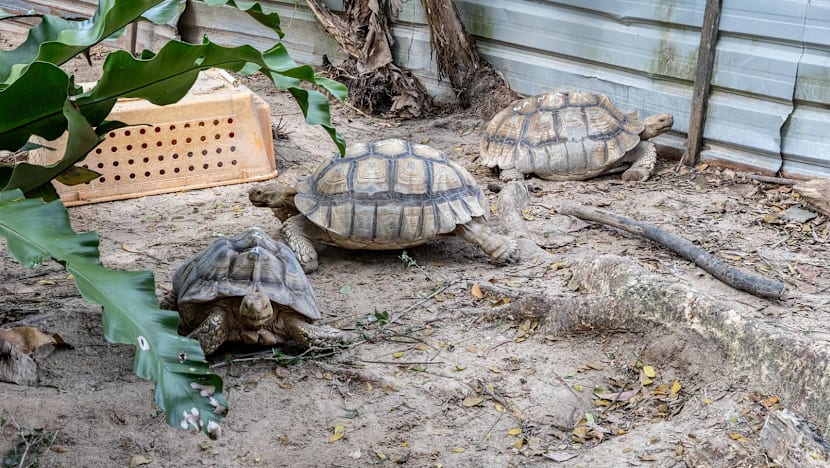
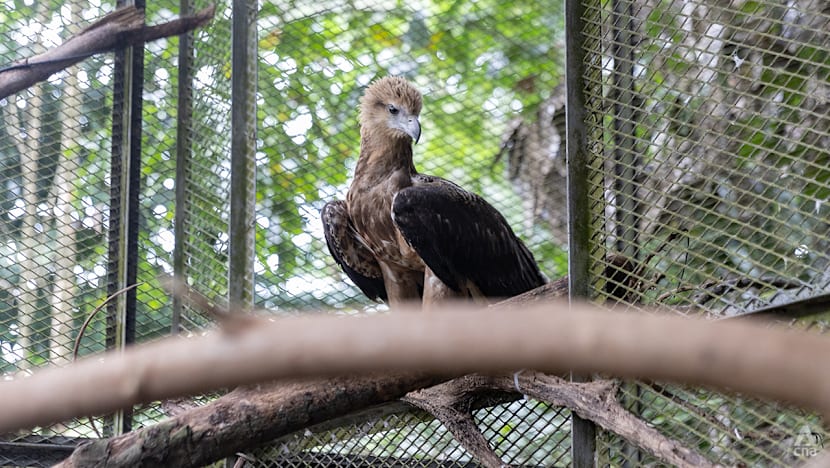
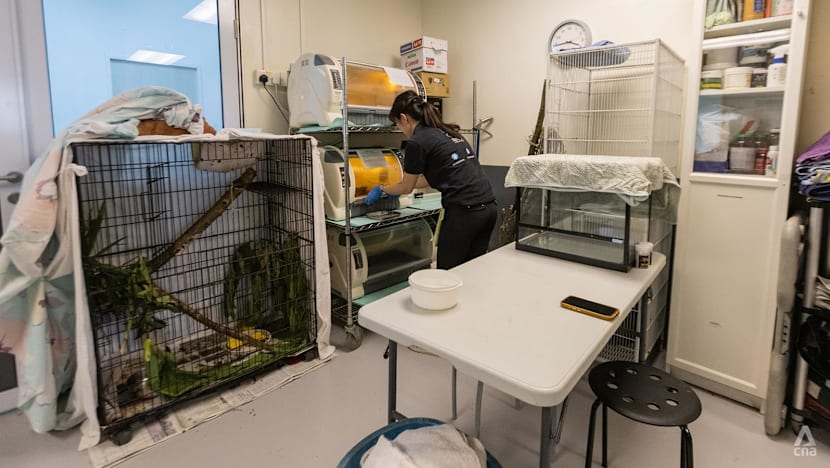
Long-term rescues at ACRES continue to draw on the organisation’s resources. Unlike native rescues – animals that are treated before being released into the wild – around 130 exotic animals have little prospect of leaving.
They cannot be released locally, leaving repatriation to their native countries as the only option. But that path is fraught with challenges, from complex paperwork to high costs.
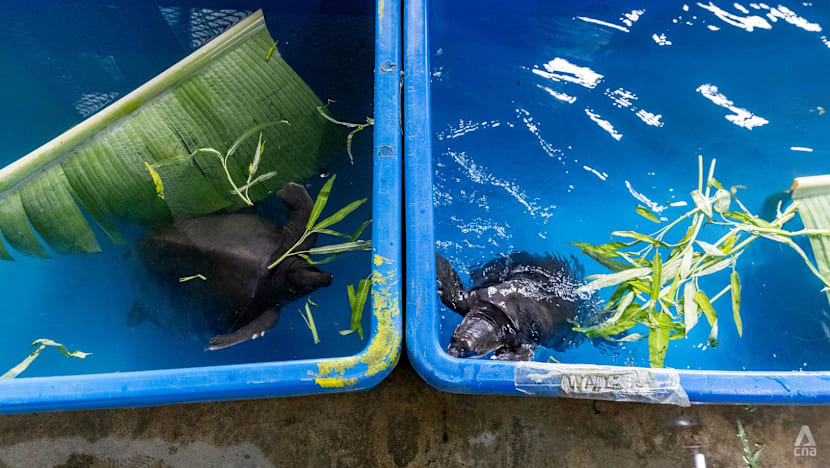
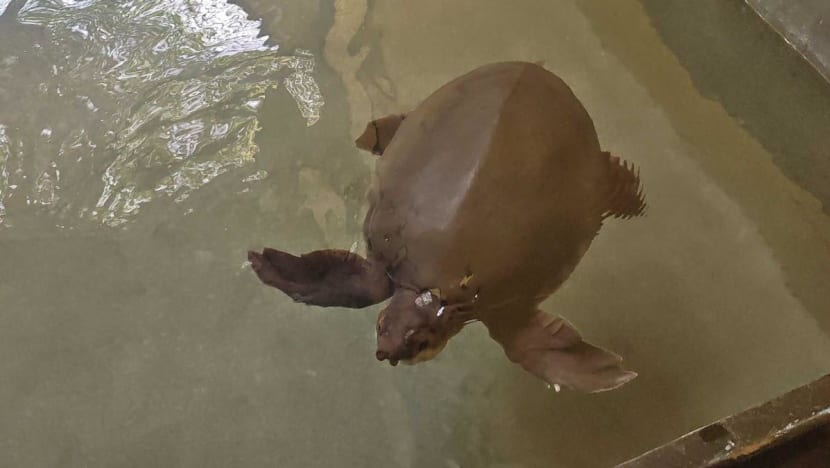
For example, the organisation is looking to repatriate 30 endangered pig-nosed turtles to Indonesia. Each requires its own pond, and most are housed individually in tubs at ACRES’ quarantine area, while the remaining are in other parts of the facility. The earliest of these turtles arrived at ACRES in 2010.
Mr Kalai Vanan said Indonesia has issued a letter of support, but genetic testing that will cost about S$12,000 is required. The amount does not include the cost of transporting the animals back to Indonesia.
The turtles’ housing situation underscores the urgent need for more space, which ACRES is now working to address.
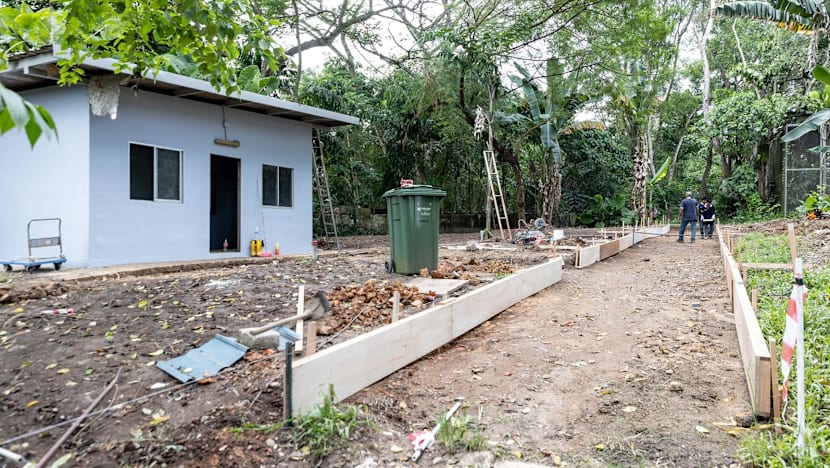
Its rescue centre at 91 Jalan Lekar was given approval last year to expand to its backyard, an area three times the size of its current footprint. This area had been off-limits after the land had been poisoned by a contractor more than a decade ago.
Work has started to clear the vegetation, but more needs to be done before ACRES can fully occupy it.
For its non-native species, ACRES was full “a long time ago”, Mr Kalai Vanan told CNA. It has been improvising and eking out space where it can.
“We improvise, and then we try to make more space ... but it is not good. We've been doing that for a long time. We do it when we can, we do it when we feel like it will not be too detrimental to the animal's welfare, but it's not something we want to keep doing.
"At the end of the day, we don't want any of the animals here. But they're here because there is nowhere else to go. They're here because if anywhere else, they may have been put down.
"As an NGO, we often feel obliged to focus on the quantity of animals rescued, but what's more important is the quality of care we can provide per animal."
The organisation hopes to raise S$400,000 at its annual gala on May 16. About half of the funds will go towards making the backyard space operational, with the remainder going towards other costs.
SLOWING ADOPTIONS
At the SPCA, adoptions have dropped by about 75 per cent, from 979 in 2019 to about 250 in 2025.
With fewer animals being adopted, the organisation is constrained in the number it can take in, a spokesperson told CNA.
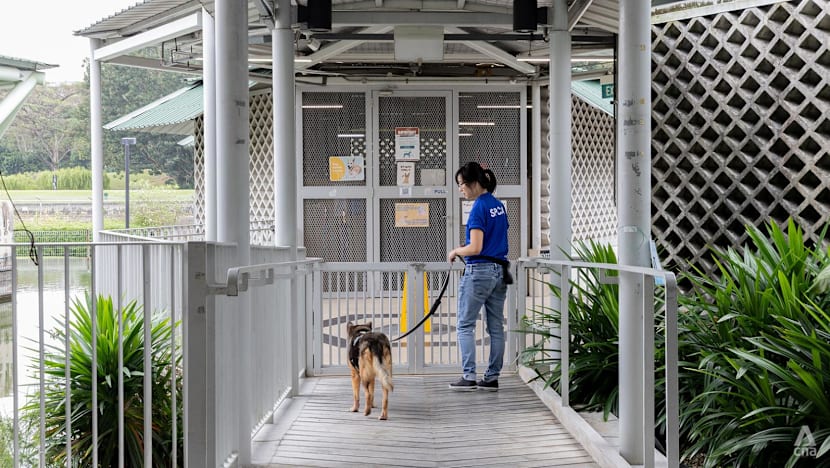
Its shelter at Sungei Tengah can accommodate between 150 and 200 animals at any given time. However, caring for animals goes beyond providing physical space – it also requires time, attention and specialised care.
"We have to prioritise emergency rescues where the animal may be in a life-threatening situation. This also means that the animals we see have more complex needs or are geriatric, requiring more attention and closer monitoring," SPCA added.
The proportion of such animals has increased in recent years, requiring the SPCA to devote more resources to their care.
"Not many adopters are able or willing to invest in meeting these heightened needs. In most cases, this is an informed and responsible decision that we value deeply. However, the upshot is that the adoption rates have continued to decline," SPCA said.
Daily food provision for shelter animals is one of the two substantial expenditures. The other is clinic services, which are heavily subsidised for clients on financial assistance, meaning a significant portion of the costs is borne by SPCA. It runs Singapore's only non-profit community animal clinic.
Financial records show that SPCA's spending has increased over the last three financial years from about S$4 million in the financial year of 2022 to 2023, to more than S$4.5 million last financial year.
Over the same period, income fell from around S$7.2 million to about S$5.6 million.
The largest spend was on salaries and bonuses, but financial records also show that expenditure on animal feed has skyrocketed, from about S$31,000 in 2024 to more than S$130,000 in 2025.
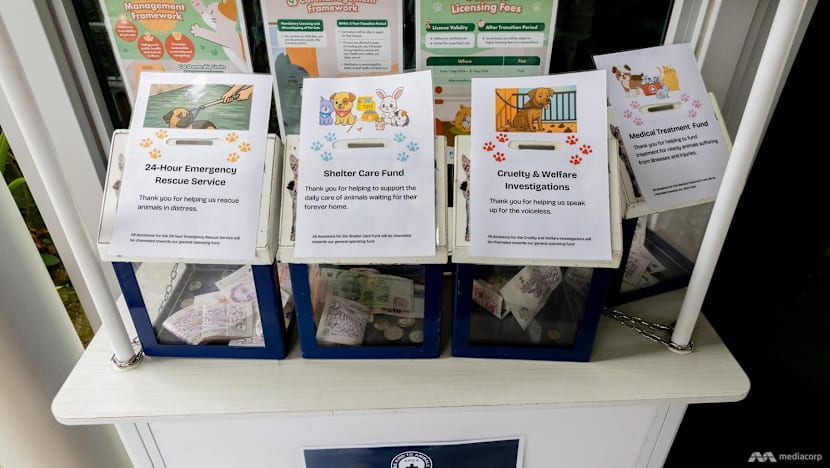
Like many animal welfare groups, SPCA relies on donations. Its funding comes from a mix of planned fundraising initiatives, ad hoc donations and bequests.
"We rely on the goodwill of supporters, and any shifts in the broader ecosystem (for example, political or economic) may change how they prioritise their donations," SPCA said.
"Hence, we closely monitor donations and act promptly when there is a shortfall or if one is imminent. For example, we would step up our campaigning and fundraising efforts to mitigate the shortfall."
RISING COSTS
One animal welfare group that has seen a sharp increase in veterinary costs is Action for Singapore Dogs (ASD), which was established in 2000 to improve the welfare of abandoned dogs.
Its president Ricky Yeo said veterinary fees have risen by more than 30 per cent since 2022. This component accounted for more than 50 per cent of ASD’s expenditure in the last financial year, he added.
Mr Yeo said veterinary fees were about S$411,000, out of a total spending of around S$777,000 that year.
“To make things worse, fewer people are adopting, so all the animals are stuck. As they get stuck, they get older, then the maintenance of these animals becomes higher,” said Mr Yeo, adding that only 65 to 67 dogs were adopted last year, down from an average of 100 to 120 in previous years.
“You can see how all these pieces, when put together, it's very difficult to keep things going.”
As a result, ASD plans to give up one of the five units it currently rents at The Animal Lodge.
The organisation intends to vacate the unit by July, which will require it to rehome about 12 dogs through adoption or foster placement. ASD currently houses about 76 dogs in its shelter and another 30 to 40 dogs in foster homes.
Ideally, it aims to care for no more than 60 dogs across its four remaining units, given the space constraints.
At the same time, the organisation has set a S$5,000 cap per dog on veterinary bills to manage costs. If the treatment exceeds the threshold, the veterinarian has to inform ASD, which will then assess how to “optimise the treatment”.
Dr Anna Wong, AVS' group director of Community Animal Management, said that animal shelters play a key role in supporting the animal rehoming landscape.
"They typically rely on public donations and/or volunteers for their operations and are responsible for the health and welfare of animals under their care.
"As such, shelters are strongly encouraged to put in place animal health management programmes and establish protocols to avoid exceeding their capacity of care, such as conducting regular assessments of their capacity and accommodation capabilities," she added.
The Animal Lodge was constructed in 2017 to provide a site for animal establishments affected by land leases expiring at Loyang, Seletar and Lim Chu Kang.
AVS oversees the management of the facility and provides non-commercial tenants with lower rental rates and waived service and conservancy charges. The authority also gathers feedback from shelters and implements supportive measures.
HUMAN BEHAVIOUR
Cost pressures are only half the problem.
While shelters support the rescue system by taking animals off the streets, the Cat Welfare Society (CWS), which has operated without a shelter since 1999, focuses on addressing the problem upstream.
It tackles resource strain by seeking to reduce the number of cats competing for limited care.
In addition to its pet cat sterilisation programme that it offers to financially disadvantaged families, CWS works with the government to run the trap-neuter-return-manage programme to control Singapore’s community cat population.
"How much you have per animal is donations over the number of cats. It's a basic fraction. What we're trying to do is increase the numerator, decrease the denominator," CWS president Thenuga Vijakumar said.
"That is our life's work. We want to expand the amount of resources available to the people who are helping cats."
Where mass culling was once used to control cat populations, sterilisation now prevents further breeding.
AVS collaborates with partners on programmes to trap, neuter, rehome or release and manage free-roaming dogs and community cats, also known as TNRM programmes.
It provides funding support for the capture, sterilisation, microchipping and pre- and post-sterilisation boarding for these dogs and cats.
"The sterilised dogs and cats are rehomed or released at suitable locations where they can continue to be responsibly cared for by community caregivers," Dr Wong said.
CWS is AVS’ lead partner for the cat TNRM programme, which was launched under the cat management framework on Sep 1, 2024. SPCA is AVS' lead partner for the dog TNRM programme.
More than 4,400 dogs and close to 3,000 cats have been enrolled under the TNRM programme as of January.
But CWS has found its work thwarted by one common factor – human behaviour.
Even without a shelter, the organisation receives four to five emails a week from owners seeking to give up their cats.
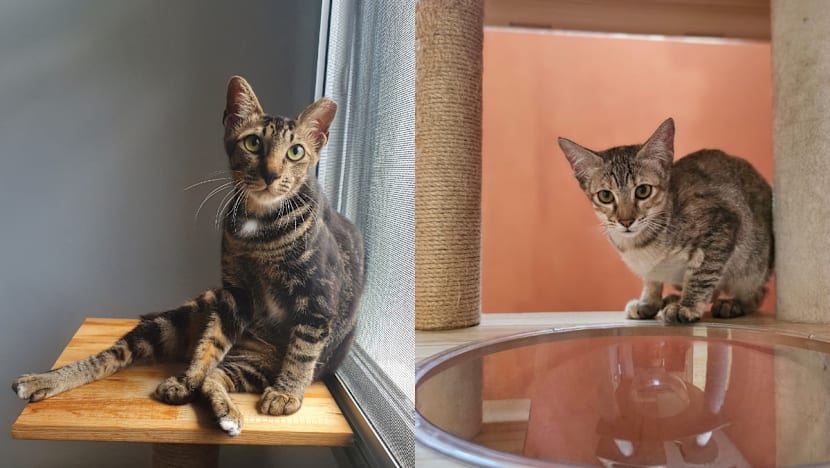
"It's remarkable how many people don't understand responsibility, don't understand what the meaning of a dependent is," Ms Thenuga said.
Abandoned cats destabilise the population of community cats, CWS noted in a 2024 report.
These cats might require treatment, fostering or rehabilitation before they can be rehomed, placing further strain on the system.
"Unless we tackle abandonment, you can't actually stop the input into the rescue system," Ms Thenuga said.
She noted that abandonment usually stems from a confluence of factors, such as overpopulation within a single household.
Rescue cats sometimes end up with fosterers like 39-year-old Putera Nurr Hakeem Mubarak, who has fostered 20 cats over the past four years.
Foster cats typically stay with Mr Hakeem for between three weeks and several months, a commitment that takes “a lot of time, and money and sometimes sanity”, he joked.
Some cats are easier to handle, but others need more effort to socialise or trips to the vet – costs that Mr Hakeem bears. While medical bills make up the largest expense, daily spending on wet food, kibble and litter also adds up.
“We sometimes get enquiries, but people are shopping around. Like my current foster had three potential enquires at an adoption drive, then they all dropped out and now he is still stuck,” Mr Hakeem said.
AVS recognises that fosterers play an important role in cat management by providing safe and temporary homes, said Dr Wong.
She added that AVS is developing guidelines to recognise cat fosterers together with the Housing and Development Board and partners for the cat TNRM programme.
It is looking into how responsible fosterers that meet guidelines can be allowed to keep more cats, Dr Wong said, adding that more details will be shared when ready.
Listen:
POLICY SUGGESTIONS
Ms Thenuga thinks that mandatory cat sterilisation could help reduce the number that are eventually abandoned.
“If sterilisation is mandated, you'd have a control on numbers – not 100 per cent control – but even if you can assert let's say 50 per cent control, you're removing the 50 per cent ebb and flow issue," Ms Thenuga said.
"If it had been mandated two years ago, we would actually be seeing and enjoying the effects of fewer cats already. It's very fast," she added, referring to the cat management framework, a national initiative to mandate microchipping and licensing for pet cats, which started in September 2024.
Under the framework, people are encouraged to sterilise their cats, but not mandated to do so. The same framework has overturned a longstanding ban against keeping cats in flats, now allowing flat owners to keep up to two.
Those who had more than two cats before the framework was introduced can continue to keep existing cats if they apply for licences during a transition period from Sep 1, 2024 to Aug 31, 2026.
Ms Thenuga believes that the limit on the number of cats has dampened adoption rates.
“Adoptions go in two ways basically. You increase the pool by finding more human beings, but you also deepen the pool.
“Sometimes an adopter with two cats can actually afford the third cat and the fourth cat. Sometimes they have two elderly cats, they want a pair of kittens, and that instantly doubles their capacity. They are able to do it.
“So you can't just hope to God that in like two years, you're suddenly going to get such a wide pool of people (to adopt cats),” she said, adding that people who adopted more cats are worried that they would have to return them.
Mr Hakeem has noticed adoption slowing for his foster cats. At adoption drives, those who attend frequently cite the cap as a reason for not adopting, he said.
“We need a way to increase the number of responsible adopters and the cats they can have. Otherwise, we as fosterers will be holding onto our rescues for longer and spend more, and then it gets harder for us to keep helping as well.”
He also stressed the need for stronger population control through sterilisation and tougher penalties against backyard breeders.
“If there are always cats, then rescuers and fosterers can never stop,” Mr Hakeem said.
PARTNERSHIPS
SPCA, ACRES, ASD and CWS are registered charities that fall under the purview of the Office of the Commissioner of Charities, which is under the Ministry of Culture, Community and Youth (MCCY).
The agency regulates and oversees all registered charities in Singapore to ensure compliance, accountability and public trust, while supporting a well-governed and sustainable charity sector, it said in response to CNA’s queries.
Asked about the support the government provides to help charities manage operational costs, the agency said all registered charities can apply for the Charities Capability Fund to enhance the productivity, operational efficiency, governance and management capacities of their organisations.
“The Office of the Commissioner of Charities has also partnered with various organisations to set up shared services to strengthen charities’ regulatory compliance and efficiency of their back-end operations,” it said.
“They provide guidance in areas like regulatory submission, governance-related matters, digitalisation etc to charities.”
The situation with animal welfare groups is on the government’s radar.
Earlier this month, Minister of State for National Development Alvin Tan said one of the priorities this year would be for the government to strengthen its partnership with the groups.
"We have already been working closely with them on many fronts, including rehoming free-roaming dogs and community cats through our trap-neuter-release-manage programme, and Project ADORE to rehome Singapore Specials in HDB flats," he wrote on Facebook.
AVS' Dr Wong said that more than 2,600 dogs have been rehomed under Project ADORE as of January this year in partnership with animal welfare groups.
Mr Tan acknowledged the work done by animal welfare groups, saying it was "not easy".
"That’s why my AVS colleagues have been supporting them along their journey. AVS has been improving infrastructure and expanding recreational facilities at The Animal Lodge, and supporting their adoption drives and outreach."
To help animal welfare groups, AVS organises community events and adoption drives. Its Pets' Day Out event serves as a regular platform that brings together animal welfare groups, pet businesses, veterinarians, and pet enthusiasts.
"AVS encourages our animal group partners to tap these platforms and provides the necessary logistical support, such as cat playpens, and picket fences for the setup of adoption spaces," Dr Wong said.
AVS also manages the Centre for Animal Rehabilitation, which was opened in 2022 to help free-roaming dogs adapt to domestic living.
Mr Tan said that the government would press on with key initiatives, such as reviewing the Animals and Birds Act, tabling a Bill to raise standards and support the veterinary sector, and continuing work with the community.
"We may not be perfect, but we all want the best for our animals. That means being kind, understanding and accommodating," he added.
LOWERING FIXED COSTS
While animal welfare groups are used to the struggle, there could be ways to lighten the burden, they said.
Mr Yeo suggested the government form a centre or agency to act as a “safety net” for animal welfare groups, and this overseeing agency can disburse funds.
Acknowledging that the involvement of such an agency may come with rules, Mr Yeo said these should be discussed with animal welfare groups as part of a “cooperative effort”.
“If you look at it, all registered charities are actually doing the work that nobody else wants to do,” Mr Yeo pointed out. “There is no physical benefit. It’s not like a company where you can profit from it.”
To help with hefty veterinary costs, Mr Yeo also suggested a subsidised vet clinic that groups can turn to.
For ACRES, it called for help in the “small things”, like subsidised parking for its rescue van, staggered rental rates for its expanded area, or lowered compliance costs for being certified to handle wildlife.
“I think what we don’t want is control over how we do things or what we do, because I think a lot of NGOs on the whole are doing great … but what we need is sometimes help in these external areas,” said Mr Kalai Vanan.
CWS’ Ms Thenuga said the focus should be on identifying predictable monthly costs.
But beyond financial costs, staff and volunteers face physical and emotional fatigue, SPCA said.
"It is hard labour to keep all our animals clean, fed, and medicated, or to stake out a location under hot sun (or in the wee hours) to maximise the chances of a successful rescue," it added.
"But more than that, the emotional toll is often understated. It is not easy to witness animals suffering, to watch them die from poor health or inflicted harm despite exhausting all avenues of treatment, or to see pets being given up because their guardian’s priorities have changed – and it never gets easier."