Singapore GDP resilient in near term, boosted by AI-driven tech demand: MAS
Singapore’s growth outlook is increasingly tied to the global AI boom, with tech sectors set to drive momentum.
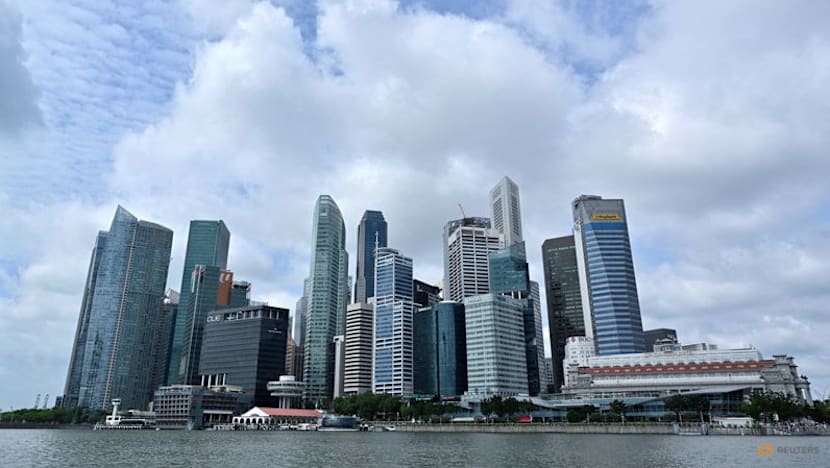
A view of the skyline in Singapore, on Jan 27, 2023. (Photo: REUTERS/Caroline Chia)

This audio is generated by an AI tool.


SINGAPORE: Singapore’s economy is expected to remain resilient in the near term, driven by firm demand in tech-related sectors and continued growth in construction and financial services.
The Monetary Authority of Singapore (MAS) said in its latest quarterly macroeconomic review on Thursday (Jan 29) that a sustained upcycle in artificial intelligence-driven information technology is supporting economic momentum.
An AI investment boom in the United States has boosted high-tech production and export activity in economies linked to the electronics supply chain, like Singapore, the central bank said.
Given this global tailwind, tech manufacturing and wholesale trade of electronics and IT equipment are expected to continue outperforming.
Non-tech industries such as construction and financial services are also likely to post firm growth, aided by lending activity and a continuous pipeline of public and private projects. The output gap is projected to stay positive in 2026, though narrower than the year before.
Gross domestic product growth is expected to moderate from 2025, when the economy grew by 4.8 per cent, MAS said.
Globally, growth is expected to ease modestly in 2026, with trade policy uncertainty receding for now and international monetary and fiscal policies likely to remain supportive.
In his New Year message, Prime Minister Lawrence Wong said Singapore’s 2025 economic growth was better than expected, given fractured trade and geopolitical tensions.
He had warned, however, that "sustaining this pace of growth will be challenging", and that Singapore cannot do "more of the same" to remain competitive.
GLOBAL AI BOOM
The sustainability of the global AI boom will be a key factor determining Singapore’s GDP growth in 2026, MAS said.
While the country does not produce graphics processing units or high-bandwidth memory chips used in AI workloads, it is integrated into the upstream AI ecosystem.
For instance, Singapore produces memory chips for storing datasets for AI models, and other servers, components and networking equipment that support AI workloads.
MAS said Singapore is poised to “deepen its linkages” in the AI global value chain. It cited American memory chip maker Micron Technology, which recently broke ground on an advanced wafer fabrication facility.
More broadly, technology-related segments such as electronics, machinery and systems manufacturing could contribute a greater share to GDP growth this year.
For example, Singapore produces semiconductors essential for electric vehicles and industrial systems. This could receive a boost as electrification and autonomous vehicles have trended globally.
At the same time, global technology companies have announced investment plans for data centres and R&D facilities in ASEAN to accelerate AI adoption, which should benefit the IT and information services segment, MAS said.


RISKS AND INFLATION OUTLOOK
MAS cautioned that downside risks remain. This includes doubts about AI’s ability to deliver on anticipated productivity improvement, which could trigger a pullback in AI capital expenditure.
External shocks such as geopolitical conflicts or renewed tariff tensions could also affect global investor sentiment and disrupt the AI investment cycle.
“Escalating geopolitical conflict, additional trade frictions or a sharp market re-pricing around AI’s potential could derail growth and weigh on inflation,” MAS said.
On Thursday, MAS raised its core inflation and headline inflation forecasts for 2026 to 1 to 2 per cent – up from an earlier range of 0.5 per cent to 1.5 per cent.
Core inflation, which excludes accommodation and private road transport, rose to around 1 per cent towards the end of 2025.
The rise reflected increases in the costs of private health insurance and holiday expenses, MAS said. Inflation of other goods and services also showed signs of picking up as firms passed on higher business costs.
Prices of non-oil exports have also started to increase, while nominal wage growth edged higher.
In 2026, core consumer price increases are expected to rise from the low levels seen in 2025, but continue to run at a slightly below-trend pace. In 2025, Singapore's core inflation averaged 0.7 per cent, down from 2.8 per cent the year before.
With growth expected to remain well-supported in 2026, MAS said it will maintain the prevailing rate of appreciation of the Singapore dollar nominal effective exchange rate (S$NEER) policy band.
The central bank manages monetary policy by letting the Singapore dollar rise or fall against the currencies of its main trading partners within an undisclosed band. Other countries typically manage monetary policy through interest rates.
Singapore can change the slope, mid-point and width of the band to adjust policy.
MAS said the width and level at which the band is centred will not be changed.
“Given the uncertainties around the outlook, MAS will continue to monitor global and domestic developments closely and stands ready to respond to risks to medium-term price stability,” MAS said.