Asia's EVolution: Indonesia’s nickel powers global electric vehicle boom but at what cost to the country?
As cities with high EV adoption cut emissions, the villages supplying the batteries bear the burden of environmental damage. CNA travels to Indonesia’s North Maluku province to find out more in this latest part of a series on EVs in Asia.
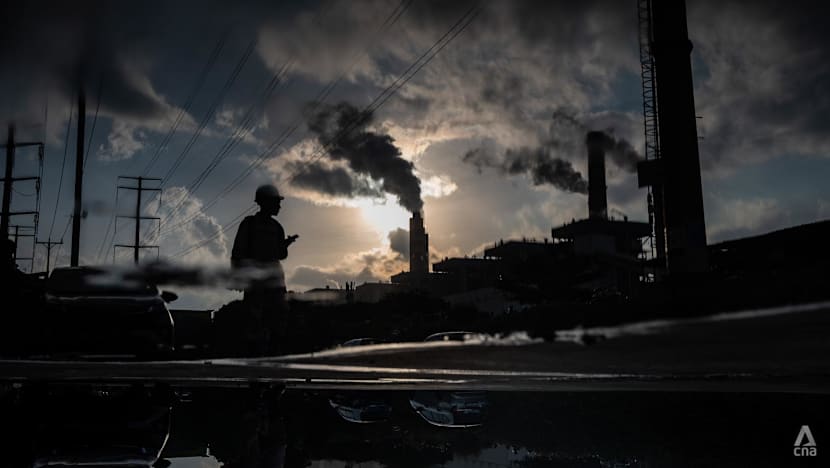
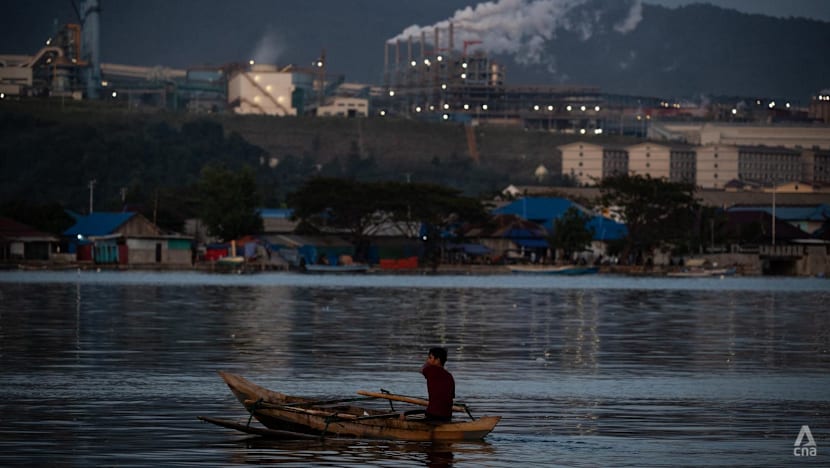
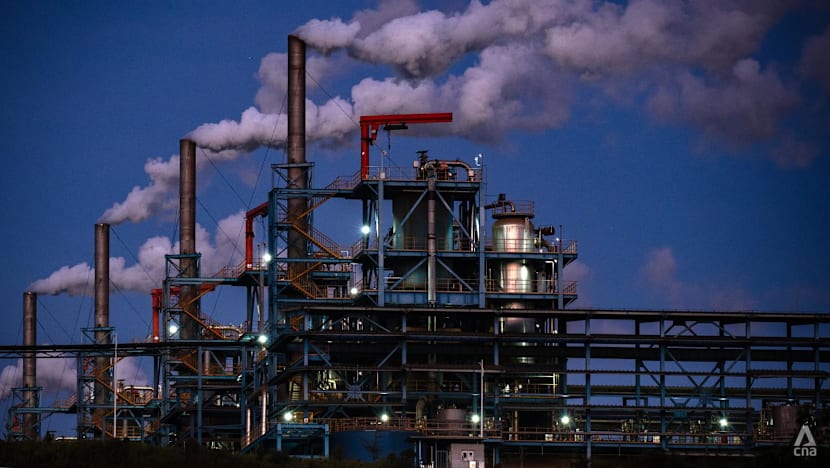
A reflection of a worker walking past a nickel refinery in Weda Bay, North Maluku, Indonesia. (Photo: CNA/Wisnu Agung Prasetyo)

This audio is generated by an AI tool.


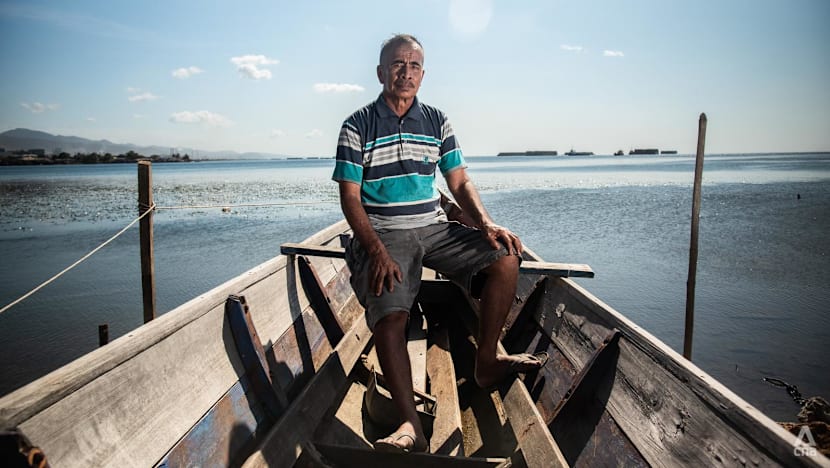
WEDA BAY, North Maluku: After decades of working on foreign fishing vessels, Abdullah Ambar returned home 10 years ago to Lelilef Sawai, a village in the remote Indonesian island of Halmahera, North Maluku hoping to settle into a quiet life.
He built a small fleet of three fishing boats, each capable of hauling up to half a tonne of skipjack tuna and mackerel for every 12-hour trip out at sea.
“You can find fish just 10m from shore,” said the 64-year-old. “If people were hungry, they could take a small canoe, go out for an hour or two, come back home, and eat. But now?”
That dream did not last.






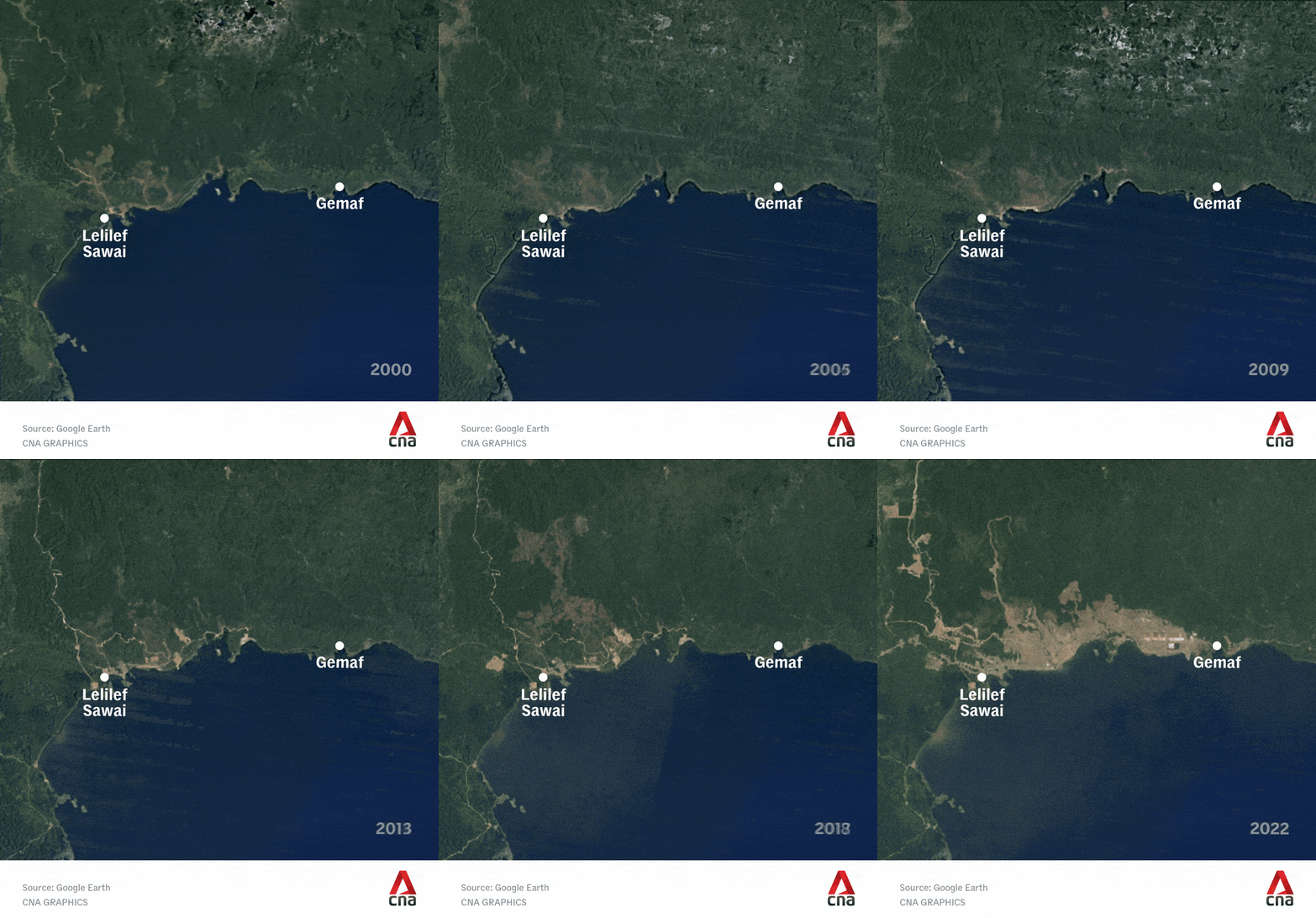
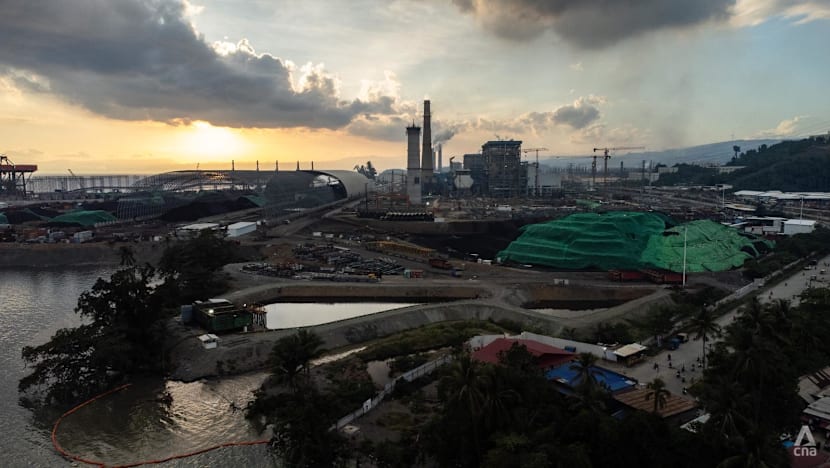
In 2018, two years after Abdullah returned home, a nickel processing facility on the other side of Weda Bay began operating, powered by a six gigawatt coal-fired power plant nearby.
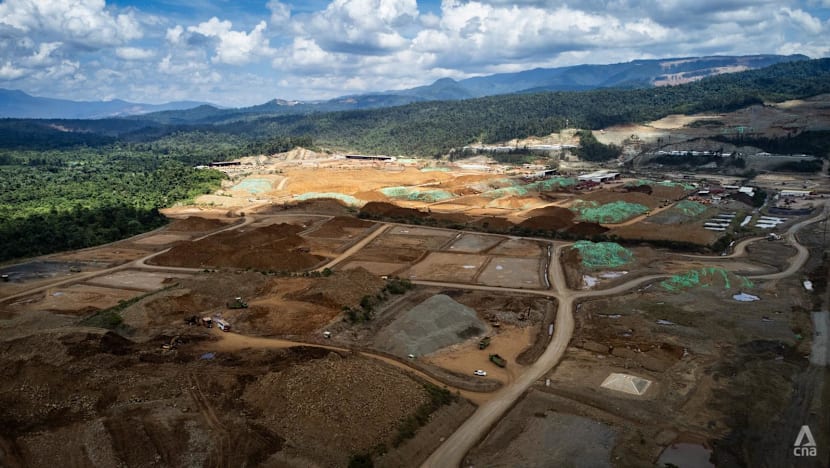
The once lush green hills were stripped bare, exposing red and orange clay that bleeds into the sea each time it rains.
The sea - once a peaceful sanctuary - had been overrun by large cargo ships which scared off the migratory fishes and whose anchors destroyed coral reefs where endemic fishes called home.
Some of these ships ferry coal to fuel the power plants of Weda Bay while others were there to transport tens of thousands of tonnes of nickel mined from the hills of Halmahera each day.
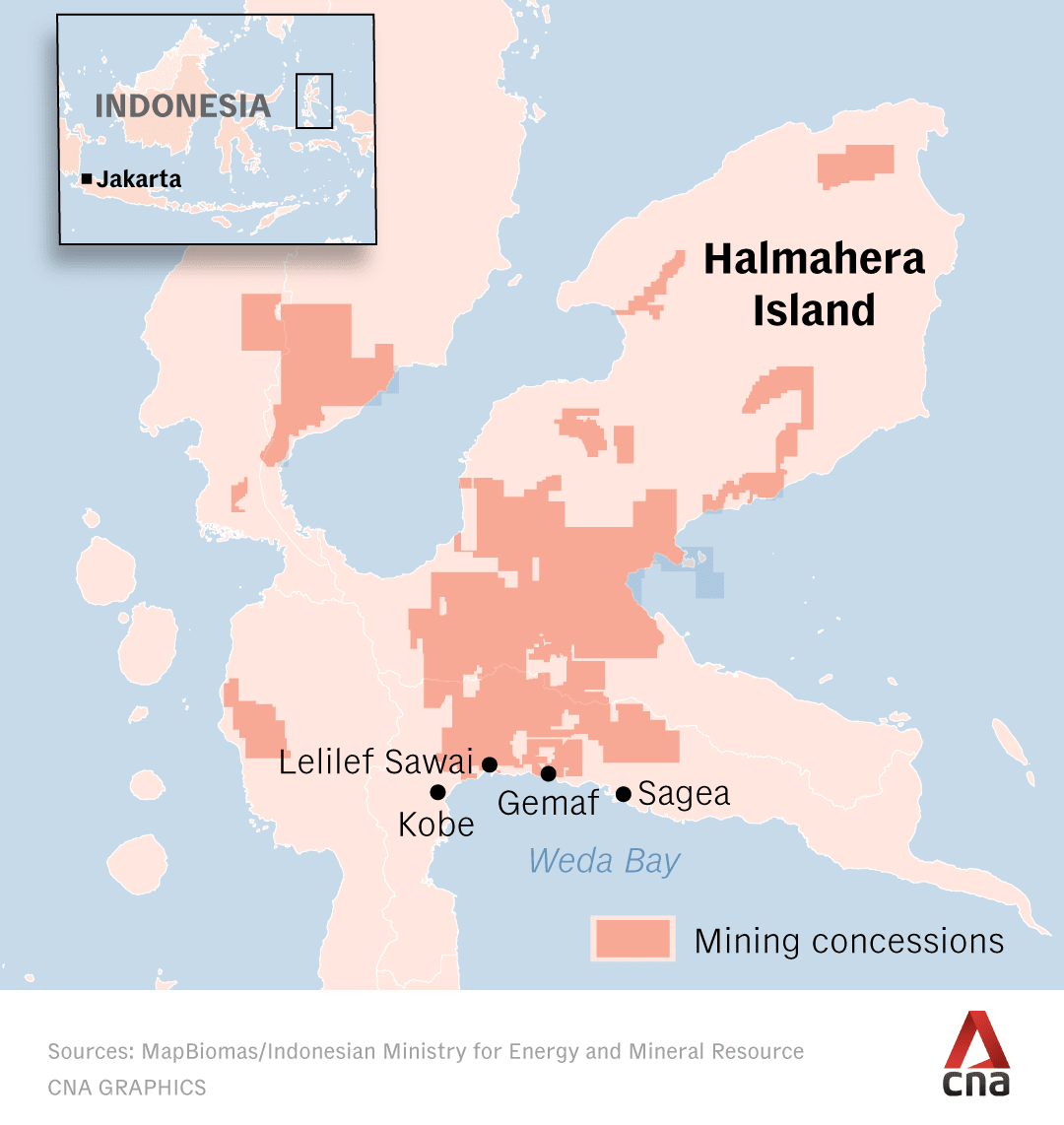
Over time, the facilities spread and encroached into the neighbouring villages of Kobe to the west as well as Gemaf and Sagea to the east, taking control over 11km of shorelines.
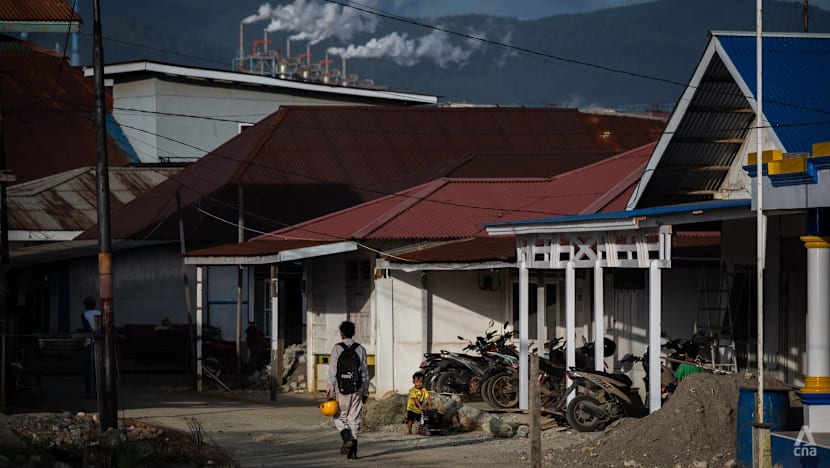
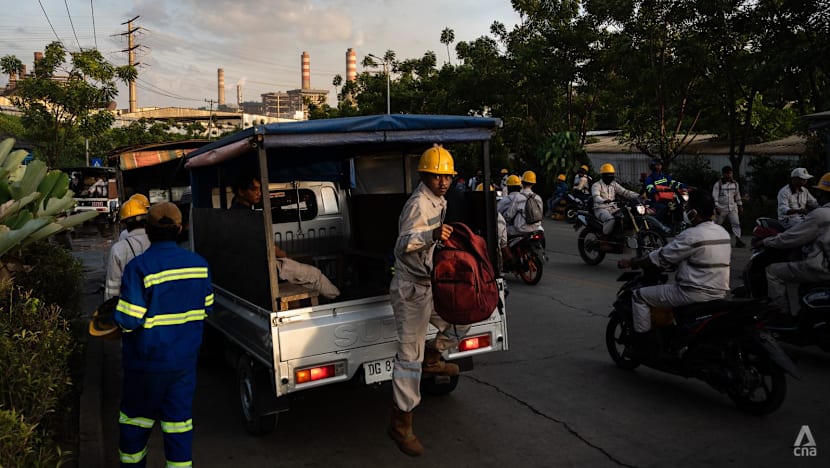
In Lelilef, Kobe, Gemaf and Sagea, once-quiet neighbourhoods and sleepy fishing villages had turned into boom towns of hostels and dormitories with roads becoming increasingly crowded with workers in overalls and hard hats.
Meanwhile, the stars disappeared, drowned out by industrial lights and hidden behind thick smoke that chokes the air.
Ironically, all of this change is driven by a global green push to cut emissions, replacing fossil-fuelled cars and motorcycles with electric vehicles (EV).
Nickel is one of the main components of an EV’s battery. It is also used in stainless steel – chosen for battery pack housings for its strength and resistance to heat.
“Nickel and other mega-projects are often launched under the banner of green development but leave behind a trail of social and environmental harm,” said Brad Adams, executive director at the United States-based environmental group, Climate Rights International.
Indonesia is the world’s largest supplier of nickel, producing about 2.2 million tonnes a year - or roughly 40 per cent - of global output. As more countries race towards net-zero targets, the International Energy Agency predicts global demand for nickel will double by 2050.
Melki Nahar of the environmental group Mining Advocacy Network (JATAM) said that places like Weda Bay – once a draw for divers and birdwatchers – had a small carbon footprint before surging demand for nickel turned lush forests and sleepy villages into mining concessions blanketed by choking haze from refineries and power plants.
"There is an exploitation of a massive scale (in Indonesia) … and yet the biggest beneficiaries are the industrialised nations and their corporations, not the (local) people,” he said.
Mineral-rich Indonesia
Nickel plays a crucial role in EV batteries. Since electrons move more freely through nickel than through many other materials, nickel-rich batteries typically store more energy, giving EVs greater driving range.
However, nickel is chemically unstable on its own. Overcharging or physical damage can trigger a chain reaction that may lead to combustion or explosion. Hence, battery-grade nickel is typically combined with other elements such as cobalt, aluminium and manganese to improve stability and safety.
Indonesia is the world’s second-largest producer of cobalt - a metal often found alongside nickel and mined together with it. The country produces about 28,000 tonnes of cobalt a year - roughly 7 per cent of global supply - although it still lags behind the Democratic Republic of Congo, which produces more than 170,000 tonnes annually.
Southeast Asia’s largest economy is also the world’s sixth-largest producer of bauxite, the ore used to make aluminium, with an annual output of about 20 million tonnes. By comparison, the top three producers - Australia, Guinea and China - each produce 98 million, 97 million and 93 million tonnes a year respectively.
Indonesia produces less than 5,000 tonnes of manganese a year, a negligible amount compared with major producers such as South Africa, Australia and Gabon, which turn out about 5.2 million, 3.3 million and 2.8 million tonnes annually, respectively.
INVESTORS FROM ABROAD
Realising the country’s importance in the EV supply chain, Indonesia began imposing a partial ban on raw nickel ore exports in 2014. Exceptions were granted to companies that committed to building refineries locally, ahead of a full export ban that came into force in 2020.
Irwandy Arif of the Indonesian Mining Institute said that before the ban, the country only had the technology to process nickel into stainless steel, which relies on high-temperature furnaces. At the time, Indonesia had little experience refining nickel into battery-grade materials, a process that depends on far more complex chemical techniques.

Investors from Europe and the US had expressed interest in building nickel refineries in Indonesia, but it was ultimately Chinese firms that brought the capital and technology Jakarta was looking for.
“(Chinese companies) offered to build refineries cheaper and faster. They had the technology and they had the funding, because they received huge incentives from the (Chinese) government,” Irwandy said.
China has sought to leapfrog its automotive industry by shifting away from the saturated market for petrol-powered vehicles, where it competes with long-established players such as Japan and the US. Instead, the world’s second-largest economy has focused on the rapidly expanding EV market.
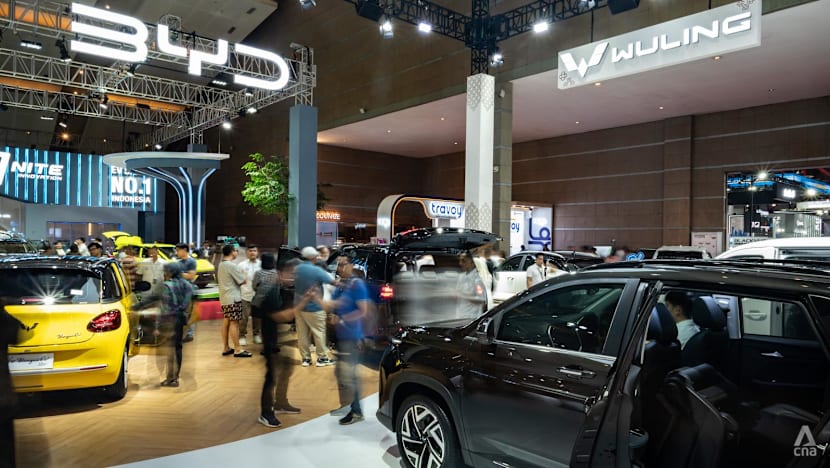
Since the early 2000s, China has invested more than US$230 billion - through subsidies, tax exemptions and direct financial support - to build its EV industry and secure control over critical supply chains, according to a study by the Center for Strategic and International Studies.
This strategy extends to Indonesia, where Chinese companies have poured in billions of dollars in the nickel sector.
Experts say this massive investment has enabled Indonesia to fast-track efforts to generate revenue and create jobs. Chinese firms have also offered to manage entire projects - from financing and design to construction and machinery sourcing - allowing factories and refineries to be built within just a few years.
“All (Indonesia) has to do is sit back and relax and before you know it, a smelter is up and running,” Irwandy told CNA.
RAPID EXPANSION
The impact of Indonesia’s raw nickel ore export ban has been dramatic.
According to data from the Indonesian Nickel Industry Forum (FINI), nickel ore production in the country surged from 7.8 million tonnes in 2015 to 265 million tonnes last year.
Over the same 10-year period, 386 nickel mining permits were issued, covering a total concession area of 9,877sqkm, or about 13 times the size of Singapore.
In Halmahera alone, concessions now span 2,560sqkm, or about one-seventh the size of the K-shaped island.
The number of nickel refineries has also risen sharply, from just six in 2015 to 79 by the end of 2025, with another 90 currently under construction across the country. Output of processed nickel climbed in tandem, from 368,000 tonnes to 2.2 million tonnes over the same period.
For nickel to be exported in its refined form, it must first be processed domestically - that has also led to an increase in the number of refineries to process the ores.
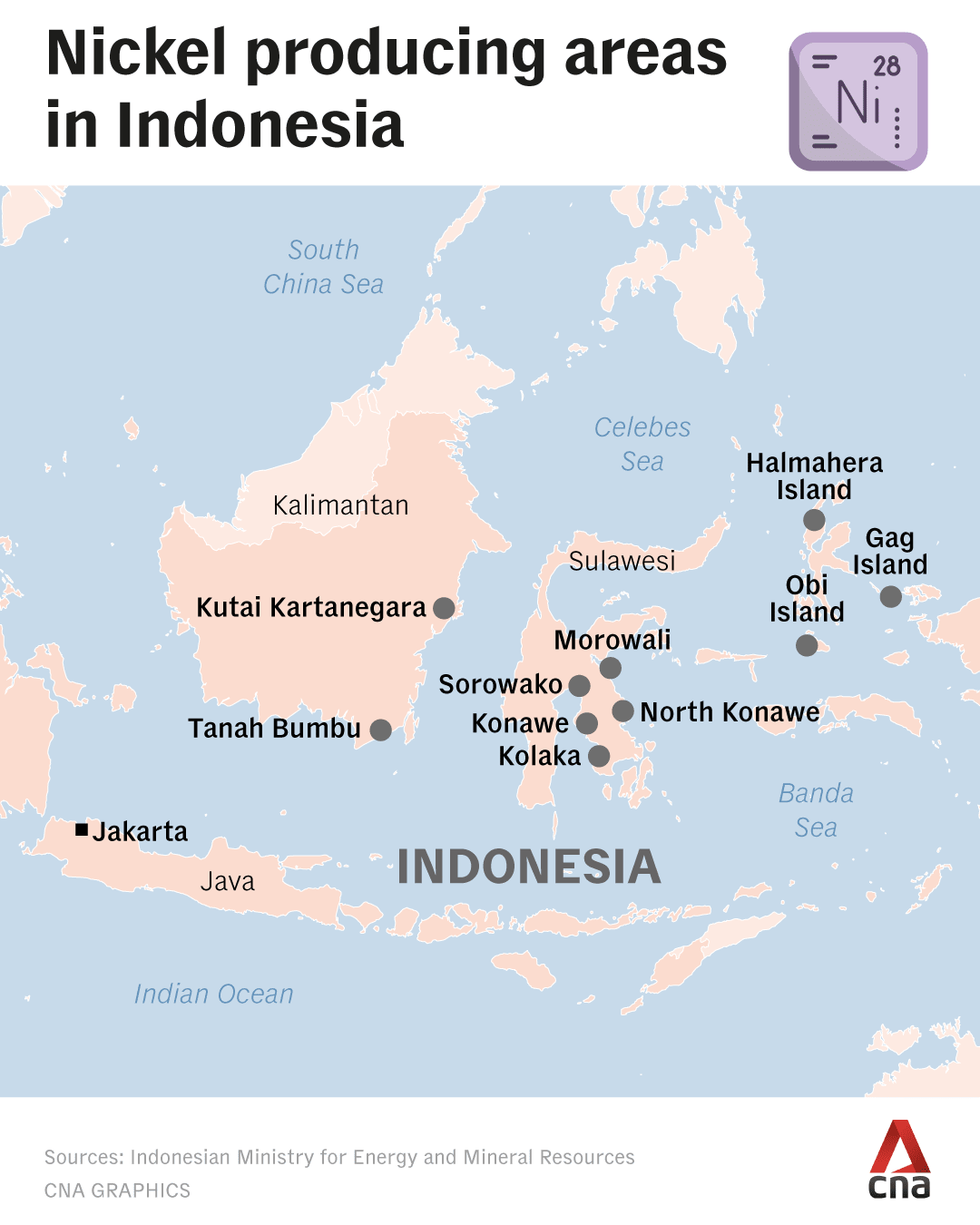
These refineries are located in the provinces of East Kalimantan, South Kalimantan, Central Sulawesi, Southeast Sulawesi, South Sulawesi, North Maluku and West Papua where nickel has so far been discovered.
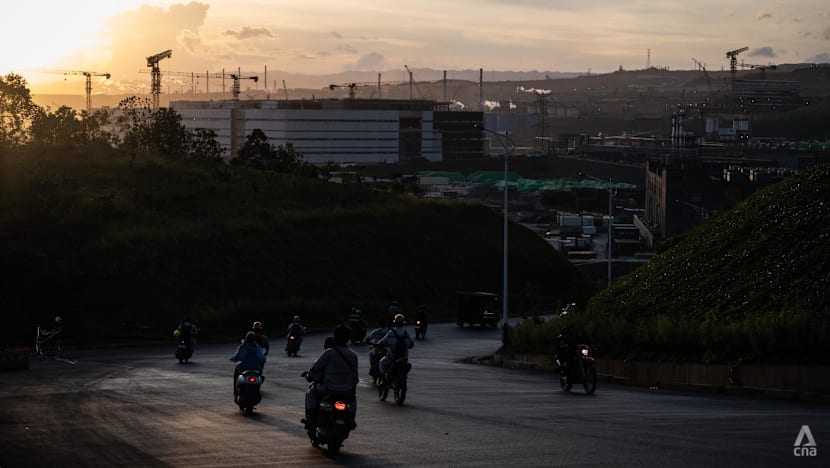
The rapid expansion of refineries has transformed rural areas such as Weda Bay into major nickel production hubs. The four villages along the bay are now home to an estimated 80,000 Indonesian workers drawn from across the archipelago, as well as thousands more from mainland China.
With 18 refineries, 11 coal-fired power plants and mining concessions stretching deep into Halmahera’s hills, Weda Bay has become the world’s largest nickel production hub, home to various Indonesian, European and Chinese firms.
But this rapid progress has not come without environmental consequences.
Fumes from the coal-fired power plants have been blanketing the air above Weda Bay, with ash settling on homes, crops and fishing boats.
According to a June 2025 paper prepared by the Indonesian Ministry for National Development Planning (Bappenas), 97 per cent of the electricity needed to process nickel in Indonesia is generated from coal-fired power plants. In 2023, the industry consumed about 100 billion kilowatt-hours of electricity – enough to power 10 million homes for a year.
A single refinery is capable of turning nickel ores into 20,000 to 60,000 tonnes of battery ingredients every year and Bappenas estimated that for every tonne of battery-grade nickel processed in Indonesia, an average of 93 tonnes of carbon dioxide equivalent is released.
By comparison, a typical passenger vehicle emits about 4.6 tonnes of carbon dioxide per year.

Meanwhile large-scale deforestation and land clearing have led to massive flooding during periods of heavy rain in Weda Bay.
Adrian Patapata, 65, said his neighbourhood in Kobe village was already prone to floods before the mines arrived. But back then, floodwaters were confined to a few spots along the banks of the Kobe River and rarely rose higher than knee level.
“Nowadays, the water comes up to here,” Adrian said, pressing the edge of his palm against his chest.
“And when it does, we sleep up there,” he added, pointing to the rafters of his wooden home, where he had built makeshift platforms for his family to ride out the floods.
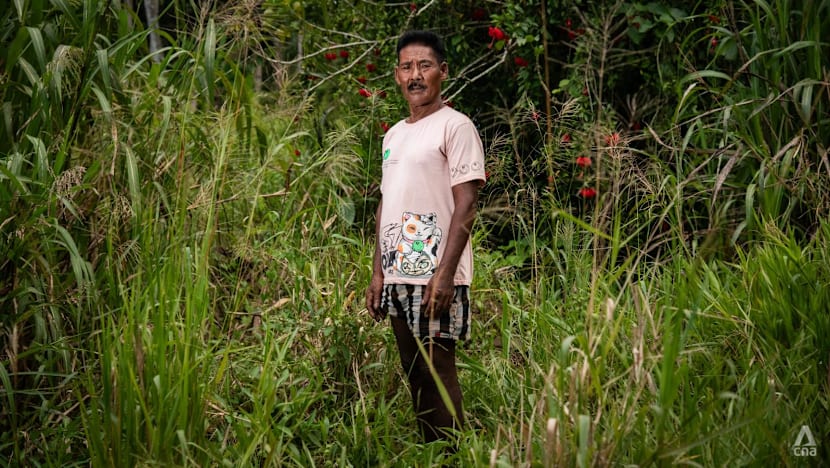
The latest flood, he said, occurred in August when the river was overrun with red and orange sludge from the hills above, drowning his neighbourhood for six days.
Years of constant flooding have destroyed the farmlands he once depended on. “The soil is no longer good,” Adrian said, adding that nearly everything he planted - cocoa trees, cassavas, bananas - grew sickly and unproductive.
In nearby Sagea village, residents fear they are next.
Mining sites now sit at the edge of the village, pushing closer to the forests and hills that safeguard Sagea’s main water sources, including Sagea Lake and the Boki Maruru cave and underground river system – both major tourist attractions and vital sources of drinking water for local residents.
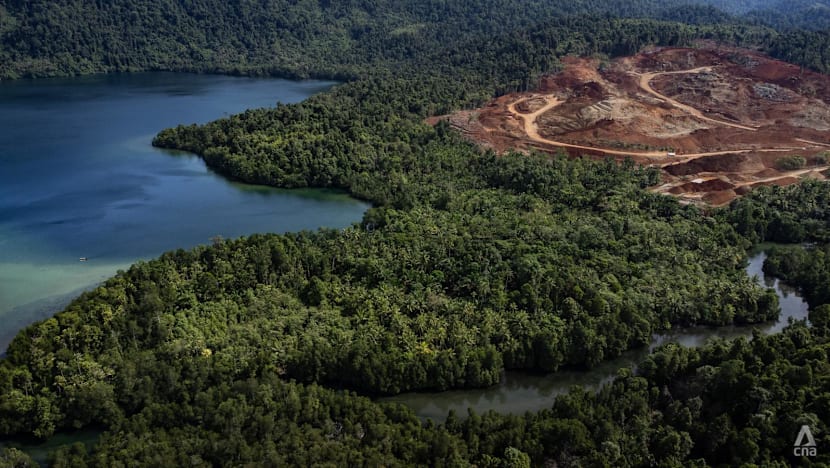
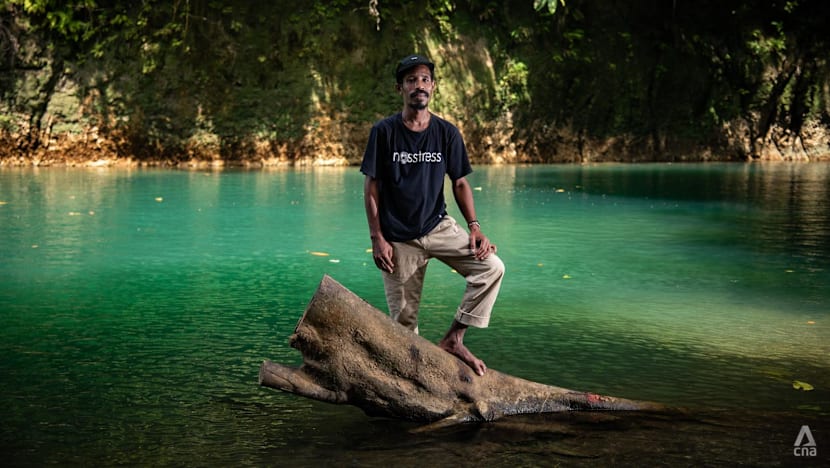
“We have seen what has happened in nearby villages. We can see the condition of the environment there and how access to clean water has become increasingly difficult,” said Mardani Harid, a spokesman for Save Sagea, a group of locals who have been advocating against mining activities in the village.
“Since mining arrived in Halmahera, the Kobe River can no longer be used because of mining activities upstream. The Waesea River in Lelilef is no longer safe to consume either nor is the Ake Sake River, the Ake Doma River or the Waleh River.
“We do not want this to happen to the rivers of Sagea as well.”
SHIFTING GEARS
Raden Sukhyar, an adviser on downstreaming at the Ministry for Industry, acknowledged that there are mining and industrial processes “which lack proper governance” that has led to widespread environmental destruction in places like Weda Bay.
“Environmental concerns and other issues are really the homework that still needs to be done,” he said.
In June 2025, Bappenas launched the “decarbonisation roadmap of Indonesia’s nickel industry” targeting an 81 per cent reduction in emissions by 2045. Under the roadmap, Indonesia hopes to reduce its dependence on coal for the nickel industry and aims to have 61 per cent of the industry’s electricity needs supplied by hydropower plants, 30 per cent by solar farms and 9 per cent wind.
But research firm World Resource Institute warned that decarbonising nickel activities in Halmahera - which lack existing grid infrastructure and large rivers for hydropower generation - might be challenging.
“The only viable clean energy sources are solar and wind, but both face land constraints,” the firm wrote in a paper released on Jan 6.
Indonesia Weda Bay Industrial Park (IWIP) - the firm which manages the nickel production hub in Halmahera - said it is trying to reduce its carbon footprint, targeting a reduction of four million tonnes of carbon dioxide per year.
“Because we intend to reduce emissions, we are currently moving ahead with the installation of solar panels or power cells,” IWIP’s general manager for health, safety and environment Iwan Kurniawan said on Jan 16, as quoted by Kompas.com.
The company is developing a solar farm with a planned capacity of up to two gigawatts, roughly half of the area’s current electricity needs. IWIP, Iwan continued, also plans to develop wind power plants with a capacity of up to 500 megawatts.
The company said that it is also implementing a range of other environmental initiatives such as restoring mined areas by planting trees across more than 40,000 hectares of river catchment areas, using electric trucks to transport nickel ore and developing its own hazardous and toxic waste treatment facility.
It is not clear when these facilities will be operational.
WHAT’S NEXT?
Experts and environmental groups praised Indonesia’s efforts to decarbonise the nickel industry but worry that these measures might be too little too late.
According to the Ministry of Energy and Mineral Resources, Indonesia has an estimated 5.3 billion tonnes of nickel ore reserves. With production continuing to rise each year, some experts warn the country could exhaust its nickel resources in less than 15 years.
“We need to start thinking long term. Some environmental damage is permanent and cannot be reversed in five or seven years,” said Putra Adhiguna, managing director of the Energy Shift Institute.
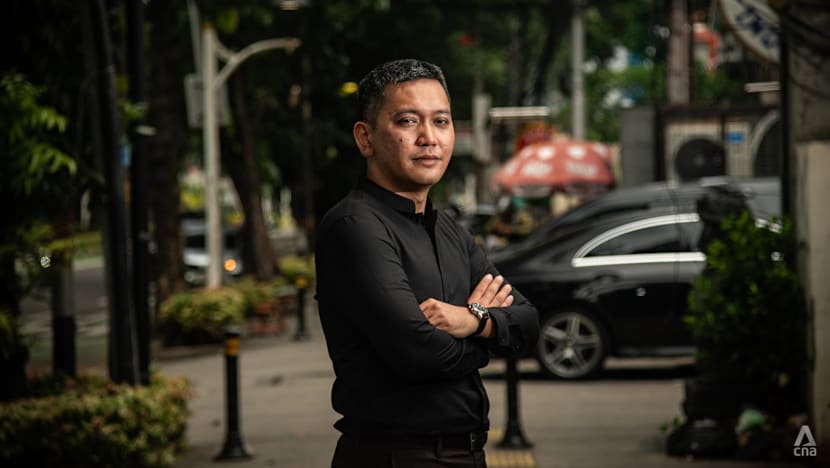
Officials, however, remain optimistic. Sukhyar, from the Ministry of Industry, believes that the country’s nickel story is far from over.
“We will continue exploring for new deposits. So far, we have focused on Sulawesi and Halmahera. There are still many islands and regions across Indonesia that have yet to be explored,” he said.
Sukhyar added that Indonesia is also pushing further downstream in the EV value chain, predicting that one day the country could become a fully integrated EV hub, capable of producing vehicles from end to end.
But Zaki Mubarok, a mining expert from the Bandung Institute of Technology, said that the goal could still be years away. While most of the raw materials needed for batteries exist domestically, the ability to process them remains limited.
To produce batteries, nickel must be combined with materials such as cobalt, manganese, lithium, aluminium and graphite. For now, only a small number of these materials can be refined domestically.
“So there needs to be a complete material supply chain in place before Indonesia can produce its own EVs,” he said.
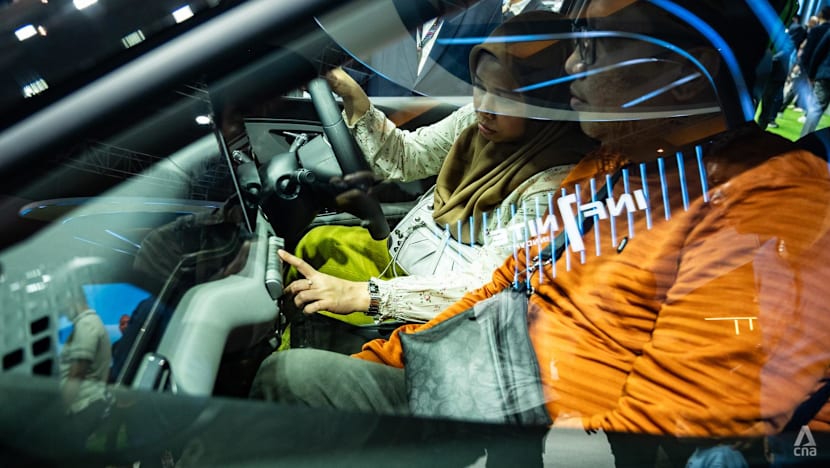
Buoyed by the success of its nickel downstreaming policy - which has increased the value of refined nickel exports more than tenfold over the past decade - Indonesia plans to extend the strategy to 27 other minerals and commodities, including zinc, bauxite and copper, by 2040.
Jakarta has already banned the export of raw zinc in 2020, raw bauxite in 2023 and raw copper in 2025.
However, attracting investors to build refineries for non-nickel minerals has proven far more challenging. Unlike nickel, Indonesia is not a dominant global player in many other minerals, and faces stiff competition from countries with larger output and no export bans in place.
Zaki also noted that processing certain minerals, such as bauxite, requires enormous capital and energy inputs. The energy demand is so high that such facilities are typically viable only when powered by hydropower, rather than coal-fired plants.
“The economics (of scale) has to make sense,” he said.
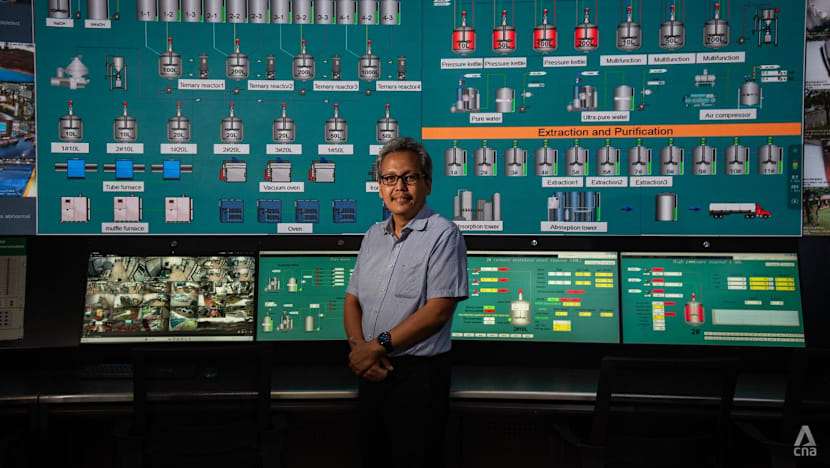
For Weda Bay native Abdullah, the future feels increasingly uncertain.
He has watched neighbours and relatives sell their land and move away, their farms absorbed into mining concessions and their homes replaced by motels and workers’ dormitories.
Abdullah is torn between leaving and staying. His once-quiet neighbourhood is now filled with the noise of unfamiliar faces; the air feels suffocating; the water leaves his skin itchy; and everyday prices are slipping out of reach.
Life in Lelilef has become increasingly hard. Still, this is the land his family has called home for generations.
“Our ancestors entrusted this land to us. When the mines are finished, we will be the ones still here,” he said.