







analysis Asia
More ASEAN states could negotiate with Iran on letting their ships cross Strait of Hormuz, but at what cost?
While Iran’s selective approach to allowing access to the Strait of Hormuz could push more countries to the negotiating table, the bigger issue is having to engage on Tehran’s terms rather than on the basis of a purely commercial right of passage, analysts say.

This audio is generated by an AI tool.


KUALA LUMPUR: More Asian countries dependent on energy imports could enter talks with Iran on allowing their ships safe passage in the crucial Strait of Hormuz if the Middle East conflict drags on, analysts say.
But these countries would also have to weigh securing their energy supplies against the optics of accepting Tehran's politicisation of the strait, possibly paying a toll fee and angering the United States, the analysts tell CNA.
Iran said it has allowed several countries' ships to cross the Strait of Hormuz since its forces effectively slowed traffic through the narrow sea lane to a trickle during the war, which began in late February.
The list comprises largely Asian states and includes China, India, Pakistan, Japan, Thailand and Malaysia.





In deciding the list, Iran assesses whether a country is directly hostile or supportive of the US-Israel position in the conflict, say observers.
Malaysia, for instance, likely got the nod because of its traditional position as a moderate Muslim country, combined with its longstanding and generally consistent engagement with Tehran, they add.
Observers say that Tehran’s selective approach might push other members of the Association of Southeast Asian Nations (ASEAN) facing domestic fuel shortages - like the Philippines and Vietnam - to negotiate for access in the Strait of Hormuz.


"It is likely that more Asian and ASEAN states will explore similar arrangements, especially energy-import dependent economies. However, how Iran responds will depend on its broader strategic calculations, so outcomes will vary," said Ilango Karuppannan, a retired Malaysian diplomat with more than three decades of experience in the foreign service.
"Iran is likely to assess countries based on their political alignment and strategic posture. States seen as closely aligned with the US, or hosting US military facilities, may face greater difficulty, while more neutral countries may have better prospects."
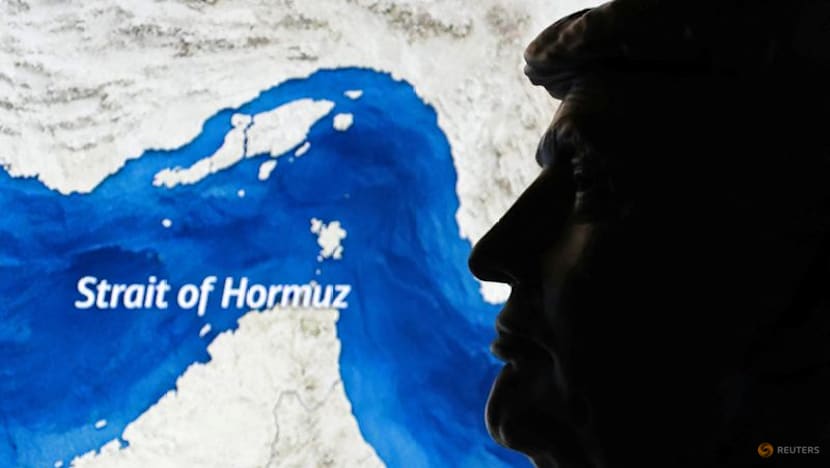
The closure of the Strait of Hormuz has disrupted fuel supplies and pushed up prices across the region. The strait, which connects the Persian Gulf to the Indian Ocean, handles about a quarter of the world’s seaborne oil trade, with roughly 80 per cent of these shipments bound for Asia.
The Philippines, for instance, has declared a national state of energy emergency, while Vietnam has temporarily waived an environmental tax on fuel to cut soaring petrol prices.
CRITICAL WATERWAY
Since Mar 2, the total number of ships that passed through the Strait of Hormuz has been roughly equal to what the critical waterway used to see in just a day, according to an analysis by maritime information service Lloyd’s List published on Mar 25.
A total of 142 vessels have transited since the start of March, but 67 per cent of that traffic has a direct affiliation with Iran either through trade or ownership, Lloyd’s List said. The remaining trickle of non-Iranian ships is made up primarily of Greece-owned or affiliated vessels (15 per cent) and Chinese vessels (10 per cent).
Since Mar 13, a total of 26 vessel transits through the strait have followed a modified route in Iranian territorial waters and pre-approved under a “toll booth” system that requires ship operators to submit to a vetting scheme, the report said, without breaking down the ships by flag or affiliation.
“While not all ships are paying a direct toll, at least two vessels have and the payment is settled in (Chinese) yuan,” the report added.
Bloomberg reported on Mar 24 that payments of as much as US$2 million per voyage were being sought on an adhoc basis, something that Iran denies.
Countries like Pakistan, India, China and Malaysia have reported their ships being allowed to sail through the Strait of Hormuz. India and Malaysia have said their ships would be granted toll-free access.
Earlier in March, a Thai bulk carrier travelling in the waterway was attacked, although Bangkok said on Mar 28 it had reached an agreement with Tehran to allow access to Thai oil vessels.
Safe passage in the strait has become a persistent issue in the Middle East conflict, with analysts saying the disruption to global supply chains will be felt long after the route is reopened and ships have been cleared to pass en masse.
US President Donald Trump has indicated a willingness to end the US military campaign against Iran even if the Strait of Hormuz remains largely closed, the Wall Street Journal reported on Mar 31, even as Tehran pushes on with plans to introduce a formal toll system for ships transiting the strait, a move Washington has publicly condemned.
The conflict has also exposed how vulnerable ASEAN is to sudden shocks and disruptions, with the bloc's trade, energy as well as agriculture and food security resilience set to be hit for months and even years, experts told CNA, stressing a need to diversify supply sources and routes.
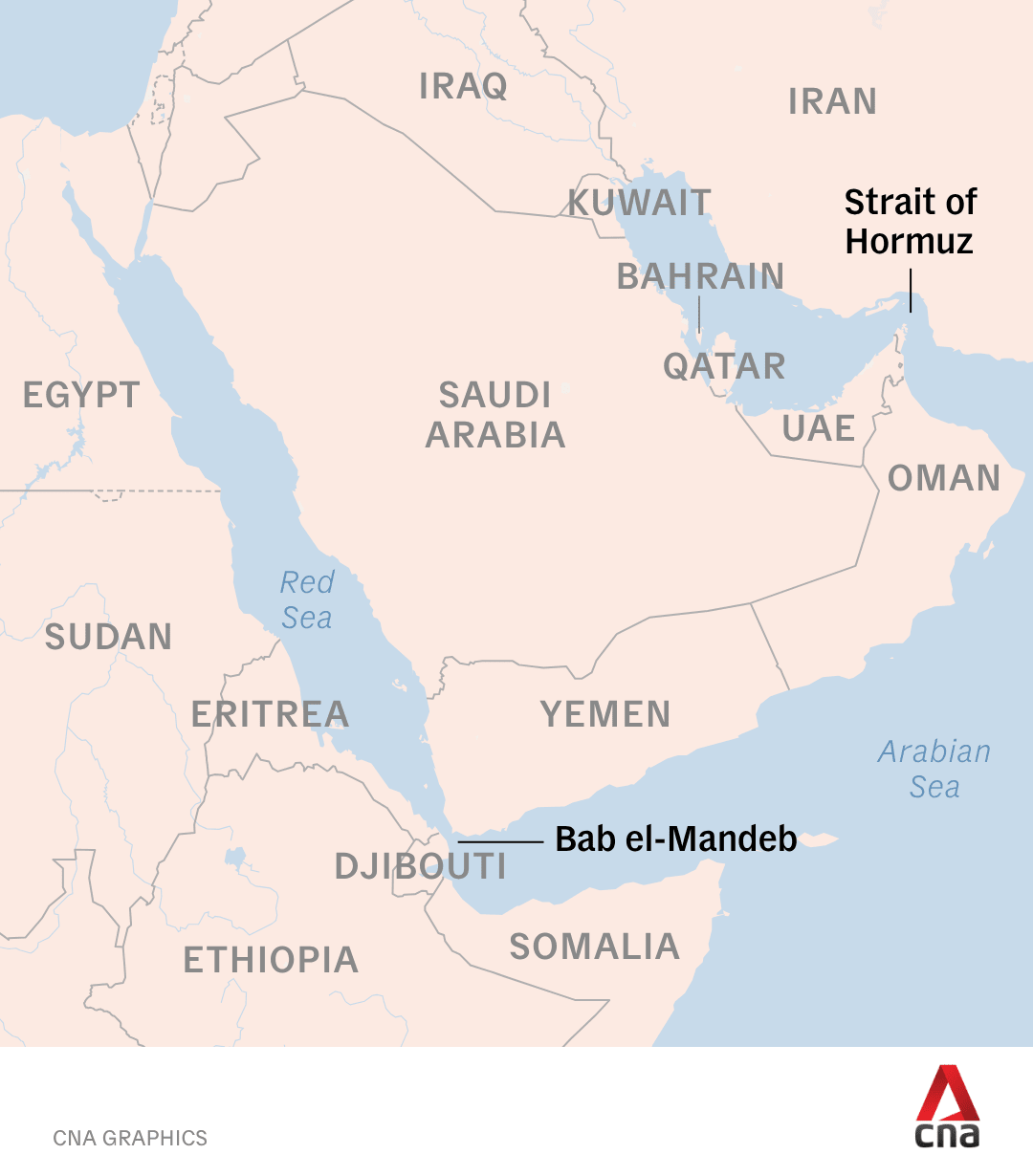
Even then, doubts linger over alternative sea routes like the Red Sea, with the Iran-backed Houthis recently joining the conflict and launching attacks against Israel.
"There may be alternative routes or bypass options, but their feasibility, capacity and cost-effectiveness are still uncertain, especially if disruption is prolonged," said Joanne Lin, coordinator of the ASEAN Studies Centre at Singapore's ISEAS-Yusof Ishak Institute.
"The more realistic lesson for ASEAN might be to diversify suppliers where possible, strengthen strategic reserves, improve contingency planning and accelerate renewables and energy transition efforts, so that the region is less vulnerable to shocks linked to a single maritime chokepoint."
GETTING THE HORMUZ GREEN LIGHT
Iran's chokehold on the Strait of Hormuz has given it leverage in the war by sending oil prices spiking to more than US$100 a barrel and countries scrambling to secure supplies.
This is well above the levels seen for most of the past two years, when prices generally hovered between US$70 and US$85 a barrel.
“Iran is turning access to the Strait of Hormuz into leverage,” said Asrul Sani, associate vice president at strategic advisory firm The Asia Group.
“By allowing non-hostile vessels through while restricting others, it is creating a clear incentive structure: Political positioning in exchange for supply security.”
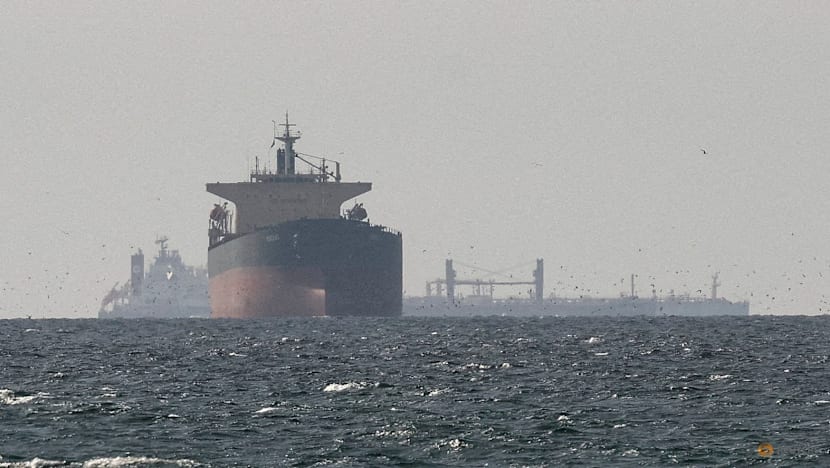
Malaysia Prime Minister Anwar Ibrahim announced on Mar 27 the country’s ships will be allowed to pass through the Strait of Hormuz, as he thanked Iran President Masoud Pezeshkian for granting Malaysian vessels “early clearance” through the waterway.
Malaysia’s Transport Minister Anthony Loke then confirmed on Mar 31 that seven Malaysian-owned vessels currently stranded in the Strait of Hormuz would soon be allowed to pass through toll-free.
Asrul said Malaysia was granted access as it has never joined pressure efforts against Tehran, a track record that “carries weight”.
“Anwar Ibrahim’s ties with Iran’s leadership gave (Malaysia) a direct leader-level channel that matters when securing assurances in a tense environment,” he said.
The longer the conflict persists, the more Iran’s selectiveness in extending safe passage only to countries it sees as “politically non-threatening” will work in its favour, Asrul asserted.
“Asian economies facing domestic pressure to secure fuel supplies will find themselves drawn into engagement on terms shaped by Tehran,” he added.
“Within ASEAN, the countries best placed to secure such arrangements are those that have kept their distance from Western pressure and remain politically acceptable to Tehran.”
While Thailand is a formal US ally, Lin from the ISEAS-Yusof Ishak Institute said Bangkok - like Putrajaya - is also a partner country of BRICS, a grouping that Iran is a full member of.
Originally formed by Brazil, Russia, India and China, with South Africa joining soon after, BRICS has long been viewed as an emerging diplomatic counterweight to traditional Western powers.
“That gives Tehran an added incentive not to alienate countries that it sees as part of a broader non-Western constituency,” said Lin, who is also a visiting scholar at the MIT Center for International Studies.
“This can provide leverage for Iran to maintain diplomatic relations with non-hostile countries which seek trading benefits.”
Lin identified Indonesia as another ASEAN member that could be granted Hormuz access, noting its Muslim-majority identity, BRICS membership, and long tradition of a free and active, non-aligned foreign policy.
Indonesian President Prabowo Subianto had previously also offered himself as a facilitator to help deescalate tensions between Iran, the US and Israel, though there are no reports that his offer has been accepted.
“(Separately) Singapore has strong commercial reasons to seek predictability as a major trading and refining hub, but would tread much more carefully given its close alignment with the US and its diplomatic relations with Israel,” said Lin.
While Iran’s selective approach could push some ASEAN countries to “test” whether access could be negotiated, the bigger issue is having to engage on Iran’s terms rather than on the basis of a purely commercial right of passage, she added.
“Tehran has already in a way framed Hormuz in political terms by saying that ‘non-hostile’ vessels may transit if they coordinate with Iranian authorities, so any country exploring this route would also have to weigh the optics of appearing to accept Iran’s politicisation of access, while avoiding optics that might anger Washington,” said Lin.
But Sharon Seah, principal fellow at the ISEAS-Yusof Ishak Institute, said she doubted if the Iranian leadership - already depleted by the war - has the bandwidth to negotiate with individual ASEAN states.
“I think some will try and will encounter different shifting demands from Iran each day. It is after all a highly volatile, fast evolving situation,” she told CNA.
“Iran’s assessment is simple - my enemy’s friend is my enemy. They will look at which countries have friendly relations with the US and Israel.”

TOLL SYSTEM?
Getting safe passage in the Strait of Hormuz could restore oil supply to ASEAN countries dependent on oil sourced from the Gulf region, namely Vietnam, Singapore, Thailand and the Philippines, said Nazery Khalid, a Malaysia-based maritime scholar and expert.
“As more energy cargoes are allowed to transit the strait to ports in those countries, the choke on oil supply would be eased and the sharp rise in prices of oil in those countries will be checked," he told CNA.
“This will provide a welcome relief to their economies, in particular, consumers who have to bear the brunt of skyrocketing oil prices.”
While widespread shortages and extreme price increases have not happened in oil-producing Malaysia, the Malaysian Transport Minister Loke stressed that it was still dependent on global markets and external supply chains.
"We are a friendly party and we have good diplomatic relations with the Iranian government. The (Iranian) ambassador has said that no toll is being imposed on Malaysian vessels,” he reportedly said.
Loke’s remarks came as Iranian state media reported on Monday that a parliamentary commission had approved plans to impose tolls paid in the local currency rial on vessels transiting the Strait of Hormuz.
Iranian state television said the plan included the “prohibition of Americans and the Zionist regime from passing through”, as well as a ban on other countries imposing sanctions on Iran.
US Secretary of State Marco Rubio had on Mar 27 called the plan “illegal” and “unacceptable”.
“It’s dangerous for the world, and it’s important that the world (has) a plan to confront it. The US is prepared to be a part of that plan. We don’t have to lead that plan, but we are happy to be a part of it,” he reportedly said.
Nazery, the maritime scholar, said Iran could be planning “various tiers” for countries seeking access to the Strait of Hormuz: friendly countries, countries indirectly supporting the US or Israel, and the enemies themselves.
“There are those granted free passage and those on whom toll charges are imposed based on Tehran's discretion,” he said.
“It is also possible countries deemed to be indirectly supporting US-Israel would be imposed with toll fees on their vessels or cargoes bound to their ports.”
DIVERSIFYING ENERGY ROUTES AND SOURCES
On that note, Nazery said countries would do well to diversify their sources of imported energy, and turn to countries like China and Russia as well as those in Africa and Latin America.
“In other words, obtaining supplies from countries which are not located in areas prone to conflict, such as the Gulf region,” he said.
Seah from the ISEAS-Yusof Ishak Institute said ASEAN in particular needs to diversify its supply sources, but acknowledged this will take time. In the meantime, gaps can be filled through intra-regional trade, she added.
This could include fertiliser for farming, she said, a commodity whose supply has been disrupted by the war as a third of fertiliser shipped by sea comes from the region via the Strait of Hormuz.
“Can urea be sourced from within the region? Can we enlist the other countries such as China, Japan, South Korea, Australia and New Zealand, basically countries on this side of the Pacific, in our diversification efforts?” she asked.
Seah observed that several events in the past five years - the COVID-19 pandemic, the Russia-Ukraine war, and Red Sea shipping disruptions - had exposed ASEAN’s supply chain resilience.
“But there were no sustained strategic actions at the regional level,” she said, calling on ASEAN to develop trade resilience measures for “highly volatile” emergency situations.
The Strait of Malacca, for one, is a “major potential chokepoint", Seah said, stressing that “if taken or blocked, will be this region and East Asia’s worst nightmare”.
The Strait of Malacca is a narrow waterway in Southeast Asia connecting India via the Andaman Sea to China and East Asia via the South China Sea. It is one of the world's most important and busiest shipping lanes, handling over 25 per cent of global trade.
“I think that ASEAN countries need to urgently discuss how to ensure the safety of passage (in the Strait of Malacca) … and to do this under worst-case scenarios,” Seah added.
“The region’s maritime security and safety planners should sit together to discuss possible measures.”
The Associated Press reported on Tuesday that Asian nations were increasingly competing for Russian crude oil as an energy crisis mounts amid the month-old war, though experts say there is a limit to how much Moscow can boost exports.
And while the Red Sea has emerged as an alternative route for Saudi Arabia to transport crude oil to Asia, Yemen's Iran-aligned Houthi rebels launched their first strikes on Israel on Mar 28, raising concerns about subsequent attacks on ships.
During Israel's latest war against Hamas in Gaza that began in 2023, the Houthis had also attacked ships in the Red Sea - a key link between Europe and Asia connected to the Suez Canal - as retaliation against Israel.
Nazery said this had forced ships to sail around Cape of Good Hope in southern Africa instead, adding up to two weeks to their journey and causing freight rates and oil prices to skyrocket.
“If ships sailing through this (Red Sea) chokepoint are attacked or even worse, the Bab el Mandeb (strait) is closed, it will worsen the global energy crisis as oil from the Gulf region cannot be transported through seaborne means,” he said.
Nazery reiterated that the potentially severe impacts of this conflict on global energy prices and economies should prompt countries, businesses and industries to make their supply chains more robust and resilient.
“Every time a conflict of this magnitude occurs, talks of making supply chains more resilient inevitably emerge. However, when things go back to normal, complacency sets in again,” he added.





