Shifting sentiments: If forced to choose a side, Southeast Asia picks China over US - narrowly, survey shows
Released by the ISEAS-Yusof Ishak Institute in Singapore on Tuesday (Apr 7), the survey findings place Beijing back in front after trailing Washington last year, reflecting shifting regional sentiment amid intensifying great power competition.

This audio is generated by an AI tool.


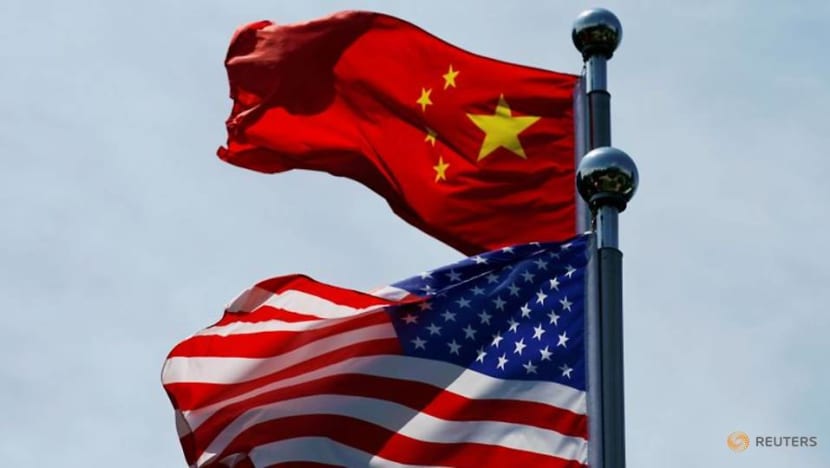
SINGAPORE: A slim majority of respondents across Southeast Asia would align with China over the United States if forced to choose sides, an annual think tank survey has found - the latest swing in a region where sentiment has oscillated between the two powers in recent years.
A total of 52 per cent chose China compared to the US (48 per cent), according to the State of Southeast Asia 2026 report released on Tuesday (Apr 7), which posed a “hypothetical forced choice” between the two strategic rivals.
The latest findings place Beijing back in front after trailing Washington from 2020 to 2023 and again in 2025 (47.7 per cent), having briefly taken the lead in 2024 (50.5 per cent).
The question was first asked in the 2020 edition of the survey.





“The results underscore how finely balanced regional sentiment remains, with relatively small margins separating the two superpowers across successive editions of the survey,” the report stated.
“The relatively narrow regional margin (52–48) reflects a deeply divided strategic landscape rather than a decisive shift toward one pole,” it added.
Now in its 8th year, the annual report by the ISEAS-Yusof Ishak Institute in Singapore examines regional perceptions on strategic issues and the influence of major powers.
This year’s survey was conducted between Jan 5 and Feb 20, with a total of 2,008 respondents from all 11 member states of the Association of Southeast Asian Nations (ASEAN), including Timor-Leste, which joined the grouping in October 2025.
Respondents included researchers, media representatives, non-governmental organisations (NGOs), government officials, private sector representatives and members of civil society.
UNEVEN REGIONAL SUPPORT
With a combined population of around 680 million and growing economic heft, Southeast Asia is becoming increasingly crucial to both American and Chinese interests.
On the headline 52-48 result in the survey’s forced-choice question, experts suggested that it reflects the region’s nuanced positioning between China and the US.
“I'm actually surprised the numbers didn't swing more, given the tariffs and other things that the Trump administration did,” said Scot Marciel, senior advisor of strategic advisory firm BowerGroupAsia and a former US ambassador to Indonesia and Myanmar.
Speaking on Tuesday at an online panel discussion organised by ISEAS-Yusof Ishak Institute to launch the 2026 edition of the survey, Marciel cited several reasons - Southeast Asia’s desire to avoid overdependence on the major powers, and the US’ continued importance as an economic partner.
“Last but not least, to the extent that the US takes actions that kind of push away or maybe discourage Southeast Asia from working with (Washington), that does not necessarily accrue to China,” he said.
Wang Huiyao, founder of the Center for China and Globalization, a Beijing-based think tank, said the findings suggest that China is no longer on the “losing side” when the region is pushed into an “uncomfortable binary”.
Speaking at the same panel discussion, Wang added that a “stronger, more united and more autonomous” ASEAN is not bad news for Beijing.
“On the contrary, if China wants a stable neighbourhood, this is exactly the kind of regional order it should be very comfortable with.”
Beneath the headline result, responses to the survey’s forced-choice question varied widely across Southeast Asia, reflecting differing national perspectives.
Support for aligning with China was particularly strong in Indonesia (80.1 per cent), Malaysia (68 per cent), Singapore (66.3 per cent), Timor-Leste (58.2 per cent), Thailand (55 per cent) and Brunei (53.5 per cent).
In contrast, support for the US remained strong in the Philippines (76.8 per cent), its ally, as well as in Myanmar (61.4 per cent), Cambodia (61 per cent) and Vietnam (59.2 per cent). Laos saw an almost even split.
“Countries with deep economic interdependence with China appear more inclined toward Beijing, whereas traditional security partners of the US, particularly the Philippines, remain firmly aligned with Washington,” the report said.
“The results suggest that while respondents continue to favour neutrality in principle, structural and economic realities may shape alignment preferences if compelled to choose.”
At the same time, expectations of improvement in relations with China are gaining ground across ASEAN, the report noted.
When asked how they see their country’s relations with China evolving in the next three years, a majority of respondents (55.6 per cent) believe they will “improve or improve significantly”.

“This marks a generally optimistic outlook toward bilateral trajectories with Beijing, despite persistent strategic tensions in parts of the region,” the report stated, with confidence particularly strong in Timor-Leste, Laos, Indonesia, Brunei, Malaysia and Cambodia.
The results suggest that China continues to be seen as an “indispensable partner” whose influence is expected to “remain constructive or at least manageable”, the report added.
Yet the data also reveals “clear divergences” within ASEAN, the report said. It cited the Philippines as a “notable outlier”, with a majority (55 per cent) foreseeing relations “worsening or worsening significantly” amid ongoing frictions in the South China Sea.
Even for respondents who view relations with China as improving, key factors could still potentially erode their positive perceptions of the world’s second-largest economy, the survey found.
China’s interference in the domestic affairs of ASEAN member states emerged as the region’s top concern (30.3 per cent), followed closely by Beijing’s “strong-arm tactics” in the South China Sea and the Mekong (28 per cent).
Concerns over economic coercion through trade and tourism ranked third (22.1 per cent).
“The prominence of domestic interference suggests that anxieties are increasingly internal rather than purely geopolitical,” the report said.
Respondents in Myanmar, Indonesia, Laos, Thailand and Singapore registered “particularly high concern” over influence operations, including through social media and perceived outreach to ethnic Chinese communities, it added.
“This points to heightened sensitivity around sovereignty, political autonomy and information integrity, especially in an era of digital penetration and polarised domestic politics.”


ASEAN-US RELATIONS
On relations with the US under a second Donald Trump presidency, the survey findings reveal “a more cautious and uncertain outlook” across ASEAN, the report said.
At the regional level, 37.7 per cent of respondents believe relations will remain the same, making this the predominant view, the report noted. A combined 32.8 per cent expect improvement, while 29.5 per cent foresee deterioration.
In contrast, last year’s survey found that 39.8 per cent of respondents expected relations to stay unchanged, 46 per cent foresaw improvement and 14.2 per cent anticipated deterioration.
“Compared to last year, optimism appears to have softened, with fewer respondents anticipating clear improvement and more adopting a wait-and-see posture,” said the 2026 report.
The report found that perceptions of what could erode positive impressions of the US were “overwhelmingly” shaped by economic concerns.
Washington’s use of sanctions, tariffs and other trade measures to punish other countries was the dominant concern (43.4 per cent), far outpacing concerns over its military activities, domestic interference and support for Israel or Taiwan, the report showed.
“This marks a notable shift toward geoeconomic anxieties as the primary source of unease regarding Washington’s role in the region,” the report said.
As for how the US can improve relations with ASEAN member states, regional expectations “point clearly” towards a rules-based and economically constructive approach, the report said.
“At the regional level, the top response (38.5 per cent) is that Washington should respect international law and its institutions and not undermine the global system,” the report stated.
This was followed by pursuing free trade and strategic partnerships instead of punitive tariffs (24.9 per cent), as well as respecting national sovereignty and foreign policy autonomy (19.6 per cent).
ON TRUST AND ASEAN NEUTRALITY
For the first time since the survey was conducted in 2019, more than a third of ASEAN respondents trust China to “do the right thing” in the wider interest of the global community, the report said.
A combined 39.8 per cent expressed confidence that China would do the right thing in contributing to global peace, security, prosperity, and governance, compared with 35.2 per cent who had little to no confidence.
That share expressing confidence stood below 20 per cent between 2019 and 2021, before rising to 26.8 per cent in 2022 and increasing steadily since.
High levels of confidence were seen in Laos, Brunei, Cambodia, Myanmar, Thailand and Timor-Leste. Meanwhile, distrust outweighed trust in the Philippines, Vietnam, Indonesia, Singapore and Malaysia.
Among those who trust China, 47.8 per cent of respondents believe the country possesses vast economic resources and a strong political will to provide global leadership. A significant proportion (22.4 per cent) also view China as a “responsible stakeholder that respects and upholds international law”.
For those who distrust Beijing, 43.8 per cent believe its economic and military power could be used to threaten their countries’ interests and sovereignty, while 23.6 per cent believe China is preoccupied with its internal affairs and is therefore unable to focus adequately on global concerns and issues.
Meanwhile for the US, the average level of trust among ASEAN respondents “remains relatively stable”, although it declined slightly to 44 per cent from 47.2 per cent last year, the report noted.
Confidence in the US outstrips distrust in most ASEAN countries, except in Singapore, Indonesia, and Malaysia, the survey showed.
Washington’s “vast economic resources and political will to exercise global leadership” was the main factor (32.5 per cent) among respondents who view it favourably on trust, although this marked a roughly 6 percentage point drop from last year.
US military power as an asset for global peace and security came in a close second (31.4 per cent), followed by perceptions of the US being a responsible stakeholder that respects and champions international law (20.9 per cent).
Among those who distrust the US, more than a third of respondents (35 per cent) think that Washington’s economic and military power could be used to threaten their countries’ interests and sovereignty.
“Such perceptions may also be influenced by Washington’s interventionist behaviour in other regions, including its increasing political pressure in Latin America and the Middle East,” the report stated.
It should be noted that the survey predates the US-Israeli war on Iran, though it was conducted after the US’ seizure of Venezuelan President Nicolas Maduro.

Even as great power rivalry looms ever larger, survey respondents “overwhelmingly reject the notion that neutrality is no longer viable”, consistent with previous years’ sentiments, the report said.
A clear majority (55.2 per cent) believe ASEAN should enhance its resilience and unity to fend off pressure from the two major powers, reinforcing the region’s continued preference to strengthen the organisation rather than external alignment,” the report stated, noting that this stance is “particularly strong” in Thailand, the Philippines, Vietnam and Indonesia.
“A further 24.1 per cent believe ASEAN should maintain its position of not siding with either China or the US, underscoring that strategic autonomy remains a core instinct,” said the report.