analysis Asia
‘Understands the game best’: How Thai PM Anutin’s Bhumjaithai scores big electoral win - and what’s next
Anutin Charnvirakul’s Bhumjaithai Party emerged as the clear winner in a general election shaped by local politics, coalition-building and voters wary of the risks of reform, say analysts.
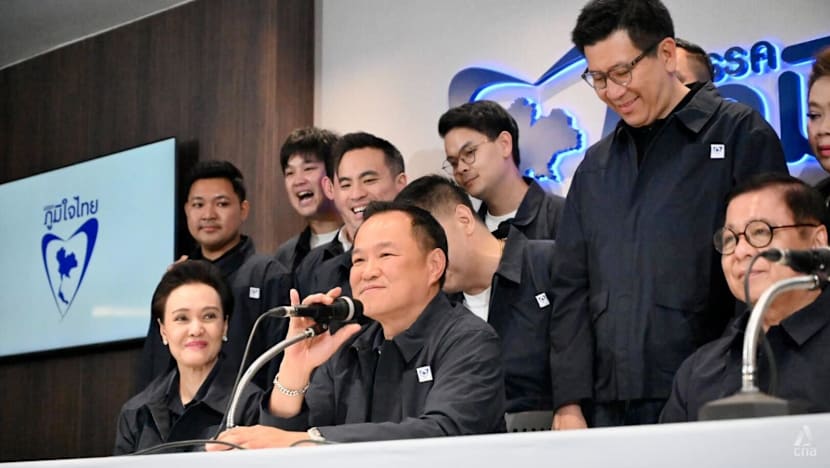
Thai Prime Minister and Bhumjaithai leader Anutin Charnvirakul at party headquarters in Bangkok on Feb 8, 2026. (Photos: CNA/Jack Board)

This audio is generated by an AI tool.


BANGKOK: Incumbent caretaker premier Anutin Charnvirakul is poised to lead Thailand’s first democratically elected pro-establishment government this century, after his party Bhumjaithai’s resounding win in Sunday’s election (Feb 8).
While votes are still being counted, Anutin is expected to form a majority government with potentially a handful of similarly-minded smaller partners, ensuring his return to the prime minister’s office.
With 94 per cent of the vote counted, Bhumjaithai has won 174 constituency seats and is likely to be allocated a further 19 seats based on the party list count - making a total of 193 out of a total of 500 seats in the parliament.
One hundred party-list seats are allocated based on each party’s share of the national vote, determined by a separate ballot on election day.





In second place, the People’s Party looks set to gain 118 seats, while Pheu Thai - linked to former prime minister Thaksin Shinawatra - is a distant third with 74.
Analysts said Bhumjaithai cannily worked Thailand’s electoral system, engaging in hyper-local politics in rural and regional areas and outmanoeuvring its progressive rivals with a message of stability and nationalism.
It reflects the fact that Thai politics still rewards local, place-based politics more than ideological movements, said Stithorn Thananithichot, a senior research associate at Chulalongkorn University.
“In reality, Thai politics does not ask who has won the hearts of the people most decisively. It asks who can best manage the balance of power needed to keep a government afloat,” he said.
“And in this electoral cycle, the party that understood this game best was Bhumjaithai.”

Bhumjaithai, with the support of fourth-placed Klatham Party, is set to have the numbers to form a government. But with an estimated 251 seats between them out of 500 in parliament, analysts said Anutin will cast a wider net to ensure his government is stable.
“Both of them are enough to have a simple majority, but Anutin needs more than that. So he’ll be looking to entice and invite smaller parties with single-digit MPs, to come into the coalition,” said Thitinan Pongsudhirak, a professor of political science and international relations at Chulalongkorn University.
“The key will be whether he includes the Democrat Party and the Pheu Thai Party,” he added.
The Democrat Party, founded in 1946, is the oldest political party in Thailand and is projected to win 22 seats in this election.
Since 2001, parties aligned with reformist or Thaksin-linked platforms have generally won national elections by vote share and seats.
Their pro-establishment rivals have more often reached power through court rulings, party dissolutions, coups and constitutional arrangements such as an appointed Senate, rather than by defeating them outright at the ballot box.
That was until Sunday.
The powerful result and clear mandate mean Anutin will likely try to build a government aligned by values, said Erik Kuhonta, an associate professor of political science at McGill University in Quebec.
“Bhumjaithai has quite a good choice of options to form a conservative coalition,” he said.
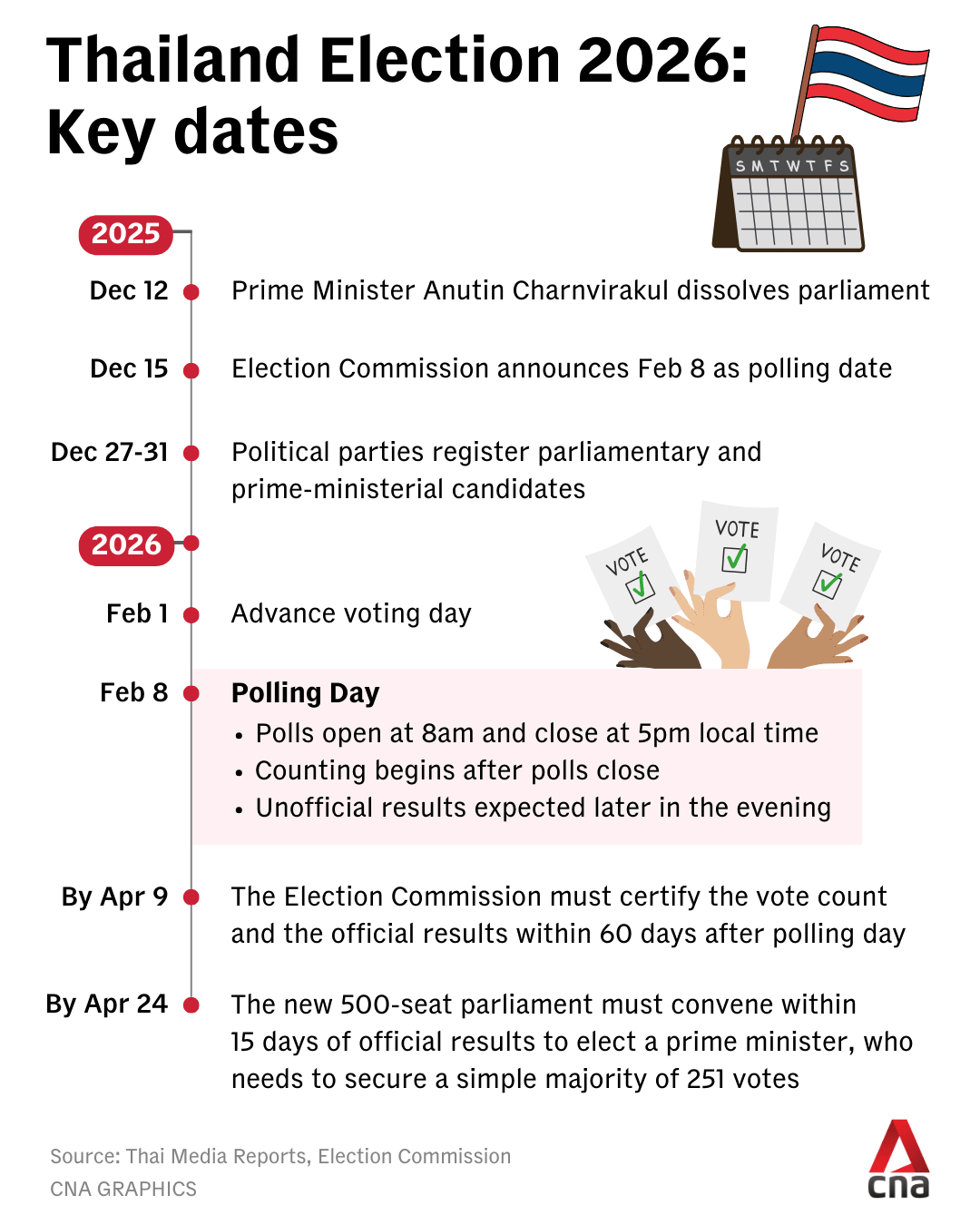
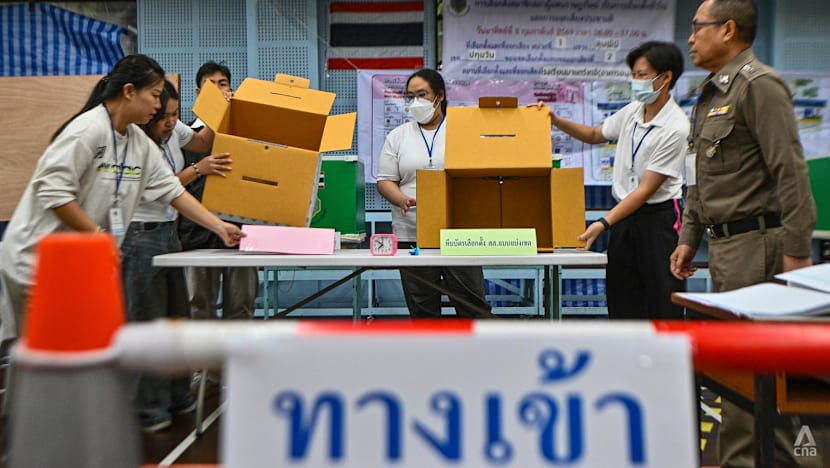
The Election Commission is required to certify the vote count and declare the official results within 60 days of polling day, which is by Apr 9. Once certified, the new parliament must convene within 15 days to elect its speaker and deputy speakers.
Parliament will then vote to choose a new prime minister, who must secure the backing of more than half of all members of parliament.
BHUMJAITHAI AS A NATIONAL FORCE
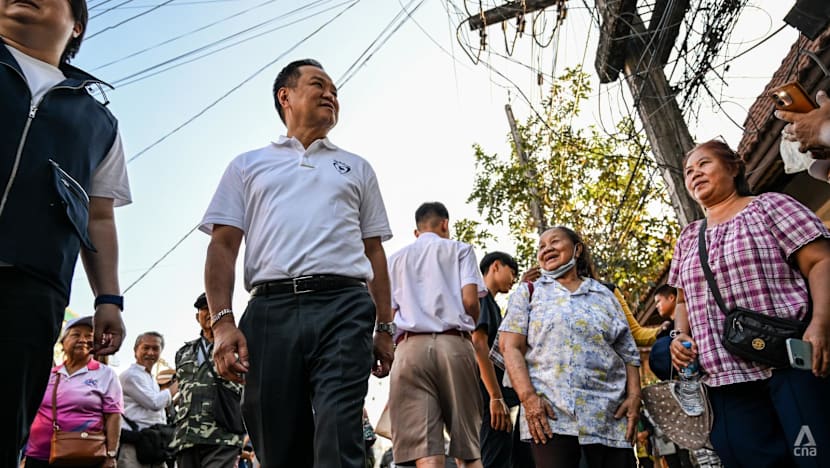
Bhumjaithai wielded an ally-making strategy that made it difficult to defeat, especially in a period of economic uncertainty and border tensions, experts told CNA.
It outmanoeuvred its progressive rivals in rural and regional areas, developing fast and pragmatic relationships with influential local clans and individuals in provinces.
“Bhumjaithai hit the right chord. They are seen as conservative, pragmatic, nationalist and that clearly resonated with voters,” Kuhonta said.
The party is fast-growing. It has transformed itself from a mid-sized provincial entity into a national force within just a few years.
Its performance in this vote is in stark contrast to the 2023 and 2019 elections, when it was not a contender and won 71 and 51 seats in total respectively.
And as other conservative parties, led by military figures like former Prime Minister Prayut Chan-o-cha - who held office from 2014 to 2023 - have fallen away, Anutin, a billionaire businessman, has stepped into their place.
Stithorn said Bhumjaithai’s strategy fit very well with the rules of Thai politics and an electoral system that places a high premium on constituency races.
Even by losing the popular vote, as it will to the People’s Party by a few million votes in this race, its ability to sweep local areas is a key path to victory, he said.
“Parties that invest in building strong local networks, with candidates deeply embedded in their provinces, naturally have an advantage over parties that rely mainly on national-level momentum,” he said.
“Bhumjaithai did not win because voters were especially attached to the party itself. It won because voters were familiar with the individual candidates.”
Its likely coalition partner, the Klatham Party, engaged in a similar style of politics and made gains in seats in the north and south of Thailand.
Klatham has poured resources into local politics and grassroots networks, promoting policies centred on agriculture, land rights and social welfare.
Its clout has expanded rapidly by drawing MPs from rival parties. In late 2024, 20 lawmakers from right wing, conservative Palang Pracharath formally defected to Klatham after being expelled, handing the party a sizeable bloc ahead of the 2026 election cycle.
These tactics appeared to have paid off but raised questions from a democratic perspective, about how accurately the system reflects the true will of the electorate, said Somchai Srisutthiyakorn, Thailand’s former election commissioner.
“What we are seeing with hyper-local politics is therefore less about policy popularity and more about the consequences of the rules themselves,” he said.
“Was the system designed to ensure that parties with the most votes have a genuine chance to form a government? Or was it designed to reward parties that are better at managing local networks?”
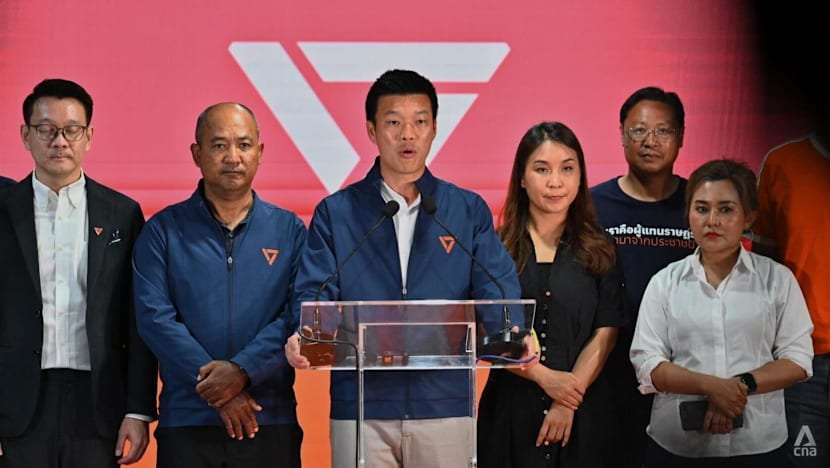
PROGRESSIVES TAKE A HIT
Still, the result was surprising for Thitinan and for many observers expecting a better showing from the People’s Party, which had been pushing for a landslide victory to ensure it could form a government.
“The reform party won the election in 2023 so people are looking for its successor to do the same. But the results have been the opposite,” he said.
“This time the establishment, the pro-establishment party, has clearly won … something that is counter-intuitive for a lot of people waking up today.”
During the last election, Move Forward Party - the previous iteration of the People’s Party - may have won the most seats with 151, but it was kept in opposition as other parties formed a majority coalition.
This time, the party led by Nattaphong Ruengpanyawut will not even be in those conversations, heading again back to those opposition benches, stung by a poor performance outside of Bangkok.
That is despite it winning, based on 94 per cent of the vote count, about 9.7 million party list votes, a clear margin over Bhumjaithai’s 5.9 million.
This clearly reflects the party’s ideological and policy-based support remains strong, said Somchai.
“But the system separates this support from constituency victories, meaning that a significant portion of public preference is not proportionately translated into political power,” he said.
The orange wave - the colour associated with the People's Party - swept the Thai capital, winning every single seat. But the party failed to broaden its appeal much beyond urban centres, a fatal flaw for its electoral hopes, the experts said.
“The fact of the matter is, if you can't penetrate deeply in the north and northeast, you will not win the election,” Kuhonta said.
Stithorn agreed that its strong performance on the party list reflects strength at an ideological level. But he said it will continue to run into a ceiling if it relies on momentum and emotion for change, rather than investing in “place-based politics”.
“The key lesson for the People’s Party is not simply that it needs to expand into the provinces. It needs to change how it does politics,” he said.
“Constituency elections are about people - about trust and personal relationships - and that still requires time and local networks to build.”
Thitinan said there will be a lot of questions about what went wrong for the party in the aftermath of this result. But the party may have also fallen victim to current circumstances and a general prevailing lack of appetite for political risk.
“I think Thais want at this time, stability, continuity and working with the devil they know, rather than something they don't know.”
On Monday, Thailand’s National Anti-Corruption Commission ruled that 44 former Move Forward lawmakers - now mostly with People’s Party - had committed serious ethical violations over their role in proposing amendments to the Criminal Code’s Section 112, the lese-majeste law.
They could face lifetime bans from politics.
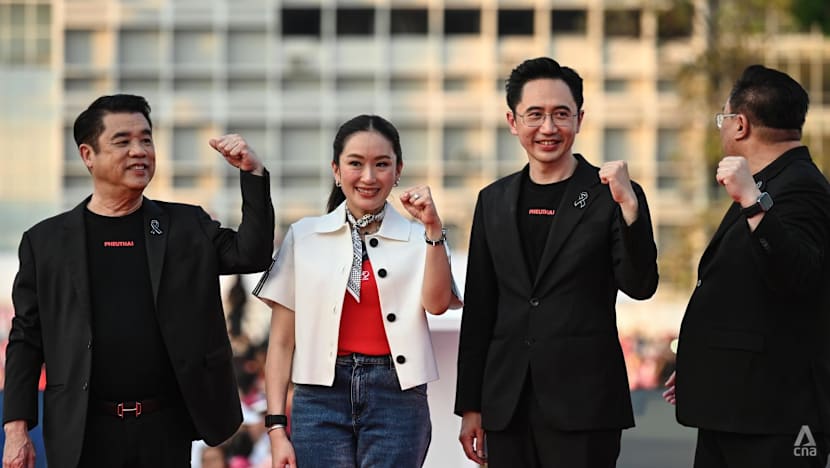
For Pheu Thai, the scars left from a bruising result which saw it lose nearly half its seats may cut deeper. Its allocation will drop from 141 in 2023 to 74 based on unofficial results.
Its prime ministerial candidate Yodchanan Wongsawat - a nephew of Thaksin - was a fresh face for the party, despite his family ties to the Shinawatras, long the dominant force in populist politics in Thailand.
But its efforts at consolidating a stronghold in the north failed, with only three seats projected to be won - two in Chiang Rai and one in Sukhothai.
Notably, it failed to win a single seat out of 10 in Thaksin’s home province of Chiang Mai - losing to People’s Party and Klatham - and continuing its decline there after winning just two seats in 2023.
It fared better in the north-east, winning a tranche of constituencies throughout the Isan region.
While it held on to its traditional base there, it no longer enjoys the dominance it once did, Stithorn said.
“The party is now being squeezed from two sides: by the People’s Party in urban areas and by Bhumjaithai in the provinces,” he said.
Pheu Thai’s leader Julapun Amornvivat said at a press conference on Sunday night that the party must respect “the voice of the people”.

WHAT’S NEXT?
Anutin told a press conference on Sunday night that he had multiple policy action items to resume as soon as possible.
But his campaign was notable for a lack of ambitious or controversial policy ideas. Even if he pursues only modest reforms, he will face immediate pressure to make them work for ordinary Thais, Thitinan said,
“Now, expectations are running high. People who voted for them want a better Thailand, want a better future, want more jobs, more income, and for Thailand to plug back into global value chains and to start to be competitive again,” he said.
“But they have a clear path, and for the full term, possibly a very strong coalition. It depends now how they want to run Thailand.”
Bhumjaithai’s election platform blended economic stimulus measures, including an expansion of popular subsidies, with commitments to reduce electricity prices and channel more investment into national security.
Its Cabinet is expected to be full of technocrats with real-world experience, a springboard by which the new government could tackle the country’s slow growth, debt issues and foreign relations.
“There'll be macro-policy stability,” Thitinan said.
“He will be looking for some kind of structural reforms to get the Thai economy moving again,” he said of Anutin.
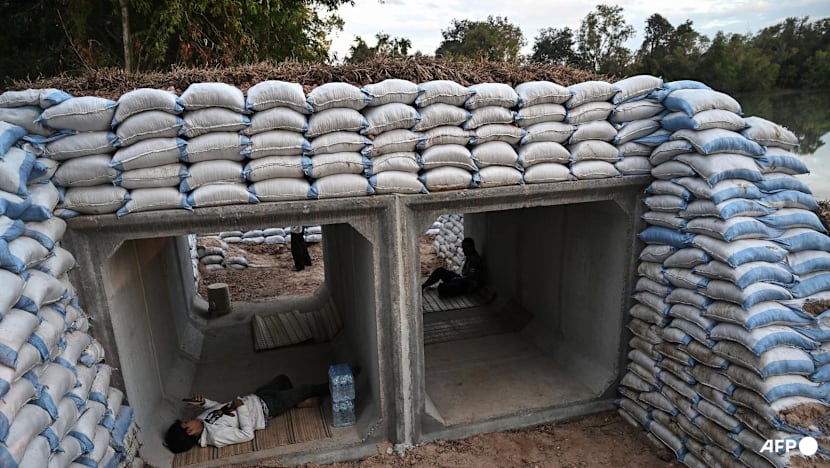
The border situation with Cambodia remains unresolved. It is an issue that Anutin has been resolute on, and he has emphasised firmly upholding territorial sovereignty and keeping diplomatic negotiations conditional on Cambodian actions.
Diplomatic efforts have been tenuous. A peace declaration was signed at the ASEAN summit in October last year, but its effectiveness has been limited by recurring violence and fragile trust.
Anutin will also need to manage a mandate to draft a new constitution, after Thais on Sunday overwhelmingly voted in favour of a referendum to amend the existing 2017 constitution written under military rule.
Currently, 60 per cent of Thais, or nearly 20 million people, voted yes for the reform, according to the Election Commission's preliminary results.
The new government and lawmakers can start the amendment process in parliament with two more referendums required to adopt a new constitution.
The fact that a conservative administration will need to handle this matter, despite the issue being one the progressive parties campaigned heavily in support of, could slow down the process, analysts said.
“It'll be more contested, because this is a kind of a contradictory outcome,” Thitinan said. “There will be very fierce contests in parliament.”
Additional reporting by Jarupat Karunyaprasit