‘Clear signal’: Thai PM Anutin says Bhumjaithai won most seats in election, open to working with other parties
“Our victory is a victory of all people,” says Anutin Charnvirakul as his party pips its fierce rivals in Sunday’s (Feb 8) election.
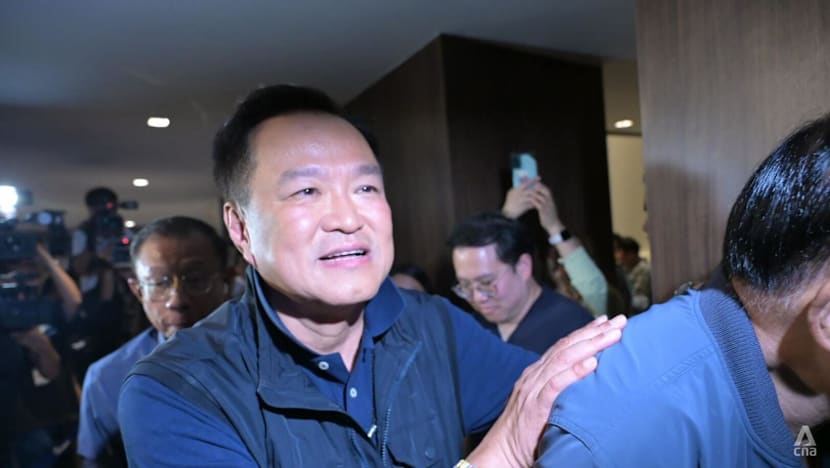
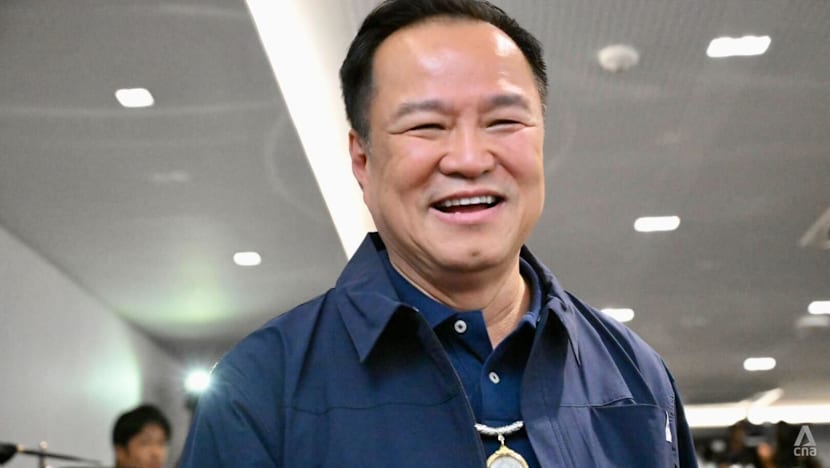
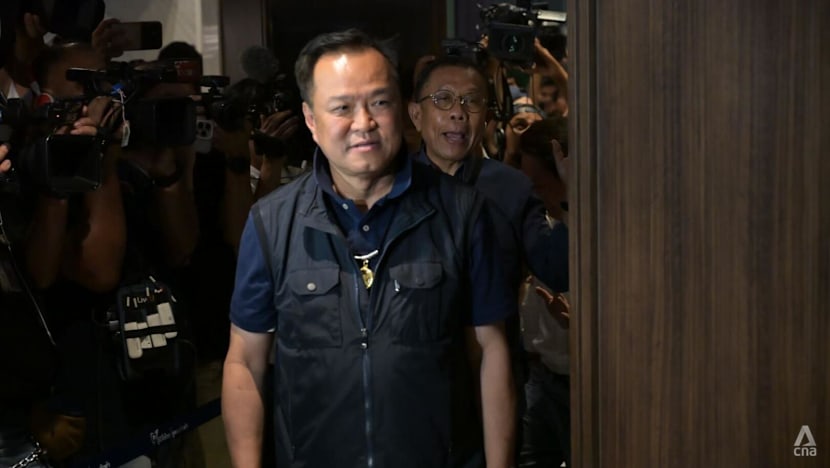
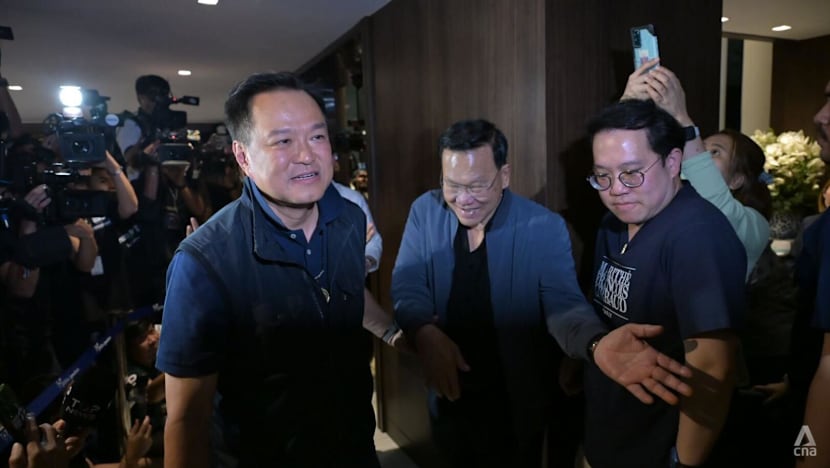
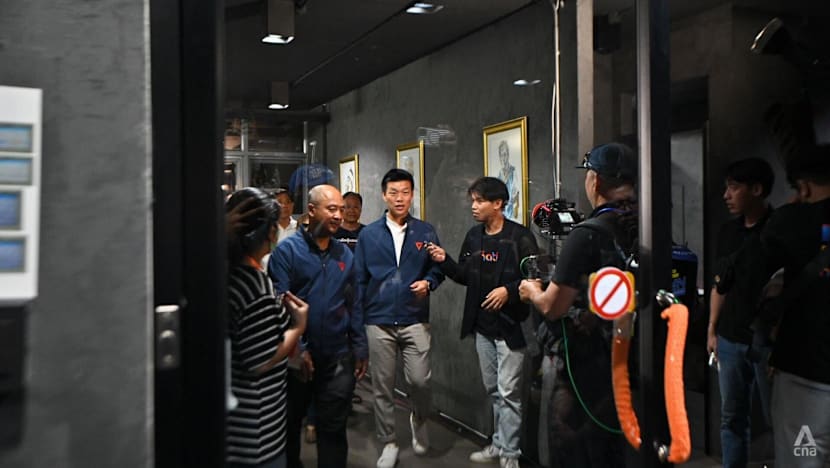
Anutin Charnvirakul, leader of the Bhumjaithai Party, arriving at the party's headquarters in Bangkok on Feb 6, 2026 evening. (Photo: CNA/Jarupat Karunyaprasit)

This audio is generated by an AI tool.



BANGKOK: In a stunning victory, Thai Prime Minister Anutin Charnvirakul’s Bhumjaithai Party comfortably pipped its rivals in the country’s general election on Sunday (Feb 8), according to unofficial results by the Election Commission.
It was projected to have won 175 constituency seats, out of a possible 400, as of 11.45pm local time.
With a possible ally Klatham Party set to win 56 seats, this means Anutin is in pole position to lead the next government.
Coming in second behind Bhumjaithai was the progressive People’s Party with 85 seats, followed by the Shinawatra family machine, Pheu Thai, with 60 seats.
About 89 per cent of the votes were accounted for by that time.
Bhumjaithai will receive more seats once the allocations of party list MPs, calculated as a proportion of total votes, are completed, which could take at least two weeks to formalise.
Its performance is in stark contrast to the 2023 and 2019 elections, when it was not a contender and won 71 and 51 seats in total respectively.
Thailand’s 500-seat House of Representatives is decided through a mixed system.
Of these, 400 constituency seats are decided through a first-past-the-post system while the remaining 100 party-list seats are allocated based on each party’s share of the national vote.
The Election Commission is required to certify the vote count and declare the official results within 60 days of polling day, which is by Apr 9.
Once certified, the new parliament must convene within 15 days to elect its speaker and deputy speakers.
Parliament will then vote to choose a new prime minister, who must secure the backing of more than half of all MPs, which means a candidate requires at least 251 votes.





HOW ANUTIN WON
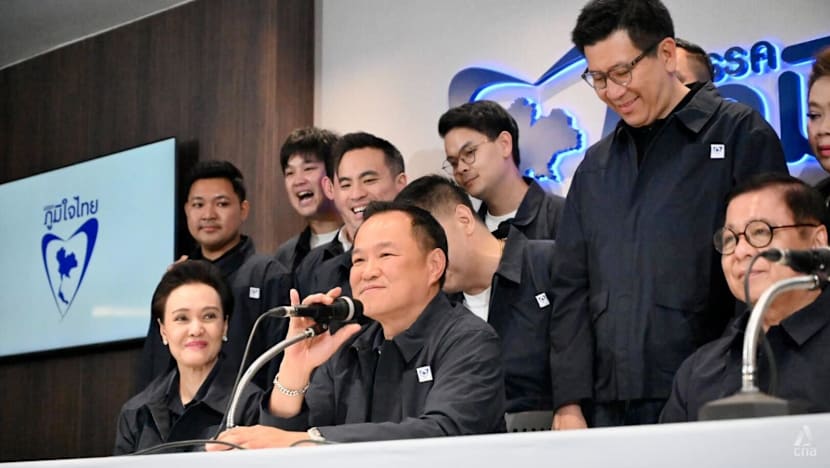
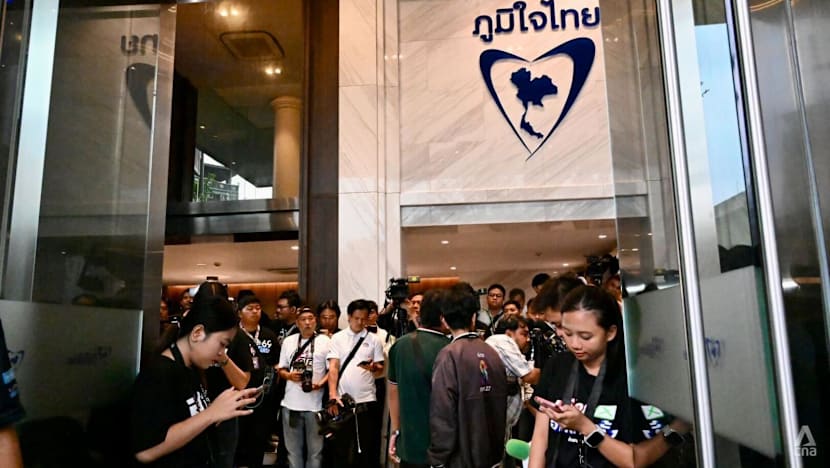
While a heavy storm dampened vote counting in the Thai capital, Anutin stepped out of the rain and into his party’s Bangkok headquarters grinning broadly at about 9pm local time, after early counts showed him well on course to securing a victory that should see him form a majority government without having to make deals with his main rivals.
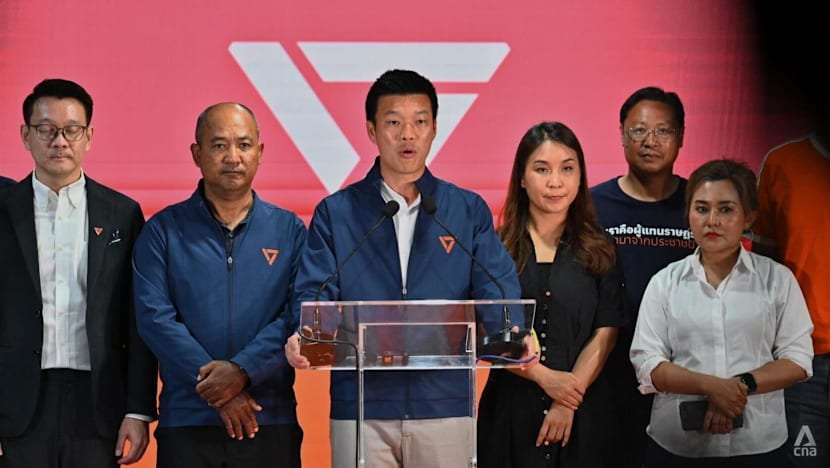
“It’s not official yet, but from what we can see, it looks like we will have the most seats,” he said about an hour later as he addressed the media, thanking voters for their trust.
“Our victory is a victory of all people.”
He added that Bhumjaithai has received a “clear signal” to administer the country, and that it accepts this task under the democratic regime with the king as head of state.
“Bhumjaithai’s win is the people’s win – all of them, whether they voted for us or not,” he said.
"At this moment, our people have given us more than what we expected this morning. So we owe our voters a fortune and we will only repay them by working our utmost to bring all the good things to them and our country."
Anutin emphasised that Bhumjaithai would wait for official election results first before asking others to join a coalition government.
“Only thing we can say now, we’ll do it for the benefit of the country as the highest priority,” he said.
Anutin also congratulated all other parties that won seats. He said he hoped all could work together and that he looked forward to moving ahead with an even stronger Cabinet and government.
“Nationalism is in the heart of Bhumjaithai,” he added.
Bhumjaithai’s victory was gained by constructing a blue wall - the party’s colour - around Bangkok. It built a campaign focused on strong provincial support.
Instead of focusing on big ideas or sweeping political ideologies, it slowly built a formidable foundation in key parts of the country, harnessing the influence of strong political families and clans and taking grip of Thailand’s conservative movement as a result.
Much territory that was once dominated by former PM Thaksin Shinawatra’s various parties over the years turned from Pheu Thai’s red to Bhumjaithai’s blue.
During the lead-up to the vote, Bhumjaithai senior leaders leaned strongly in the party’s identity as being from the political right and deeply patriotic. It positioned itself as a stability-oriented, pragmatic option versus its reformist rivals from the People’s Party.
Anutin and Bhumjaithai will be closely aligned with the country’s influential conservative forces going forward.
That is expected to mean little likelihood of major policy shifts in the immediate future and a focus on maintaining the status quo in international relations and economic policy.
Its election platform also included expanding popular subsidy schemes to stimulate spending and boost growth, proposals to lower electricity prices and invest heavily in national security.
In an atmosphere of uncertainty and national pride, Anutin’s stance on projecting Thailand’s strength, protecting its borders and consolidating the power and role of the military in national affairs were key parts of the party’s strategy to win votes, analysts added.
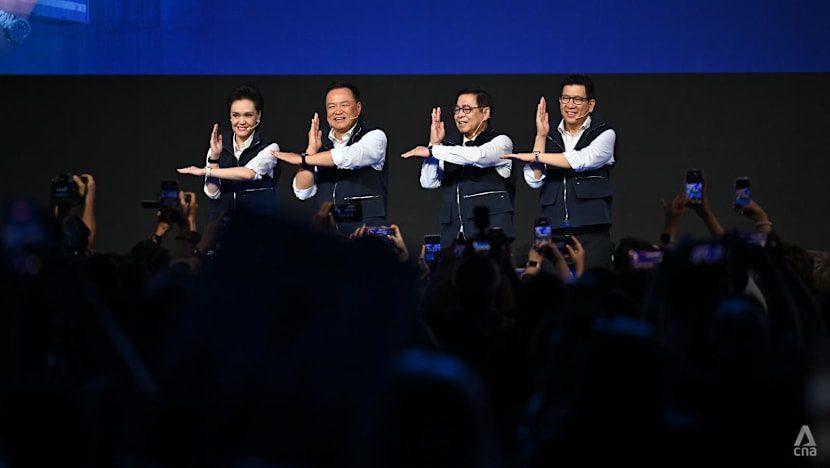
The election, called less than 100 days into Anutin’s administration, allowed him to harness nationalist sentiments stirred by months of fighting across the Thai-Cambodia border, they said.
Speaking to CNA’s Asia Tonight on Sunday night, Termsak Chalermpalanupap, a visiting senior fellow at the ISEAS – Yusof Ishak Institute’s Thailand Studies Programme, said that while economic pressures remain voters’ top concern, border security has taken on added urgency.
“Border security is more immediate, and that's why Anutin could capitalise on the nationalist sentiment. Nationalist sentiment will win votes,” he said.
“He works well with the Thai military on the border conflict and so far, people along the borders are quite happy with his hard stance towards Cambodia.”
Constitutional reform, by contrast, ranks low among voter priorities, Termsak said.

Anutin, a former health and interior minister, made visiting the Isan region, a broad expanse of 20 rural and typically poorer provinces, a key priority since being elevated to national leadership and throughout the election campaign.
Conversely, its rivals were weakened by the political fallout from Cambodia.
Pheu Thai’s management of the issue triggered a backlash that led to Paetongtarn Shinawatra’s ouster over ethics violations, while the People’s Party drew resistance for past efforts to challenge the military’s place in national life.
Anutin’s numbers in parliament are expected to be bolstered by the in-kind conservative party, Klatham, led by Thamanat Prompow, a senior politician once convicted for heroin trafficking and sentenced to six years in an Australian prison in the 1990s.
Klatham has also heavily invested in local politics and grassroots leaders, with policies focused on agriculture and land rights and social welfare.
Its influence has grown quickly as it targeted members of parliament from other parties; 20 MPs from the Palang Pracharath Party formally joined Klatham after being expelled from their old party in late 2024, giving it a large parliamentary bloc going into the 2026 cycle.
It picked up seats across the map, especially in the south and the north.
The Pheu Thai party, which had allocated much of its resources to creating a stronghold in the north, especially in important provinces in Chiang Mai and Chiang Rai, saw that support ebb.
The People's Party was on track to win most of the urban seats in the region, while Klatham dominated rural areas.
It has left Pheu Thai with only a couple of regions of power; namely Nakhon Ratchisima in the northeast as well as other patches of Isan, including in the provinces of Loei and Kalasin.
Before the vote, analysts told CNA that if Pheu Thai, long dominated by the Shinawatra family, could not build its influence in the north, its time as a major player in Thai politics could be over.
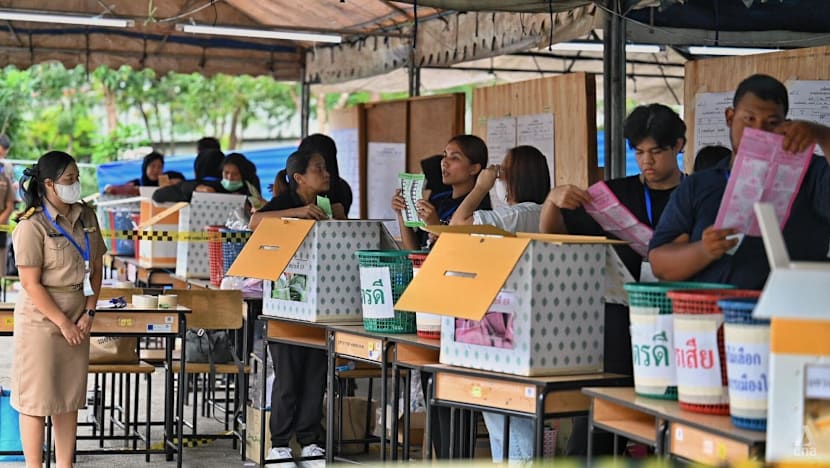
The 60 constituency seats it is projected to win nationwide this time is a sharp drop from the 112 it won in 2023, along with another 29 party-list seats.
Pheu Thai’s leader Julapun Amornvivat said at a press conference on Sunday night that the party must respect “the voice of the people”.
“We have to respect the results.”
Despite this, the party’s prime minister candidate Yodchanan Wongsawat - Thaksin's nephew - said that he was still encouraged by the support he received.
PEOPLE’S PARTY UNDERWHELMS AFTER 2023 HIGHS
While Bhumjaithai looks set to lead the government according to unofficial results, its main rival the People’s Party has underwhelmed and significantly lowered its seat share as compared to the last polls in 2023.
People’s Party, formerly named Move Forward Party, had clinched the most votes in Thailand’s last general election in 2023, a total of 151.
While the People’s Party maintained its grip in Bangkok, sweeping all 33 constituencies, it lost ground in other urban cities like Chonburi, Phuket and Nonthaburi.
In Chonburi, east of Bangkok, People’s Party had won seven out of the 10 seats in 2023, but it is projected to win just two in the current polls, with Bhumjaithai favourites to clinch seven.
The overall result is a huge blow for the youth-linked party.
In the last polls, much of the country was awash in an orange progressive wave led by rookie politician and leader of the Move Forward Party Pita Limjaroenrat.
Pita has since been sidelined and banned from politics for a decade.
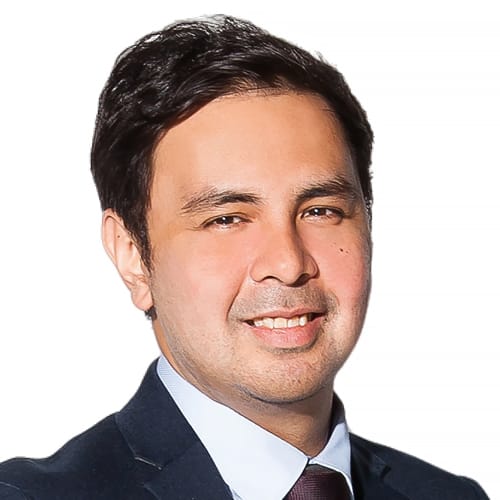
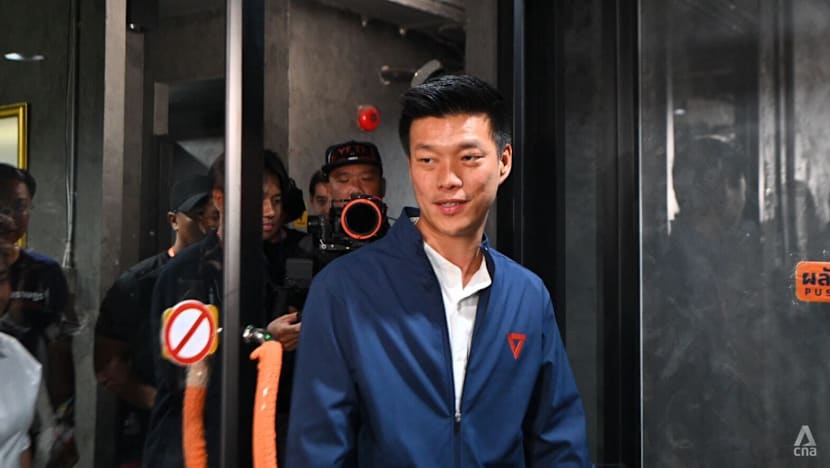
The party is now led by Natthaphong Ruengpanyawut, a 38-year-old businessman.
Speaking to reporters at the party headquarters in Bang Kapi district in Bangkok at around 10pm local time on Sunday, Natthaphong appeared calm as he acknowledged the outcome that the People’s Party is unlikely to be the “number one party” and therefore will not form the government.
“Earlier we have said that the People’s Party will not vote for Bhumjaithai’s candidate to be prime minister so now we are ready to be in the opposition,” he said.
He also called for Thais who voted for the People’s Party to “not lose hope”.
Natthaphong also urged all political parties elected into government to deliver on promises they made to the public during the course of the campaign.
REFERENDUM ON CONSTITUTION
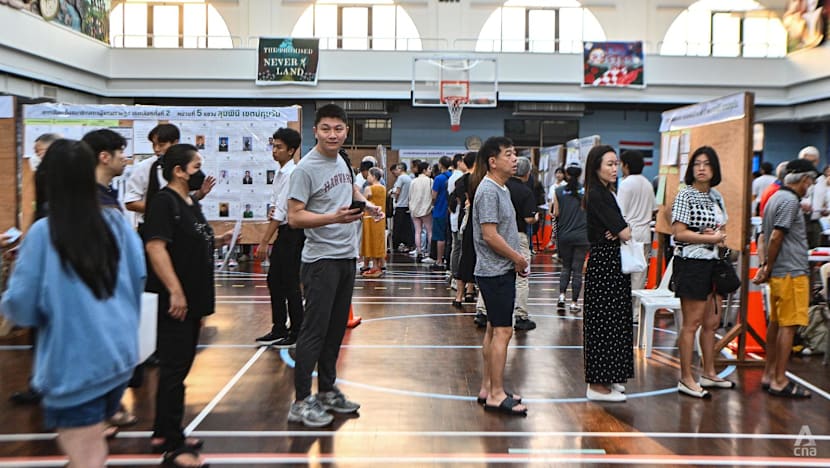
For the first time in Thailand’s history, a national referendum was held alongside the general election on Sunday.
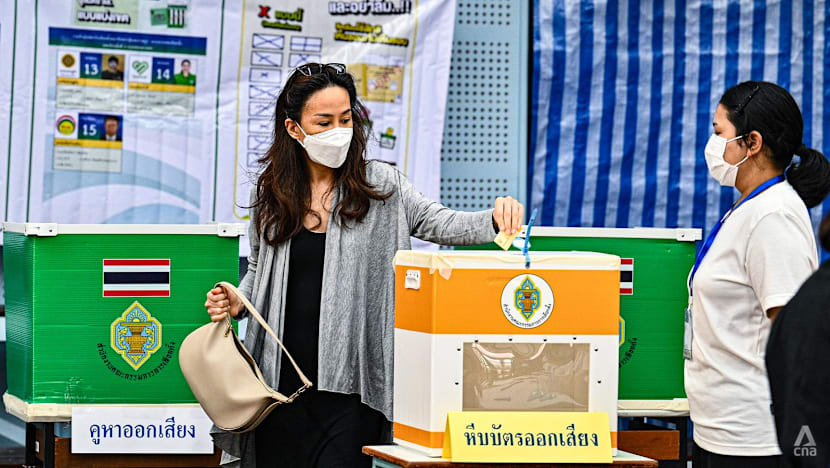
This means, each voter received three ballot papers on Sunday - two for the general election and one for the national referendum.
Approval of the referendum would give the newly-elected parliament a mandate to draft a new constitution. Otherwise, the current 2017 constitution written under military rule following the 2014 coup would remain in place.
According to the Election Commission results as of 11.30pm with 31 per cent of the votes counted, around 59 per cent of voters supported having a new constitution, while 32 per cent voted against it.
Thailand has had 20 constitutions since the end of absolute monarchy in 1932, with most of the changes following military coups.
If voters back the drafting of a new national charter, the new government and lawmakers can start the amendment process in parliament with two more referendums required to adopt a new constitution.
Speaking at a press conference on Sunday night, People’s Party leader Natthaphong Ruengpanyawut urged all prospective 500 members of parliament to “honour this decision by the people”, referring to the likely referendum result.
Listen:
VOTERS SAY THEY WANT BETTER ECONOMY, “FEWER SCAMMERS”
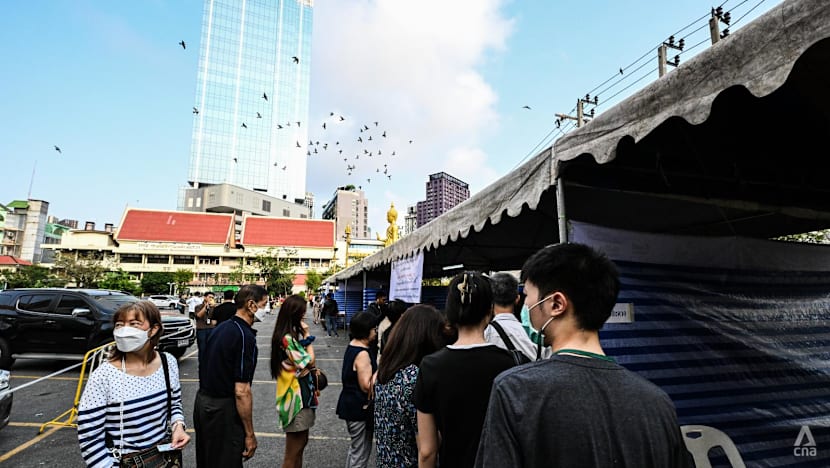
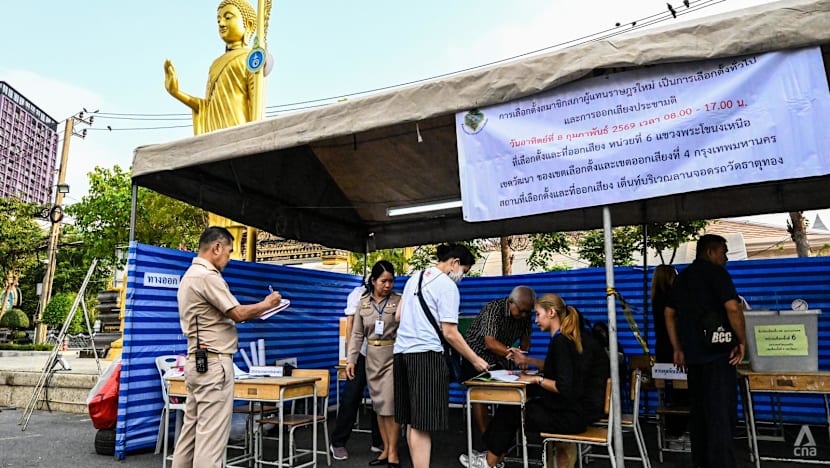
Over 50 million Thais were eligible to vote on Sunday. More than 2 million had already cast their ballots in advance voting on Feb 1.
Key issues that have featured in the election campaign include cost of living, economic recovery and political reform.
Polls opened at 8am on Sunday and closed at 5pm, with voters telling CNA that after years of political uncertainty and fragile conditions, they hoped for a corruption-free future, better economy and “fewer scammers”.
Speaking earlier on Sunday in his home constituency of Buriram city in Thailand’s northeast, also headquarters of the Bhumjaithai Party, Anutin said he hoped for reconciliation between parties.
“I wish all parties well in this election and that we can let bygones be bygones,” Anutin said.
“I might have clashed with some (so) let me use this opportunity to ask for forgiveness from everyone.”
In Bangkok, Natthaphong told reporters that he remained optimistic about his party’s prospects.
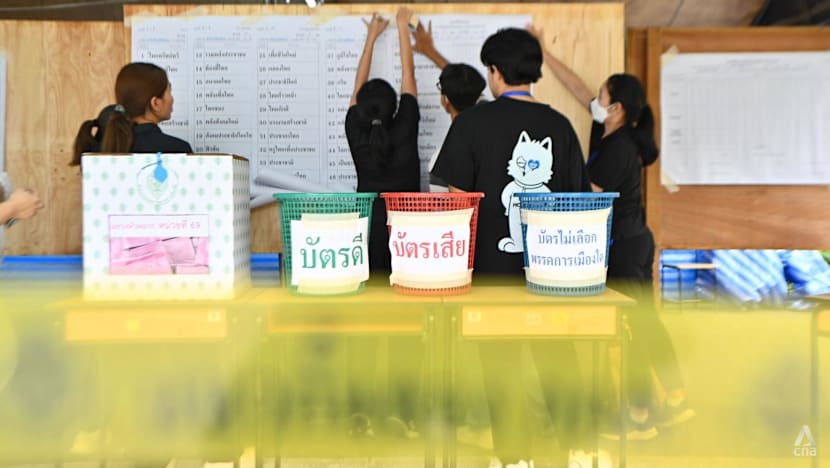
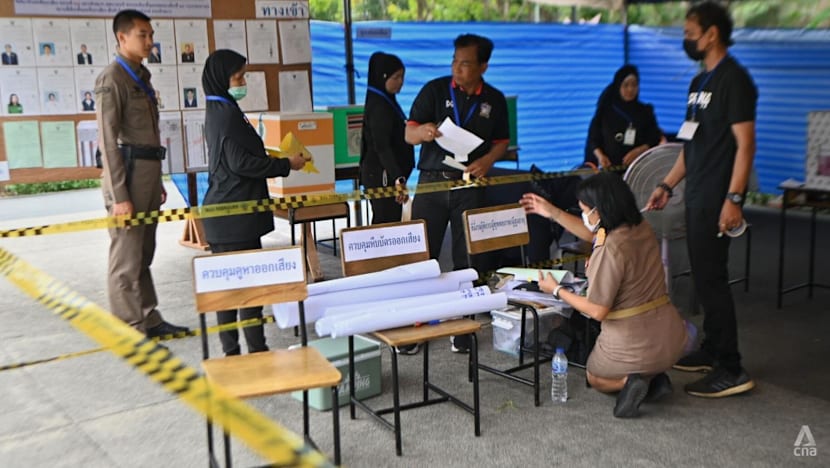
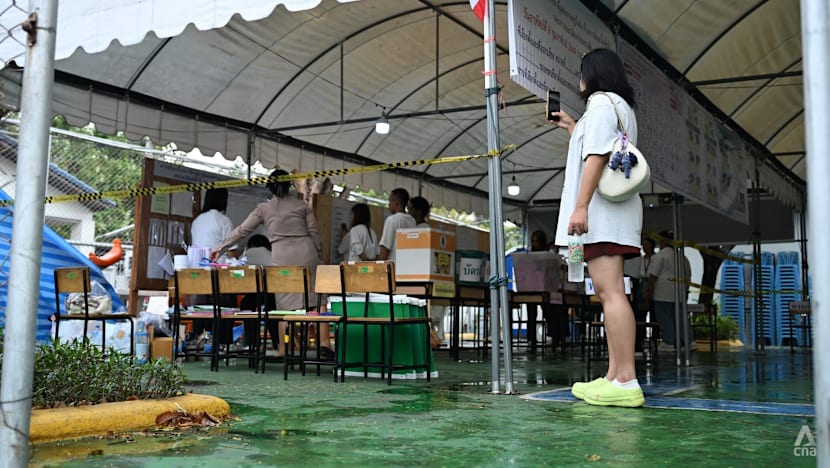
As the ballot closed and vote-counting started, a huge thunderstorm swept across the Thai capital at about 7pm local time on Sunday.
Additional reporting by Izzah Aqilah Norman and Savanna Tai