Commentary: Trump’s aggression abroad undermines traditional US partnerships in Asia
The more the US aspires to a sphere of influence in the West, the more China will feel entitled to demand the same in the East, says Pusan National University’s Robert Kelly.
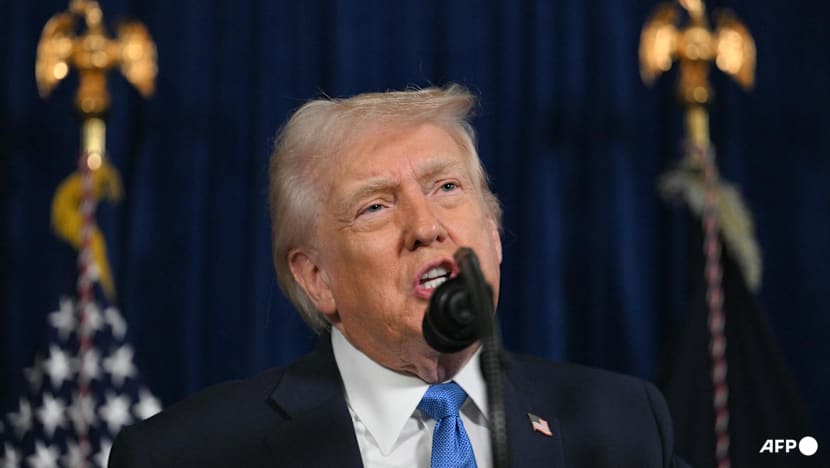
US President Donald Trump speaks to the press following US military actions in Venezuela, at his Mar-a-Lago residence in Palm Beach, Florida, on Jan 3, 2026. (File photo: AFP/Jim Watson)

This audio is generated by an AI tool.


BUSAN, South Korea: US President Donald Trump shocked the world earlier this month by capturing Venezuelan President Nicolas Maduro, who will be tried in New York on drug and terrorism charges.
In justifying a US-led regime change in Venezuela, Trump has not bothered with the usual American bromides about spreading democracy or defending human rights. Instead, he has cited reasons from stopping the flow of drugs and migrants to the US to taking control of Venezuela’s oil reserves. In what seems to be a return to great power imperialism of the 19th century, Trump has threatened to seize other countries in the Western Hemisphere too, such as Cuba and Colombia.
As the world’s second most powerful state, China benefits not only from the US focusing its attention on the Western Hemisphere, but also the global shift to power politics. The more Trump aspires to an American sphere of influence in the West, the more China will feel entitled to demand the same in the East.
Liberal democracies in Asia will be unable to contest China’s realpolitik logic with invocations of the liberal international order, because Trump rejects that order too.
PERCEIVED WEAK LINKS IN THE REGION
On New Year’s Eve, China carried out large military drills around Taiwan, which involved firing rockets and deploying warships and aircraft near the island. In his New Year’s Day message, Chinese President Xi Jinping said that unification is “unstoppable”.
Though such drills are routine, Chinese exercises around Taiwan have become increasingly large and sophisticated. China could use force but seems likely to try a blockade first, which its recent exercises near Taiwan practised.
The US will probably not move to break a Chinese naval or missile quarantine, as it is unlikely to run the large risk of escalating with China for non-Americans. Discussions about Taiwan have notably been absent from high-level US-Chinese talks, such as the Oct 30 meeting between Trump and Xi.
As American influence wanes in East Asia, Chinese attention may turn towards South Korea. When South Korean President Lee Jae Myung visited China on Jan 5, Xi called on him to make “the right strategic choices”. The implicit message here may be that South Korea should not assist Taiwan in a conflict and should distance itself from Japan and the US.
Lee will likely comply. He has evaded questions about whether South Korea would intervene in a conflict in the Taiwan Strait and South Korea is eager for Chinese market access.
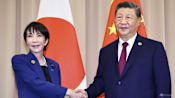
Lee met Japanese Prime Minister Sanae Takaichi on Jan 13 and vowed to deepen security and economic ties. However, he reaffirmed that South Korea will not get involved in the spat between Japan and China concerning Takaichi’s remark that Japan could respond militarily if threatened by a Chinese attack on Taiwan.
Another "weak link" on China’s maritime periphery is the Philippines. Like Taiwan and South Korea, it is a small US partner vulnerable to Chinese pressure. China has made competing territorial claims in the South China Sea, and has targeted Philippine coast guard vessels and fishing boats in disputed areas. Like South Korea, the Philippines too may pursue a separate peace with China if the US signals that it will draw back from the region.

DOES DONALD TRUMP CARE?
A curious irony of Trump’s actions is that the US need not give up its positions in Europe and East Asia to attain Western hemispheric influence. Washington already gets most of what it wants from its neighbours. It does not need, for example, to conquer Greenland for national security when it already has military access to the island under an agreement signed with Denmark in 1951.
Cuba and Venezuela stand against the US in the Western Hemisphere, but both are minor players with problems of corruption. There is no compelling reason to retrench from global liberalism to regional bullying, as the former has well served US national security.
Trump does not seem to grasp that US competitors, such as China and Russia, will now use his realpolitik logic to assert analogous spheres of influence. To be sure, the liberal international order never constrained them much. But the liberal order provides a framework of solidarity for smaller countries to resist a major power’s hegemony.
For instance, liberalism has been a unifying principle among Indo-Pacific states from the US to India, Japan, South Korea and the Philippines. The “free and open Indo-Pacific” directly refutes realpolitik and gives the ungainly coalition some ideological definition. That is, liberalism gives the many, varied states worried about China a coherent language of cooperation and vision.
Trump’s recent actions have eliminated that. If states fearful of China are united by nothing more elevated than national interest, they are less likely to cooperate with each other.
If the US is an unreliable ally, it makes sense to look for alternate arrangements. US defection has already motivated nuclear weapons debates in South Korea and Japan. But if Trump’s America is openly aggressive toward traditional partners, then approaching China for a separate peace could become more attractive.
Both the US and China are militarily capable; the difference between them used to be liberalism. The US, pre-Trump, was a more trustworthy ally. In pursuing a hemispheric zone of influence, Trump encourages China to seek the same and gives Asian countries no reason to align with the US to stop it.
Robert Kelly is a professor of political science at Pusan National University. He writes a monthly column for CNA.